📅 Tuesday, September 1, 2026
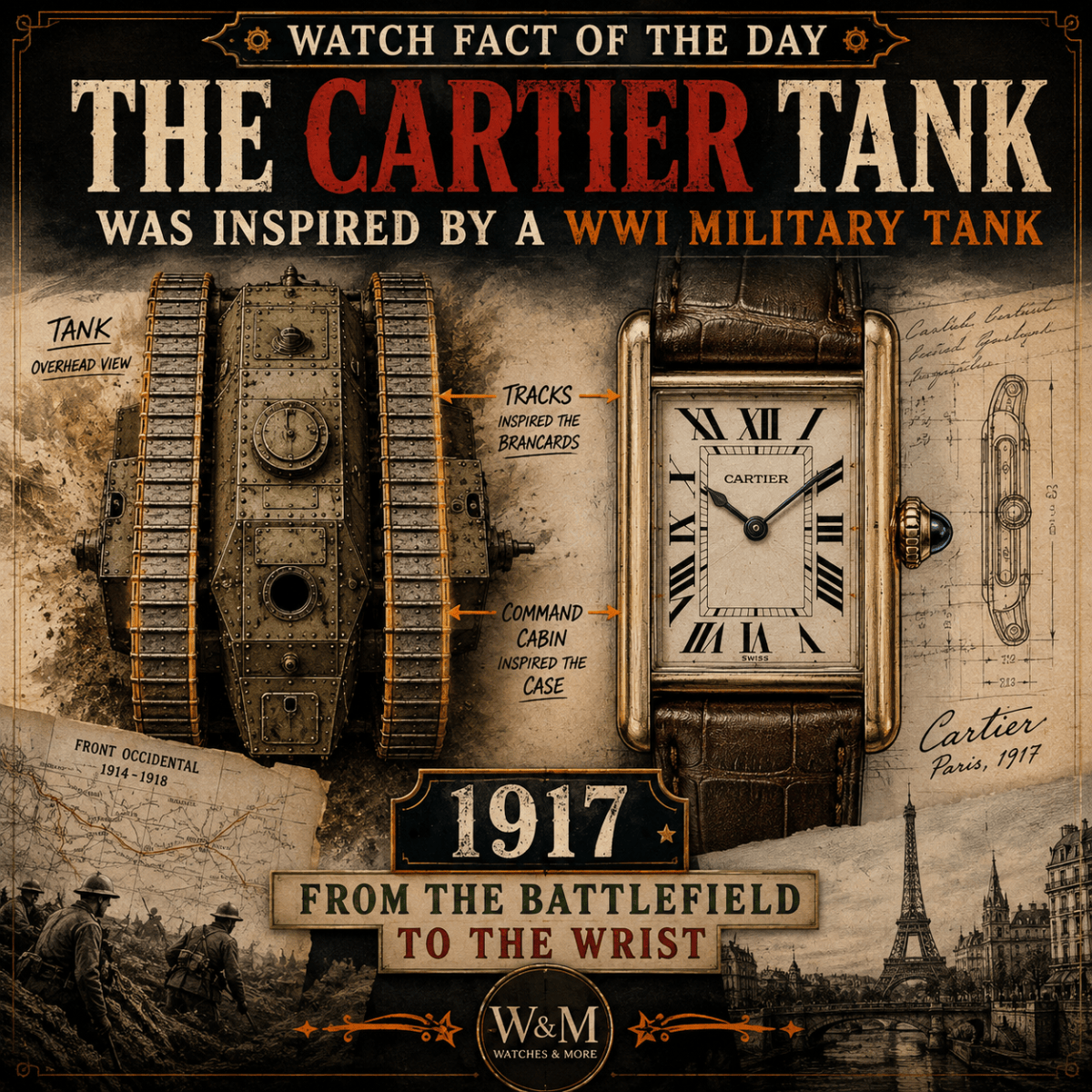
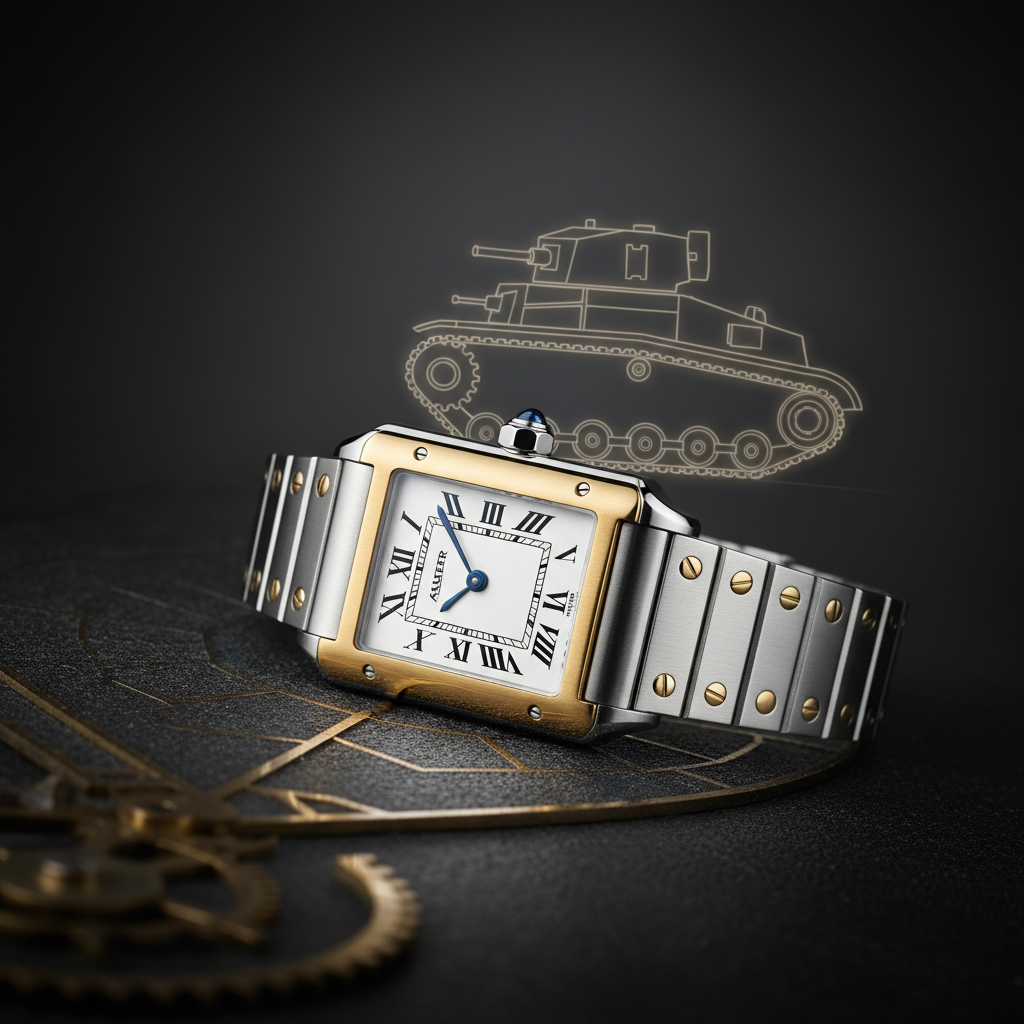
In 1917, while the First World War was still raging across Europe, Louis Cartier created one of the most enduring shapes in watchmaking history. Rather than following the traditional round form of the pocket watch, Cartier drew inspiration from the stark geometry of a military tank viewed from above. The result was a wristwatch whose architecture transformed the machinery of war into something remarkably refined. Denali Development
Look at a Cartier Tank from above and the connection becomes much easier to see. According to Cartier, the watch’s two long parallel brancards represent the tank’s tracks, while the central case corresponds to the vehicle’s cabin. Those brancards became one of the Tank’s defining visual signatures and remain fundamental to the design more than a century later. Denali Development
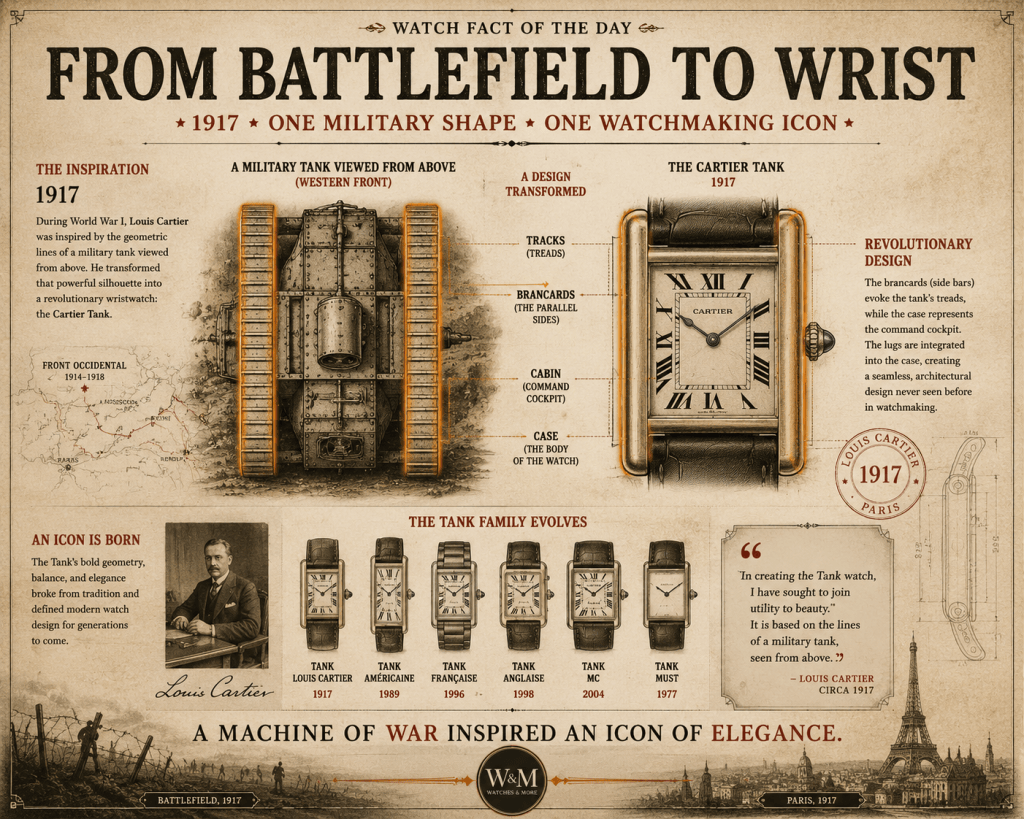
But Louis Cartier did more than borrow the silhouette of an armored vehicle. The Tank introduced an important design principle: the case flows directly into the bracelet or strap attachments without interrupting the visual rhythm. Cartier describes the design as moving from the square of the dial toward the rectangle of the bracelet, creating an unusually unified relationship between case and strap. Cartier
That geometry was radical for its time. Watches still carried much of the visual language of round pocket watches, while the Tank embraced straight lines, symmetry and architectural proportions. Its rectangular dial, Roman numerals, chemin-de-fer minute track and distinctive parallel sides helped create a watch that looked unmistakably modern—yet would prove remarkably resistant to changing fashion.
The Tank also became the foundation for an entire family of designs. Cartier continued experimenting with its proportions, eventually producing interpretations including the Tank Louis Cartier, Tank Américaine and Tank Française, while retaining those fundamental parallel brancards that visually connect them to the original idea. Denali Development
More than a century later, that’s perhaps the greatest surprise of the Tank. A design whose inspiration came from one of the most imposing machines of World War I became an enduring symbol of elegance, restraint and sophisticated watch design.
💡 Did You Know?
The Tank’s military inspiration isn’t merely watch-world folklore. Cartier itself describes the design using exactly this visual relationship: the brancards correspond to the tracks and the case to the vehicle’s cabin.
Category: Brand Spotlight
Disclaimer: Every effort has been made to keep these watch facts accurate, but the world of horology is full of myths, disputed stories, and fascinating trivia. Consider these facts a starting point for discovery rather than the final word. If you have corrections or additional insights, let us know—we’re always happy to keep the record ticking in the right direction.
🕐 Discover more watch facts, reviews, and buying guides at WatchesAndMore
🛍️ You Might Also Like
As an Amazon Associate and affiliate partner, WatchesAndMore earns from qualifying purchases.
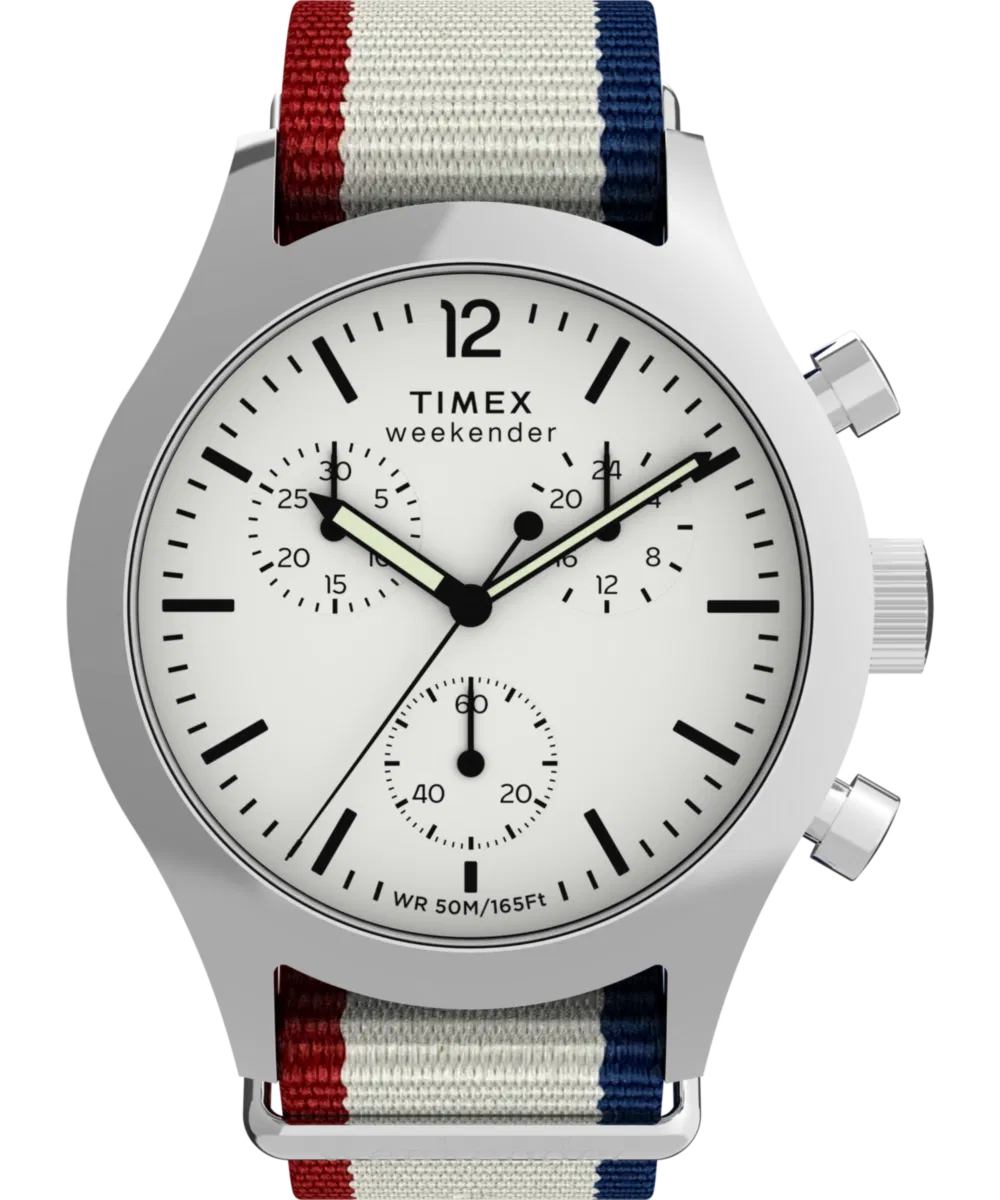
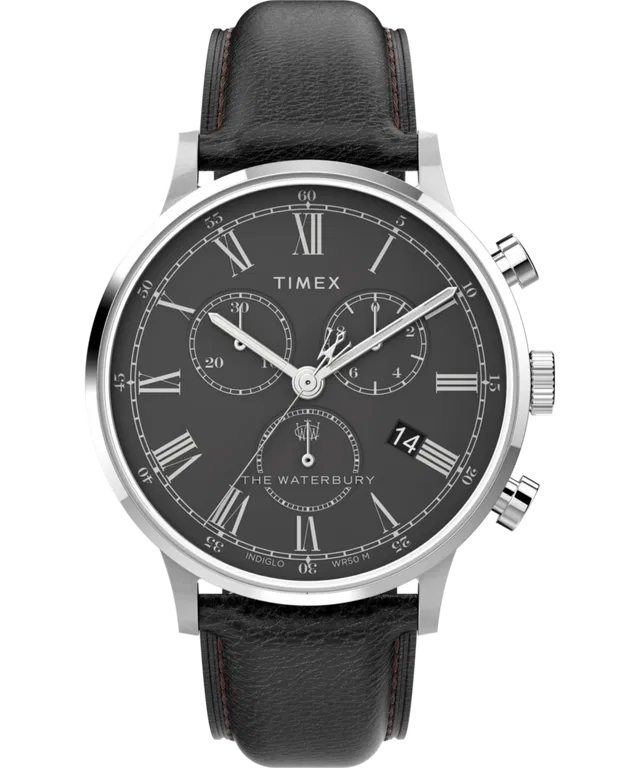
Timex
★★★★★ 4.5 (3,041 reviews)
$79


Browse all 142+ expert-reviewed watches →



⭐ Why It Matters
This is a story about design responding to a particular purpose. The relationship between an object’s form and the way someone uses it can be as revealing as the movement inside.
📚 Sources & Further Reading
Further reading: Fondation de la Haute Horlogerie — watchmaking glossary
Join the Conversation
Which detail in this story interests you most, and would it influence what you wear or collect? Share your thoughts in the comments below.
Read Next
- Movado Ermeto: The Travel Watch That Became a Table Clock
- Movado Polyplan: The Watch with a Movement on Three Planes
🛍️ Explore designs, gifts and more at the W&M companion shop.