📅 Saturday, September 26, 2026
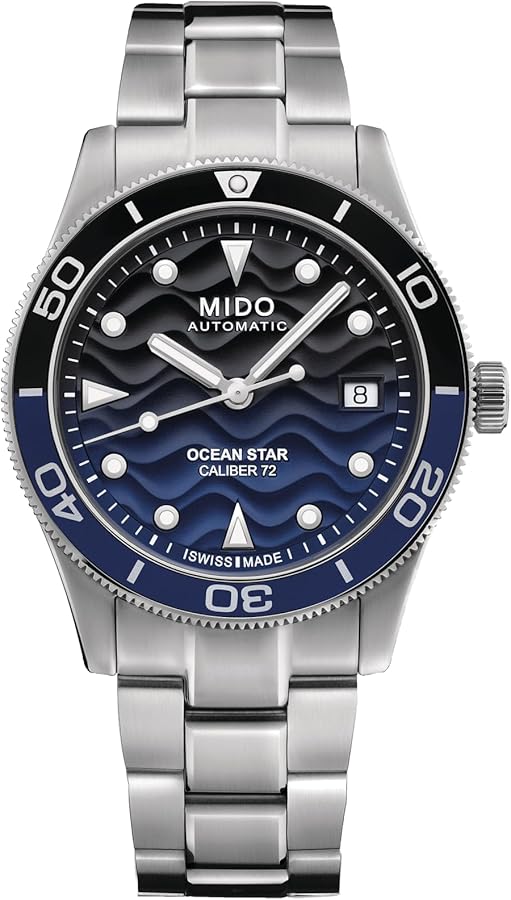
Long before modern dive watches became icons, Swiss watchmakers were already fighting one of mechanical horology’s oldest enemies:
WATER.
Moisture could enter through the crown, case joints, or crystal and quickly damage steel components inside the movement. Rust, corrosion, and contaminated lubricants could turn a perfectly good watch into a repair nightmare.
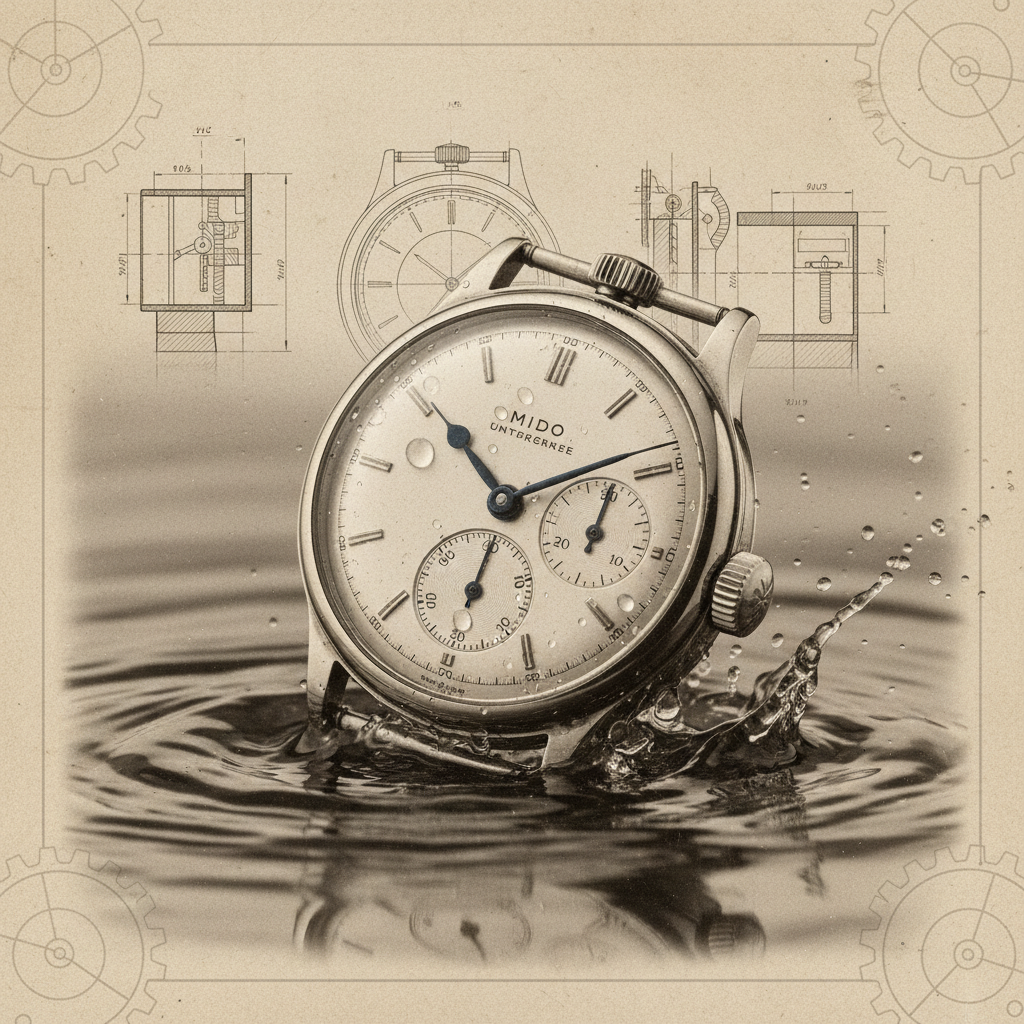
Mido became one of the early brands to take that problem seriously.
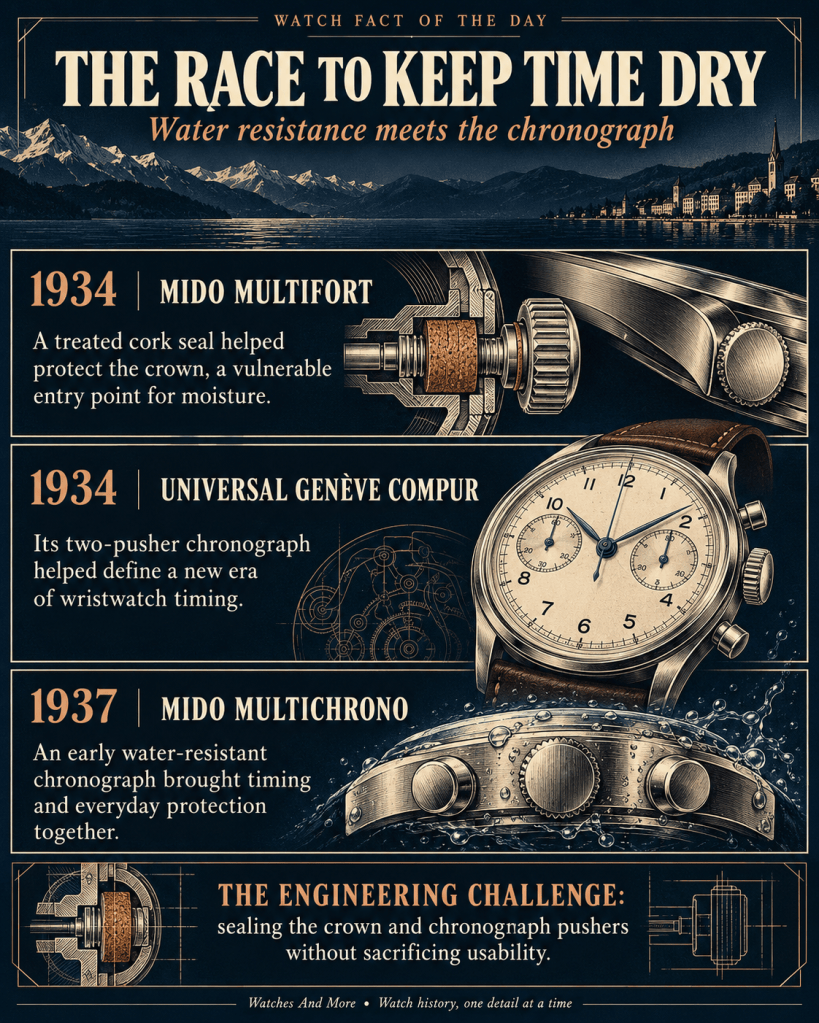
One of its best-known solutions was the Aquadura system, which used a specially treated cork gasket surrounding the crown stem. The cork remained compressed around the winding stem, helping form a barrier against water and dust while still allowing the crown to be operated. Mido’s own technical material continued describing Aquadura as a distinctive system for improving water resistance decades later. MIDO Watches
That sounds simple today.
In the early years of wristwatch engineering, it was anything but.
Why the Crown Was Such a Problem
A watch case can be sealed relatively easily if nothing has to move through it.
But the crown does.
The wearer has to pull it.
Turn it.
Wind the watch.
Set the time.
Every moving interface creates a possible entry point for moisture.
Mido’s cork system addressed that vulnerable area by maintaining pressure around the crown stem rather than relying only on a rigid metal fit.
MOVING PART + FLEXIBLE SEAL = BETTER PROTECTION
That became part of Mido’s broader reputation for practical, robust watches.
Where the Multifort Fits In
The Multifort became one of Mido’s defining lines and was associated with the brand’s push toward durable everyday wristwatches.
Rather than chasing only elegance, Mido leaned into the idea that a watch should be able to handle:
water
dust
shocks
temperature changes
That philosophy helped shape the kind of utility watch we now take for granted.
And eventually, Mido would extend the Multifort family into chronographs and other sportier configurations.
💡 Did You Know?
The clever thing about the Aquadura system was the material choice.
Cork seems primitive next to modern synthetic gaskets, but it had useful properties:
compressible
resilient
capable of maintaining contact around a moving stem
That made it surprisingly effective for early watch sealing.
Modern Mido documentation still describes the Aquadura concept as a cork gasket surrounding the crown stem. MIDO Watches
⭐ Why It Matters
Today we expect a sports watch to survive rain, sweat, washing hands, and sometimes swimming.
That expectation had to come from somewhere.
Early water-resistant watchmaking was built one vulnerable point at a time:
caseback
crystal
crown
pushers
gaskets
The crown was one of the hardest problems.
Mido’s cork-seal approach was an early and elegant answer.
BEFORE SCREW-DOWN CROWNS BECAME STANDARD…
SOME WATCHMAKERS TRUSTED CORK.
Category: Watch History
Disclaimer: Every effort has been made to keep these watch facts accurate, but the world of horology is full of myths, disputed stories, and fascinating trivia. Consider these facts a starting point for discovery rather than the final word. If you have corrections or additional insights, let us know—we’re always happy to keep the record ticking in the right direction.
🕐 Discover more watch facts, reviews, and buying guides at WatchesAndMore
🛍️ You Might Also Like



As an Amazon Associate and affiliate partner, WatchesAndMore earns from qualifying purchases.