
📅 Monday, August 25, 2026
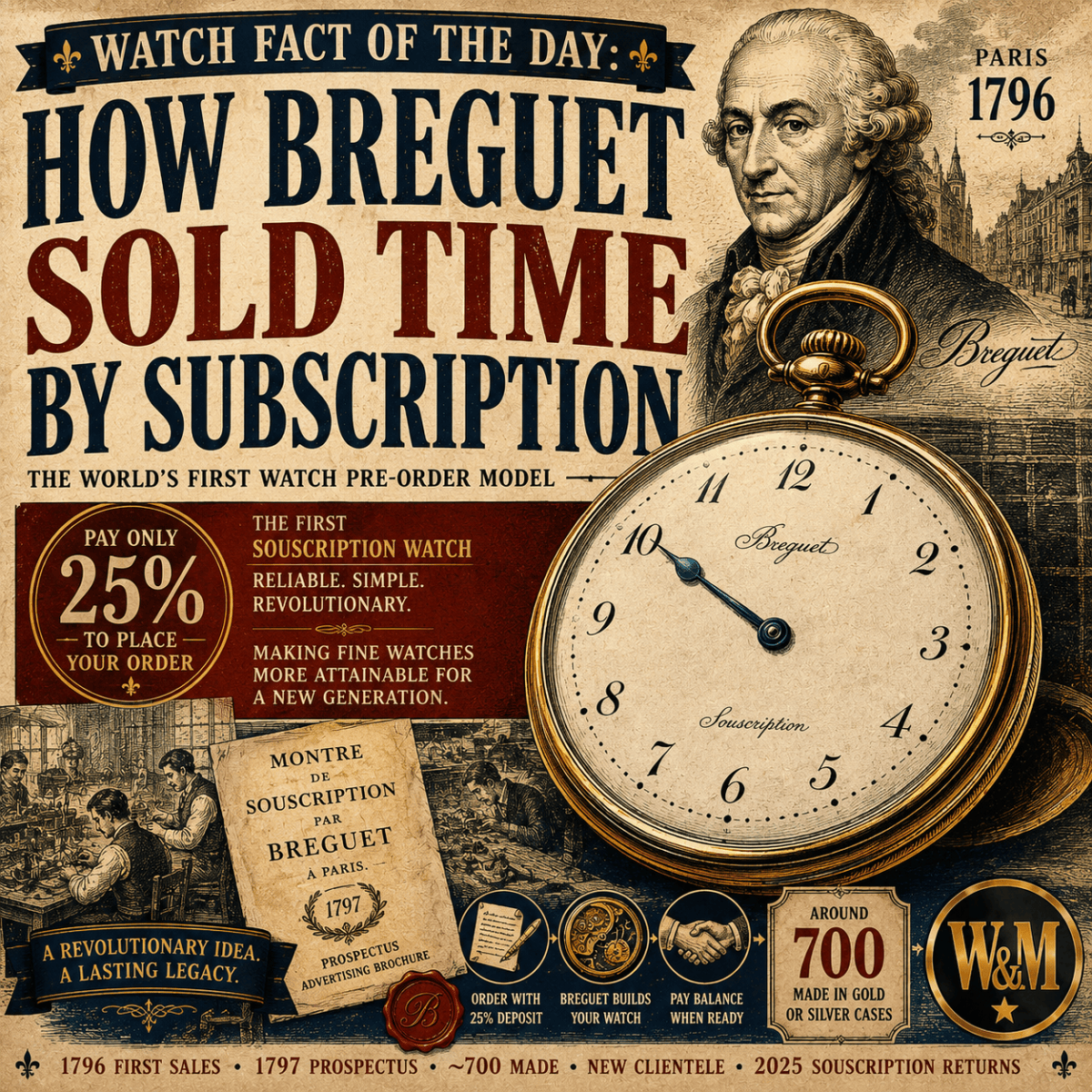
Long before online pre-orders, Abraham-Louis Breguet used a subscription model to make one of his most influential pocket watches more attainable. His large, single-hand Souscription watch was sold with a quarter of the price paid when the order was placed; Breguet’s records describe the design as simple, reliable, and successful enough to reach a broad new clientele.
The first examples went on sale in 1796, and a brochure promoted the model in 1797. Around 700 were made in gold or silver cases, turning a practical sales idea into a lasting chapter of watchmaking history.
In 1796, in the turbulent aftermath of the French Revolution, Abraham-Louis Breguet introduced an ingenious idea that was as much a business innovation as a watchmaking one: the montre de souscription, or subscription watch. Instead of requiring a customer to pay the entire price upfront, Breguet accepted an order with a deposit of one quarter of the purchase price. The remaining amount would be paid when the watch was completed—essentially an extraordinarily early form of the deposit-funded pre-order model familiar to modern consumers.
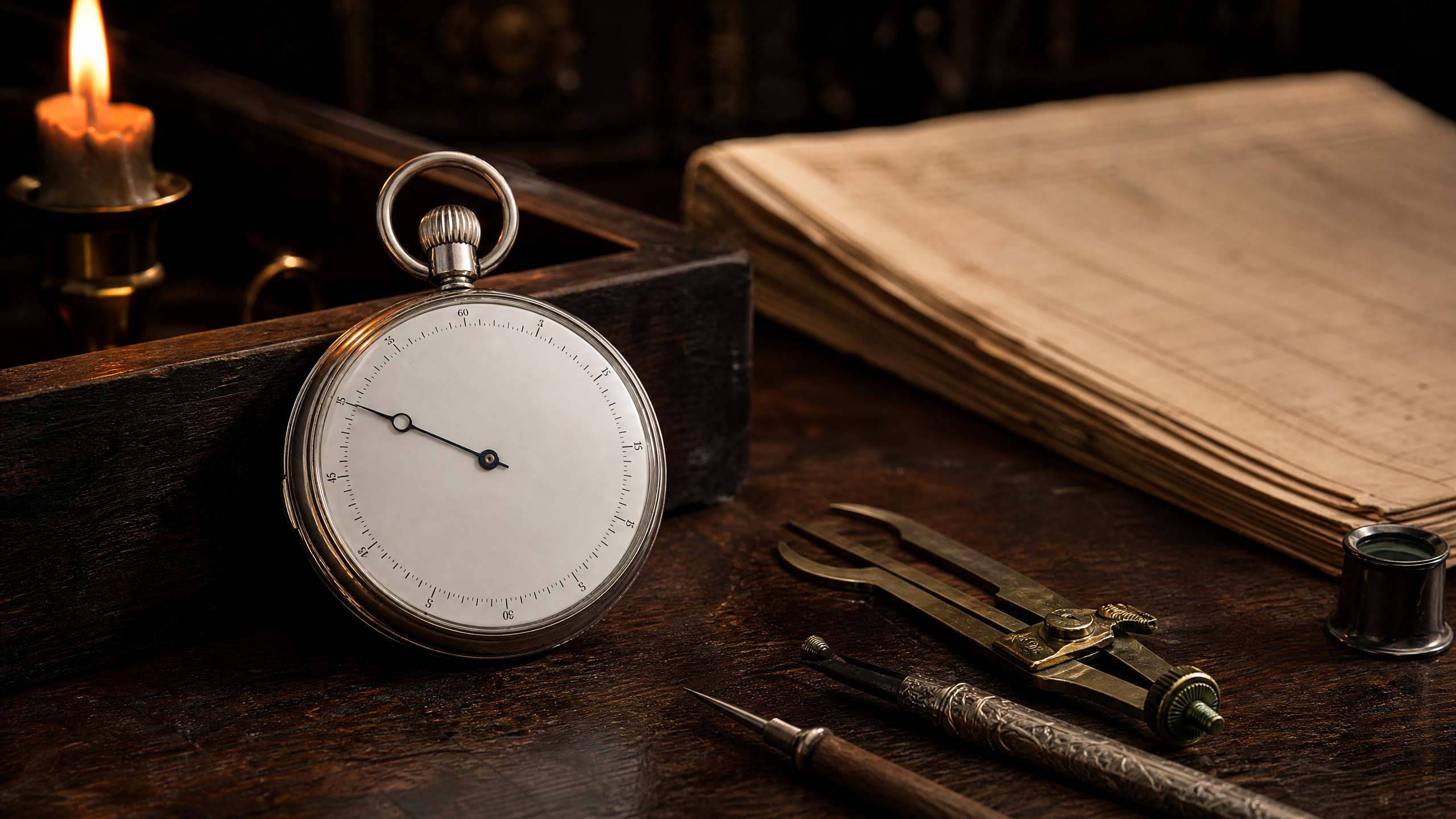
The watch itself was deliberately different from Breguet’s elaborate prestige pieces. The original Souscription was a substantial pocket watch measuring approximately 61 mm (2⅜ inches) in diameter, with a white enamel dial and just one hand indicating both hours and approximate minutes. Behind that wonderfully sparse face was a specially developed movement emphasizing mechanical simplicity, reliability and economical construction. Breguet describes the watches as both reliable and affordable, allowing his workshop to reach customers beyond the aristocratic clientele normally associated with his name.
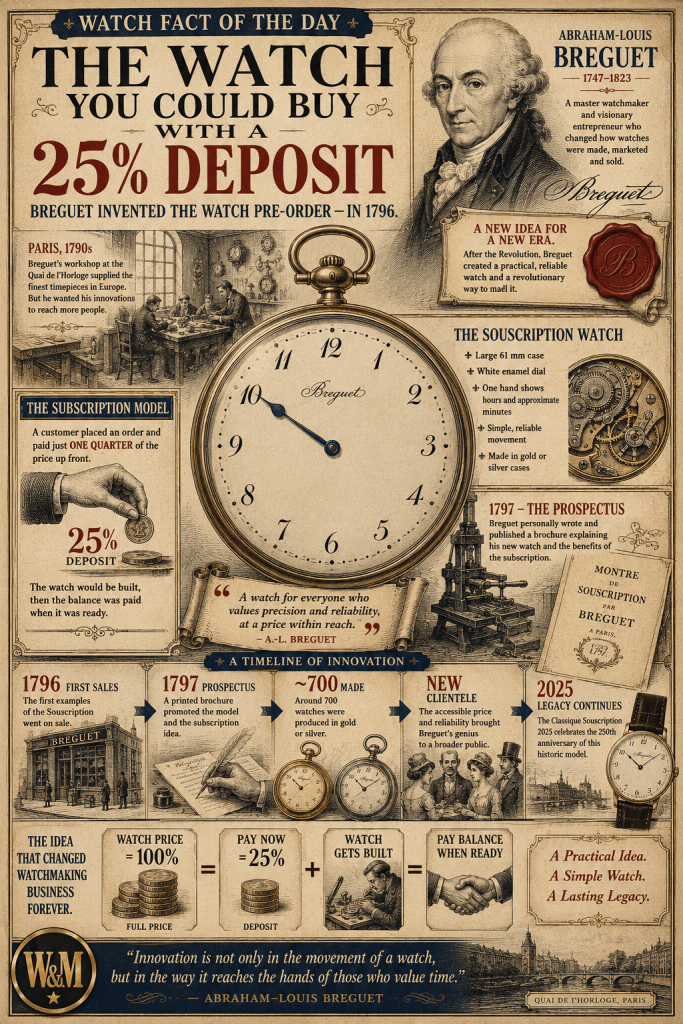
Breguet didn’t merely invent the watch and wait for customers to discover it. In 1797, he promoted the Souscription through a printed advertising prospectus explaining the concept directly to potential buyers. Breguet’s modern historical account describes this document as remarkable for its time because the watchmaker personally explained the intentions, technical choices and philosophy behind the creation from the perspective of his customers. In other words, Breguet wasn’t only redesigning the watch—he was rethinking how a watch could be marketed and sold.
The strategy worked. Approximately 700 Souscription watches were eventually produced, offered in either gold or silver cases, and Breguet says most were sold between 1798 and 1805. The model attracted an important new clientele to the House and became one of the foundational chapters in Breguet’s history. One documented experimental example, No. 246, was sold on January 9, 1798, to a customer recorded as Mr. Durbach.
Its influence went beyond sales. Breguet subsequently adapted the Souscription’s calibre architecture for his early montres à tact, ingenious watches that allowed their owners to determine the approximate time by touch rather than having to look directly at the dial. What began as a simplified and more attainable watch therefore became a mechanical foundation Breguet could develop further.
And more than two centuries later, the idea has come full circle. For its 250th anniversary in 2025, Breguet unveiled the Classique Souscription 2025, a modern wristwatch directly inspired by those original pocket watches. It resurrected the white Grand Feu enamel dial, single flame-blued hand and distinctive Breguet numerals while interpreting the architecture of the historic Souscription movement in a new calibre.
💡 Did You Know?
The original Souscription wasn’t simply minimalist for aesthetic reasons. Its single hand and intentionally simplified movement architecture were fundamental to Breguet’s plan to produce a reliable watch at a more attainable price—and then finance orders through a 25% deposit. More than two centuries before online crowdfunding and pre-orders, one of history’s greatest watchmakers had already discovered that customers could help fund production by subscribing before their watch was finished.
Category: Watch History
Disclaimer: Every effort has been made to keep these watch facts accurate, but the world of horology is full of myths, disputed stories, and fascinating trivia. Consider these facts a starting point for discovery rather than the final word. If you have corrections or additional insights, let us know—we’re always happy to keep the record ticking in the right direction.
Source: Breguet — Sale of the first subscription watch.
🕐 Discover more watch facts, reviews, and buying guides at WatchesAndMore