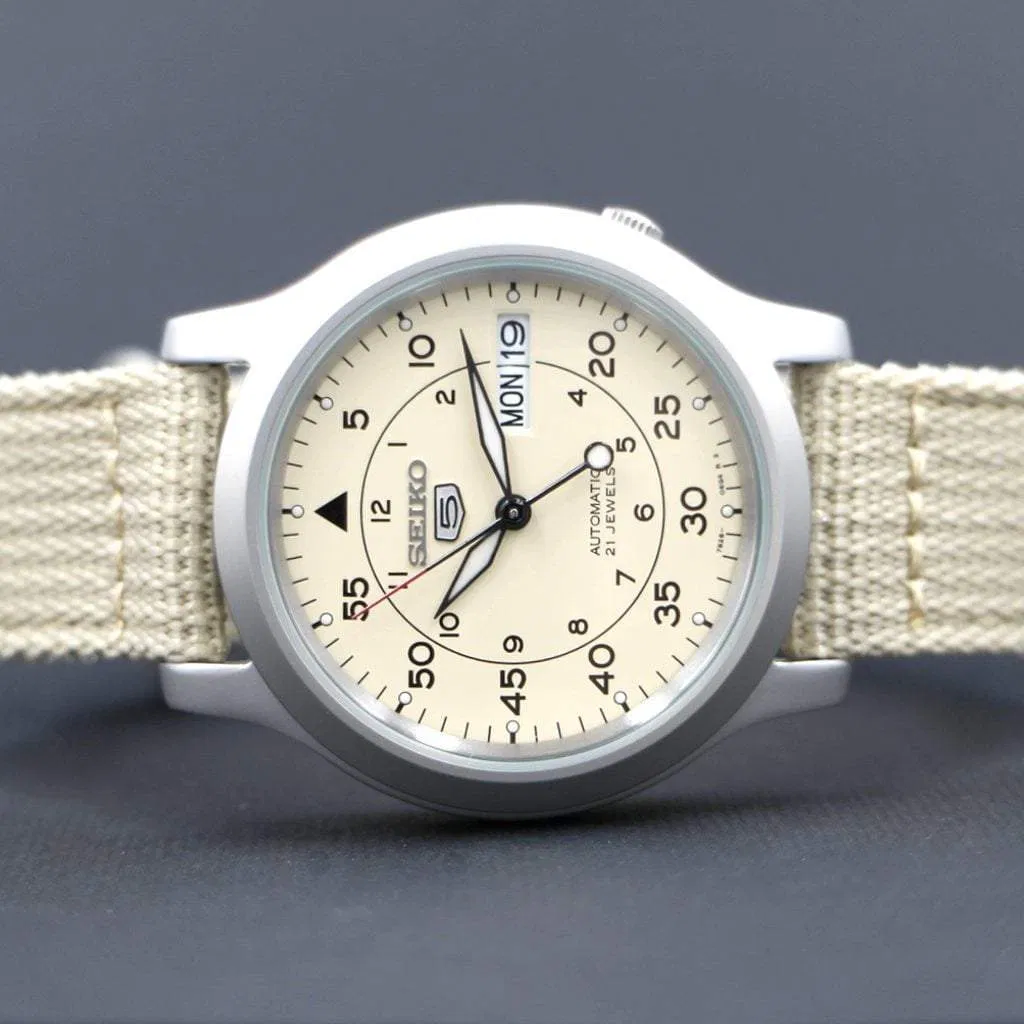
In 1965, members of the Japanese Antarctic Research Expedition relied on early Seiko waterproof watches, including the 62MAS. When one diver’s watch was acciden
📅 Sunday, September 27, 2026
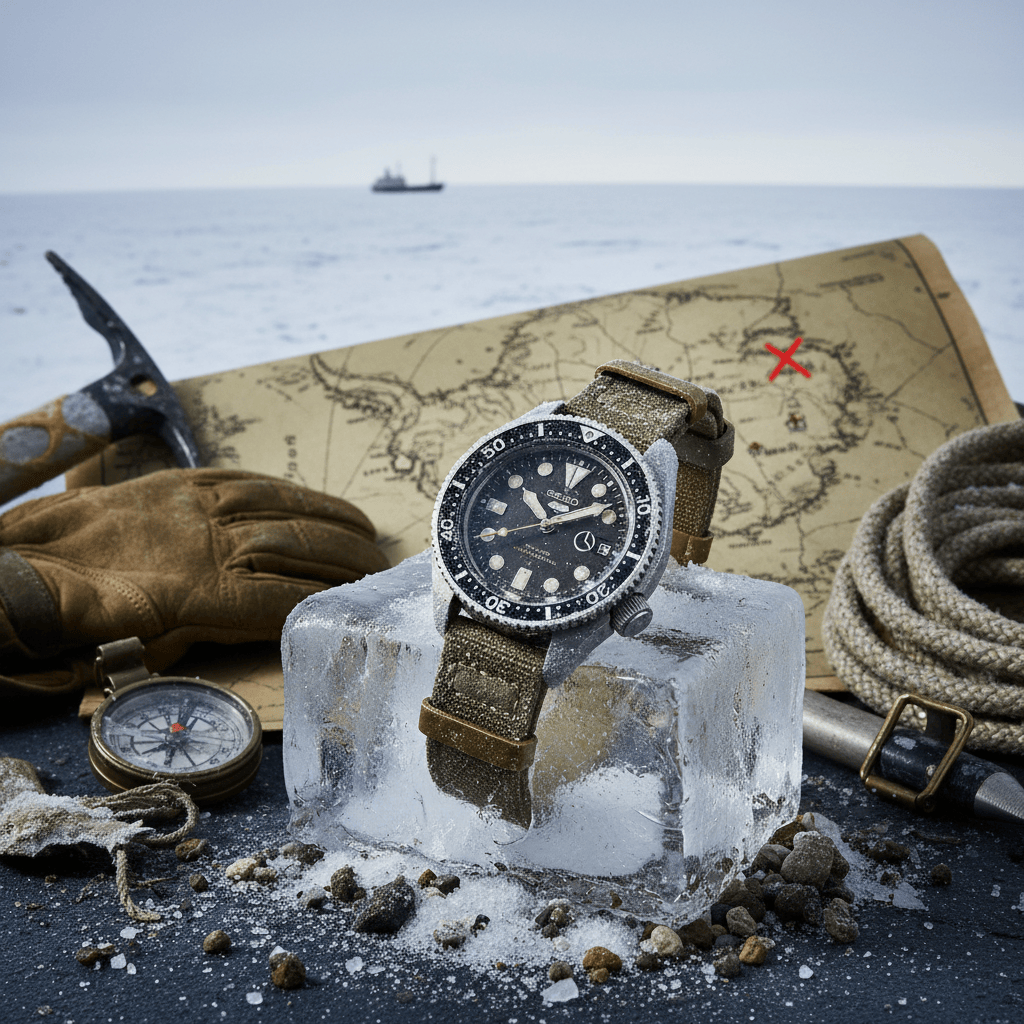
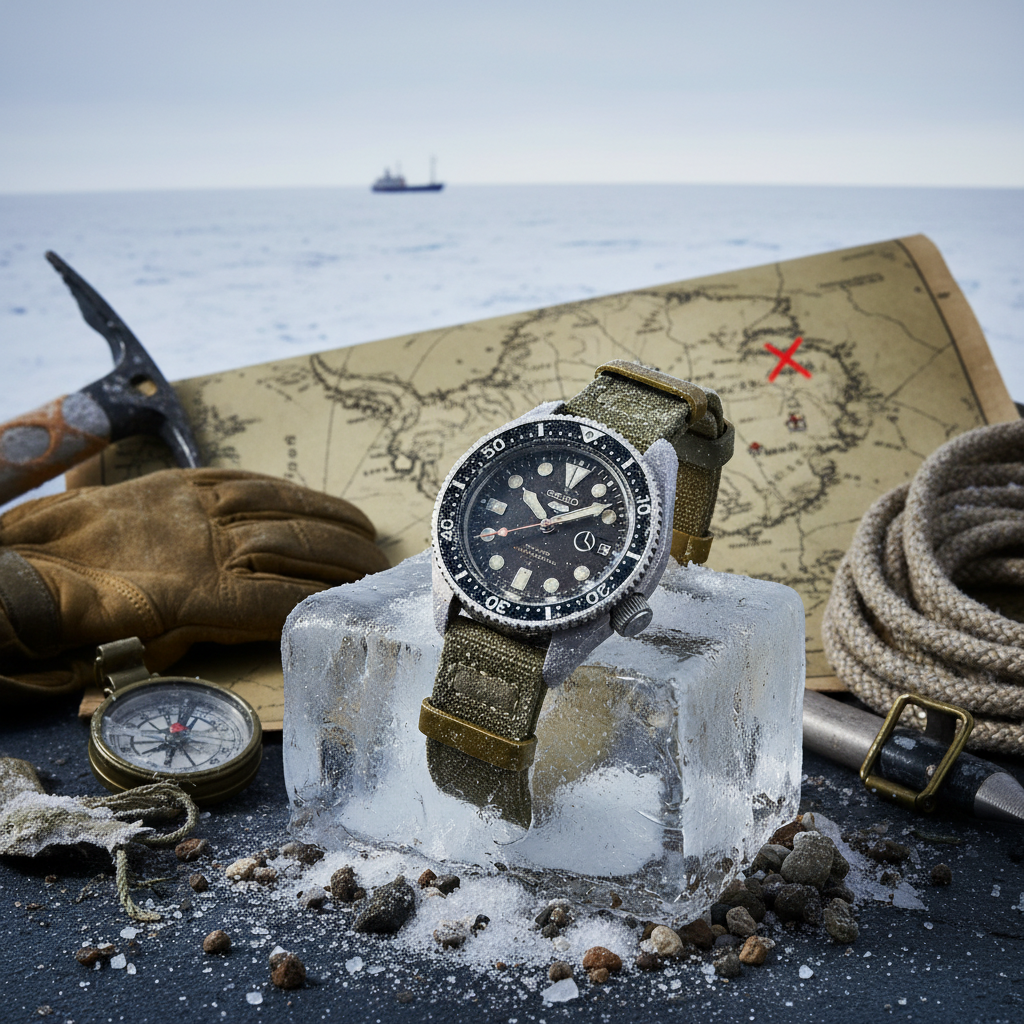
In 1965, members of the Japanese Antarctic Research Expedition relied on early Seiko waterproof watches, including the 62MAS. When one diver’s watch was accidentally lost in the freezing waters and recovered 50 days later encrusted in ice, it was found to still be ticking accurately once thawed. This extreme durability test proved instrumental in establishing Seiko’s reputation for rugged professional dive watches.
Category: Military Watches
Disclaimer: Every effort has been made to keep these watch facts accurate, but the world of horology is full of myths, disputed stories, and fascinating trivia. Consider these facts a starting point for discovery rather than the final word. If you have corrections or additional insights, let us know—we’re always happy to keep the record ticking in the right direction.
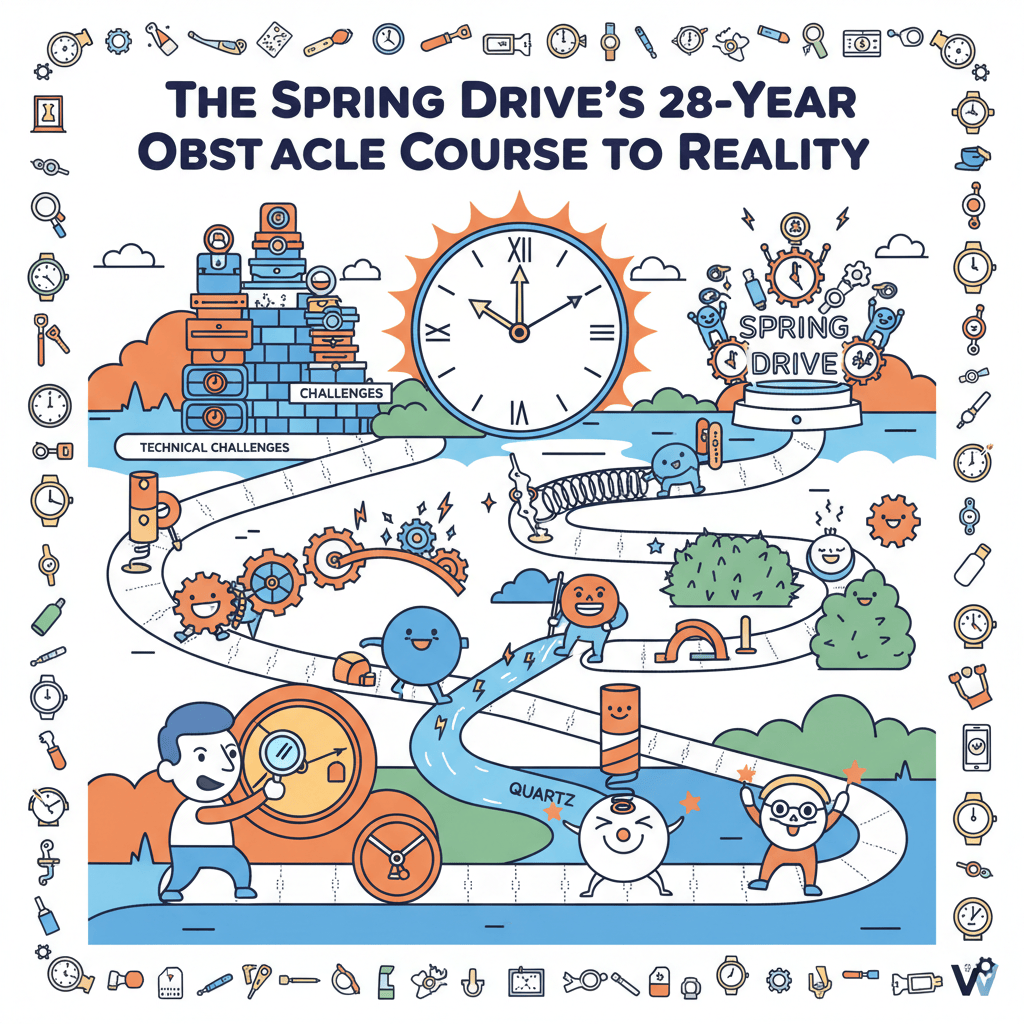
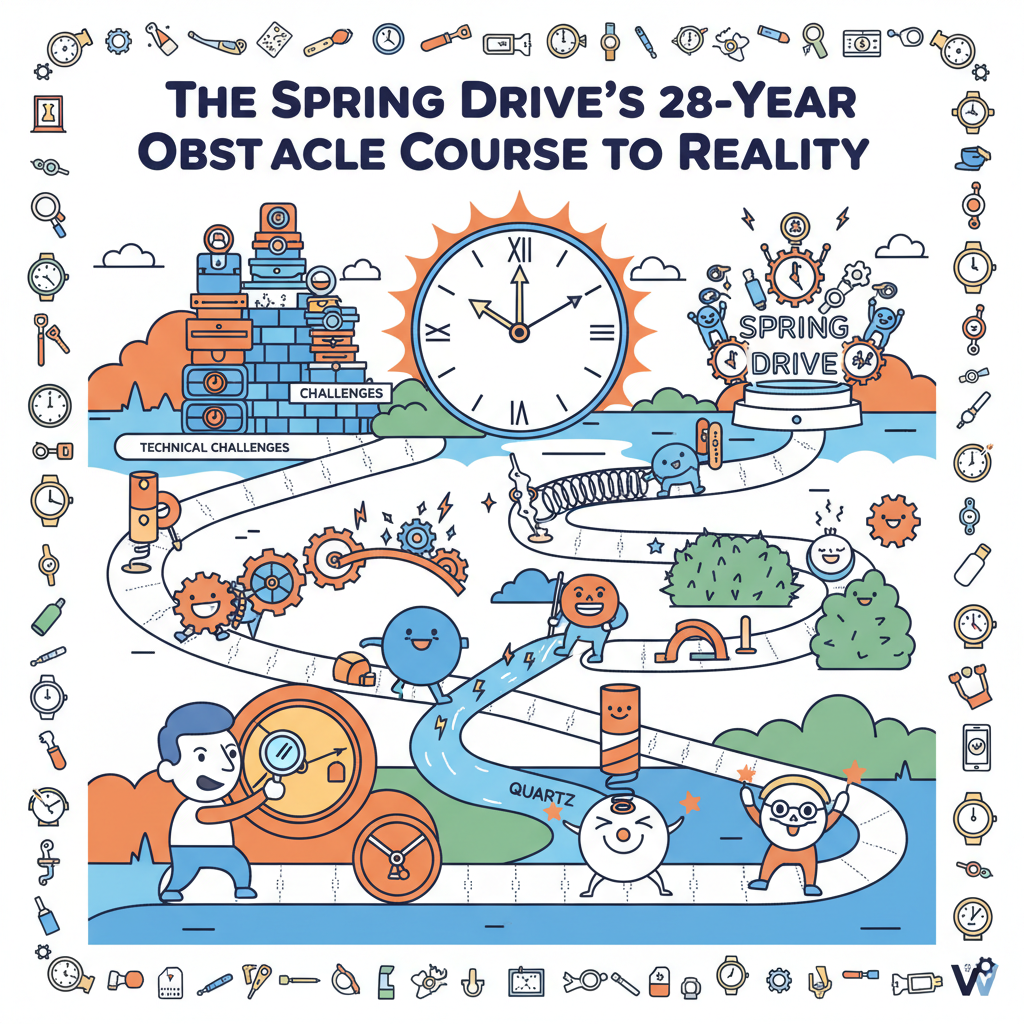
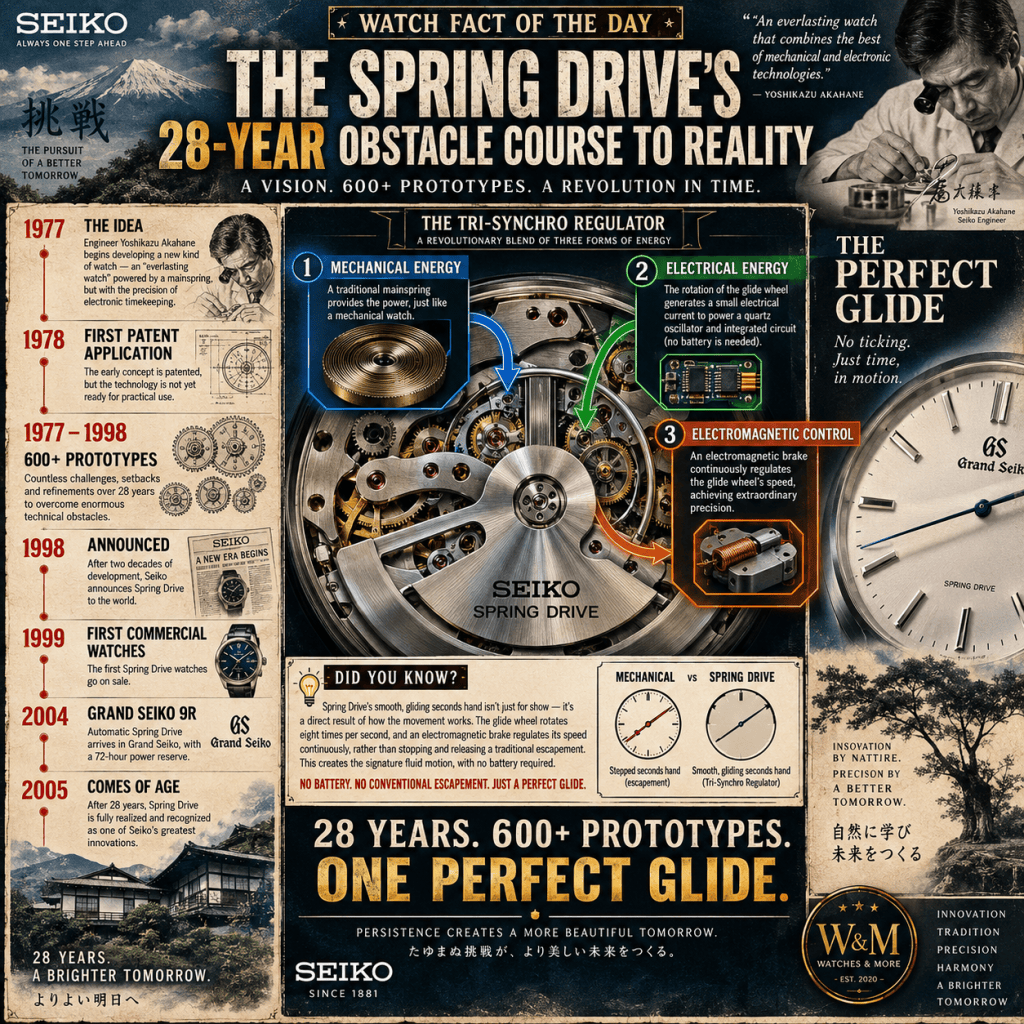
In 1977, Seiko engineer Yoshikazu Akahane kicked off an epic 28-year quest to create the “ever-lasting watch,” merging traditional mainspring mechanics with electric precision. His passion for achieving just one-second accuracy per day led to over 600 prototypes and plenty of challenges. The breakthrough? The Tri-Synchro Regulator, which mixes mechanical, electrical, and electromagnetic energy—no batteries needed! This innovation gave birth to Spring Drive, featuring a smooth, gliding seconds hand instead of the usual ticking one. Sadly, Akahane passed away right before its launch in 1998, but his legacy lives on as a key player in modern watchmaking.
📅 Friday, September 4, 2026
In 1977, young Seiko engineer Yoshikazu Akahane began pursuing an idea that sounded almost contradictory: an “ever-lasting watch” powered by a traditional mainspring, yet capable of the extraordinary precision associated with electronic timekeeping. His goal was approximately one second of accuracy per day without abandoning the fundamental spring-driven architecture of mechanical watchmaking. It would become one of the longest and most ambitious development stories in modern horology. Seiko Watch Corporation
The challenge was enormous. Seiko says the journey ultimately stretched across 28 years, countless setbacks and more than 600 prototypes. An early patent application was filed in 1978, but the technology necessary to turn Akahane’s concept into a practical wristwatch simply wasn’t mature enough yet. Improvements in electronics, energy efficiency, mainspring technology and manufacturing would all be necessary before the dream could become reality. Seiko Watch Corporation
The breakthrough was what became known as the Tri-Synchro Regulator. Instead of a conventional mechanical escapement, Spring Drive coordinates three forms of energy: mechanical, electrical and electromagnetic. The unwinding mainspring drives the gear train and glide wheel; that motion generates a tiny electrical current to power a quartz oscillator and integrated circuit, while an electromagnetic brake regulates the glide wheel’s speed. The watch therefore creates the electricity its regulator requires from the energy already stored in its mainspring. Grand Seiko
And that’s an important distinction: Spring Drive does not contain a battery. Its sole power source is the mainspring. There is no conventional electric motor driving the hands and no secondary battery hidden inside; the electronics exist to regulate the mechanical energy being released through the movement. Grand Seiko
The architecture also created Spring Drive’s most recognizable visual signature: its extraordinary gliding seconds hand. A conventional mechanical watch repeatedly locks and unlocks its gear train through an escapement, producing the familiar series of tiny steps. Spring Drive has no conventional escapement; its glide wheel rotates continuously in one direction, allowing the seconds hand to sweep smoothly and silently around the dial. Seiko Watch Corporation
The timeline is particularly interesting. Spring Drive was announced in 1998 after roughly 20 years of development and 600 prototypes, and the first hand-wound Spring Drive watches followed in 1999. Development continued, however, and in 2004 Grand Seiko introduced the automatic 9R Spring Drive, combining automatic winding, a 72-hour power reserve and one-second-per-day accuracy. Seiko’s broader history describes 2005 as the culmination of the full 28-year journey—the point when “Spring Drive came of age.” Grand Seiko
Sadly, Akahane did not live to see the technology’s commercial success. Grand Seiko records that he died from pneumonia in August 1998, shortly before Spring Drive’s public launch. But the idea he had pursued since 1977 survived him—and eventually became one of Seiko’s defining contributions to modern watchmaking. Grand Seiko
💡 Did You Know?
Spring Drive’s famous smooth seconds hand isn’t simply a cosmetic effect designed to make the watch look different. It is a visible consequence of how the movement regulates time. The glide wheel rotates eight times per second while generating the electricity needed to power the quartz oscillator and IC; an electromagnetic brake continuously controls its speed rather than repeatedly stopping and releasing a traditional escapement. That uninterrupted rotational motion travels through the gear train to produce the mesmerizing glide of the seconds hand.
No battery. No conventional escapement. No ticking seconds hand.
Disclaimer: Every effort has been made to keep these watch facts accurate, but the world of horology is full of myths, disputed stories, and fascinating trivia. Consider these facts a starting point for discovery rather than the final word. If you have corrections or additional insights, let us know—we’re always happy to keep the record ticking in the right direction.
The Seiko 6105-8110/8119 is iconic, largely thanks to Martin Sheen wearing it in Apocalypse Now, earning it the nickname “Captain Willard.” Launched in the 1970s, this diver watch was known for its ruggedness and water resistance, making it a favorite among U.S. servicemen during the Vietnam War. Its unique design, including a crown-guard and push-and-turn mechanism, contributed to its popularity. While the 6105 isn’t technically the “Turtle,” its legacy paved the way for later models. The watch symbolizes durability, practicality, and a cool connection to both military history and movie fame, proving it’s more than just a pretty face on screen.
📅 Wednesday, August 19, 2026
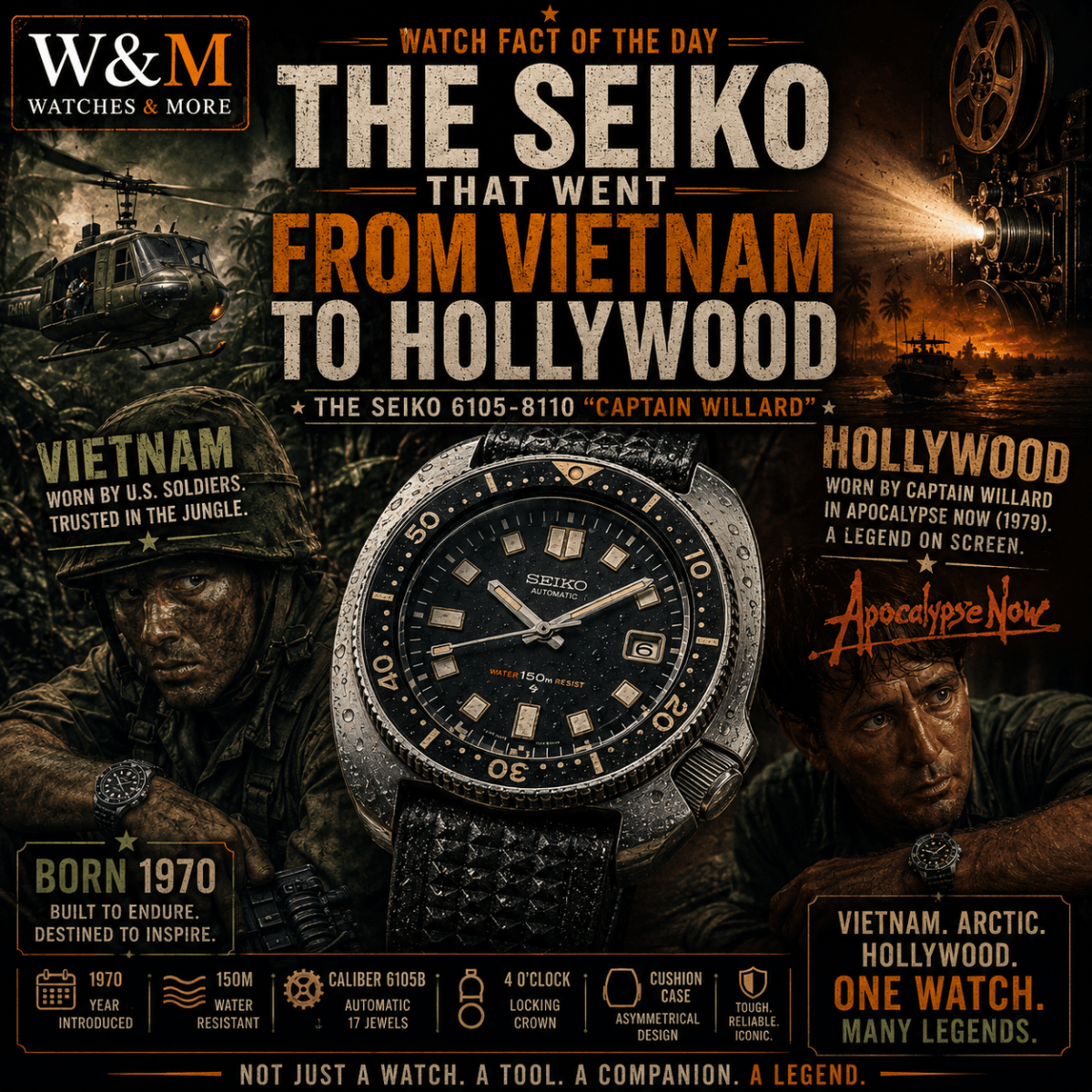
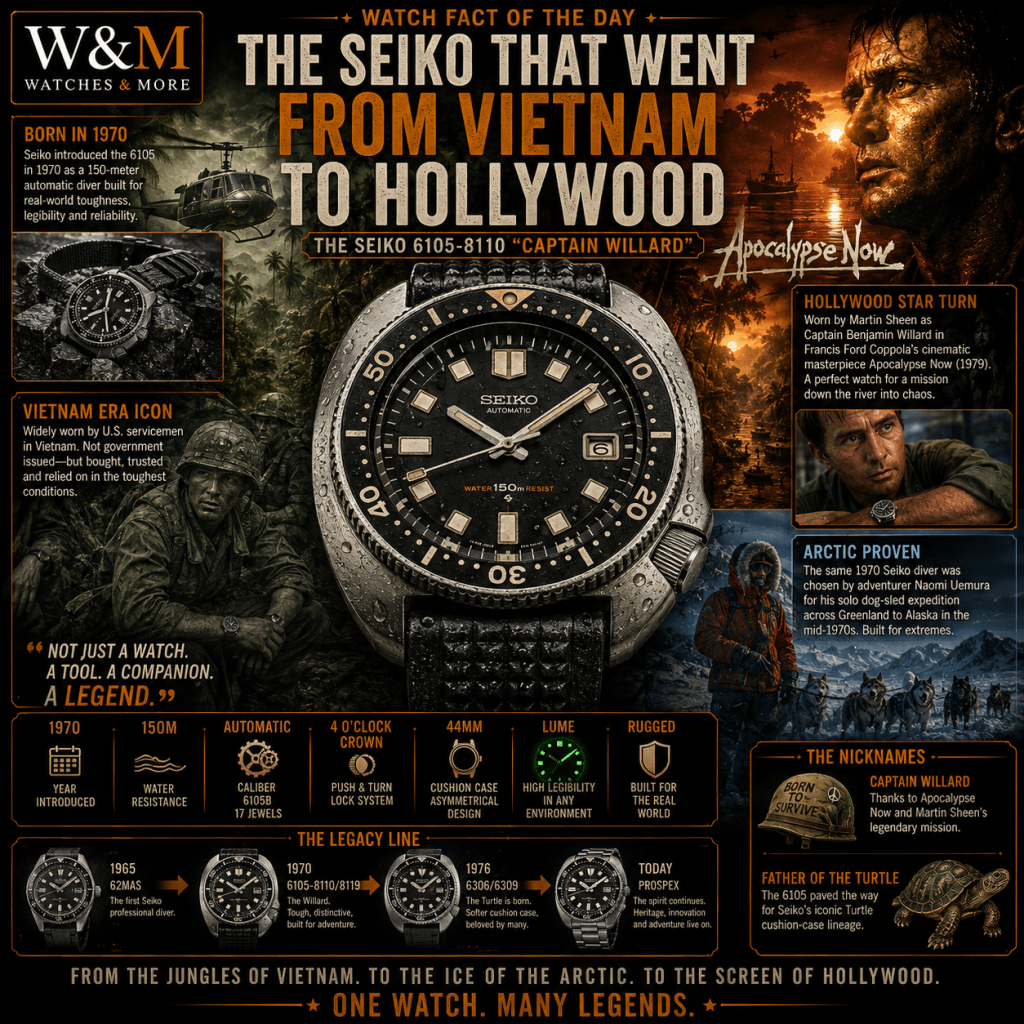
The watch associated with Apocalypse Now is the Seiko 6105-8110/8119, a 150-meter automatic diver introduced around 1970. It is often called the “Captain Willard” today because Martin Sheen wore one as Captain Benjamin Willard in Francis Ford Coppola’s Apocalypse Now. One important correction, though: the 6105 itself is not usually the watch collectors mean by “the Turtle.” That nickname belongs more directly to the later Seiko 6306/6309 cushion-case divers; Seiko itself has described the 6105 as the “father of the Turtle.”
The 6105’s reputation was already being forged long before Hollywood noticed it. Its large asymmetrical case extended protectively around the crown at 4 o’clock, creating one of the most distinctive silhouettes in Seiko’s dive-watch history. The watch offered 150 meters of water resistance, strong luminous markers, a highly legible black dial and a rugged automatic movement built for hard use. Seiko later highlighted the same 1970 diver design for its real-world toughness, noting that Japanese adventurer Naomi Uemura wore one during his extraordinary solo dog-sled journey from Greenland to Alaska in the mid-1970s.
At the same time, the 6105 became a familiar sight among U.S. servicemen during the Vietnam era. It was not a standard government-issued watch in the way some military watches were; rather, soldiers could buy Seiko divers privately because they were relatively affordable, robust and readily available in Asia. Veteran-owned examples with documented Vietnam histories still surface in collections today, and enthusiast research consistently places the 6105 among the watches commonly worn by American servicemen in the region. That distinction matters: the 6105’s military credibility came from actual field use, not from an official procurement contract.
Its case architecture was also technically interesting. Rather than a conventional screw-down crown, the 6105-8110/8119 used a distinctive push-and-turn locking system, with “LOCK” and an arrow marked on the crown. Inside was the 17-jewel automatic calibre 6105B, running at 21,600 vibrations per hour, with quick-set date and hacking seconds, but no conventional hand-winding. At roughly 44 mm, the watch was substantial for its day, yet the short lugs and flowing case made it surprisingly wearable. That asymmetrical crown-guard concept became enormously influential in later Seiko dive-watch design.
Then came Hollywood. During production of Apocalypse Now, a Seiko 6105 was placed on Martin Sheen’s wrist as Captain Willard, a detail watch enthusiasts later recognized as remarkably appropriate for the character. Hodinkee has noted that a U.S. Army officer operating in the film’s Vietnam setting plausibly could have worn a 6105, given how popular the watch was among American servicemen there. The movie’s 1979 release permanently linked the model with Willard, and the collector nickname “Captain Willard” eventually became nearly as recognizable as the reference number itself.
What makes that appearance so effective is that the watch doesn’t look like deliberate product placement. It looks used, practical and completely at home in the environment. That matches the 6105’s real personality: it was never conceived as a luxury statement. It was an accessible Japanese diver designed around durability, visibility and function. Hollywood simply amplified a reputation the watch had already earned in the real world.
The 6105 also sits at a fascinating point in Seiko’s diver evolution. Seiko’s first professional diver, the 62MAS, appeared in 1965, followed by increasingly capable models throughout the decade. The 6105 series replaced the earlier design and ultimately led toward the 6306/6309, whose softer cushion-shaped case became the classic “Turtle.” In other words, the Willard wasn’t merely a cult movie prop; it was an important evolutionary link between Seiko’s earliest dive watches and the design language that would define generations of Seiko tool watches.
Its legacy became so strong that Seiko returned to the design decades later. In 2019, the company released the SLA033, a high-end Prospex recreation of the 1970 diver, explicitly celebrating the historic model and its unique crown-protecting case. Seiko has continued using the basic architecture in later reinterpretations, proof that a shape created for practical protection in 1970 eventually became one of the brand’s most recognizable visual signatures.
💡 Did You Know?
The Seiko 6105’s Hollywood fame is only half the story. Naomi Uemura trusted the same basic 1970 diver design on a 12,000-plus-kilometre solo dog-sled journey across the Arctic, while American servicemen were buying and wearing the watch in Vietnam. Few watches can claim credible links to combat-zone field use, polar exploration and one of cinema’s greatest war films.
Category: Watches on Screen
Disclaimer: Every effort has been made to keep these watch facts accurate, but the world of horology is full of myths, disputed stories, and fascinating trivia. Consider these facts a starting point for discovery rather than the final word. If you have corrections or additional insights, let us know—we’re always happy to keep the record ticking in the right direction.
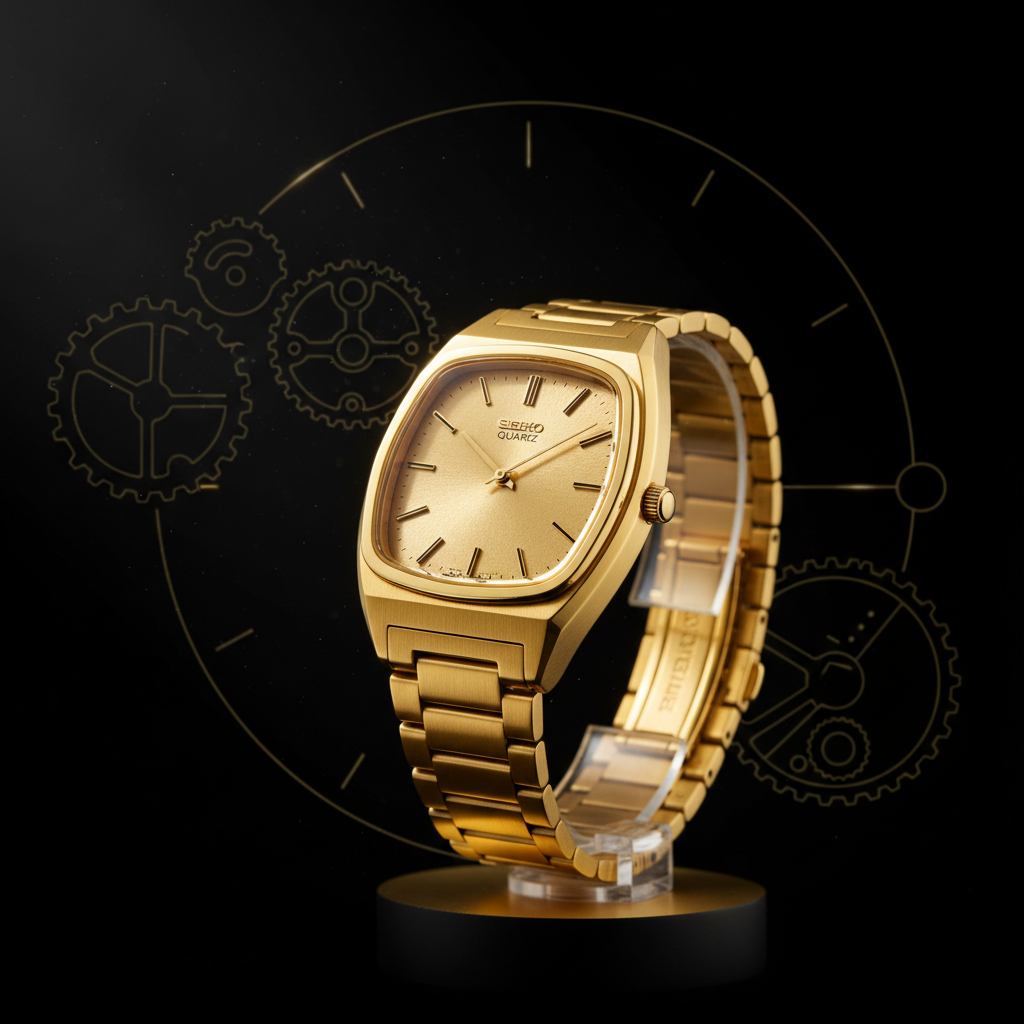
Back in the day, Seiko dropped the Quartz Astron on December 9, 1969, and it cost as much as a decent Toyota car. Crazy, right? But still, every one of the 100 limited edition gold pieces sold out instantly, kickstarting the quartz revolution in watches. This piece of horology history changed the game forever. Just a heads up though, while we aim to get our watch facts straight, there’s a lot of myths and stories out there in the watch world. So, consider this info a jumping-off point, and feel free to share any cool corrections you’ve got!
📅 Sunday, August 9, 2026
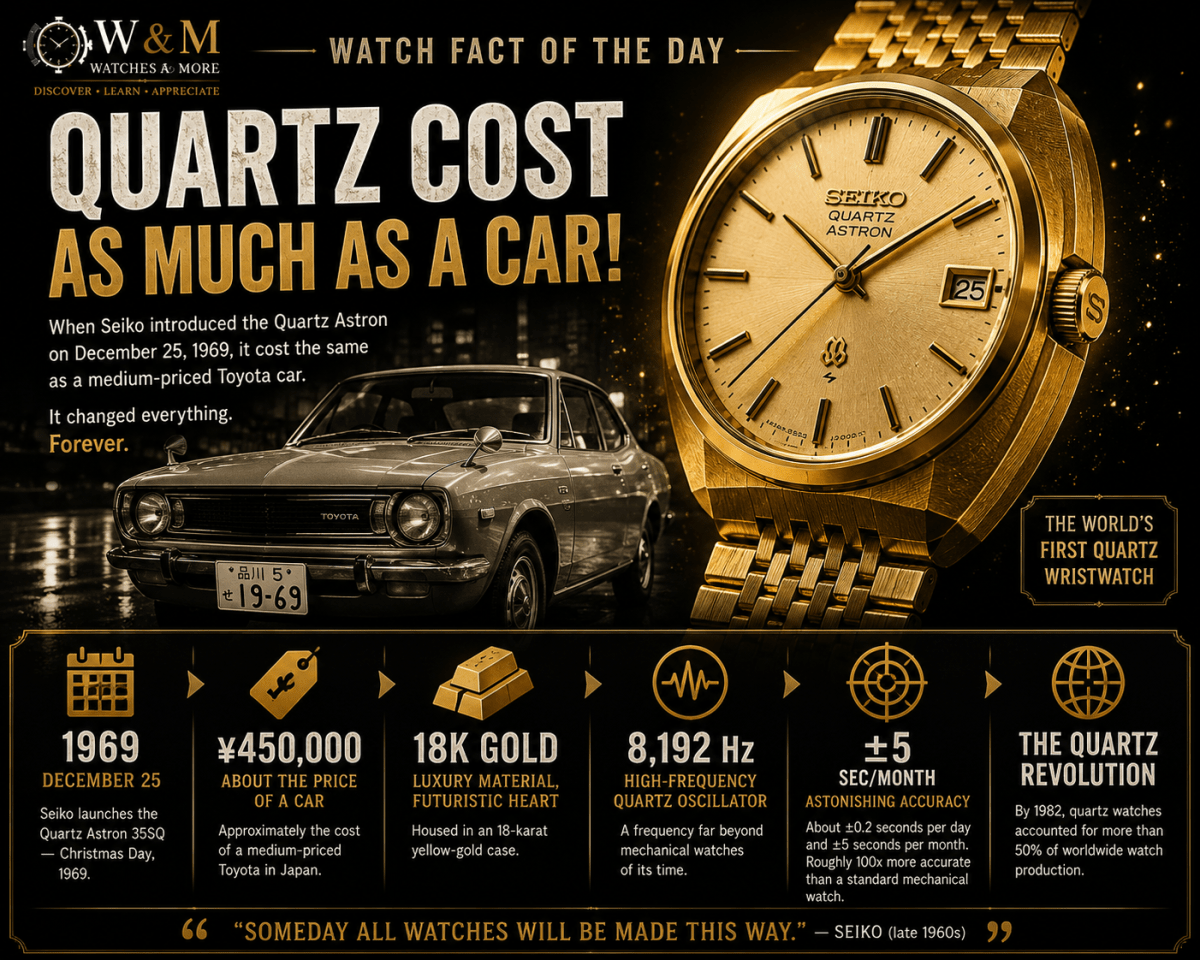
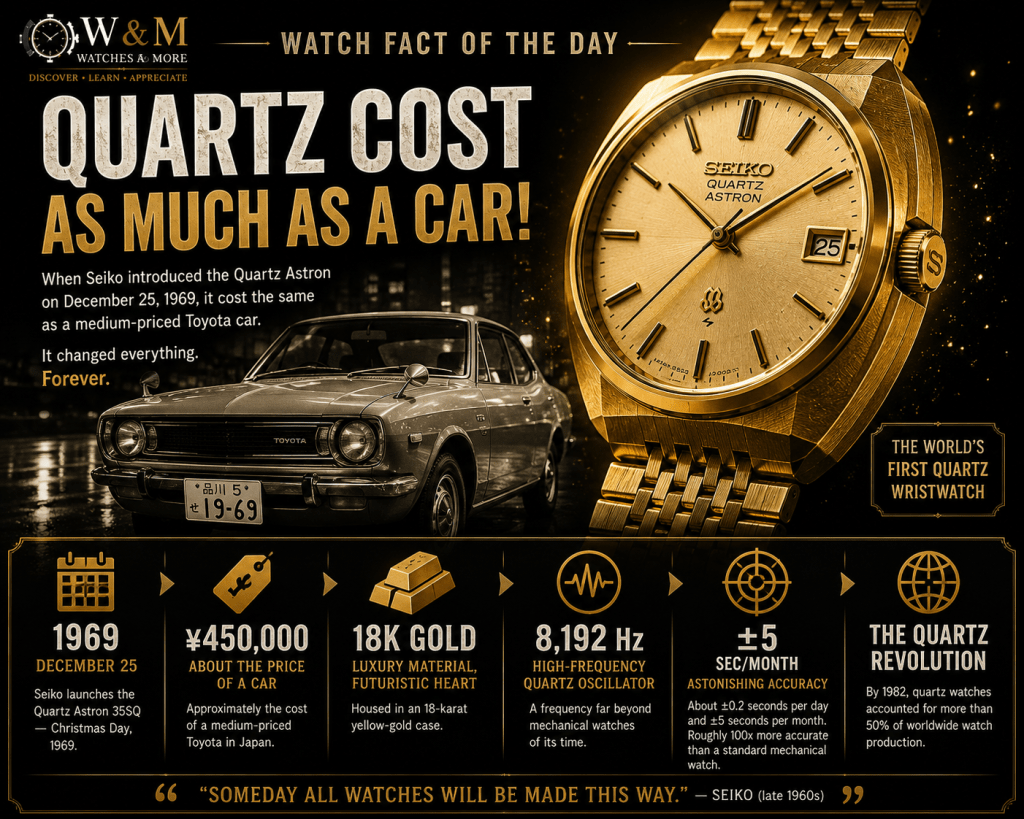
Today we often associate quartz watches with affordable, everyday timekeeping. But when Seiko unveiled the Quartz Astron 35SQ on December 25, 1969, quartz represented the absolute cutting edge of watchmaking technology. The world’s first commercially marketed quartz wristwatch arrived in an 18-karat yellow-gold case with an astonishing price of ¥450,000—approximately the cost of a popular Japanese automobile at the time.
And buyers weren’t simply paying for gold. Inside was technology that seemed almost futuristic in 1969. The Astron’s quartz oscillator vibrated at 8,192 Hz, while its innovative electronic system drove an open-type stepping motor. The result was accuracy of approximately ±0.2 seconds per day and ±5 seconds per month—a dramatic improvement over the mechanical wristwatches of its era. Seiko describes the Astron as offering roughly 100 times the accuracy of a standard mechanical watch.
What began as extremely expensive technology rapidly transformed during the 1970s. Seiko moved toward mass production, quartz technology spread throughout the industry, and increasingly affordable electronic watches began challenging the dominance of traditional mechanical watchmaking. By 1982, quartz watches represented more than half of worldwide watch production.
That makes the original Astron wonderfully ironic from today’s perspective. Quartz didn’t begin as the cheap alternative to mechanical watches—it began as technological luxury. The Astron was a gold-cased demonstration of what the future of timekeeping could achieve, and that future eventually became inexpensive enough to put astonishing accuracy on almost anyone’s wrist.
💡 Did You Know?
Seiko later opened key quartz patents, helping its approach become an industry standard. The company even advertised its confidence in the technology with a remarkably prophetic idea: “Someday all watches will be made this way.”
Category: Brand Spotlight
Disclaimer: Every effort has been made to keep these watch facts accurate, but the world of horology is full of myths, disputed stories, and fascinating trivia. Consider these facts a starting point for discovery rather than the final word. If you have corrections or additional insights, let us know—we’re always happy to keep the record ticking in the right direction.
Are you a watch enthusiast, a collector, or just looking for the perfect timepiece that balances exceptional value and timeless style?
At WatchesAndMore Design Studio, we know the world of watches can be overwhelming. That’s why we’re thrilled to announce the launch of our brand-new section: Watch of the Week!
What is “Watch of the Week”?
Every week, our team of horology experts hand-selects one timepiece that stands out for its quality, heritage, and, most importantly, its value proposition. This isn’t just a random pick; it’s a deep dive into a watch that deserves a spot on your wrist or in your collection.
We cut through the noise to bring you a single, compelling recommendation, complete with a detailed breakdown of why we love it, its key features, and where you can find the best deal.
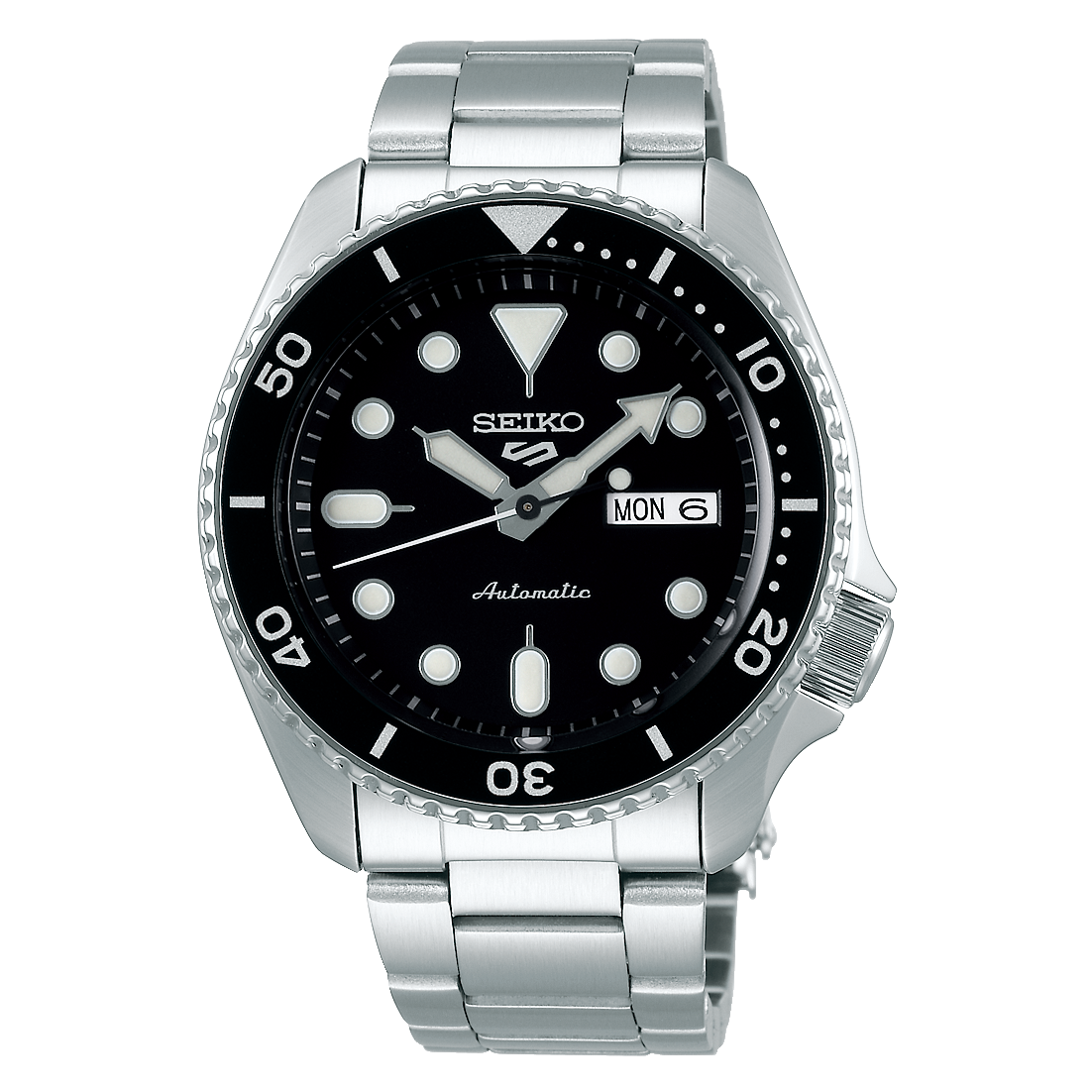
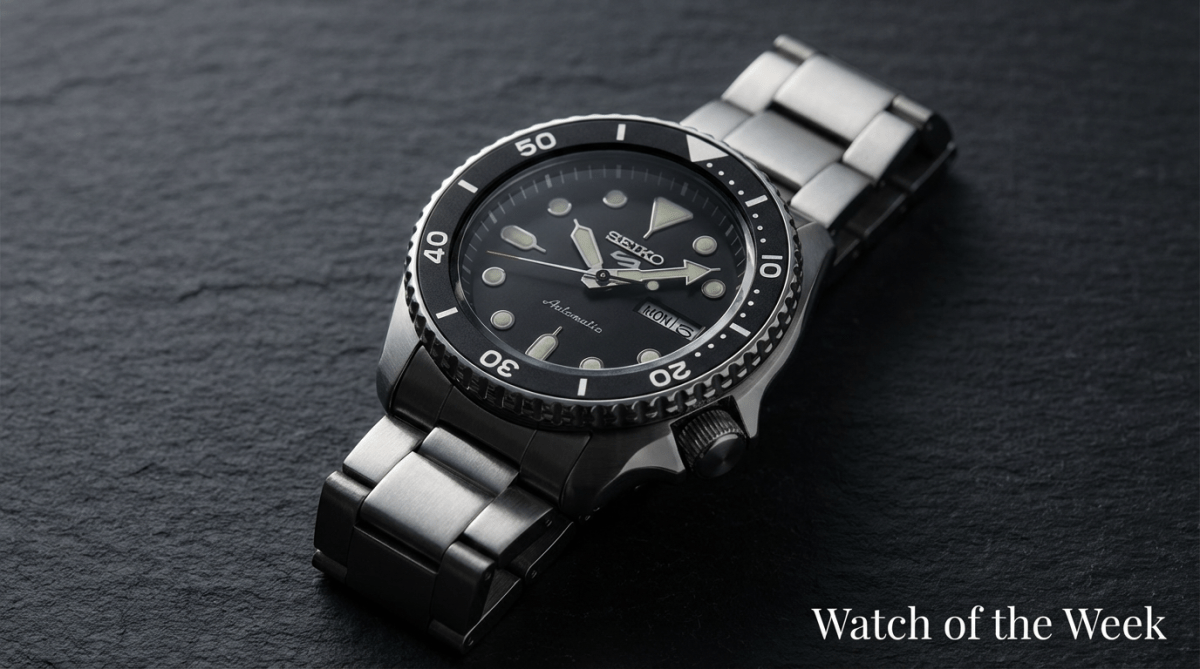
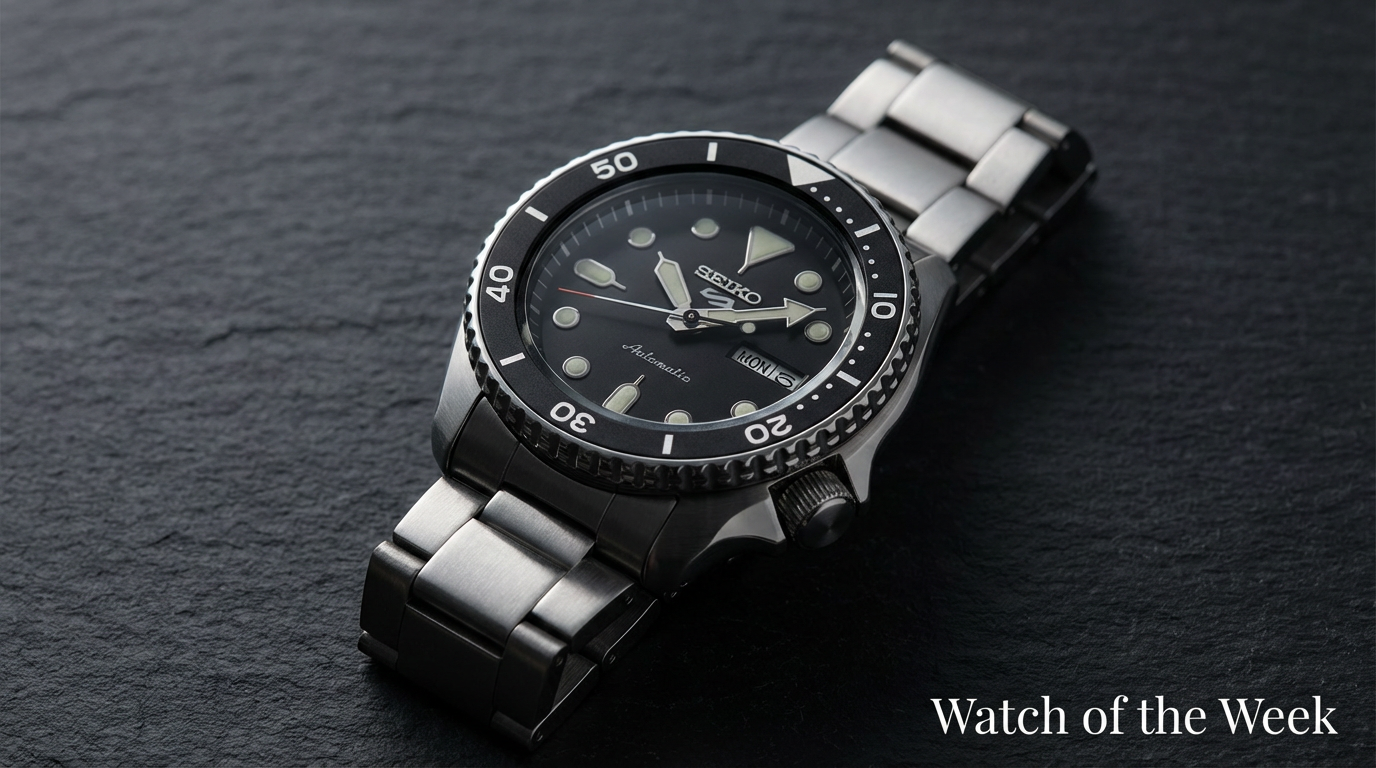
This Week’s Spotlight: The Seiko 5 Sports SRPD55
To kick things off, we’re featuring a modern legend: the Seiko 5 Sports SRPD55.
•The Heritage: It’s the worthy successor to the iconic SKX007, one of the most beloved dive watches ever made.
•The Upgrade: It features Seiko’s upgraded 4R36 automatic movement, which includes manual winding and hacking seconds—a significant step up from its predecessor.
•The Value: Currently available for 21% OFF at just $275, it represents arguably the best value in automatic dive watches on the market today.
We love the SRPD55 because it perfectly blends the legendary dive watch DNA with modern finishing and an improved movement, all while maintaining that classic tool-watch aesthetic. It’s the perfect first automatic watch and a true heir to an icon.
Why You Should Follow Along
The watch industry is vast, but your time is limited. Let us do the work for you.
•Save Time: Get a single, expertly vetted recommendation each week.
•Save Money: We highlight watches with exceptional value, often featuring current deals.
•Expand Your Knowledge: Learn the history and technical details that make each watch special.
Whether you’re looking for a rugged diver, a sophisticated dress watch, or a piece of retro tech, our Watch of the Week will guide you.