📅 Monday, September 28, 2026
Watch Fact of the Day: The Stopwatch That Timed the First Flight at Kitty Hawk
On the morning of December 17, 1903, Wilbur and Orville Wright stood on the windswept dunes near Kitty Hawk, North Carolina, ready to attempt something no one had yet achieved in a controlled, powered aircraft.
At 10:35 a.m., Orville climbed aboard the Wright Flyer.
Wilbur ran alongside.
The aircraft lifted from the rail.
And for exactly:
12 SECONDS
the world changed.
The Flyer traveled 120 feet before touching down. Later that same day, the brothers made three more flights, with the final attempt covering 852 feet in 59 seconds. Air and Space Museum
But how did they know those exact times?
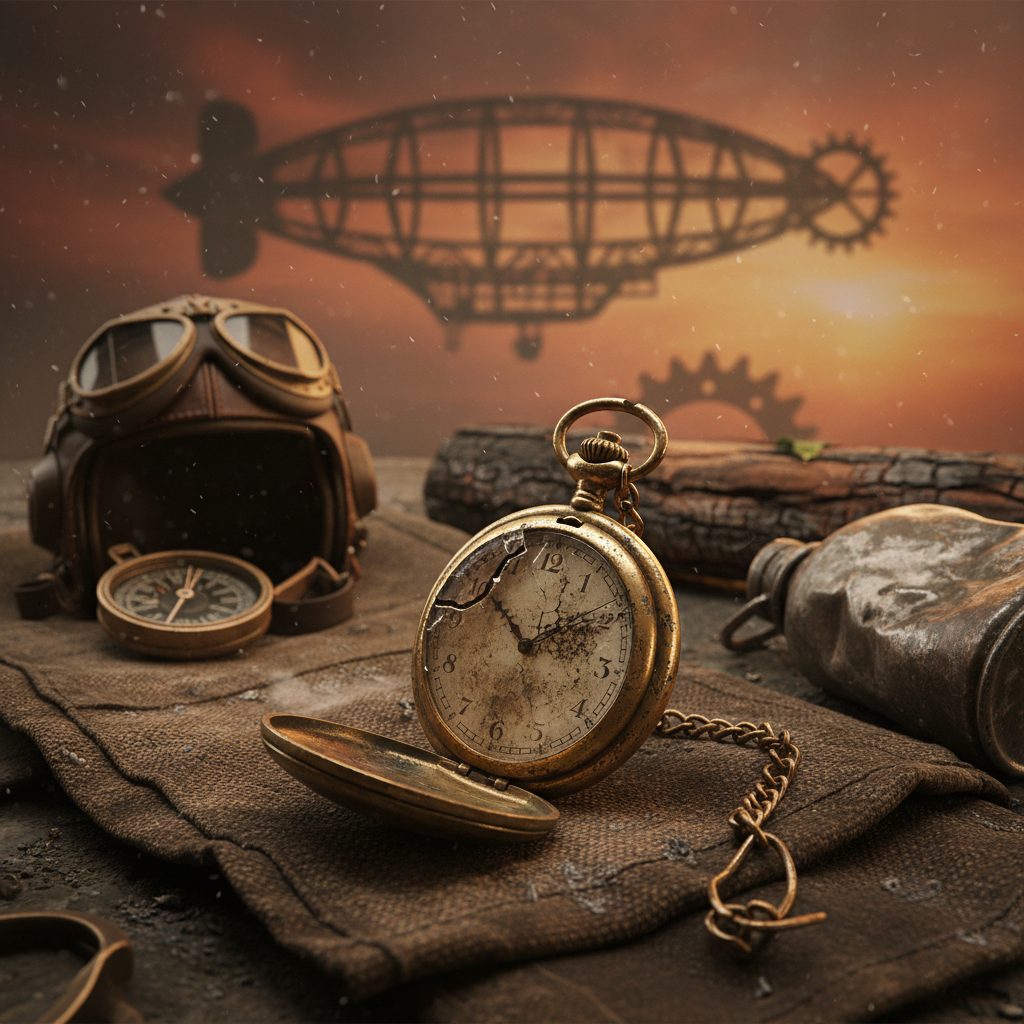
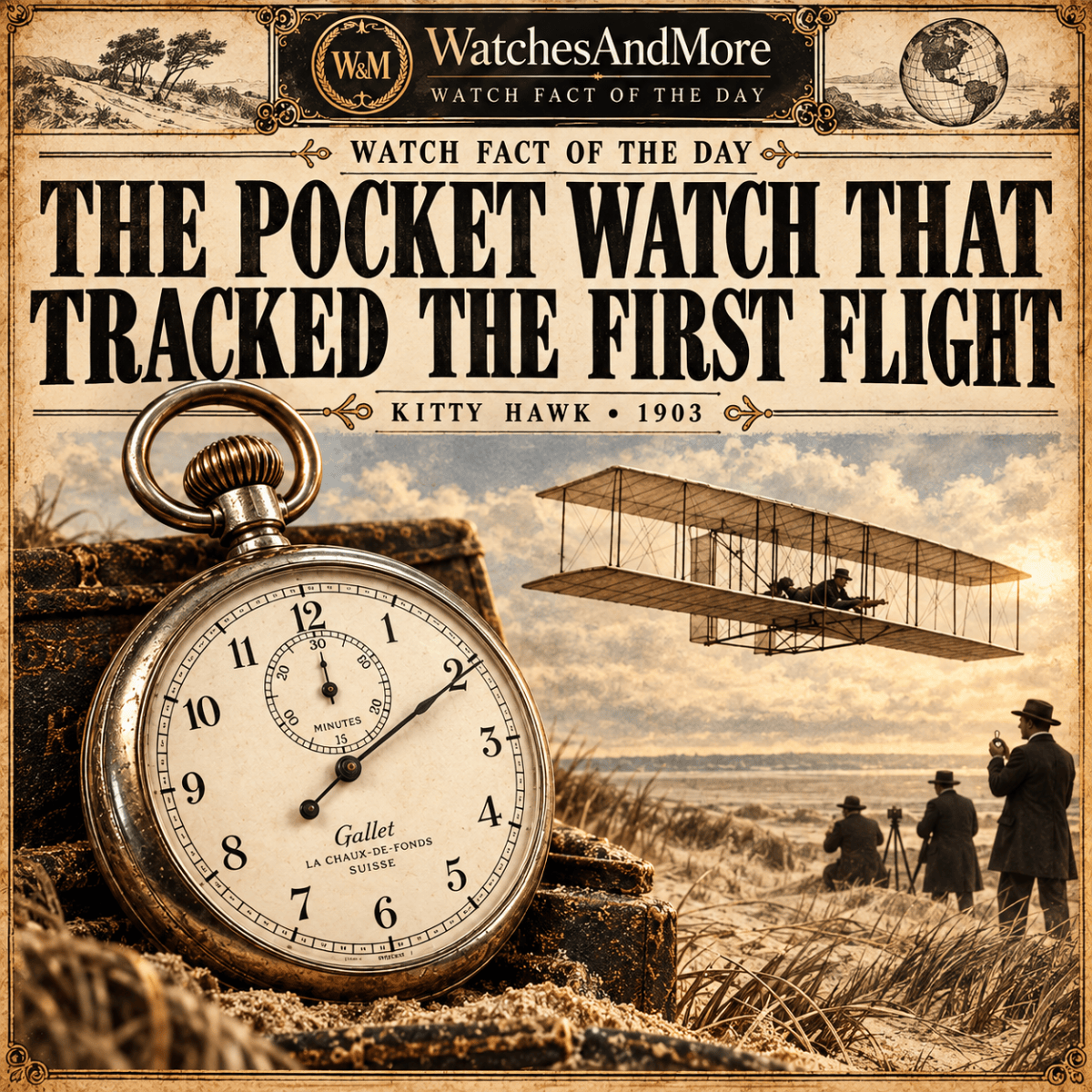
They used a small hand-held stopwatch.
The National Air and Space Museum preserves that stopwatch today and identifies it as the instrument Wilbur and Orville used to time the historic flights at Kitty Hawk. Air and Space Museum
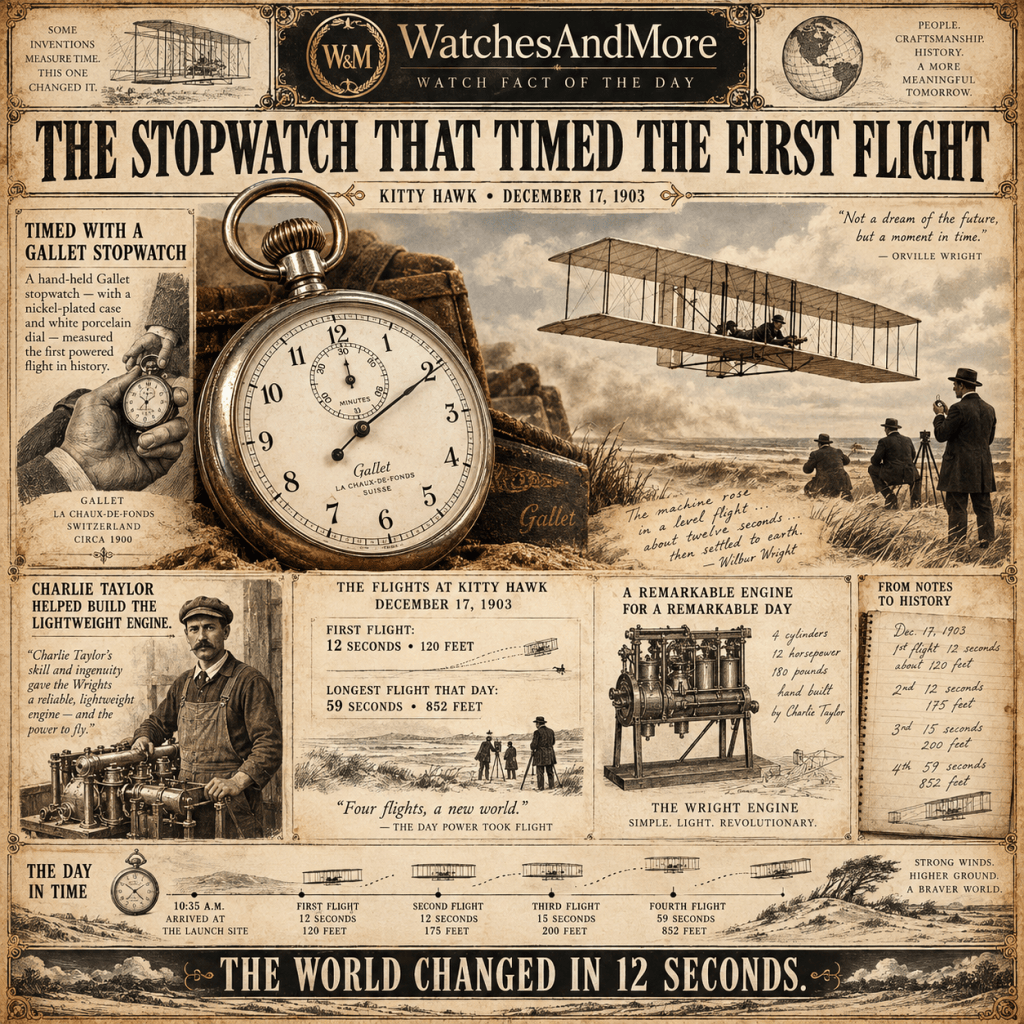
A Tiny Instrument at a Giant Moment
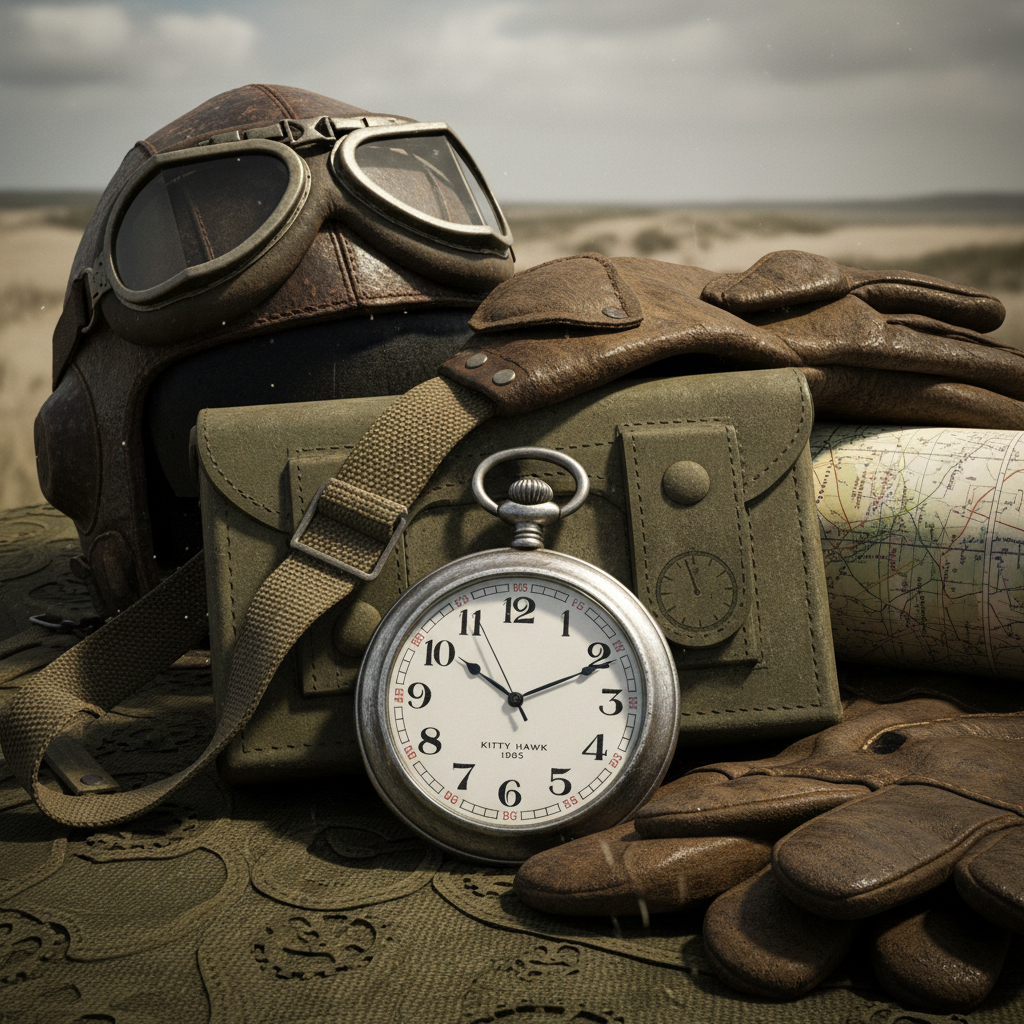
The stopwatch itself is remarkably ordinary-looking.
It has a nickel-plated case, a white porcelain dial with black Arabic numerals, and a smaller inset register for minutes.
No precious metal.
No complicated movement.
No dramatic decoration.
Just a practical timing instrument made by Gallet.
Yet on that cold December morning, it became one of the quiet witnesses to the birth of powered aviation. Smithsonian Institution
Why Timing Mattered
The Wright brothers were not simply trying to make an aircraft leave the ground.
They were conducting experiments.
Every flight produced data:
distance
duration
wind
control
engine performance
The stopwatch turned those fleeting seconds into measurable evidence.
The first flight:
12 SECONDS
120 FEET
The fourth:
59 SECONDS
852 FEET The Library of Congress
Those numbers became part of aviation history because someone measured them.
💡 Did You Know?
The Wright Flyer was powered by a lightweight engine built with the help of their mechanic Charlie Taylor.
Taylor helped design the engine and did virtually all of the machine work needed to produce it. The crankcase was made from aluminum—an important weight-saving choice for the Flyer. Air and Space Museum
So while the stopwatch did not make the airplane fly, it was there to record exactly how long humanity stayed airborne.
That makes it a beautiful reminder that big breakthroughs often depend on very small instruments.
⭐ Why It Matters
The Wright brothers’ stopwatch is not famous because it was luxurious.
It matters because it measured a moment no one had ever measured before.
12 SECONDS
That was enough.
Enough to prove controlled powered flight was possible.
Enough to open the door to aviation.
Enough to change transportation, warfare, exploration, commerce, and eventually spaceflight.
THE AIRPLANE MADE HISTORY.
THE STOPWATCH COUNTED THE SECONDS.
Category: Military Watches
Disclaimer: Every effort has been made to keep these watch facts accurate, but the world of horology is full of myths, disputed stories, and fascinating trivia. Consider these facts a starting point for discovery rather than the final word. If you have corrections or additional insights, let us know—we’re always happy to keep the record ticking in the right direction.
🕐 Discover more watch facts, reviews, and buying guides at WatchesAndMore
🛍️ You Might Also Like
As an Amazon Associate and affiliate partner, WatchesAndMore earns from qualifying purchases.