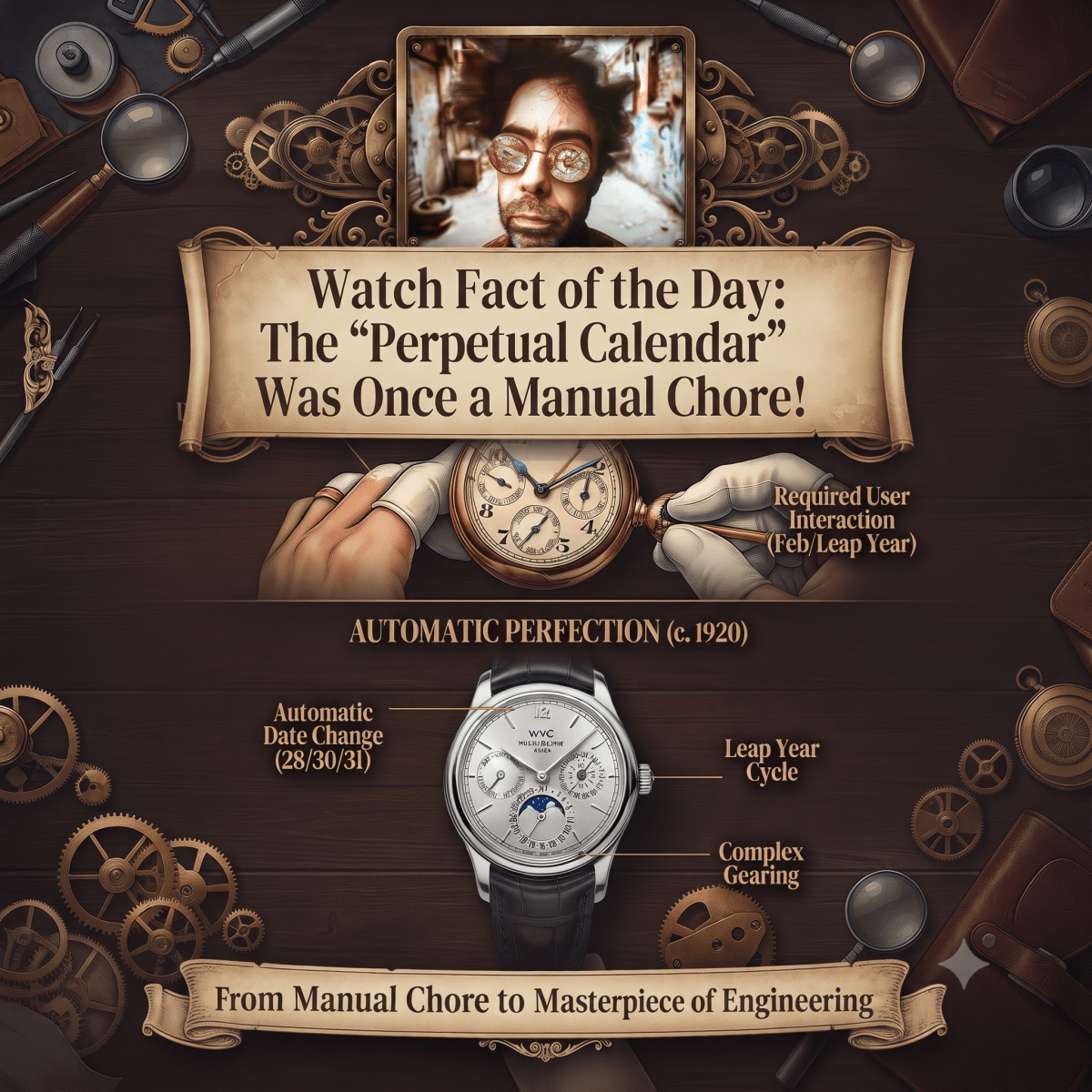
Before perpetual calendars made wristwatches behave like timekeeping wizards, owners had to embark on a monthly ritual of adjusting their watches, playing an endless game of “is it February again?” Fast forward to the late 19th century, when watchmakers conjured up a mechanical marvel that understands leap years, February 29s, and can keep track of time until 2100 (with just one manual nudge). These tiny ticking masterpieces contain a labyrinth of gears, turning them into the wrist’s very own computer. So if you ever wanted to wear a mini engineering triumph and impress your wristwatch friends, now’s your time!
📅 Friday, July 24, 2026
Before the advent of truly perpetual calendar mechanisms in wristwatches, owners had to manually adjust the date, day, month, and even the leap year cycle. Early ‘perpetual’ calendars only accounted for months with 30 or 31 days, requiring manual correction for February and leap years. It wasn’t until the late 19th and early 20th centuries that watchmakers perfected the complex gearing to automatically handle these variations, making it a truly ‘perpetual’ complication.
Watch fact: the perpetual calendar evolution
A true perpetual calendar is one of the greatest achievements in mechanical watchmaking. Using an intricate network of levers, cams, gears, and springs, the movement “knows” the length of each month and automatically advances the calendar accordingly. It even recognizes leap years, correctly displaying February 29 every four years without requiring intervention. Once properly set, a perpetual calendar can continue displaying the correct date until the year 2100, when the Gregorian calendar skips a leap year because century years must be divisible by 400 to qualify. At that point, even these remarkable watches will require a single manual adjustment.
The level of engineering involved is astonishing. Many perpetual calendar movements contain hundreds of additional components dedicated solely to the calendar mechanism. Watchmakers must carefully synchronize every indication—date, day, month, leap year, and often the moon phase—so they all change in perfect harmony, usually around midnight. A tiny mistake during assembly can throw the entire system out of sequence, making these among the most demanding complications to manufacture and service.
Today, perpetual calendars remain one of the “Holy Trinity” of traditional grand complications, alongside the tourbillon and the minute repeater. Prestigious manufacturers such as Patek Philippe, Audemars Piguet, Vacheron Constantin, and IWC continue to produce extraordinary perpetual calendar watches that blend centuries-old mechanical ingenuity with modern precision. For collectors, owning one is like wearing a miniature mechanical computer on the wrist—one that can keep track of the calendar for generations.
Watch fact: the perpetual calendar evolution
💡 Did You Know?
Some modern perpetual calendars are so advanced that they combine a perpetual calendar, chronograph, moon phase, and minute repeater in a single movement. These “grand complications” can contain well over 1,000 individual components, making them some of the most complex mechanical devices ever worn on the wrist.
Disclaimer: Every effort has been made to keep these watch facts accurate, but the world of horology is full of myths, disputed stories, and fascinating trivia. Consider these facts a starting point for discovery rather than the final word. If you have corrections or additional insights, let us know—we’re always happy to keep the record ticking in the right direction.
So, mystery clocks are these super cool timepieces that create the illusion of hands floating on a crystal dial, thanks to genius engineering by Jean-Eugène Robert-Houdin and later Cartier. Instead of traditional setups, their hands are on almost invisible discs moved by hidden gears. This mix of clockmaking and magic has made them an art form, highly sought after by collectors and royalty alike. Today, original models fetch crazy prices at auctions, proving they still wow people even in our digital age. Fun fact: Harry Houdini’s name pays homage to Robert-Houdin, showcasing the magic blend of these iconic clocks!
📅 Thursday, July 23, 2026
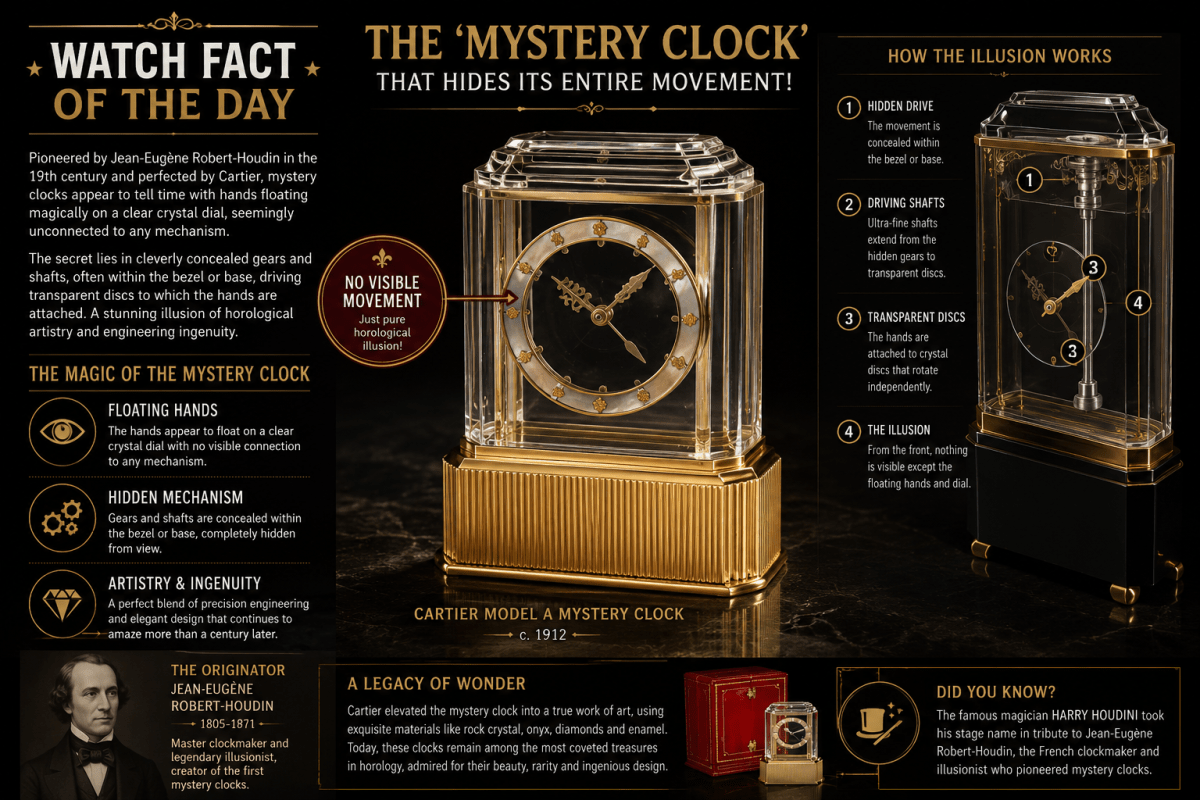
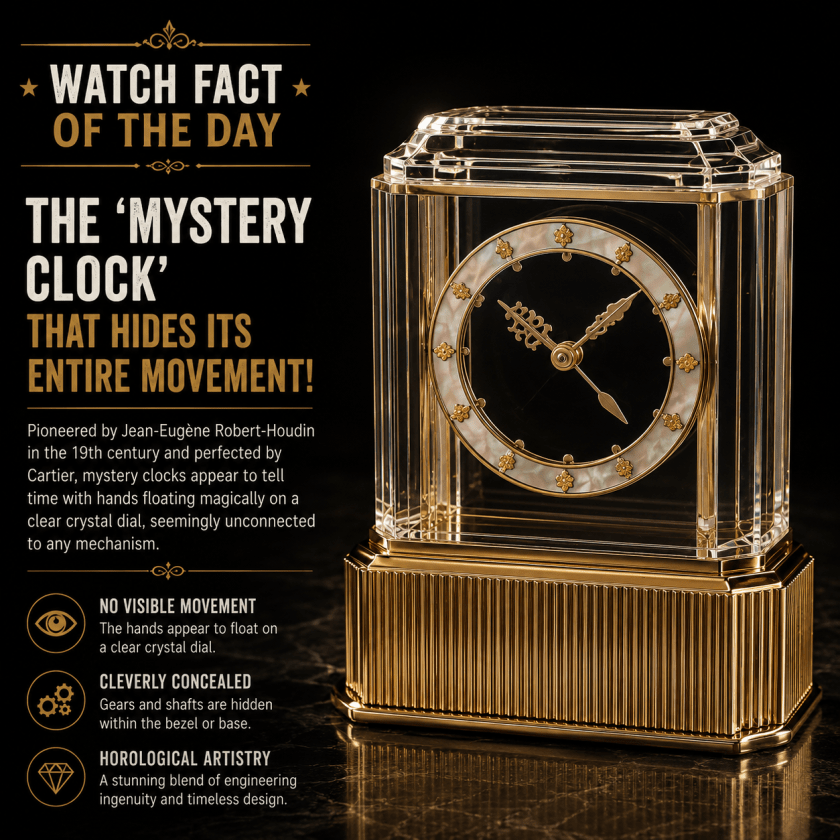
Mystery clocks, pioneered by Jean-Eugène Robert-Houdin in the 19th century and perfected by Cartier, appear to tell time with hands floating magically on a clear crystal dial, seemingly unconnected to any mechanism. The secret lies in cleverly concealed gears and shafts, often within the bezel or base, driving transparent discs to which the hands are attached. This illusion creates a captivating display of horological artistry and engineering ingenuity.
Mystery Clock
The illusion is so convincing that even experienced collectors often find themselves searching for the hidden movement. Rather than being attached to a central pinion like a traditional clock, the hands are mounted to nearly invisible crystal discs that rotate independently. These discs are driven by finely machined gears concealed within the clock’s frame, allowing the hands to appear as though they are suspended in mid-air. The effect is equal parts engineering and stage magic—a fitting legacy for Robert-Houdin, who was not only a master clockmaker but also one of history’s greatest illusionists.
In the early 20th century, Cartier elevated the mystery clock into a true work of decorative art. Combining exquisite craftsmanship with luxurious materials such as rock crystal, jade, onyx, enamel, diamonds, and precious metals, Cartier’s mystery clocks became prized possessions of royalty, industrialists, and collectors around the world. Each piece required extraordinary precision to ensure the hidden mechanism remained completely concealed while maintaining flawless timekeeping, making them some of the most technically demanding clocks ever produced.
Today, original mystery clocks rank among the most desirable and valuable creations in horology, often commanding extraordinary prices at auction. More than a century after they first amazed audiences, they continue to blur the line between science, engineering, and illusion. Even in an age of digital technology, few mechanical creations inspire the same sense of wonder as watching a pair of hands glide effortlessly across a crystal dial with no visible connection to the movement that drives them.
💡 Did You Know?
The famous magician Harry Houdini took his stage name in tribute to Jean-Eugène Robert-Houdin, the French clockmaker and illusionist who pioneered mystery clocks. Although Houdini later criticized Robert-Houdin’s work, his legendary stage name remains a lasting tribute to the man whose ingenious mechanical illusions captivated audiences decades earlier.
Category: Fun Quirk
Disclaimer: Every effort has been made to keep these watch facts accurate, but the world of horology is full of myths, disputed stories, and fascinating trivia. Consider these facts a starting point for discovery rather than the final word. If you have corrections or additional insights, let us know—we’re always happy to keep the record ticking in the right direction.
Back in the day, doctors used specialized watches with pulsometer scales to measure patients’ heart rates. They’d start the stopwatch, count heartbeats for 15 or 30 seconds, then instantly get the beats per minute from the scale—no math required. These watches were key tools for medical pros, especially Swiss brands like Longines and Omega. Even though electronic devices took over, collectors still love these timepieces for their craftsmanship and history. Think of it as a time when watches had a real purpose beyond just telling time, serving as vital instruments alongside stethoscopes in the medical field.
📅 Wednesday, July 22, 2026
Before digital devices, doctors relied on specialized watches to quickly measure a patient’s pulse. These ‘doctor’s watches’ featured a pulsometer scale on the dial or bezel, allowing a physician to start the chronograph, count a specific number of heartbeats (e.g., 15 or 30), and then read the beats per minute directly from the scale. This ingenious complication was a vital diagnostic tool in medical practice for decades.
The pulsometer was one of several purpose-built scales developed for chronographs during the late 19th and early 20th centuries. Unlike a standard tachymeter, which measures speed over a known distance, a pulsometer was calibrated specifically for heart rate. After counting a predetermined number of heartbeats—commonly 15 or 30—the physician could stop the chronograph and read the patient’s pulse directly in beats per minute, eliminating the need for mental calculations during a medical examination.
Many renowned Swiss manufacturers, including Longines, Omega, Universal Genève, and later Patek Philippe, produced elegant chronographs featuring pulsometer scales. These watches became trusted companions for physicians making hospital rounds, house calls, and even battlefield examinations, where speed and accuracy could make a critical difference. The distinctive scales, often printed in red or blue around the edge of the dial, remain some of the most visually striking complications ever created.
Although electronic monitors have long replaced the pulsometer in everyday medical practice, these watches remain highly sought after by collectors. They represent a fascinating period when mechanical watchmaking wasn’t just about telling time—it provided practical tools for professionals. Today, a well-preserved doctor’s chronograph is admired not only for its craftsmanship but also as a reminder of an era when a skilled physician’s most important diagnostic instruments were a stethoscope, a trained eye, and a watch.
💡 Did You Know?
Doctor’s watches weren’t the only profession-specific timepieces. Watchmakers also created telemeter chronographs for measuring the distance of visible events like lightning, tachymeter chronographs for calculating speed, and asthmometer watches designed to help physicians measure a patient’s breathing rate—showcasing just how versatile mechanical chronographs became before the digital age.
Category: Watch History
Disclaimer: Every effort has been made to keep these watch facts accurate, but the world of horology is full of myths, disputed stories, and fascinating trivia. Consider these facts a starting point for discovery rather than the final word. If you have corrections or additional insights, let us know—we’re always happy to keep the record ticking in the right direction.
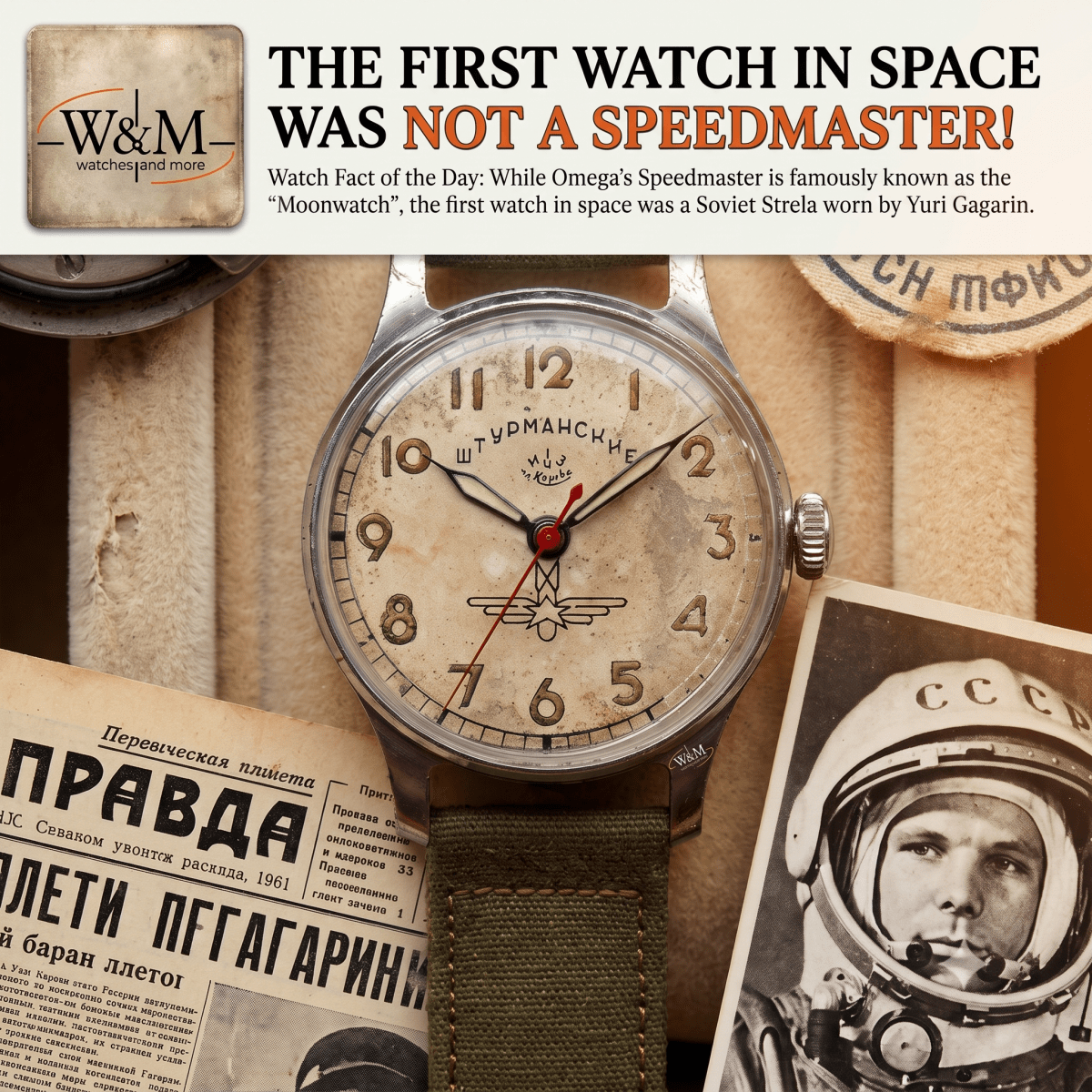
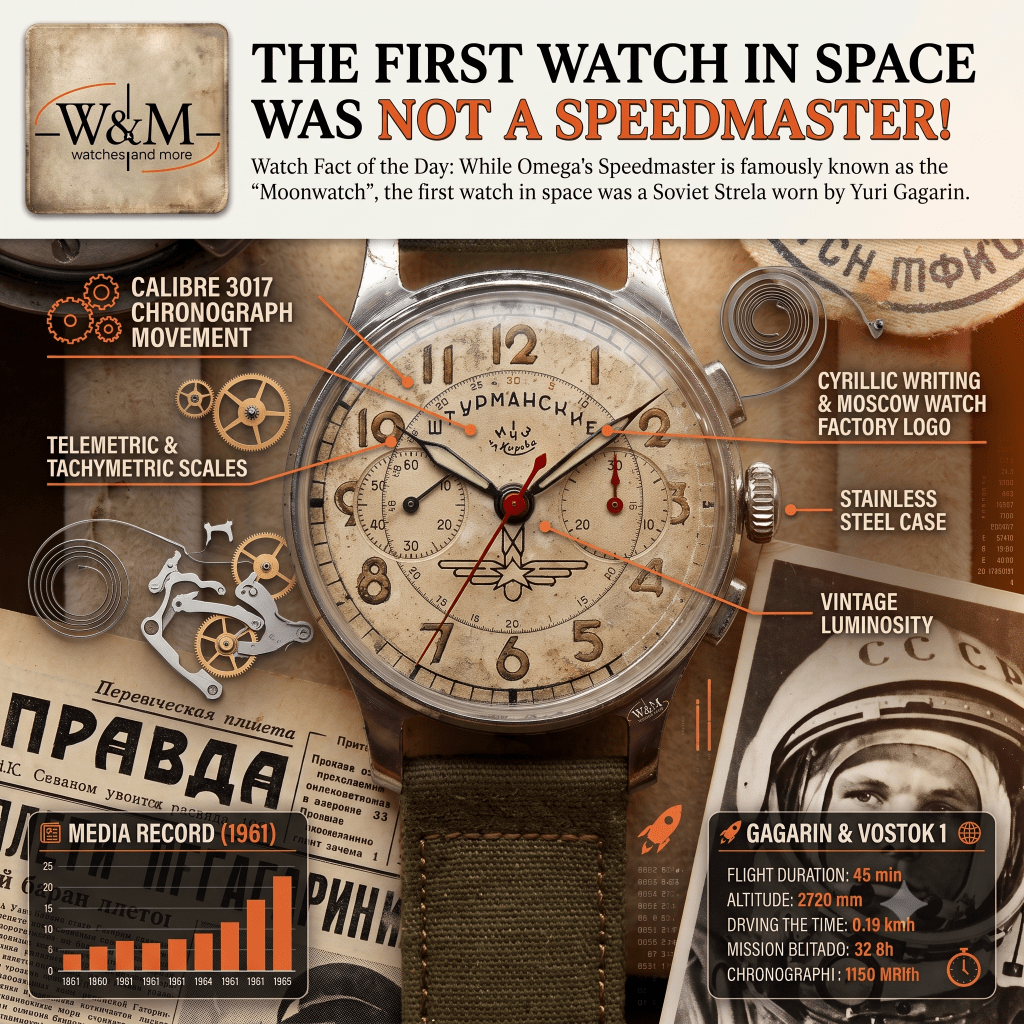
So, here’s the scoop: while the Omega Speedmaster is strutting around as the famous ‘Moonwatch’, it’s actually the Russian Strela that rocked the first space mission, making its debut on Yuri Gagarin’s wrist in 1961. Yep, the Soviets were first! Gagarin’s Vostok 1 mission lasted just 108 minutes, but it was a 108-minute thrill ride that sent humanity into orbit, with the sturdy Strela keeping time like a pro. The Speedmaster didn’t join the space party until 1965, earning its Moonwatch title in 1969. So, while the Speedmaster gets the lunar glory, don’t forget the understated Strela, the original space watch trendsetter!
📅 Tuesday, July 21, 2026
While Omega’s Speedmaster is famously known as the ‘Moonwatch’ and the first watch worn on the Moon, the very first wristwatch to journey into space was actually a Russian Strela, worn by Yuri Gagarin in 1961 during his Vostok 1 mission. This often-overlooked detail highlights the pioneering efforts of Soviet cosmonauts in the early space race. The Strela, a chronograph, predates the Speedmaster’s official qualification for space by several years.
Gagarin’s historic Vostok 1 mission on April 12, 1961, lasted just 108 minutes, but it forever changed human history. As the first person to orbit the Earth, every piece of equipment he carried became part of spaceflight legend—including the watch on his wrist. The Soviet-made Strela chronograph was valued for its robust mechanical construction and precise timekeeping, qualities that made it a dependable companion during one of humanity’s greatest achievements.
The Omega Speedmaster wouldn’t enter the history books until several years later. After rigorous testing by NASA in 1965, the Speedmaster became officially certified for all manned space missions and went on to accompany astronauts throughout the Gemini and Apollo programs. Its defining moment came in 1969 when Buzz Aldrin wore his Speedmaster onto the lunar surface, earning the model its enduring “Moonwatch” nickname. While the Speedmaster became synonymous with lunar exploration, the Strela will always hold the distinction of being among the earliest watches worn during mankind’s first ventures into space.
Today, both watches occupy legendary status in horology, each representing a different chapter of the Space Race. The Strela symbolizes the Soviet Union’s groundbreaking achievement of sending the first human into orbit, while the Speedmaster embodies NASA’s remarkable journey to the Moon. Together, they remind us that some of history’s greatest watches earned their reputations not in display cases or advertisements, but by accompanying explorers into the most unforgiving frontier ever encountered.
🚀 Why It Matters
The story of the first watch in space is a reminder that horological history is often more nuanced than popular legend suggests. While the Speedmaster rightly deserves its place as the Moonwatch, the Strela deserves recognition for accompanying humanity’s very first journey beyond our planet—a milestone that forever changed both space exploration and watchmaking history.
Category: Watch History
Disclaimer: Every effort has been made to keep these watch facts accurate, but the world of horology is full of myths, disputed stories, and fascinating trivia. Consider these facts a starting point for discovery rather than the final word. If you have corrections or additional insights, let us know—we’re always happy to keep the record ticking in the right direction.
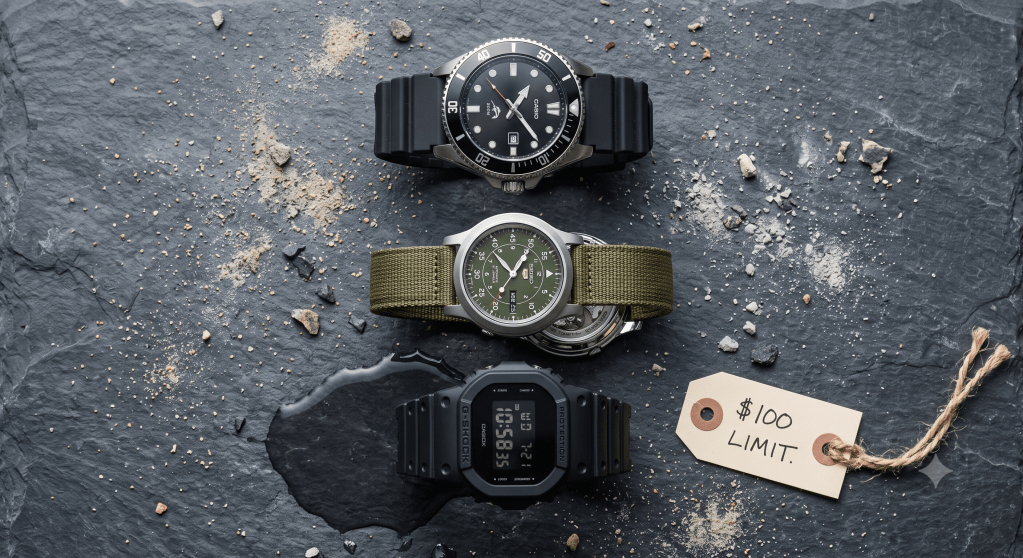
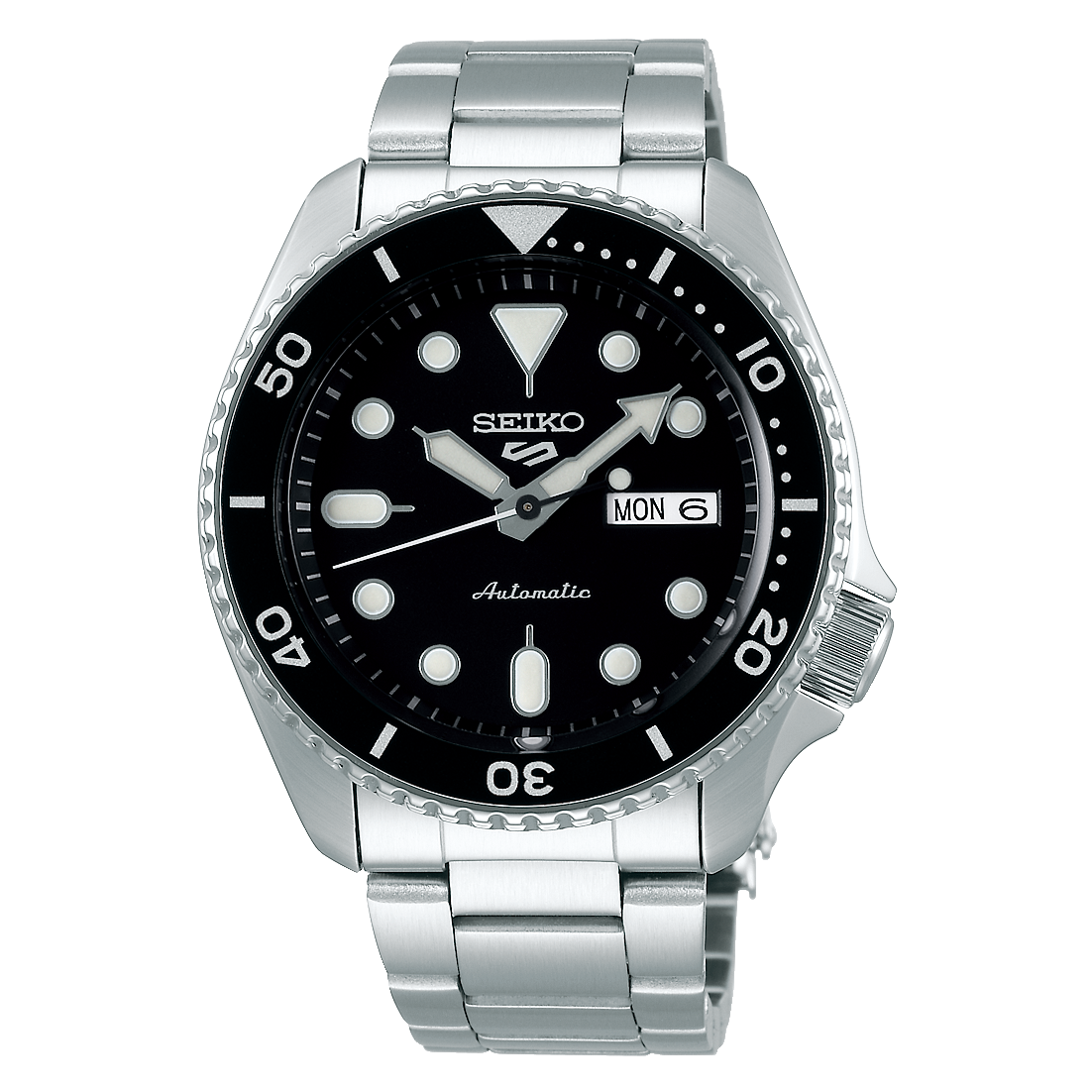
In 2026, the under-$100 watch scene is a treasure trove of style without the wallet ache! Who needs a luxury watch when a $59 Casio Duro meets dive standards rivaling sportier Rolexes? Or the Seiko 5 at $89, perfect for showing off your automatic creds without the snooty price tag. Feeling tactical? The G-Shock will withstand army drills and rogue ocean waves for just $99. And the legendary Casio F-91W at $15? It’s not just a watch; it’s an icon worn by everyone from leaders to, well, you! These watches offer serious bang for your buck—who said bling had to come with a big price?
The $100 price ceiling used to mean compromise. Not anymore. In 2026, a $59 Casio Duro meets the same ISO 6425 dive watch standard as watches costing ten times more. An $89 Seiko 5 gives you a genuine mechanical automatic movement. A $99 G-Shock DW5600BB-1 has survived military deployments, deep-sea dives, and decades of daily wear. The watches on this list are not budget substitutes — they are legitimate tool watches and style icons that happen to cost under $100. Here are the seven best.
#1: Casio MDV106-1A Duro — Best Dive Watch Under $100
The Casio MDV106-1A Duro is the most remarkable value proposition in watchmaking. For $59, you get a watch that meets the same ISO 6425 dive watch certification standard as Rolex Submariners and Omega Seamasters. The screw-down crown, unidirectional rotating bezel, and 200M water resistance are not approximations of dive watch specs — they are the actual specs.
The Duro has been a cult favourite for over a decade precisely because it delivers professional dive watch functionality at a price that feels almost irresponsible. The resin case and strap are virtually indestructible, the mineral crystal is replaceable for a few dollars, and the quartz movement will keep accurate time for years without service.
**Pros:** ISO 6425 certified, 200M water resistance with screw-down crown, unidirectional rotating bezel, incredibly durable resin construction.
**Cons:** No date complication, mineral crystal scratches more easily than sapphire.
**Who It Is For:** Divers, swimmers, outdoor enthusiasts, and anyone who wants the most capable watch possible for under $60.
The Seiko 5 SNK803 is the entry point to mechanical watchmaking for millions of people worldwide. The 7S26 automatic movement inside is a genuine self-winding mechanical calibre — not a quartz movement dressed up to look mechanical. At $89, you are buying into a tradition of Japanese watchmaking that stretches back decades.
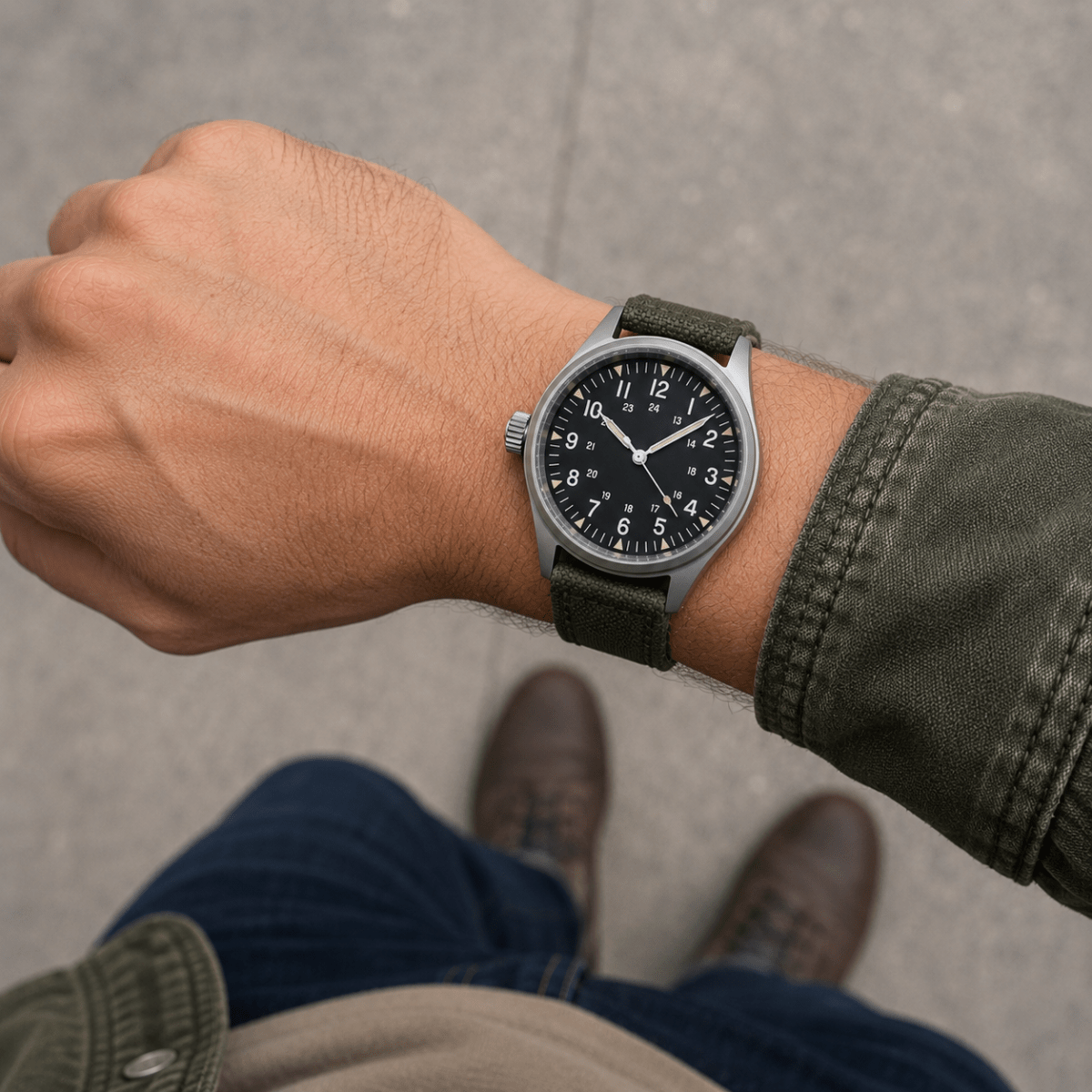
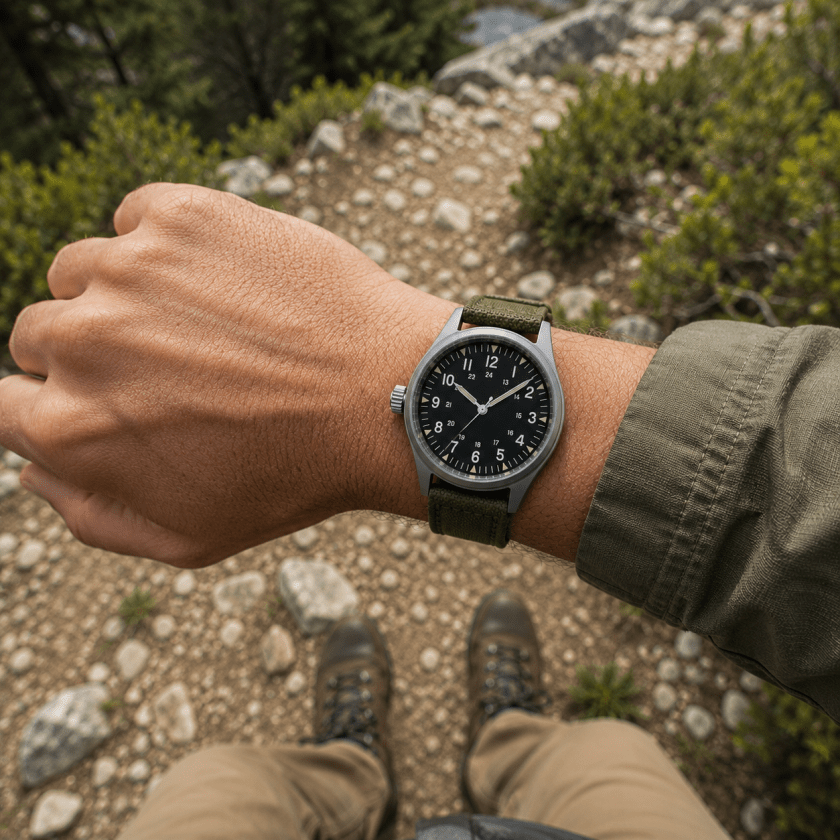
The military-inspired olive dial and canvas strap give it a field watch character that works equally well with jeans or chinos. The day/date complication adds everyday utility. The 30M water resistance means you should keep it away from the pool, but for everyday wear, the SNK803 is an extraordinary watch at an extraordinary price.
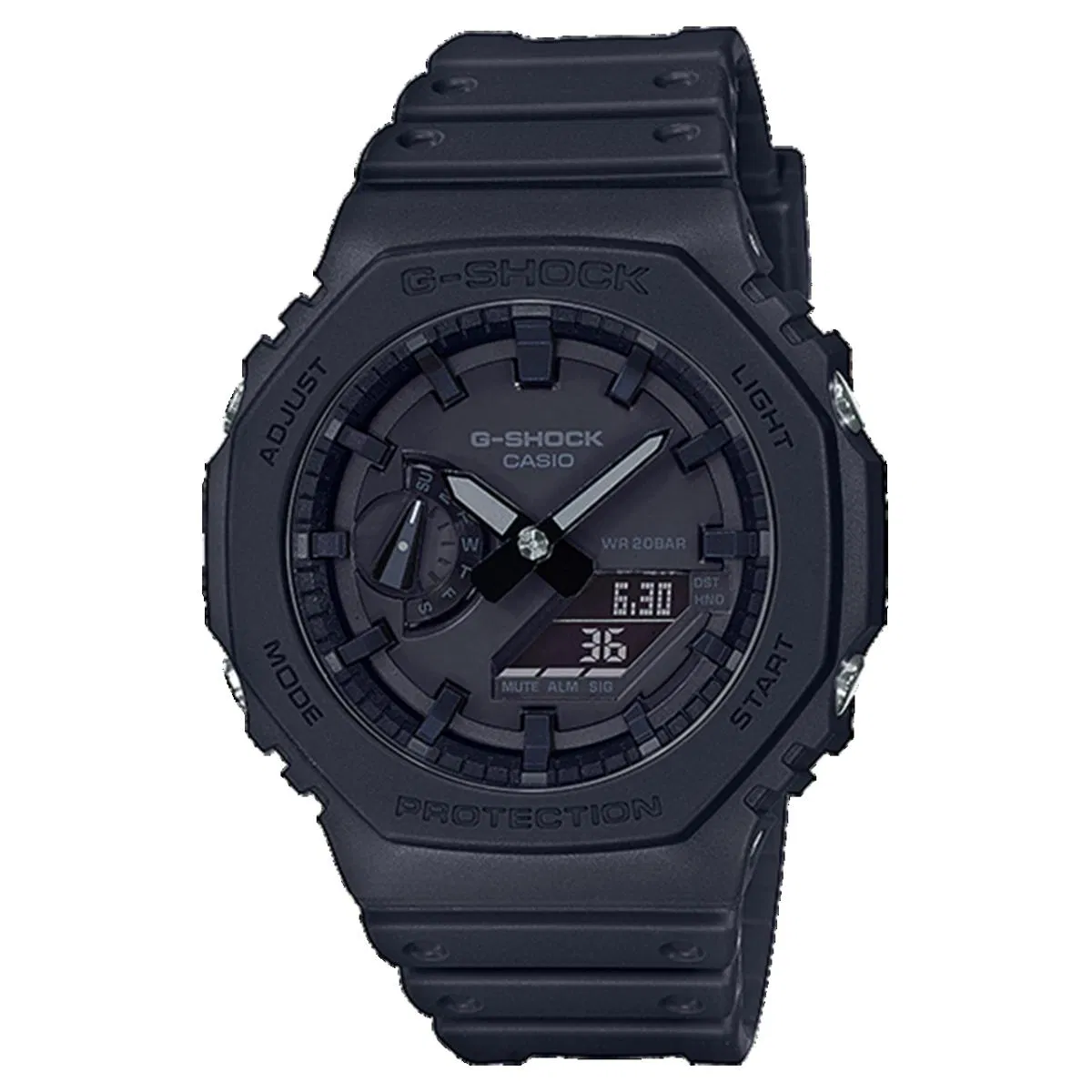
The DW5600BB-1 is the G-Shock that refuses to compromise. The all-black colorway removes every trace of flash, leaving only function — and the function is extraordinary. Shock resistance certified to 10G, 200M water resistance, and a battery life measured in years rather than months.
The square case is a direct descendant of the original DW-5000C from 1983, the watch that started the G-Shock revolution. Military units, special operations forces, and outdoor professionals around the world trust this watch precisely because it has never let anyone down.
**Pros:** 200M water resistance, shock resistant to 10G, all-black stealth aesthetic, stopwatch, alarm, countdown timer.
**Cons:** Digital-only display, larger case may feel bulky on smaller wrists.
**Who It Is For:** Military, law enforcement, outdoor professionals, and anyone who needs a watch that simply will not fail.
The Timex Expedition Scout is the watch that proves you do not need to spend $100 to get something genuinely good. At $49, it delivers Indiglo backlight (Timex’s legendary electroluminescent illumination), 200M water resistance, and a military-inspired dial that reads clearly in any light.
The acrylic crystal will scratch over time, but acrylic can be polished back to clarity — something you cannot do with mineral glass. The Scout is the ideal first watch, camping companion, or backup piece for anyone who wants reliable, readable timekeeping without any anxiety about damage.
**Pros:** Indiglo backlight for night visibility, 200M water resistance, military-inspired dial, incredibly lightweight.
**Cons:** Acrylic crystal scratches easily, no date display.
**Who It Is For:** Hikers, campers, first-time watch buyers, and anyone who wants a genuinely capable watch for under $50.
The Casio AE1200WH is a travel watch that makes no apologies for its price. At $27, it displays five world time zones simultaneously, offers 100M water resistance, and runs for ten years on a single battery. The dual analog-digital display is busy but deeply functional once you learn to read it.
This is the watch that earned the nickname ‘Casio Royale’ — a reference to the $11,000 Patek Philippe Aquanaut Travel Time it superficially resembles. If you travel frequently or work across time zones, the AE1200WH is one of the most practical watches ever made.
**Pros:** 5 world time zones simultaneously, 10-year battery life, 100M water resistance, dual analog-digital display.
**Cons:** Busy dial takes time to learn, large case at 45mm.
**Who It Is For:** Frequent travellers, remote workers across time zones, and anyone who wants maximum functionality for minimum spend.
The Casio W800H-1AV is the workhorse of the Casio lineup — no frills, no fashion, just reliable sport watch functionality at a price that makes it essentially disposable. At $30, it offers 100M water resistance, dual time zones, a stopwatch, and a countdown timer.
It is the watch you buy for the gym, the beach, or any activity where you do not want to risk your more expensive timepieces. The W800H has been in continuous production for years because it does exactly what it promises, every time.
**Pros:** 100M water resistance, dual time zones, stopwatch and countdown timer, extremely lightweight.
**Cons:** Basic digital display only, no backlight on all models.
**Who It Is For:** Gym-goers, swimmers, and anyone who wants a no-anxiety sport watch for under $30.
The Casio F-91W is the most democratically worn watch in history. At $15, it has been on the wrists of world leaders, Olympic athletes, fashion designers, and soldiers in every conflict zone on earth. The F-91W is not a budget watch — it is a cultural artifact that happens to cost $15.\
The 7-year battery life, 30M splash resistance, and built-in alarm and stopwatch make it genuinely functional. The featherweight 21g case means you forget you are wearing it. If you have never owned a Casio F-91W, buy one. It will be the best $15 you ever spend on a watch.
**Pros:** Iconic status, 7-year battery life, lightweight at just 21g, alarm and stopwatch included.
**Cons:** Only 30M water resistance (splash proof only), no date display.
**Who It Is For:** Everyone. Literally everyone. Buy one.
For most people, the Casio MDV106-1A Duro at $59 offers the best combination of capability and value. It is an ISO-certified dive watch for $59 — a specification that costs $300–$500 from most other brands. If you want a mechanical watch, the Seiko 5 SNK803 at $89 is the answer.
**Can you get a good automatic watch under $100?**
Yes — the Seiko 5 SNK803 at $89 is a genuine mechanical automatic watch with a self-winding 7S26 movement. It is not as accurate as a quartz watch (expect ±15 seconds per day), but it never needs a battery and the experience of wearing a mechanical timepiece is fundamentally different.
**Is the Casio F-91W really worth buying?**
Absolutely. The F-91W is a genuine cultural icon that happens to cost $15. Its 7-year battery life, alarm, stopwatch, and backlight make it more functional than many watches costing ten times more.
**What is the best waterproof watch under $100?**
The Casio MDV106-1A Duro ($59) and the G-Shock DW5600BB-1 ($99) both offer 200M water resistance. The Timex Expedition Scout ($49) also offers 200M water resistance at a lower price.
**Should I buy a Casio or a Seiko under $100?**
It depends on what you want. Casio watches under $100 are almost universally quartz — extremely accurate, low maintenance, and often feature-packed. Seiko’s sub-$100 offerings (the Seiko 5 range) are mechanical automatics — less accurate but more interesting mechanically, with no battery to replace.
The under-$100 watch market in 2026 is one of the most exciting segments in all of watchmaking. A $59 Casio Duro gives you ISO dive watch certification. An $89 Seiko 5 gives you a genuine mechanical automatic. A $15 Casio F-91W gives you a cultural icon with a 7-year battery. None of these watches are compromises — they are legitimate tool watches and style icons that happen to cost less than a restaurant dinner. Use our [Watch Advisor] to find your perfect match, or browse the full [Watch Database] to filter by price, movement, and style. All prices are current Amazon listings — click any link to check the latest price.
So, if you’re into vintage watches, you gotta know about “tropical dials.” These are basically black dials that have faded over time into shades of brown, thanks to things like UV exposure or paint issues. What was once seen as a flaw is now a hot trend, with collectors paying big bucks for these unique pieces. Each tropical dial ages differently, giving each watch its own distinct vibe. Some of these rare watches have even sold for way more than their original black-dial counterparts, showing that sometimes a little “defect” can turn into a treasure. Time really can create beauty!
📅 Monday, July 20, 2026
Many vintage watch collectors highly prize ‘tropical dials,’ where a black dial has faded over decades to shades of brown, often due to UV exposure or manufacturing defects. This discoloration, initially considered a flaw, now commands significant premiums, transforming a defect into a unique and sought-after aesthetic. It’s a testament to how the passage of time can unexpectedly enhance a watch’s value and character.
Among vintage watch collectors, tropical dials are some of the most prized and fascinating examples of nature improving on human craftsmanship. Originally produced with black dials, these watches gradually faded over decades into rich shades of chocolate brown, caramel, or even golden bronze.
This transformation typically occurred due to prolonged UV exposure, environmental conditions, and the chemical composition of the dial’s original paint or lacquer. At the time, manufacturers considered this discoloration an unintended flaw. Today, however, collectors see it as a one-of-a-kind feature that tells the watch’s unique story.
Because no two tropical dials age exactly alike, each develops its own distinctive character. As a result, well-preserved examples often command significant premiums over identical models with standard black dials.
It’s a perfect reminder that, in the world of vintage watches, the passage of time doesn’t just measure history—it can actually create it.
⌚ Fun Fact: Some rare tropical-dial watches have sold for several times the value of the same model with an untouched black dial, proving that sometimes the most beautiful treasures begin as manufacturing mistakes.
Category: Fun Quirk
Disclaimer: Every effort has been made to keep these watch facts accurate, but the world of horology is full of myths, disputed stories, and fascinating trivia. Consider these facts a starting point for discovery rather than the final word. If you have corrections or additional insights, let us know—we’re always happy to keep the record ticking in the right direction.
The Patek Philippe Calibre 89, one of the most complicated mechanical watches ever made, was created in 1989 to celebrate the company’s 150th anniversary. Despi
📅 Sunday, July 19, 2026
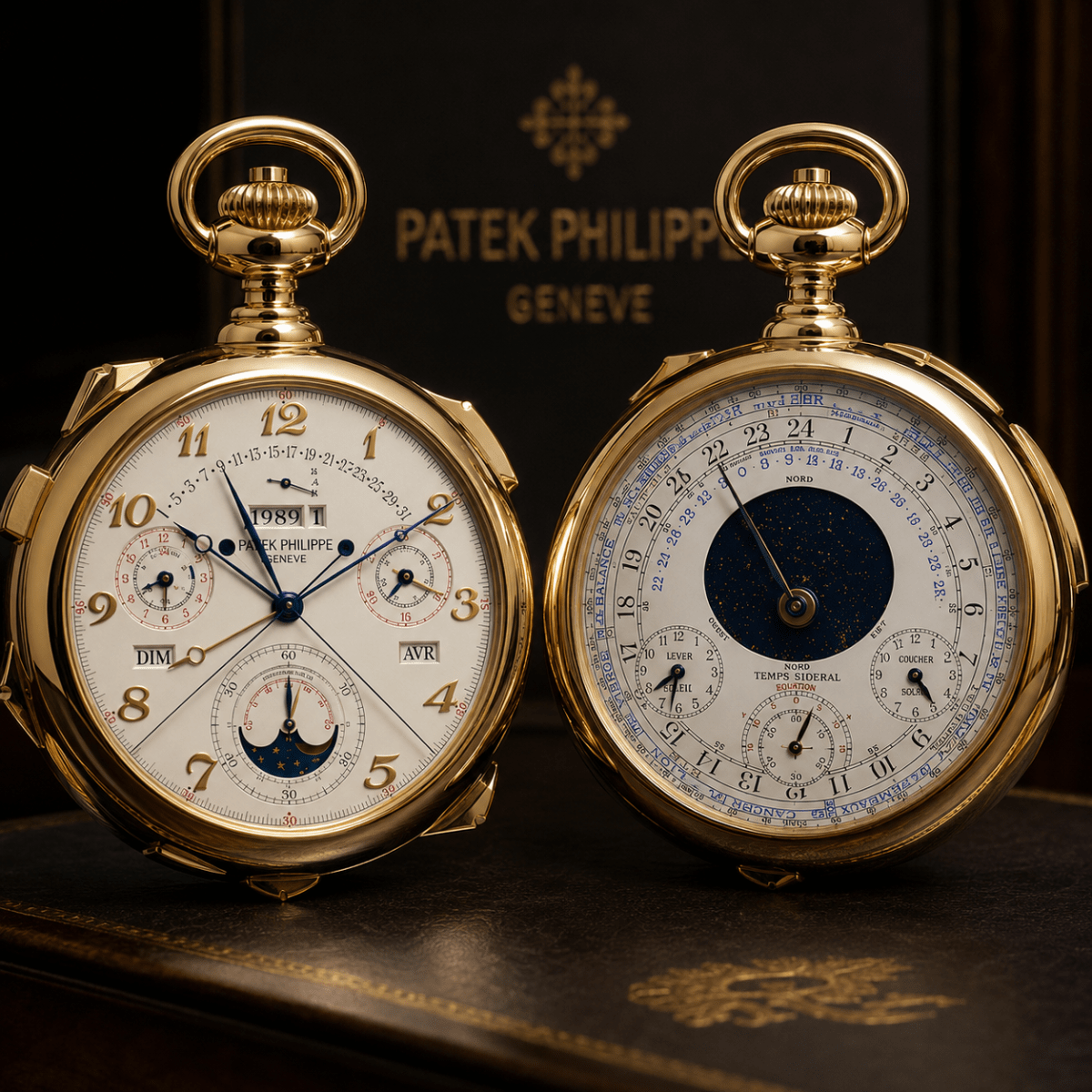
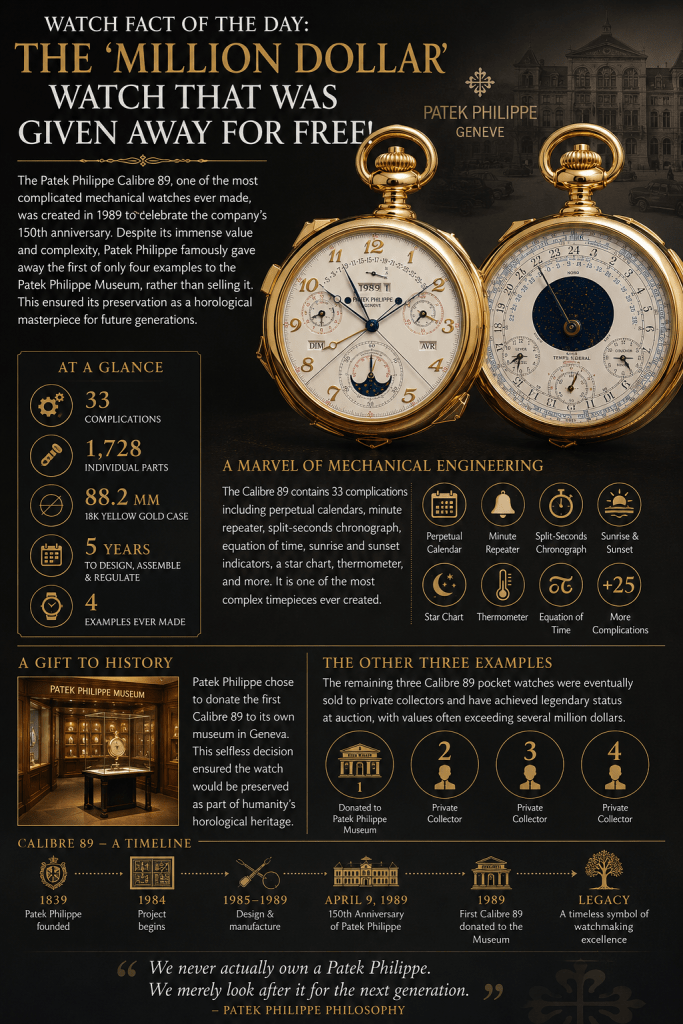
The Patek Philippe Calibre 89, one of the most complicated mechanical watches ever made, was created in 1989 to celebrate the company’s 150th anniversary. Despite its immense value and complexity, Patek Philippe famously gave away the first of only four examples to the Patek Philippe Museum, rather than selling it. This ensured its preservation as a horological masterpiece for future generations.
The Calibre 89 is a staggering achievement in mechanical engineering, containing 33 complications and an astonishing 1,728 individual components. Housed in an elegant 88.2 mm gold pocket watch case, it features perpetual calendars, sunrise and sunset indicators, a star chart, a minute repeater, a thermometer, and even an equation of time display. It took a team of master watchmakers nearly five years to design, assemble, and regulate each movement, cementing its place among the most complex mechanical timepieces ever created.
Rather than treating the first Calibre 89 as a commercial product, Patek Philippe viewed it as part of the company’s legacy. By donating the inaugural example to its museum in Geneva, the manufacture ensured that collectors, historians, and future generations could appreciate this remarkable milestone in watchmaking. The remaining examples entered private hands over the years, where they have become some of the most coveted and valuable watches ever offered at auction, often commanding prices measured in the millions of dollars.
Today, the Calibre 89 remains a symbol of what traditional watchmaking can achieve when technical innovation is pursued without compromise. It wasn’t created to break sales records or maximize profits—it was built to celebrate 150 years of horological excellence. By placing the very first example in its museum rather than a private collection, Patek Philippe made a powerful statement: some masterpieces are simply too important to disappear into a safe, and are best preserved as part of watchmaking history for everyone to admire.
Category: Record Breaker
Disclaimer: Every effort has been made to keep these watch facts accurate, but the world of horology is full of myths, disputed stories, and fascinating trivia. Consider these facts a starting point for discovery rather than the final word. If you have corrections or additional insights, let us know—we’re always happy to keep the record ticking in the right direction.
What do you get when you design a watch for lefties? A Destro watch! This quirky timepiece flips the script on traditional wristwatches, moving the crown to the left side so left-handed folks can finally stop giving their wrists the side-eye. But don’t be fooled—many righties are snatching these up just for the comfort and to flaunt their unconventional style. Originating from Italian lingo, “Destro” hints at its right-handed roots, making it a favorite among soldiers and adventurers alike. So, whether you’re a lefty or just a watch rebel, the Destro proves that sometimes it takes a little wrist action to stand out in the horology world!
📅 Saturday, July 18, 2026
While most watches are designed to be worn on the left wrist and wound with the right hand, ‘Destro’ watches are specifically crafted for left-handed wearers. The crown and pushers are positioned on the left side of the watch case, making it easier for left-handed individuals to operate the watch without removing it from their right wrist. This thoughtful design caters to a significant portion of the population often overlooked in standard watch manufacturing.
The “Destro” Watch
The term “Destro” comes from the Italian word for “right,” referring to watches designed to be worn on the right wrist. While they were created with left-handed wearers in mind, Destro watches also became popular with military personnel, divers, and outdoor professionals who preferred wearing their watch on their dominant hand or wanted to prevent the crown from digging into the back of their wrist during strenuous activity. By relocating the crown to the opposite side of the case, manufacturers improved both comfort and accessibility.
Some of the most recognizable Destro watches have come from brands such as Panerai, Tudor, and TAG Heuer, each embracing the unconventional layout for different reasons. Panerai, in particular, produced several left-handed models for military divers, where practicality always came before tradition. Today, these unusual references are highly sought after by collectors, not only because of their rarity but because they stand out from conventional watch designs.
Interestingly, many people who buy Destro watches aren’t left-handed at all. Some simply enjoy the improved comfort of a left-side crown, while others appreciate owning something a little different from the norm. In a hobby where small details can make a watch truly distinctive, the Destro layout proves that sometimes flipping a familiar design on its head is all it takes to create a future collector’s favorite.
Category: Fun Quirk
Disclaimer: Every effort has been made to keep these watch facts accurate, but the world of horology is full of myths, disputed stories, and fascinating trivia. Consider these facts a starting point for discovery rather than the final word. If you have corrections or additional insights, let us know—we’re always happy to keep the record ticking in the right direction.
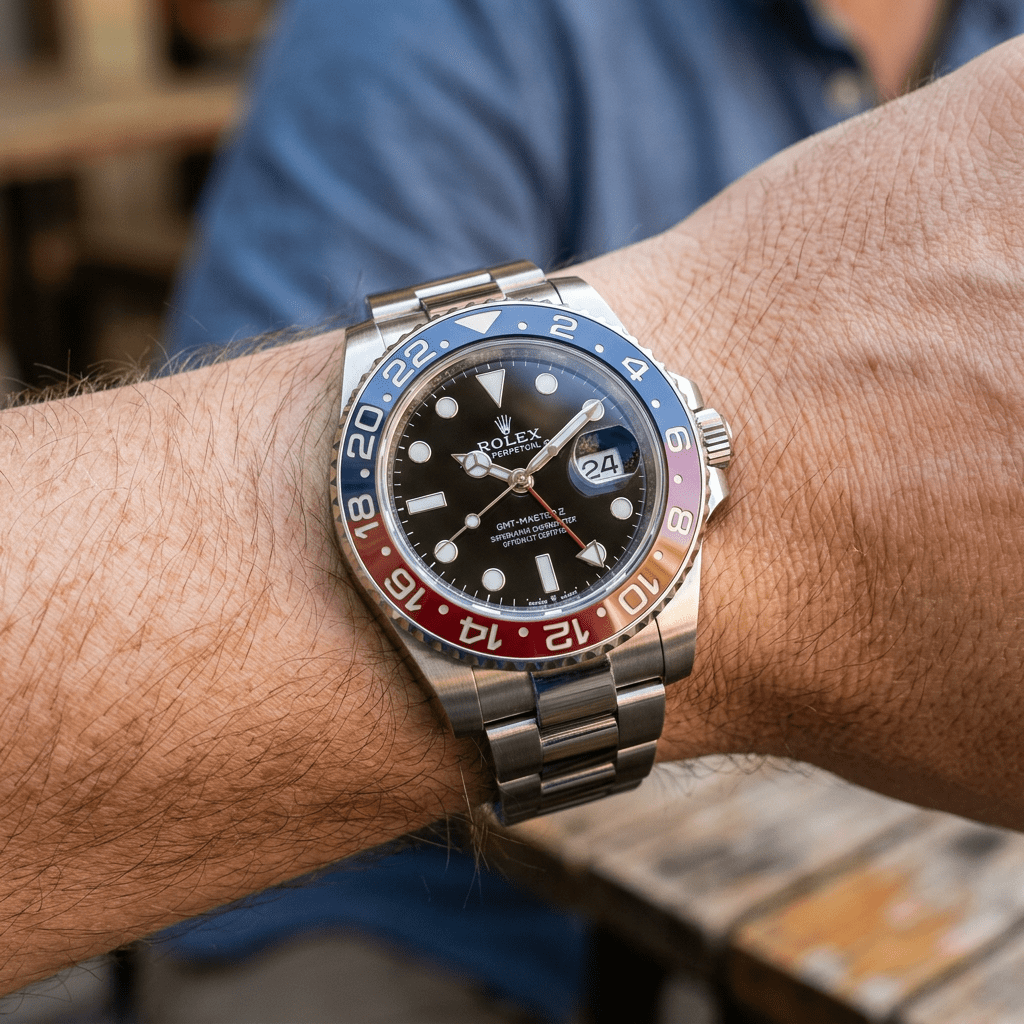
Once upon a time in the 1950s, pilots had a dilemma: how to tell if it was cocktail or coffee time at 30,000 feet. Enter the Rolex GMT-Master with its dizzying blue and red ‘Pepsi’ bezel, a brilliant dual-tone decision that transformed navigation into a colorful affair. Designed to help aviators avoid costly blunders, it echoed the Pepsi logo, leading collectors to nickname it the “Pepsi” bezel. Fast forward, and this practical watch feature turned into one of the most coveted horological icons. Who knew that saving pilots from time zone confusion could lead to a frenzy in watch fashion! Cheers to that!
📅 Friday, July 17, 2026
The iconic blue and red ‘Pepsi’ bezel, famously associated with the Rolex GMT-Master, was originally developed for a practical reason: to distinguish between day and night hours for pilots. The red portion indicated daylight hours, while the blue represented nighttime, making it easier for aviators to track time across multiple zones. Its distinctive color combination was a functional design choice that unexpectedly became one of horology’s most recognizable and beloved aesthetic features.
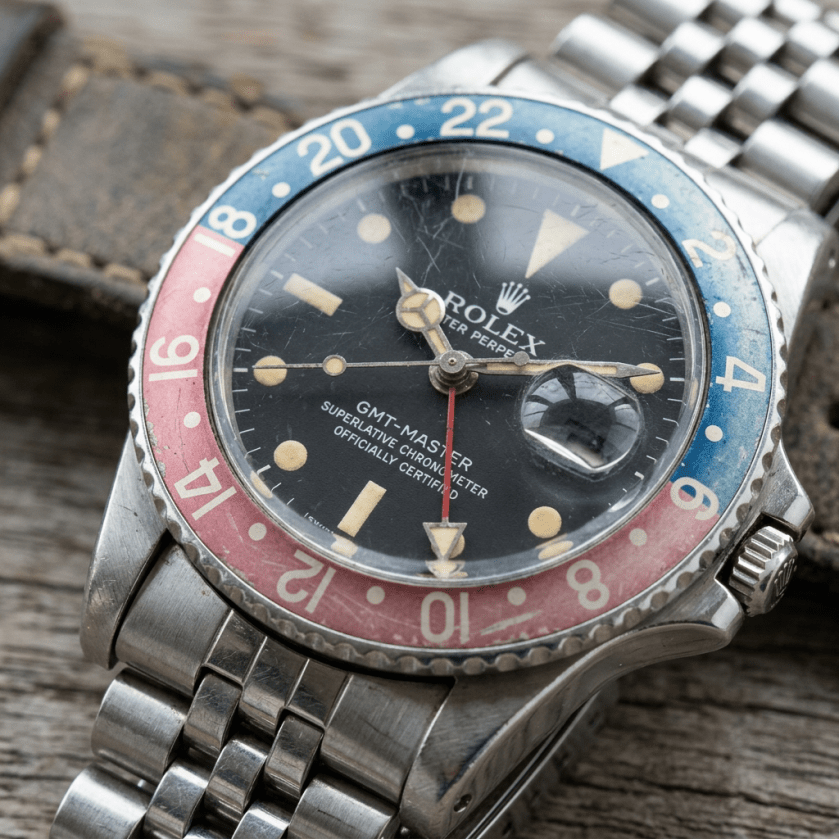
A close-up of a vintage Rolex GMT-Master watch showcasing its aged bezel and worn dial.
The story began in the 1950s when commercial aviation was rapidly expanding and international pilots needed an easier way to keep track of multiple time zones. Working closely with Pan American World Airways (Pan Am), Rolex introduced the GMT-Master in 1954 with a rotating 24-hour bezel and an additional GMT hand. The two-tone bezel wasn’t chosen simply because it looked attractive—it allowed pilots to instantly distinguish between daytime and nighttime hours at a glance, reducing the chance of costly navigation errors during long-haul flights.
Over the decades, the blue-and-red bezel took on a life of its own. Collectors affectionately nicknamed it the “Pepsi” bezel because its colors resembled the famous soft drink’s logo, a nickname that Rolex never officially adopted but enthusiasts embraced worldwide. The success of the Pepsi bezel inspired a whole family of colorful GMT nicknames, including the “Coke” (red and black), “Batman” (blue and black), and “Root Beer” (brown and black), proving just how influential a functional design decision had become.
Today, the Pepsi bezel is one of the most recognizable features in all of watchmaking. Modern ceramic versions are incredibly difficult to manufacture because creating a perfectly crisp, two-color ceramic insert requires advanced engineering and precision. What started as a practical solution for airline pilots has evolved into one of the most sought-after and enduring design icons in horological history—a perfect example of how great functionality can become timeless style.
Category: Watch History
Disclaimer: Every effort has been made to keep these watch facts accurate, but the world of horology is full of myths, disputed stories, and fascinating trivia. Consider these facts a starting point for discovery rather than the final word. If you have corrections or additional insights, let us know—we’re always happy to keep the record ticking in the right direction.











 WatchesAndMoreCO