
📅 Sunday, September 27, 2026
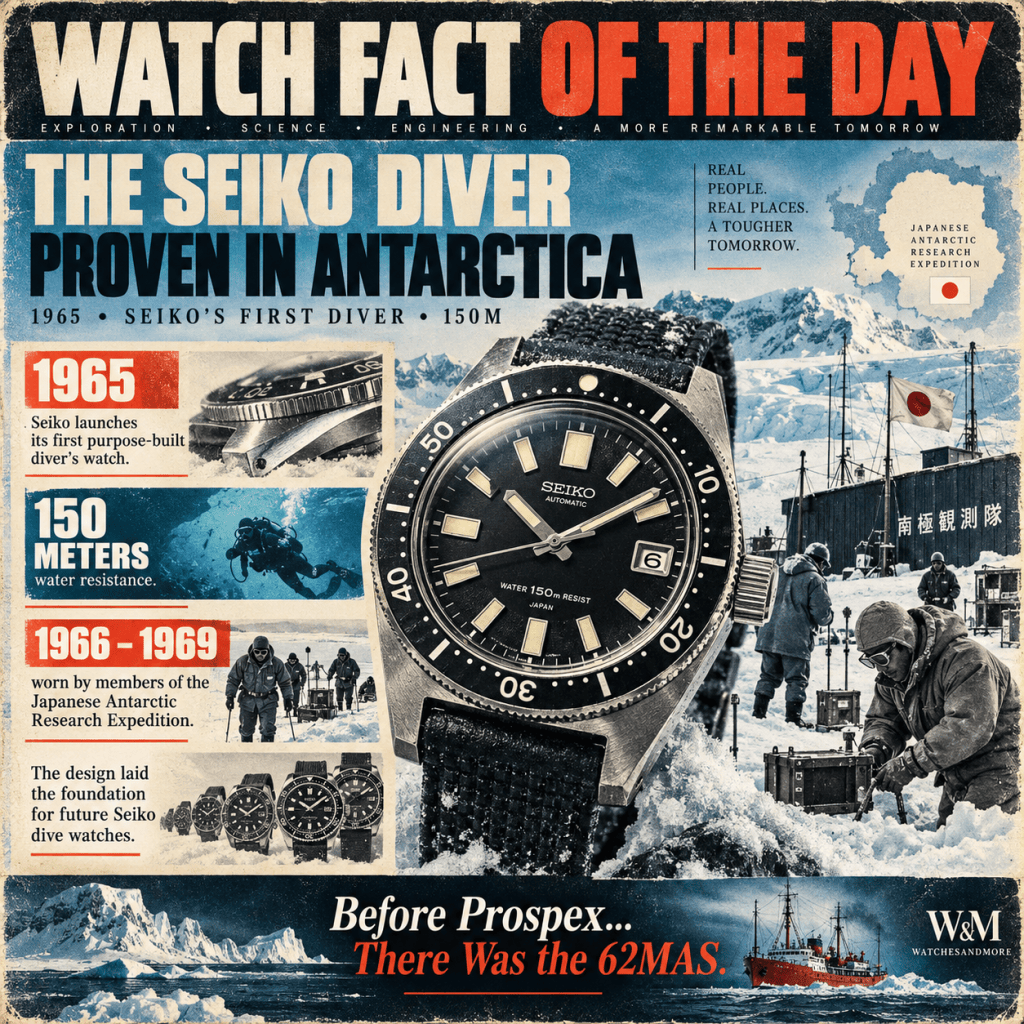
When Seiko introduced the 62MAS in 1965, it became the company’s first purpose-built diver’s watch—and Japan’s first of its kind. With an automatic movement, strong luminous markers, a rotating timing bezel, and 150 meters of water resistance, it was designed to be a serious working tool rather than a fashion accessory. Seiko Philippines (Official Store)
Its real test came soon afterward.
From 1966 to 1969, members of the Japanese Antarctic Research Expedition wore the 62MAS in one of the harshest environments on Earth. Sub-zero temperatures, snow, ice, moisture, and remote field conditions subjected the watch to the kind of punishment that no showroom demonstration could replicate. Seiko later pointed to that Antarctic service as an important early proof of the diver’s durability and reliability. Seiko Philippines (Official Store)
That matters because the 62MAS arrived at a pivotal moment in Seiko’s history.
The company was just beginning to establish itself as a serious maker of professional sports watches, and the 62MAS became the design and engineering foundation for generations of Seiko divers that followed. Its simple black dial, large luminous markers, date window, and no-nonsense case architecture created a visual language Seiko still revisits today. Monochrome Watches
💡 Did You Know?
The 62MAS is known by collectors today by a nickname derived from its 6217-series movement/reference and “automatic self-dater” identity, but its historical significance is much bigger than the nickname itself.
It was the starting point for a dive-watch family tree that eventually produced icons such as the 6105, the Tuna, the Turtle, and the modern Prospex line. Monochrome Watches
⭐ Why It Matters
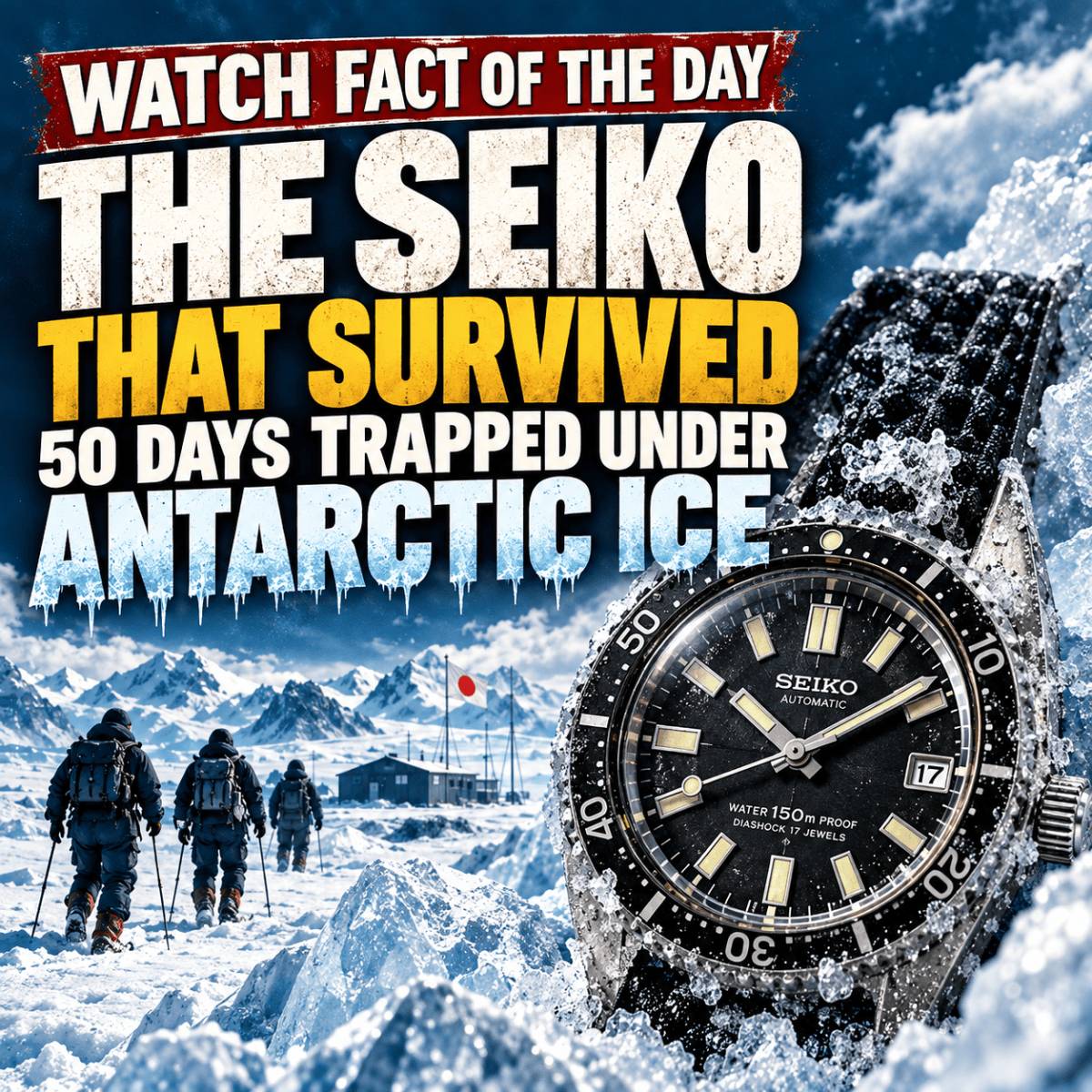
The 62MAS didn’t need a mythical 50-day-under-the-ice survival story to be impressive.
It already had something better:
REAL ANTARCTIC SERVICE.
That’s what gives the watch its place in Seiko history.
It wasn’t just designed to look rugged.
It was actually used in an environment where equipment failure could matter.
1965 — SEIKO’S FIRST DIVER
1966–1969 — ANTARCTIC EXPEDITION USE
150 METERS — BUILT FOR REAL CONDITIONS
Category: Military Watches
Disclaimer: Every effort has been made to keep these watch facts accurate, but the world of horology is full of myths, disputed stories, and fascinating trivia. Consider these facts a starting point for discovery rather than the final word. If you have corrections or additional insights, let us know—we’re always happy to keep the record ticking in the right direction.
🕐 Discover more watch facts, reviews, and buying guides at WatchesAndMore
🛍️ You Might Also Like
As an Amazon Associate and affiliate partner, WatchesAndMore earns from qualifying purchases.
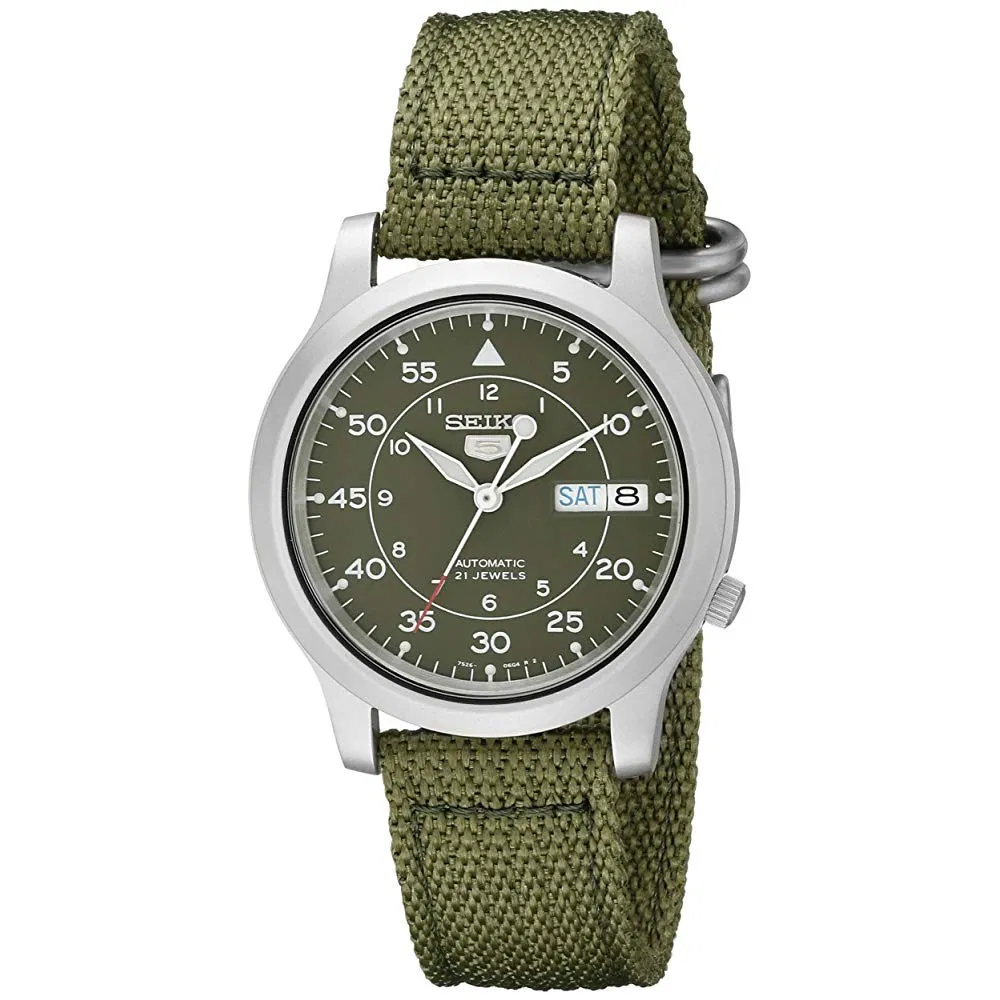
Seiko
★★★★★ 4.8 (6,961 reviews)
$89

Browse all 142+ expert-reviewed watches →