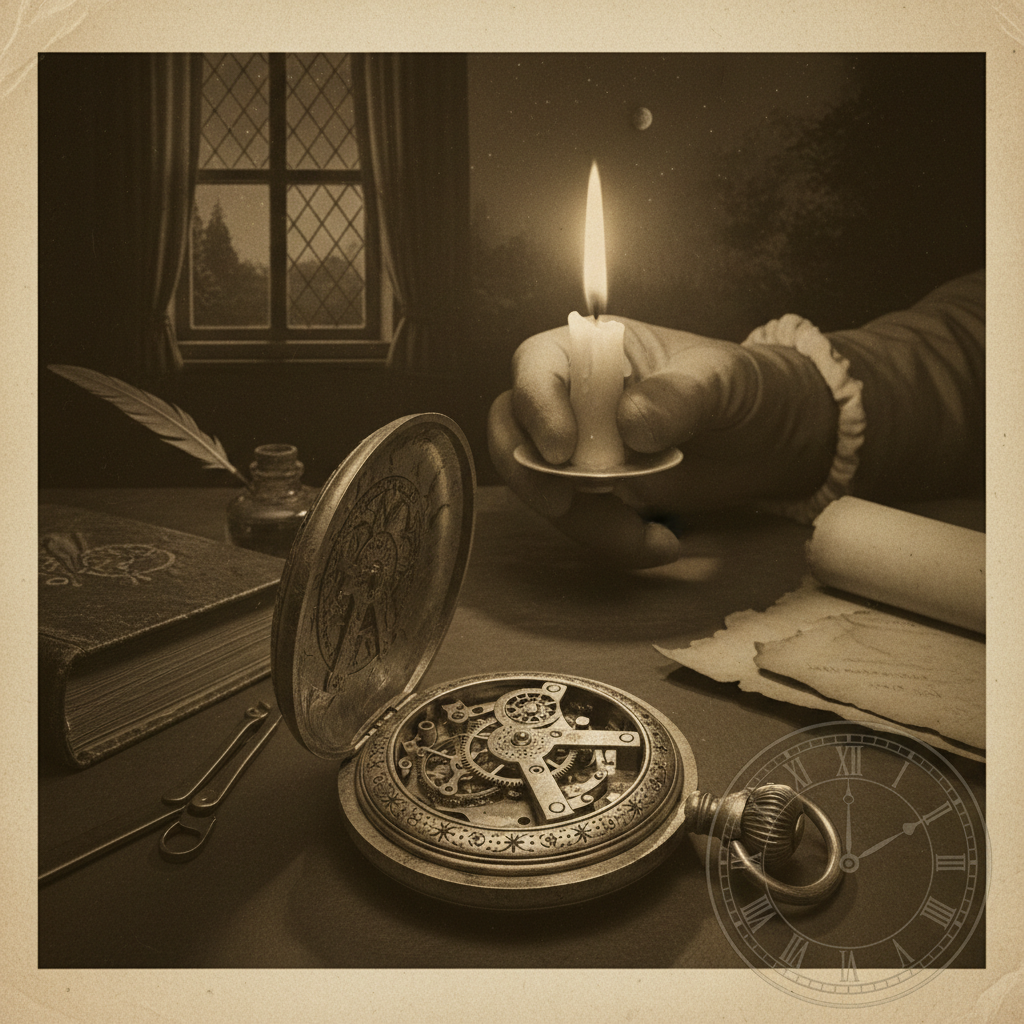
Watch Fact of the Day: Why Minute Repeaters Were Invented for the Dark

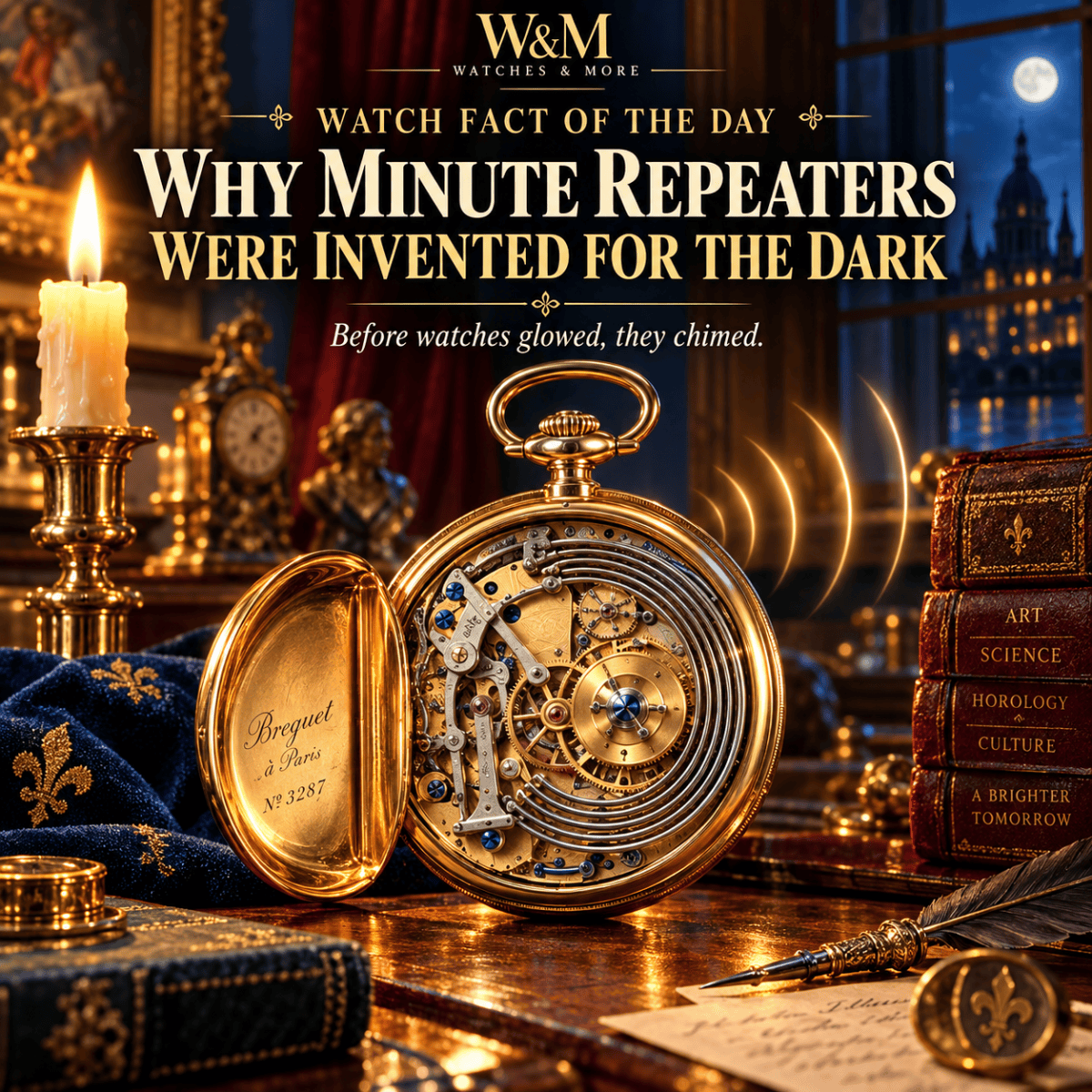
Long ago, telling time in the dark was a challenge, leading to the revolutionary invention of speaking watches in the late 1600s. These ingenious mechanisms allowed users to hear the time through a series of musical chimes, transforming timekeeping into a delightful auditory experience. The innovation continued with Breguet’s spring gong in the late 1700s, which improved sound quality and design. Although the need for such watches diminished with the advent of easier lighting methods, the minute repeater evolved into a remarkable piece of artistry in watchmaking. Today, these intricate devices embody a blend of tradition and technical mastery, showcasing the beauty of horology.

Watch History: Tuesday, September 22, 2026

📅 Tuesday, September 22, 2026

Long before luminous paint, electric lights, or glowing digital displays, checking the time at night could be surprisingly inconvenient.

If you woke in a dark room, reading a watch or clock meant finding a candle, lamp, or other light source first.

Watchmakers came up with a much more elegant solution:

MAKE THE WATCH SPEAK.

By the late 1600s, English watchmakers were developing repeating watches that could strike the time on demand. Early quarter repeaters announced the hours and quarter-hours, and by the early 1700s watchmakers in southern Germany had developed mechanisms capable of indicating the minutes as well. Haute Horlogerie

That was the breakthrough.

Instead of needing to see the dial, the owner could activate a slide or pushpiece and simply listen.

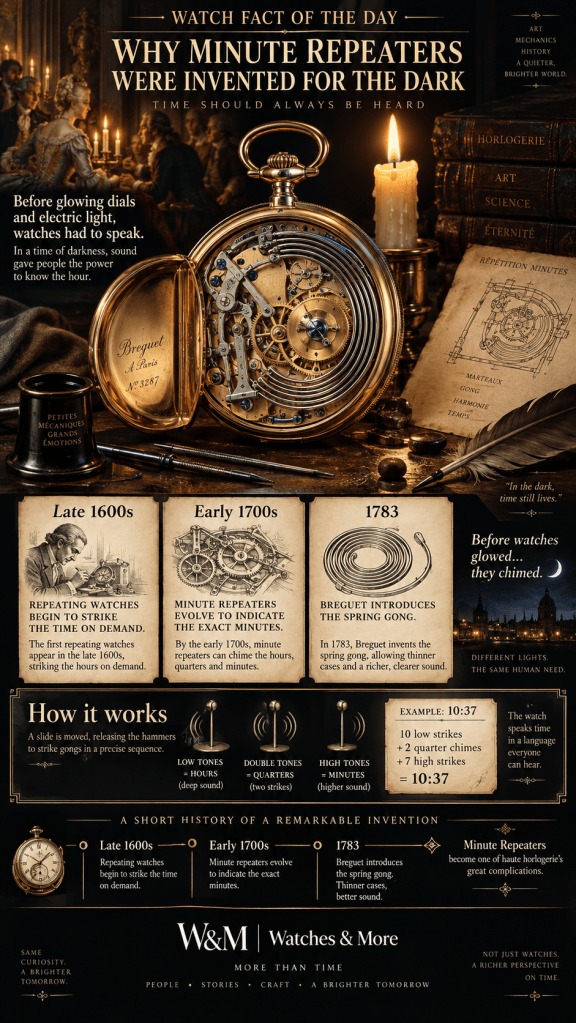
A traditional minute repeater translates the time into three acoustic signals:

LOW TONES = HOURS

TWO-TONE CHIMES = QUARTERS

HIGH TONES = REMAINING MINUTES
Watch Fact of the Day: Why Minute Repeaters Were Invented for the Dark

So if the time were 10:37, the watch would strike:

10 hour tones

then

2 quarter-hour sequences

then

7 minute tones

A mechanical watch had effectively become an audible time calculator.

🔔 Breguet Made It Smaller — and Better

Early repeating watches generally struck tiny bells housed inside the case.

That worked, but bells took up valuable space.

In 1783, Abraham-Louis Breguet introduced a major improvement by replacing the traditional bell with a spring gong. The gong could be coiled around the movement, helping make repeating watches thinner while also improving the quality and character of the sound. The idea was so effective that other watchmakers quickly adopted it. Montres Breguet

That innovation helped shape the architecture of the minute repeater we recognize today.

💡 Did You Know?

The modern matchstick didn’t appear until 1845.

The Fondation Haute Horlogerie notes that once matches made candles and oil lamps much easier to light, demand for repeating watches declined. But by then, the minute repeater had evolved beyond pure necessity and become one of watchmaking’s most technically prestigious complications. Haute Horlogerie

In other words, the technology survived long after the original practical problem became easier to solve.

Why?

Because watchmakers had turned a night-time convenience into mechanical art.

⭐ Why It Matters

A minute repeater is one of those complications that reminds us how differently watches were once used.

Today, we think of a watch primarily as something we look at.

A repeater was designed to be:

HEARD.

And making a tiny mechanical object produce clear, musical tones is extraordinarily difficult.

A modern minute repeater must coordinate:

racks

snails

hammers

gongs

springs

timing mechanisms

all while keeping the entire sequence synchronized with the actual time shown on the dial.

That is why minute repeaters remain among the most demanding complications in haute horlogerie. Breguet still describes the minute repeater as a mechanism that makes time audible through precise interaction between hammers and gongs.


Category: Watch History

Disclaimer: Every effort has been made to keep these watch facts accurate, but the world of horology is full of myths, disputed stories, and fascinating trivia. Consider these facts a starting point for discovery rather than the final word. If you have corrections or additional insights, let us know—we’re always happy to keep the record ticking in the right direction.

🕐 Discover more watch facts, reviews, and buying guides at WatchesAndMore


🛍️ You Might Also Like

As an Amazon Associate and affiliate partner, WatchesAndMore earns from qualifying purchases.
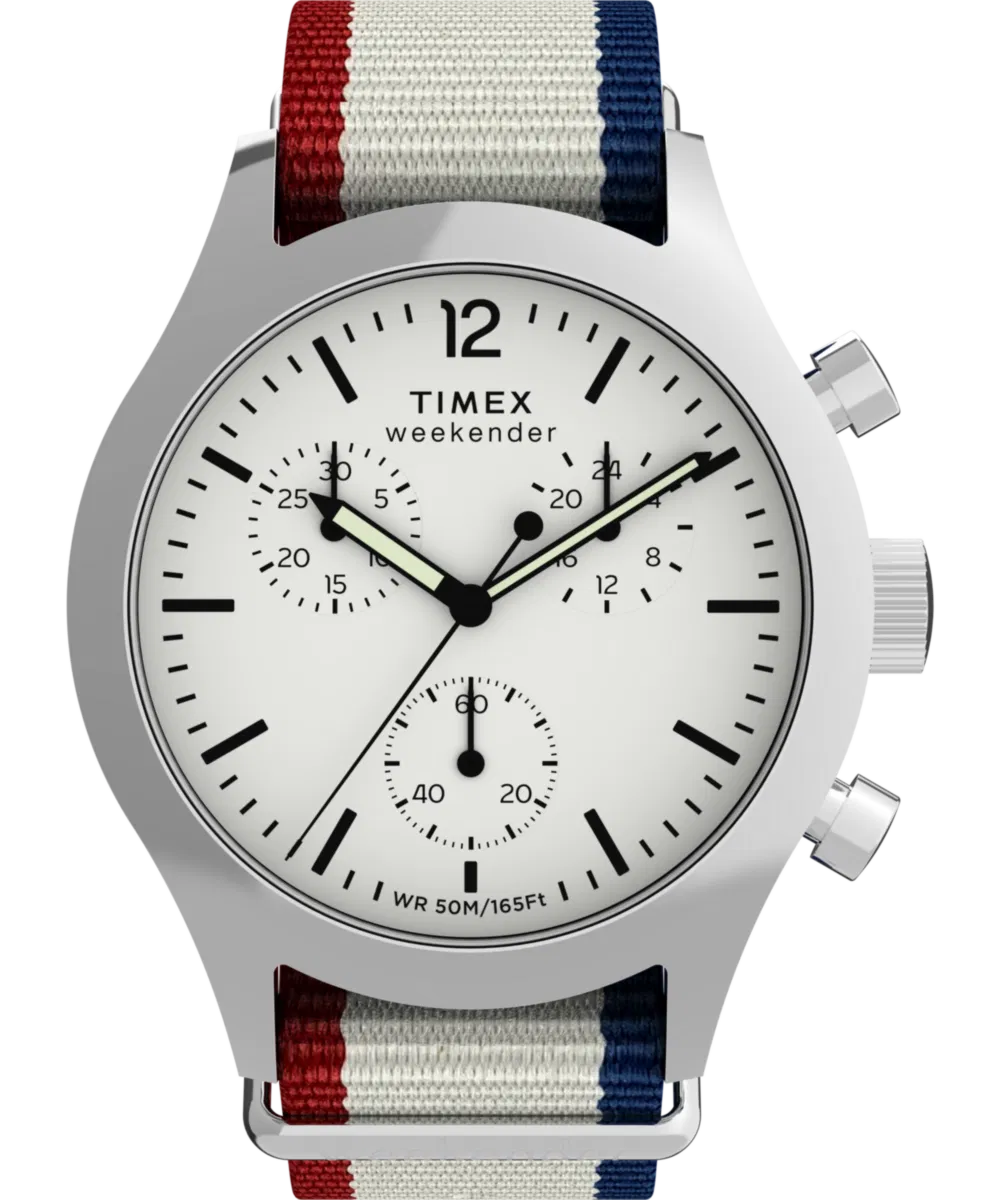
Timex Weekender Chronograph
🔥 Deal of the Day

Timex Weekender Chronograph

Timex

★★★★★ 4.5 (3,041 reviews)

$79
Offer expires in


🔥 Grab This Deal →

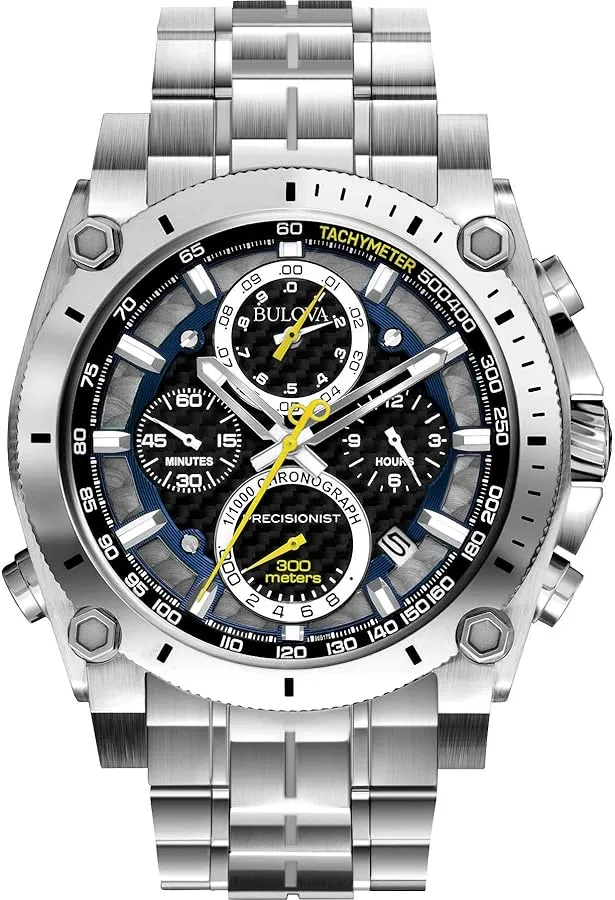
Bulova Precisionist


Bulova Precisionist

Bulova

★★★★★ 4.6 (1,100 reviews)

$219


Check Price on Amazon →

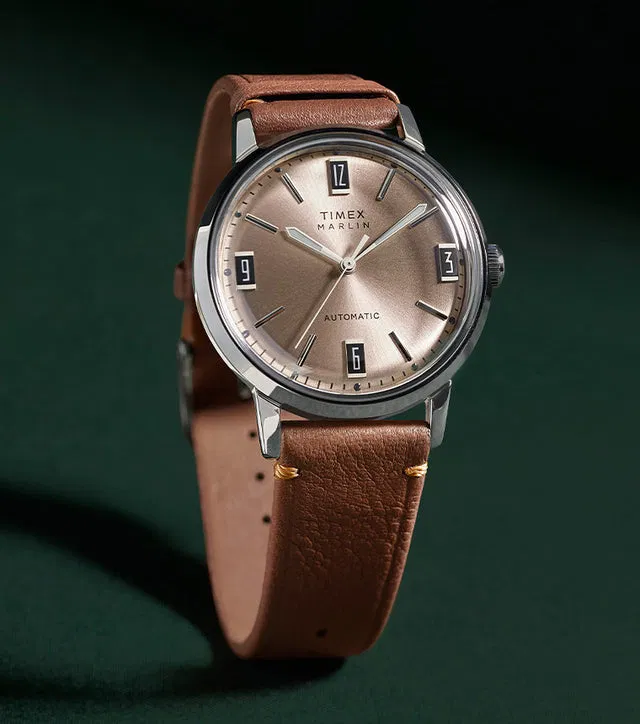
Timex Marlin Automatic 40mm


Timex Marlin Automatic 40mm

Timex

★★★★★ 4.7 (1,106 reviews)

$259


Check Price on Amazon →


Browse all 142+ expert-reviewed watches →

ETSY Shop
ETSY Shop
Redbubble Shop
Redbubble Shop
More Watch Facts
More Watch Facts

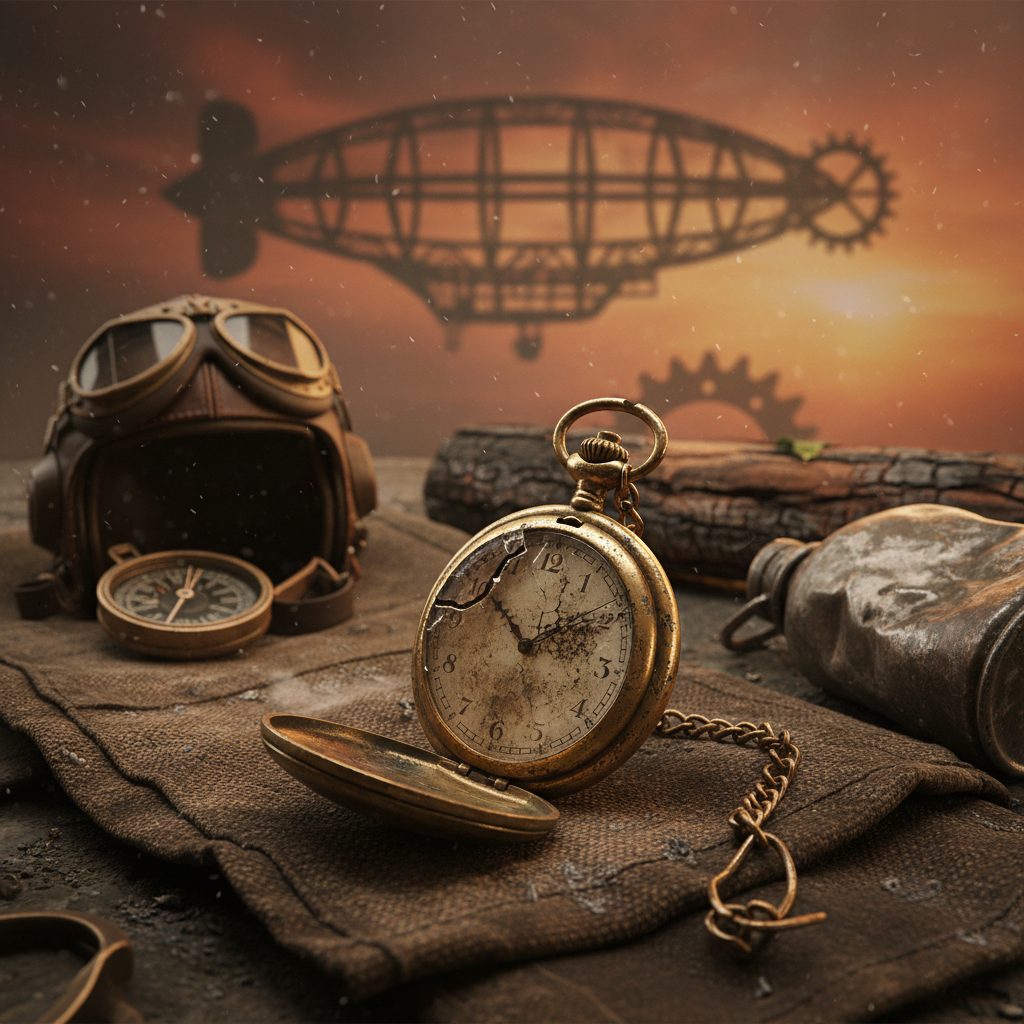
Watch Fact of the Day: The Pocket Watch That Survived the Hindenburg Disaster

When the Hindenburg airship burst into flames in Lakehurst, New Jersey, in 1937, passenger Ernst Wendler carried a gold pocket watch in his vest. Miraculously r

Military Watches: Monday, September 21, 2026

📅 Monday, September 21, 2026

On the evening of May 6, 1937, the German airship LZ 129 Hindenburg approached the Naval Air Station at Lakehurst, New Jersey, after crossing the Atlantic from Frankfurt.

At approximately 7:25 p.m., while the ship was attempting to land, fire appeared near the stern. Within roughly half a minute, the enormous hydrogen-filled airship was engulfed and collapsing toward the ground. Of the 97 people aboard, 35 died, along with one member of the ground crew. HISTORY CHANNEL ITALIA

Among the crew was Walter Banholzer, a 28-year-old engine mechanic from Rottweil, Germany.

A vintage pocket watch that survived the Hindenburg disaster, showing signs of damage and history, surrounded by newspaper clippings and facts about the event. The background features an image of the Hindenburg in flames with a timeline of the disaster.

Banholzer had worked aboard the Hindenburg during its operational career and was assigned to the starboard aft engine section. At the time of the landing, however, he had been sent forward with several other crewmen to help compensate for the airship being tail-heavy. When the fire erupted, the flames tore rapidly through the ship. Banholzer survived the initial crash but was gravely burned and later died from his injuries. facesofthehindenburg.blogspot.com

What remained from that night included one extraordinary personal object:

His pocket watch.

A watch later offered by Hermann Historica was described as Walter Banholzer’s Omega pocket chronograph, carried during the Hindenburg disaster and partially destroyed by fire. The watch bears a 0.900 silver hallmark, the initials “WB” engraved on the cover, a damaged enamel dial with Roman numerals, and a small seconds register at 6 o’clock. It was sold with supporting photographs and family provenance documentation. Invaluable

The condition tells its own story.

The case is scorched.

The enamel dial is damaged.

The movement survived only partially intact.

It is not a pristine collector’s watch.

It is a witness.

💡 Did You Know?

Banholzer’s location aboard the Hindenburg was misunderstood for decades.

Early diagrams placed him in an engine gondola at the time of the fire. Later research using witness testimony and crew-position records showed that he had actually been sent forward toward the bow shortly before the disaster to help trim the tail-heavy airship. facesofthehindenburg.blogspot.com

That detail matters because it brings us closer to the human reality of the final minutes.

He was not simply “aboard the Hindenburg.”

He was working.

Following orders.

Helping prepare the ship to land.

And carrying an ordinary personal timepiece that would outlive him.

⭐ Why It Matters

Historic disasters often become enormous stories.

Names.

Numbers.

Photographs.

Headlines.

The Hindenburg became one of the most recognizable images in aviation history, and the catastrophe helped destroy public confidence in passenger airships. HISTORY CHANNEL ITALIA

But objects like Banholzer’s watch make those events personal again.

Not an airship.

Not a headline.

One mechanic.

One pocket watch.

One evening in 1937.

That is why surviving artifacts matter.

They shrink history back down to human scale.


Category: Military Watches

Disclaimer: Every effort has been made to keep these watch facts accurate, but the world of horology is full of myths, disputed stories, and fascinating trivia. Consider these facts a starting point for discovery rather than the final word. If you have corrections or additional insights, let us know—we’re always happy to keep the record ticking in the right direction.

🕐 Discover more watch facts, reviews, and buying guides at WatchesAndMore


🛍️ You Might Also Like

As an Amazon Associate and affiliate partner, WatchesAndMore earns from qualifying purchases.

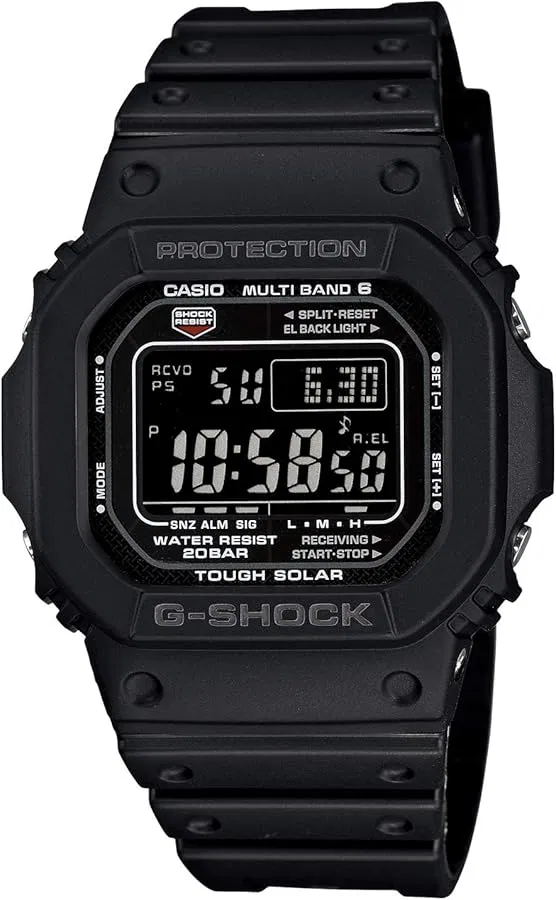
G-Shock GWM5610-1 Solar Atomic
🔥 Deal of the Day

G-Shock GWM5610-1 Solar Atomic

Casio

★★★★★ 4.8 (5,621 reviews)

$129

Offer expires in


🔥 Grab This Deal →

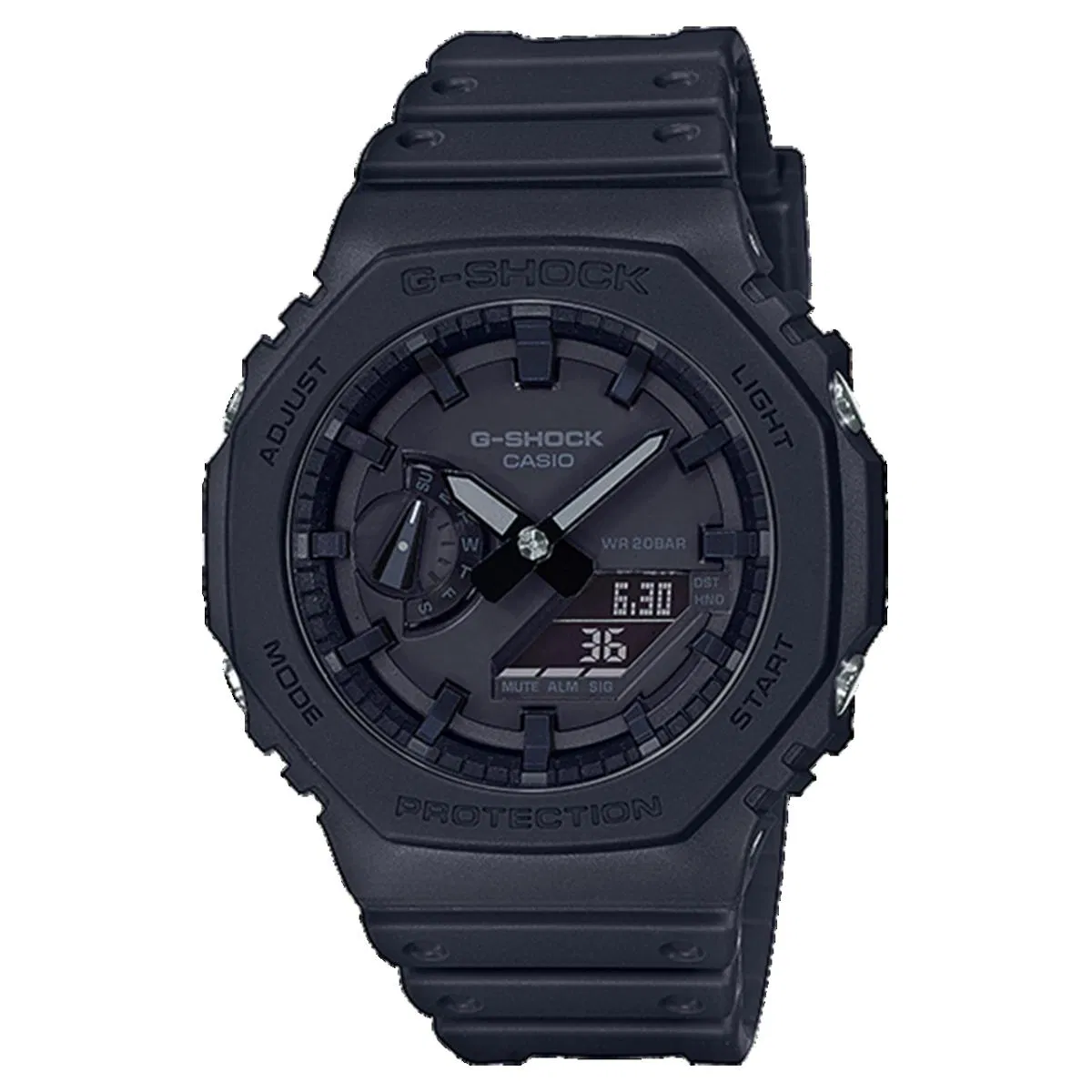
G-Shock GA2100-1A1 CasiOak


G-Shock GA2100-1A1 CasiOak

Casio

★★★★★ 4.8 (2,156 reviews)

$99


Check Price on Amazon →

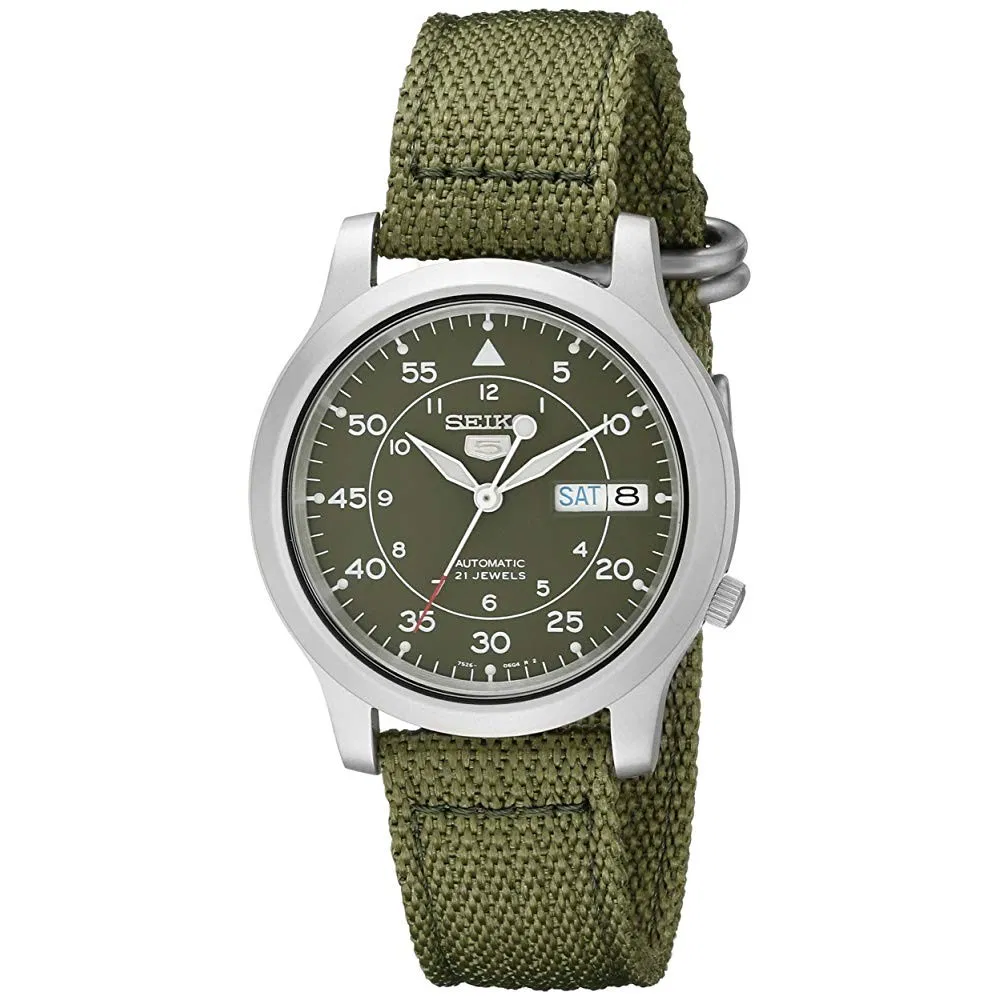
Seiko 5 SNK805 Green Military


Seiko 5 SNK805 Green Military

Seiko

★★★★★ 4.8 (6,961 reviews)

$89


Check Price on Amazon →


Browse all 142+ expert-reviewed watches →

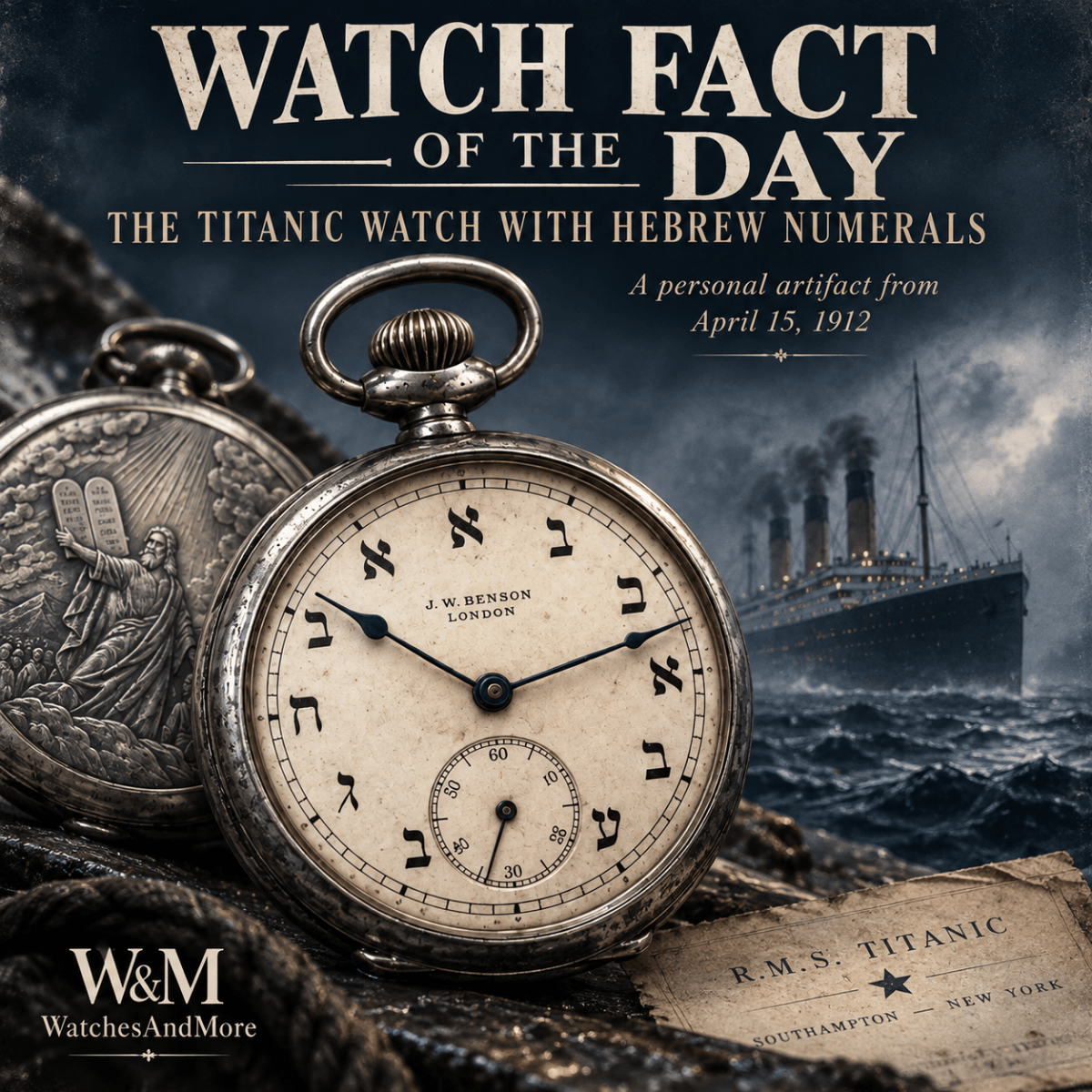
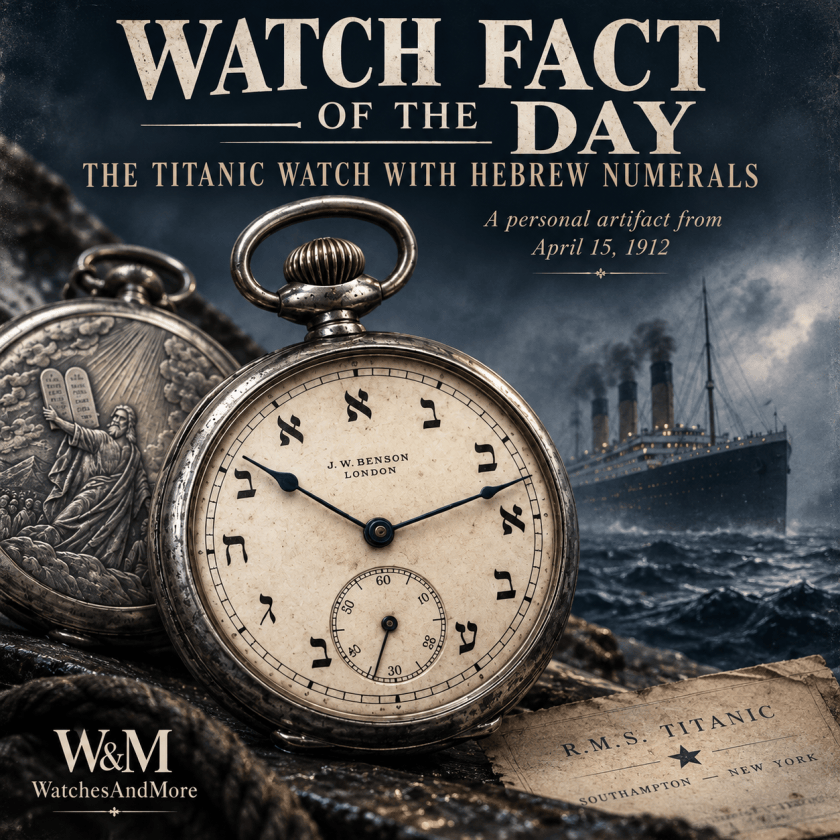
Watch Fact of the Day: The Titanic Pocket Watch with Hebrew Numerals

Sinai Kantor’s pocket watch, recovered from the Titanic wreckage, is a poignant artifact of human tragedy and resilience. This Swiss-made timepiece bears Hebrew numerals and an embossed depiction of Moses, connecting deeply to Kantor’s Jewish identity. As a second-class passenger, Sinai aimed to start anew in America with his wife, Miriam, who survived the disaster. The watch stopped around 2:25 a.m., leaving a haunting reminder of that fateful night. Its sale at auctions for impressive sums underscores its significance as a personal relic amidst the Titanic’s vast history, humanizing a tale often told through cold statistics.

Watch Fact of the Day: The Titanic Pocket Watch with Hebrew Numerals

📅 Thursday, September 17, 2026

Among the many personal objects recovered after the sinking of the RMS Titanic, one pocket watch stands out for both its appearance and the story of the man who carried it.

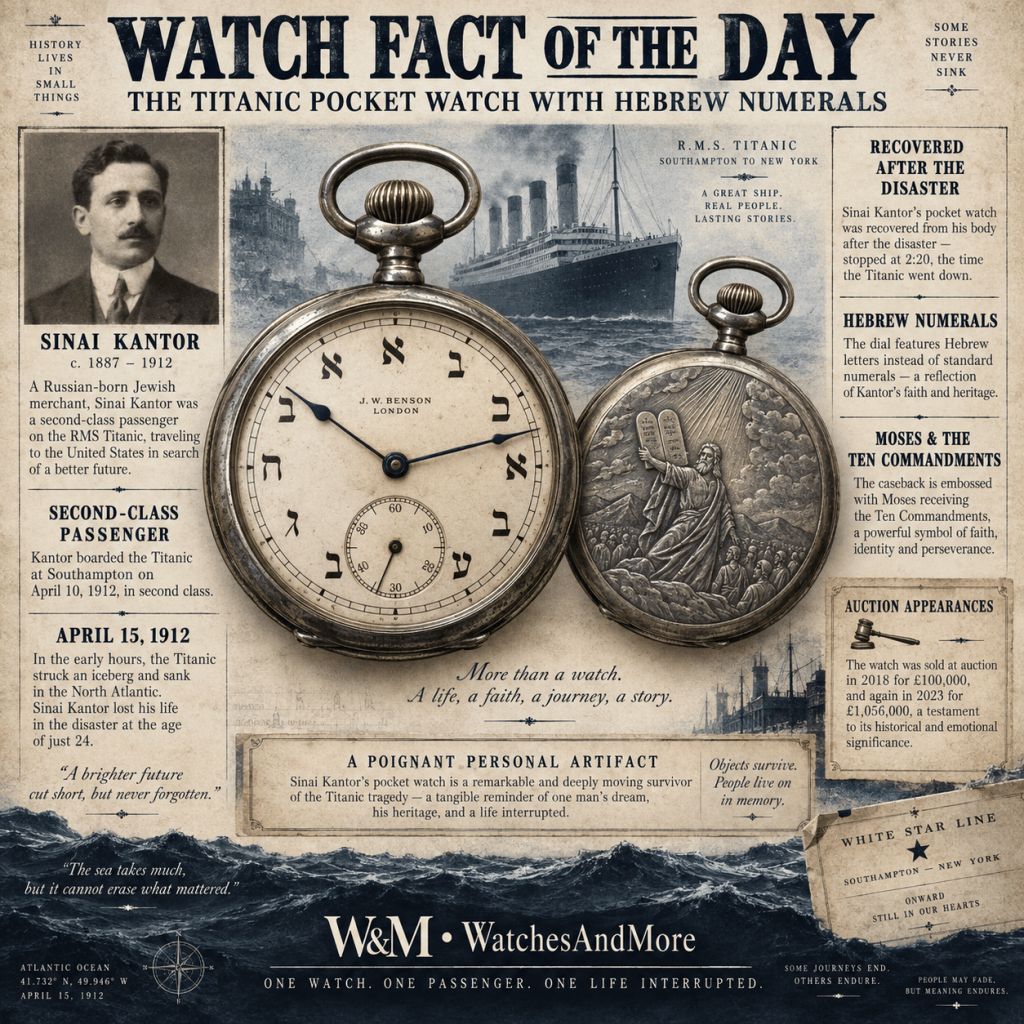
The watch belonged to Sinai Kantor, a 34-year-old Jewish immigrant from Vitebsk in the Russian Empire who was traveling to New York with his 24-year-old wife, Miriam. The couple boarded Titanic at Southampton as second-class passengers, hoping to begin a new life in America. Sinai was a furrier and reportedly intended to sell furs to help finance further study after their arrival. Miriam survived the disaster; Sinai did not.

What makes Kantor’s watch extraordinary is its unmistakably personal design.

The Swiss-made, open-face pocket watch has Hebrew letters in place of conventional numerals around the dial. Its back cover carries an embossed scene of Moses holding the Ten Commandments, making the watch not only a timekeeper but also an object closely connected to Kantor’s Jewish identity.

When Titanic sank in the North Atlantic in the early hours of April 15, 1912, Kantor was among the passengers who lost their lives. His body was later recovered by the cable ship CS Mackay-Bennett, and the pocket watch was among the belongings ultimately returned to his widow. Surviving documentation lists a “silver watch and strap” among his recovered effects, helping establish the watch’s provenance.

An illustrated article about Sinai Kantor's Titanic pocket watch, featuring Hebrew numerals. The image includes a vintage photo of Kantor, details about the watch's history, and its significance as a personal artifact from the Titanic disaster.

More than a century in salt water left its mark.

The hands are now almost completely deteriorated, the dial is stained, and the movement shows extensive rust. Yet dried water marks on the dial have been interpreted as indicating that the watch stopped at approximately 2:25 a.m. — only a few minutes after Titanic disappeared beneath the surface. That detail should be treated as an interpretation of the surviving marks rather than absolute proof of the exact moment the mechanism stopped, but it adds an undeniably haunting dimension to the object.

The watch has also become a significant Titanic collectible.

In 2018, Heritage Auctions sold it for $57,500. Then in 2023, it appeared at auction again and sold for £97,000, roughly $118,700 at the time. The dramatic increase reflects not just the watch itself, but the importance collectors place on objects with strong provenance and a deeply documented personal story.

💡 Did You Know?

Sinai and Miriam Kantor were not traveling as wealthy first-class passengers.

They were second-class immigrants heading toward a new life in New York.

Miriam survived in Lifeboat No. 12, while Sinai’s body was recovered days later. His effects eventually made their way back to her after considerable administrative effort.

That makes this watch much more than Titanic memorabilia.

It is one of the few surviving personal objects that still connects us directly to an individual passenger.

⭐ Why It Matters

Titanic is often remembered through statistics:

more than 1,500 dead
one enormous ship
one catastrophic night

But objects like Sinai Kantor’s pocket watch bring the story back down to human scale.

A watch.

A husband.

A wife.

A journey toward a new life.

A dial marked with Hebrew letters.

A back cover showing Moses and the Ten Commandments.

And a movement scarred by the Atlantic more than a century ago.

THE SHIP BECAME HISTORY.

THE WATCH REMAINED PERSONAL.


Category: Watch History

Disclaimer: Every effort has been made to keep these watch facts accurate, but the world of horology is full of myths, disputed stories, and fascinating trivia. Consider these facts a starting point for discovery rather than the final word. If you have corrections or additional insights, let us know—we’re always happy to keep the record ticking in the right direction.

🕐 Discover more watch facts, reviews, and buying guides at WatchesAndMore


🛍️ You Might Also Like

As an Amazon Associate and affiliate partner, WatchesAndMore earns from qualifying purchases.

Timex Weekender Chronograph
🔥 Deal of the Day

Timex Weekender Chronograph

Timex

★★★★★ 4.5 (3,041 reviews)

$79

Offer expires in


🔥 Grab This Deal →

Bulova Precisionist


Bulova Precisionist

Bulova

★★★★★ 4.6 (1,100 reviews)

$219


Check Price on Amazon →

Timex Marlin Automatic 40mm


Timex Marlin Automatic 40mm

Timex

★★★★★ 4.7 (1,106 reviews)

$259


Check Price on Amazon →


Browse all 142+ expert-reviewed watches →

Watch Fact of the Day: The 19th-Century Timekeeper That Used Mercury to Stay Accurate

Back in the day, clockmakers were on a mission to combat the effects of temperature on their timepieces. They created mercurial pendulums, where mercury in a jar at the bottom adjusted to heat changes, keeping clocks accurate. This nifty solution was a big deal before the advent of quartz and atomic clocks. While it was an impressive engineering feat, mercury wasn’t the safest material to work with. Eventually, better and safer methods replaced it, but the mercurial pendulum remains a cool example of how creativity and science played a role in crafting precise timepieces. Horology has always been about innovation, not just gears!

Fun Quirk: Sunday, September 13, 2026

📅 Sunday, September 13, 2026

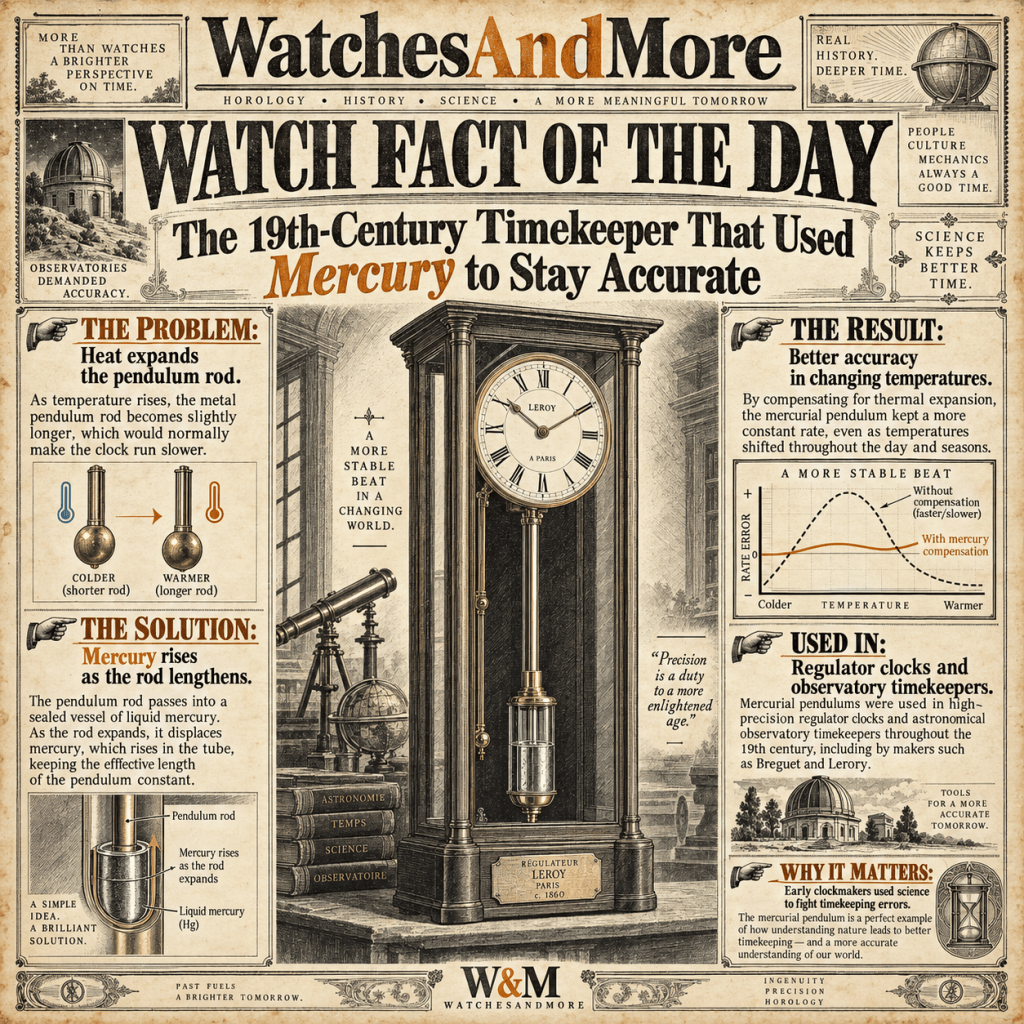
Long before modern alloys and electronic regulation, precision clockmakers searched for clever ways to fight one of timekeeping’s greatest enemies: temperature. As the weather changed, pendulum rods expanded and contracted, altering a clock’s rate. To solve the problem, some 19th-century regulators and observatory clocks used a mercurial pendulum, in which a jar of mercury at the bottom of the pendulum helped offset those changes. As the pendulum rod expanded downward in warmer temperatures, the mercury’s surface rose upward, compensating for the shift and helping the clock maintain far better accuracy.

The idea was both elegant and scientifically ingenious. Rather than fighting physics directly, clockmakers used one physical reaction to counteract another. This made mercurial pendulums an important step in the long quest for precision timekeeping, especially in observatory and regulator clocks where even tiny errors mattered. Before quartz and atomic timekeeping, this was cutting-edge technology—proof that great horology has always been as much about clever engineering as beautiful craftsmanship.

Of course, mercury came with obvious drawbacks. It was heavy, delicate to handle, and hazardous by modern standards, which meant these systems were never especially practical outside high-precision clockmaking. Over time, improved compensation pendulums and safer materials replaced them. Still, the mercurial pendulum remains one of the most fascinating examples of watchmakers and clockmakers using the science of their era to solve the eternal problem of keeping better time.

💡 Did You Know?

The mercurial pendulum wasn’t designed to make a clock run faster or slower on its own—it was designed to help the clock stay consistent as temperatures changed. That distinction made it a major breakthrough for scientific and observatory-grade timekeeping.

⭐ Why It Matters

This story shows that horology has never been just about gears and springs. It has always been about creative problem-solving. Long before computers and electronics, clockmakers were already using chemistry, physics, and materials science to chase greater precision.


Category: Fun Quirk

Disclaimer: Every effort has been made to keep these watch facts accurate, but the world of horology is full of myths, disputed stories, and fascinating trivia. Consider these facts a starting point for discovery rather than the final word. If you have corrections or additional insights, let us know—we’re always happy to keep the record ticking in the right direction.

🕐 Discover more watch facts, reviews, and buying guides at WatchesAndMore


🛍️ You Might Also Like

As an Amazon Associate and affiliate partner, WatchesAndMore earns from qualifying purchases.

G-Shock GWM5610-1 Solar Atomic
🔥 Deal of the Day

G-Shock GWM5610-1 Solar Atomic

Casio

★★★★★ 4.8 (5,621 reviews)

$129

Offer expires in


🔥 Grab This Deal →

G-Shock GA2100-1A1 CasiOak


G-Shock GA2100-1A1 CasiOak

Casio

★★★★★ 4.8 (2,156 reviews)

$99


Check Price on Amazon →

Casio Edifice Chronograph


Casio Edifice Chronograph

Casio

★★★★★ 4.7 (1,264 reviews)

$120


Check Price on Amazon →


Browse all 142+ expert-reviewed watches →

Watch Fact of the Day: The First Waterproof Watch Was Actually a Pocket Watch!

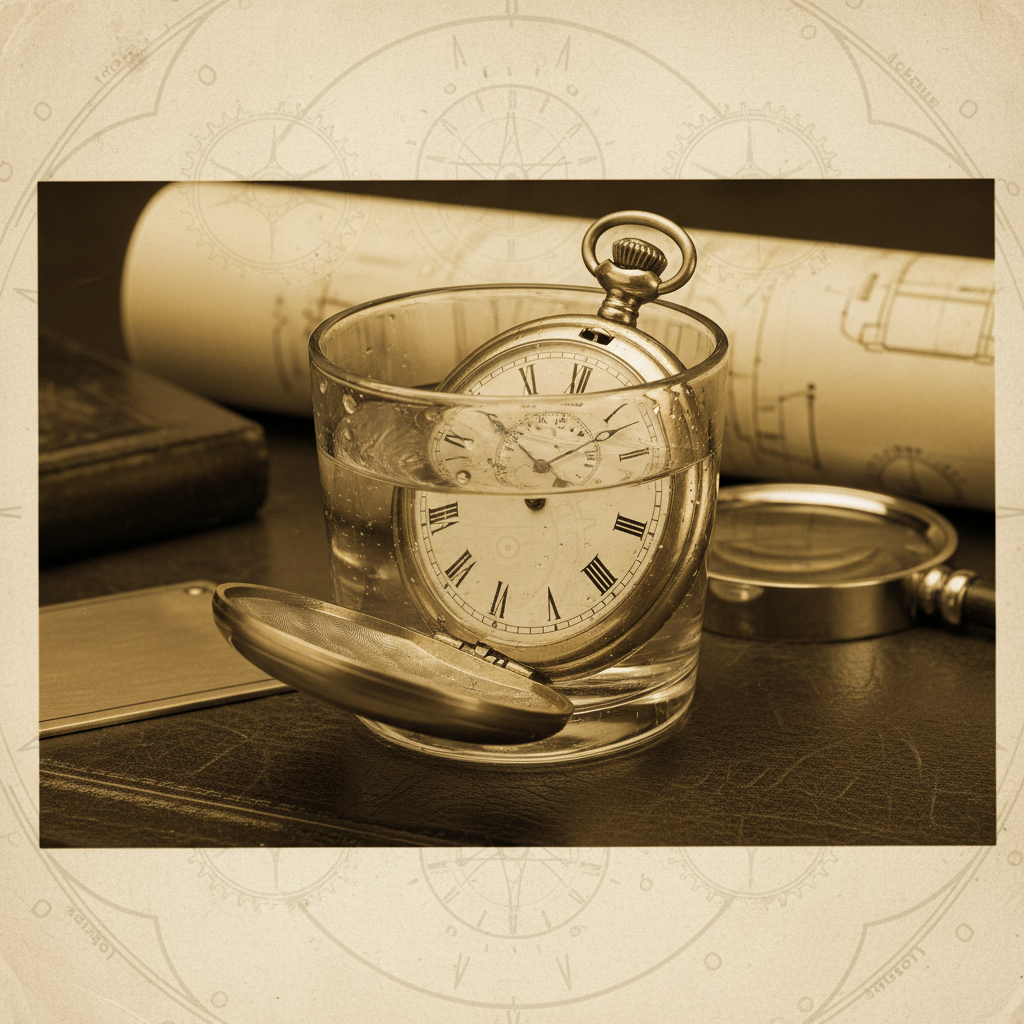
Once upon a time in the 1890s, a genius named François Borgel created the first waterproof pocket watch. Yes, before Rolex made it fashionable in 1926, Borgel was sealing time like a pro with his nifty screw-down case. It’s like he was the watchmaker’s version of a mad scientist, laying the groundwork for timepieces enduring monstrous water battles. So, while Rolex gets the glory, it’s Borgel who deserves the VIP pass to the horology hall of fame. Picture a gold pocket watch chilling half-submerged in water, like: “Before the Oyster, there was Borgel!” And there you have it, timekeeping’s legendary origin story—splash zone included!

Watch History: Friday, August 7, 2026

📅 Friday, August 7, 2026

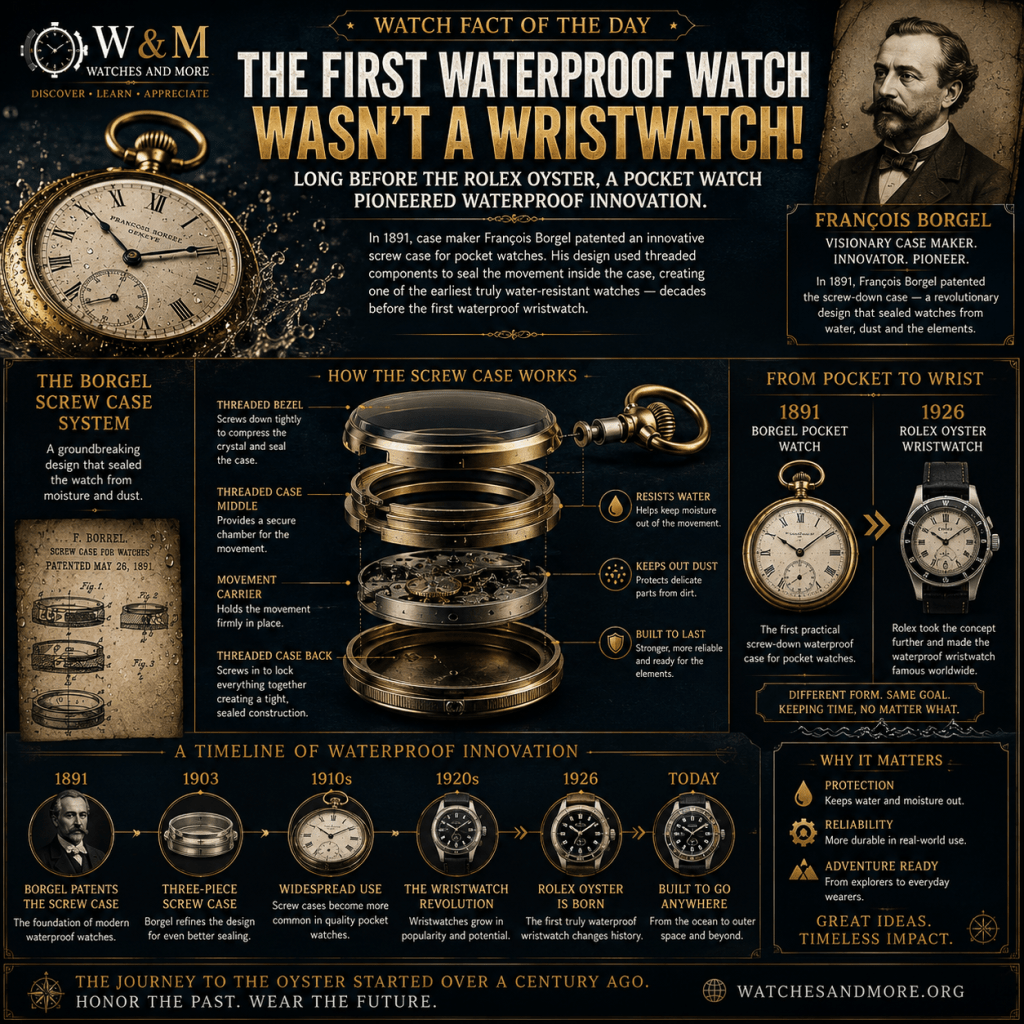
While Rolex is often credited with popularizing the waterproof wristwatch with its Oyster case in 1926, the very first truly waterproof timepiece was a pocket watch created by François Borgel in 1890. His patented screw-down case design, featuring a threaded bezel, case back, and crown, was revolutionary and predated Rolex’s innovation by decades. This early design laid crucial groundwork for the development of robust watches capable of withstanding the elements, long before wristwatches became commonplace.


Borgel continued refining the idea, eventually patenting a three-piece screw case in 1903 whose construction—with threaded components securing the case—anticipated principles that would later become important in waterproof wristwatch design. Borgel cases were subsequently used with movements from respected Swiss manufacturers, making his work an important chapter in the evolution from delicate pocket watches to rugged wristwatches capable of surviving demanding environments.

Then, in 1926, Rolex’s Oyster would take the concept of a sealed wristwatch to another level and, crucially, turn water resistance into something the public could understand and trust. But the road to the Oyster didn’t begin overnight: watchmakers and specialist case makers had been attacking the problem for decades.

💡 Did You Know?

Borgel’s contribution wasn’t primarily the watch movement—it was the case. That actually gives us a killer visual direction for the W&M infographic: an exploded Borgel pocket-watch case, showing how the components screwed together, followed by an evolutionary timeline leading toward the waterproof wristwatch.

Category: Watch History

Disclaimer: Every effort has been made to keep these watch facts accurate, but the world of horology is full of myths, disputed stories, and fascinating trivia. Consider these facts a starting point for discovery rather than the final word. If you have corrections or additional insights, let us know—we’re always happy to keep the record ticking in the right direction.

🕐 Discover more watch facts, reviews, and buying guides at WatchesAndMore


🛍️ You Might Also Like

As an Amazon Associate and affiliate partner, WatchesAndMore earns from qualifying purchases.

Timex Weekender Chronograph
🔥 Deal of the Day

Timex Weekender Chronograph

Timex

★★★★★ 4.5 (3,041 reviews)

$79

Offer expires in


🔥 Grab This Deal →

Bulova Precisionist


Bulova Precisionist

Bulova

★★★★★ 4.6 (1,100 reviews)

$219


Check Price on Amazon →

Timex Marlin Automatic 40mm


Timex Marlin Automatic 40mm

Timex

★★★★★ 4.7 (1,106 reviews)

$259


Check Price on Amazon →


Browse all 142+ expert-reviewed watches →
ETSY Shop
ETSY Shop
Redbubble Shop
Redbubble Shop
More Watch Facts
More Watch Facts