📅 Tuesday, September 8, 2026
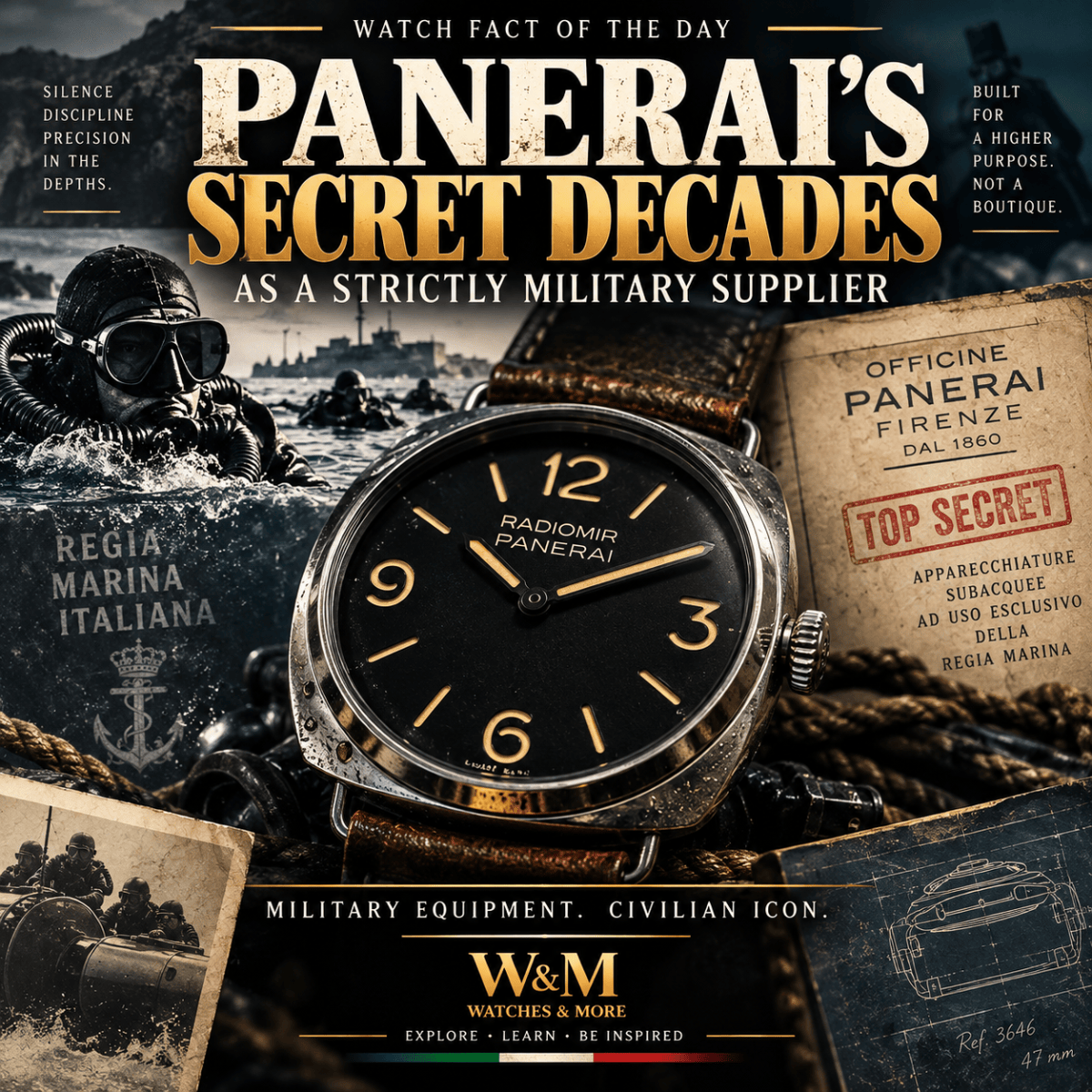
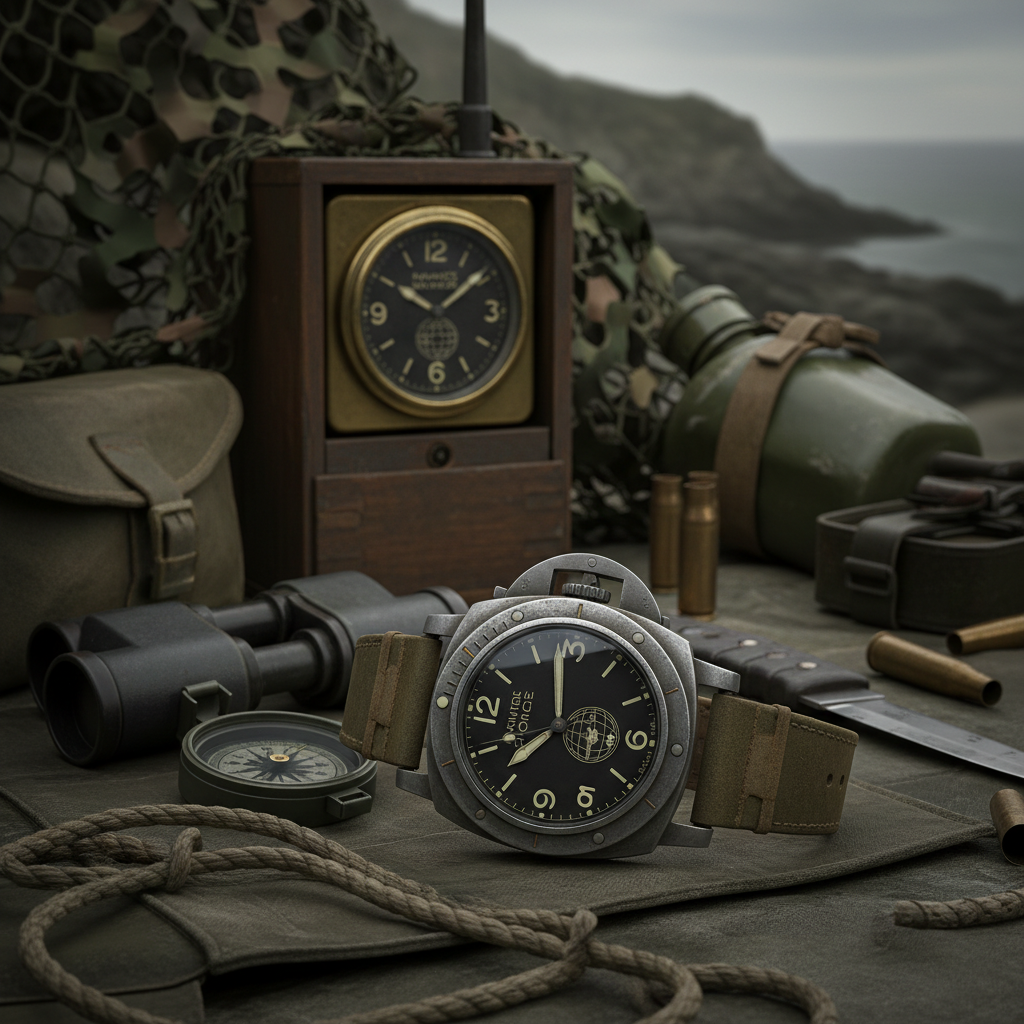
Long before Panerai became one of the most recognizable names in luxury sports watches, its oversized timepieces weren’t sitting in boutique windows. They were being developed as military instruments for Italian naval forces, and for decades the watches and much of the technology behind them remained far removed from the civilian market.
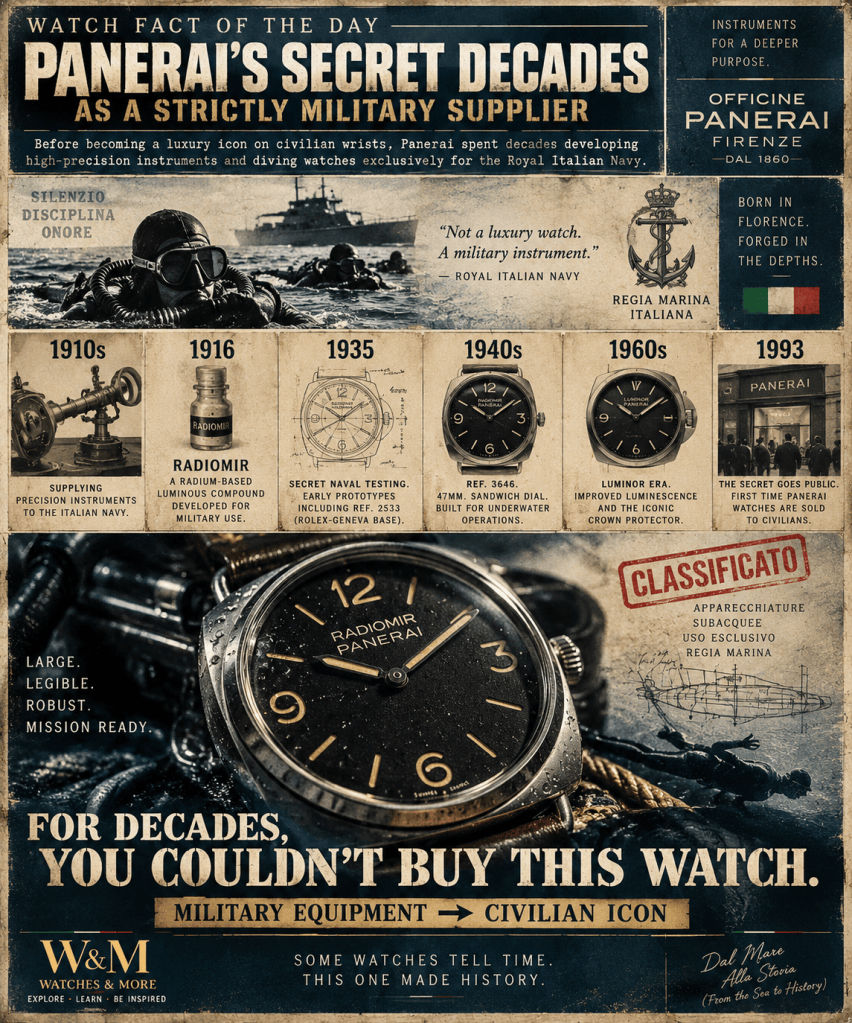
Panerai’s military relationship actually predates its famous diving watches. Beginning in the 1910s, the Florentine company supplied the Italian Navy with precision instruments, including naval combat sights. In 1916, Panerai documented the name Radiomir for a radium-based luminous compound developed to make military instruments readable in darkness.
Then things became considerably more interesting beneath the surface.
In 1935, the Royal Italian Navy began a secret program involving new underwater assault vehicles and operators. Panerai participated by developing specialized instruments, including experimental underwater watches. According to Panerai’s account of Italian Navy archives, several prototypes were commissioned for testing, with Ref. 2533, based on a watch supplied by Rolex-Geneva and modified by Panerai, emerging as the best result.
By the 1940s came the legendary Radiomir Ref. 3646. It was enormous by contemporary standards: approximately 47 mm, with a cushion-shaped steel case, welded wire lugs and a long water-resistant leather strap designed to fit over protective diving clothing. Inside was a hand-wound Cortebert/Rolex 618 pocket-watch-derived calibre.
But arguably its most important feature was what happened in darkness.
Panerai developed its now-famous sandwich dial, using overlapping plates and large cut-out numerals and markers so the luminous material underneath could shine through strongly. Radiomir’s radium-based compound provided extraordinary visibility in poor-light conditions—exactly what naval operators needed underwater. The hazardous radium material was eventually replaced by a lower-radiation tritium-based compound called Luminor, which would give another legendary Panerai family its name.
The watches weren’t luxury accessories. They were purpose-built military tools, developed around requirements for visibility, water resistance, robustness and operation under extreme conditions. Panerai itself says the watches were produced strictly for military use and used by the forces into the early 1970s, while their designs remained protected by military secrecy.
And that’s what makes 1993 such an extraordinary dividing line in Panerai history.
For the first time, Officine Panerai entered the civilian watch market, unveiling limited and numbered versions of the Luminor, Luminor Marina and Mare Nostrum. The collection was presented on September 10, 1993, appropriately enough at the military harbor of La Spezia aboard the Italian Navy vessel Durand De La Penne. Panerai’s own historical account explicitly describes this moment as relieving CEO Dino Zei from maintaining military secrecy over these products.
Suddenly, a design language that had spent decades associated with naval specialists could be purchased by ordinary enthusiasts.
💡 Did You Know?
Those gigantic early Panerai watches weren’t oversized simply to make a fashion statement. The 47 mm case, highly luminous dial, minimal hour markings and long strap all made sense as functional equipment intended to remain legible and wearable in demanding underwater conditions—including over protective clothing.
What looks unmistakably “Panerai” today was largely born from function rather than fashion.
47 MM CASE → MAXIMUM LEGIBILITY
SANDWICH DIAL → POWERFUL LUMINESCENCE
LONG STRAP → OVER DIVING GEAR
ROBUST CONSTRUCTION → MILITARY DUTY
⭐ Why It Matters
Panerai’s story is unusual because the civilian luxury brand effectively arrived after much of its visual identity had already been established for an entirely different purpose.
The cushion-shaped cases, enormous numerals, sandwich dials, luminous displays and later crown-protection system weren’t originally designed to make a watch recognizable from across a cocktail lounge.
They were solutions to military requirements.
Then in 1993, the secret finally stepped into civilian life.
BUILT FOR THE NAVY.
HIDDEN FOR DECADES.
RELEASED TO THE PUBLIC.
Category: Military Watches
Disclaimer: Every effort has been made to keep these watch facts accurate, but the world of horology is full of myths, disputed stories, and fascinating trivia. Consider these facts a starting point for discovery rather than the final word. If you have corrections or additional insights, let us know—we’re always happy to keep the record ticking in the right direction.
🕐 Discover more watch facts, reviews, and buying guides at WatchesAndMore
🛍️ You Might Also Like
As an Amazon Associate and affiliate partner, WatchesAndMore earns from qualifying purchases.