Watch Fact of the Day
📅 Monday, October 12, 2026
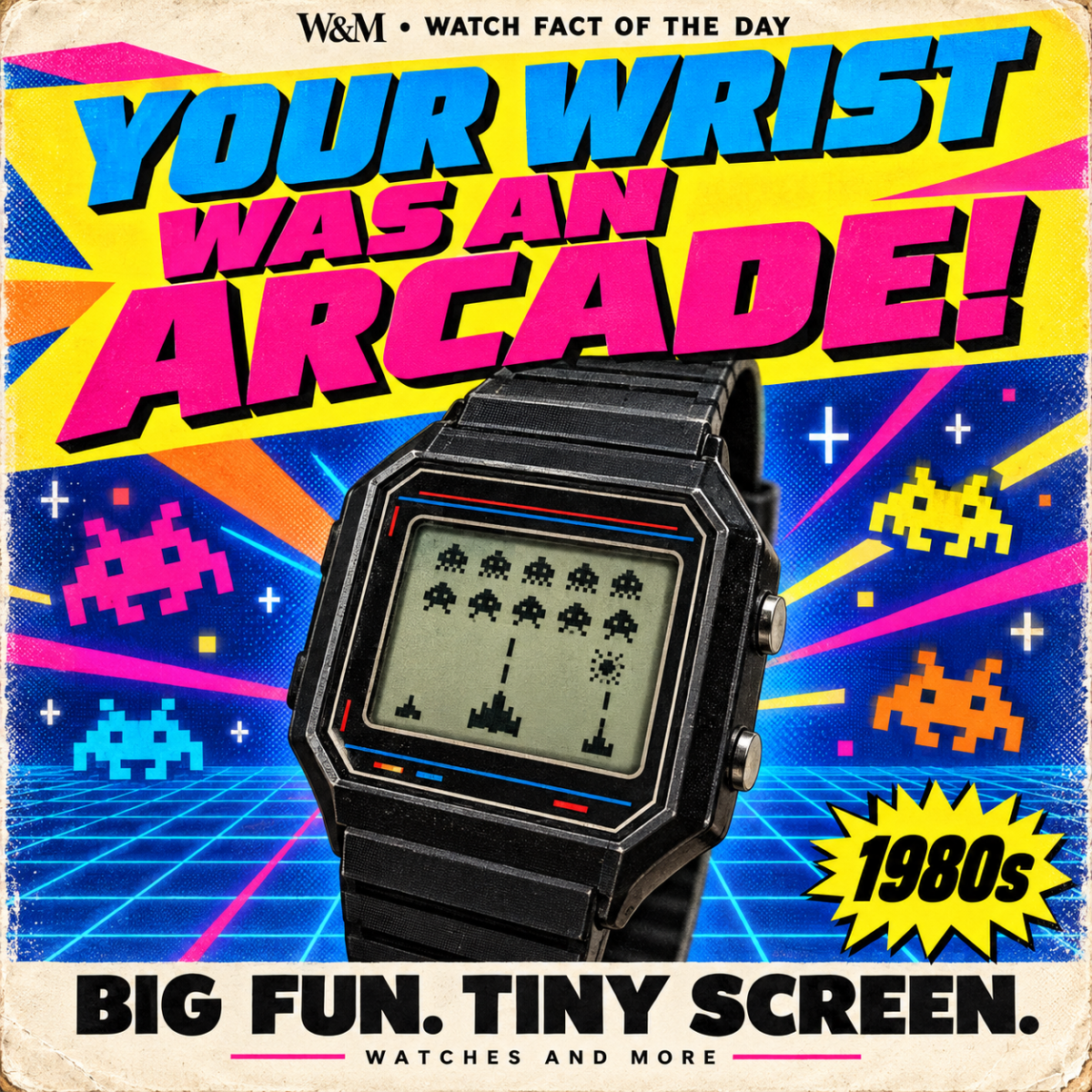
Before smartwatches, a few tiny buttons and an LCD screen were all you needed to battle aliens between checking the time.
Imagine looking down at your watch and facing an alien invasion.
Your mission? Move your spaceship, fire back, and survive—on a screen small enough to hide beneath your sleeve.
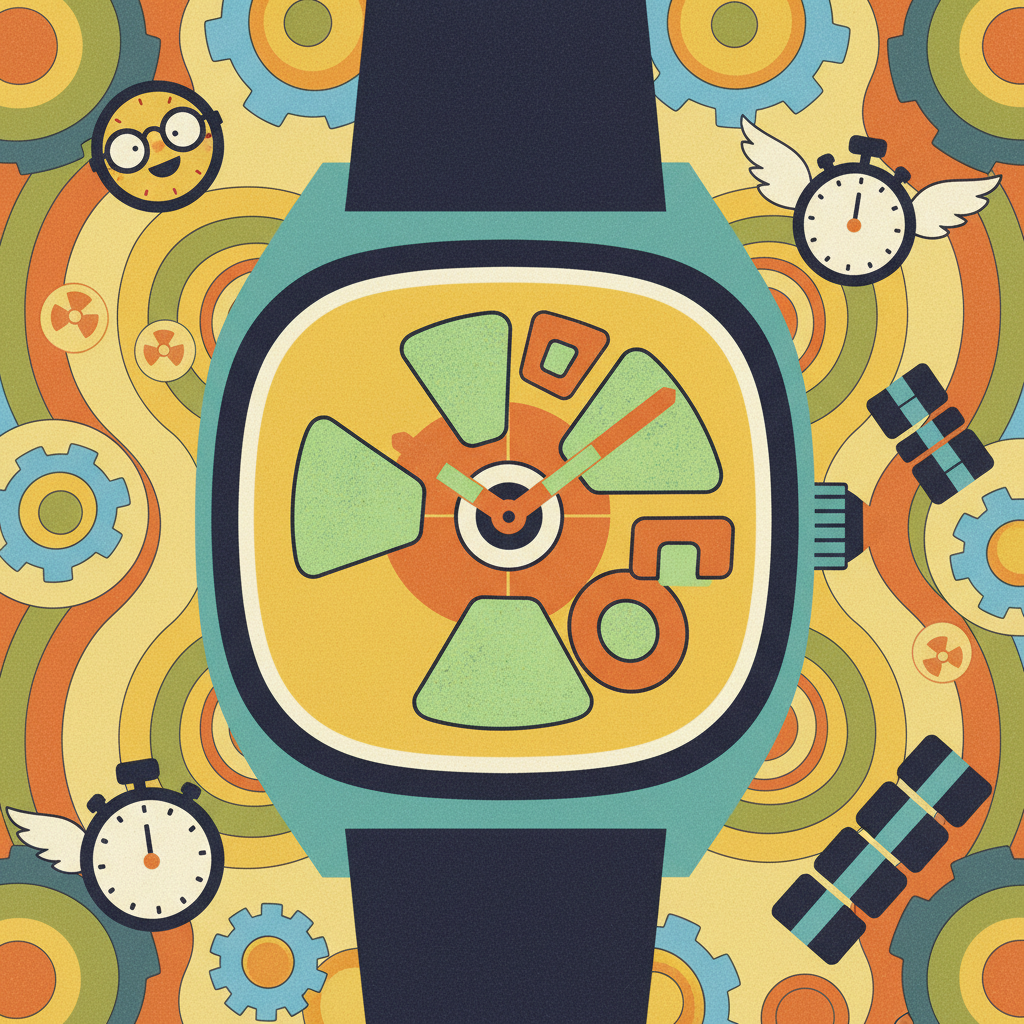
Welcome to the wonderfully geeky world of LCD game watches, where timekeeping met arcade action and your wrist became the coolest gadget in the room.
For a generation discovering digital technology, these watches offered something irresistible: a little piece of the future you could actually wear.
⏱️ First Came the Digital Revolution
Before watches could entertain us, manufacturers had to squeeze increasingly capable electronics into remarkably small cases.
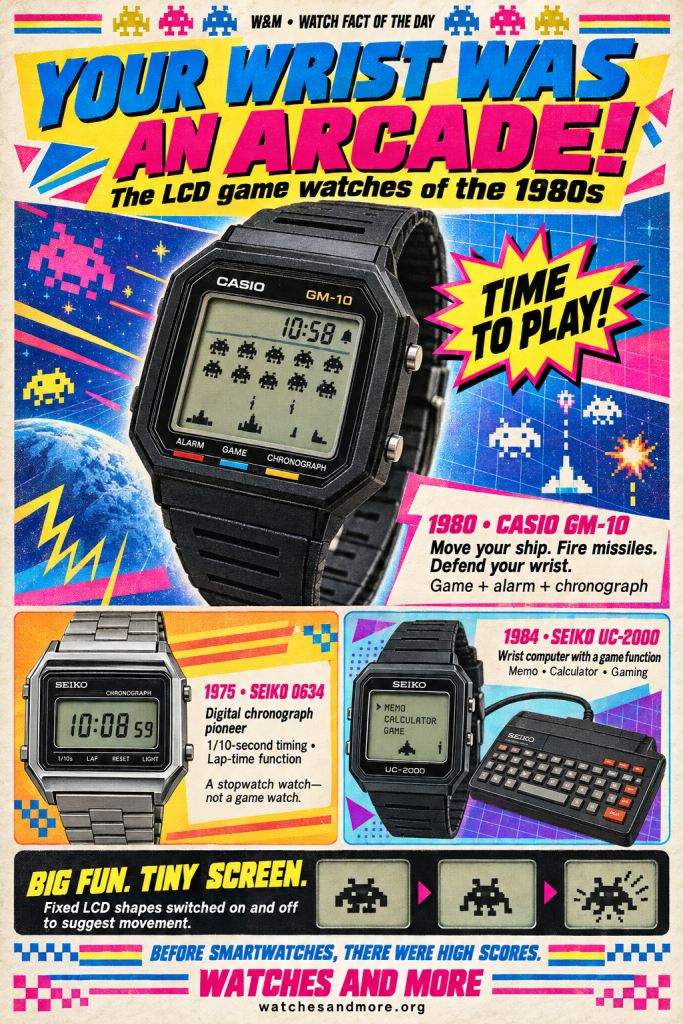
In 1975, Seiko introduced its 0634 digital quartz chronograph, which the company identifies as the world’s first digital quartz watch with a chronograph. It measured elapsed time to one-tenth of a second, included a lap-time function, and featured an internal light.
That watch didn’t contain a game. But it belonged to an exciting new era in which buttons and digital displays expanded what a wristwatch could do.
Once your watch could time a race, the next question practically asked itself:
Could it let you play one?
👾 Meet the Tiny Wrist Arcade
One memorable example was the Casio GM-10, also known as the Game-10, documented by vintage electronics specialists as a 1980 model.
Its attraction was a miniature space battle. Using two buttons on the right side, players manoeuvred a ship and fired missiles at attacking aliens. It also offered an alarm and chronograph, so the entertainment came alongside practical watch functions.
Think about the appeal.
An arcade machine was something you visited. A home console was something you sat down to play.
This game went wherever your wrist went.
Waiting around suddenly had possibilities. So did the dangerous phrase: “Just one more go.”
🕹️ Big Imagination, Tiny Screen
The magic of these early game watches came from how much entertainment designers could squeeze into so little space.
Many used fixed LCD shapes that switched on and off in sequence, creating the impression of movement. The games depended on simple actions, timing, and repetition rather than elaborate graphics.
A few changing shapes could become a challenge. A tiny button could become the difference between survival and defeat.
There’s a lovely design lesson in that: you don’t need a huge screen to create a big moment.
💡 Did You Know?
Seiko also put gaming into a wrist computer.
Its 1984 UC-2000 worked with an external controller and keyboard, using electromagnetic induction to transfer character data. Alongside memo and calculator functions, Seiko’s official history lists a game function.
That makes a fascinating pairing: Casio’s miniature arcade action and Seiko’s more ambitious approach to wrist computing.
The wrist was becoming a place to experiment.
⭐ Why It Matters
Game watches deserve a place in wearable technology history because they made a compelling promise:
A watch could be something you interacted with for pleasure.
We can see them as early expressions of an idea that modern smartwatches would explore much further: the wrist as a home for useful tools, information, and entertainment.
That’s a historical connection, rather than proof that game watches directly caused the smartwatch revolution. Their contribution was helping make a multifunction watch feel exciting—and personal.
They didn’t simply tell you the time.
They gave you a reason to spend a little time with them.
❤️ The W&M Take: High Scores, Small Screens, Huge Charm
At Watches And More, we love watches with a story. And a watch that lets you defend your wrist against aliens? That’s a pretty good one.
These little electronic adventures capture a wonderful moment in design history, when digital displays felt futuristic and manufacturers were willing to ask playful questions.
What else could a watch become?
Sometimes the answer was a calculator. Sometimes it was a wrist computer.
And sometimes, gloriously, it was an arcade.
Before gaming lived in our pockets, a little of it lived on our wrists.
⌚ Keep exploring the world of watches:
What would you choose for your wrist: a space battle, a racing game, or good old-fashioned timekeeping?
Category: Fun Quirk
Disclaimer: Every effort has been made to keep these watch facts accurate, but the world of horology is full of myths, disputed stories, and fascinating trivia. Consider these facts a starting point for discovery rather than the final word. If you have corrections or additional insights, let us know—we’re always happy to keep the record ticking in the right direction.
🕐 Discover more watch facts, reviews, and buying guides at WatchesAndMore
Read Next
Casio F-91W: The Everyday Watch in Counter-Terrorism Files
Hamilton Pulsar P1: The 1972 LED Time Computer
Join the Conversation
Did you own a game watch—and which game would you bring back? Share your thoughts in the comments.
Explore watches in the W&M Watch Database.



📚 Sources & Further Reading
Further reading: Fondation de la Haute Horlogerie — watchmaking glossary