Watch Fact of the Day
📅 Saturday, October 10, 2026
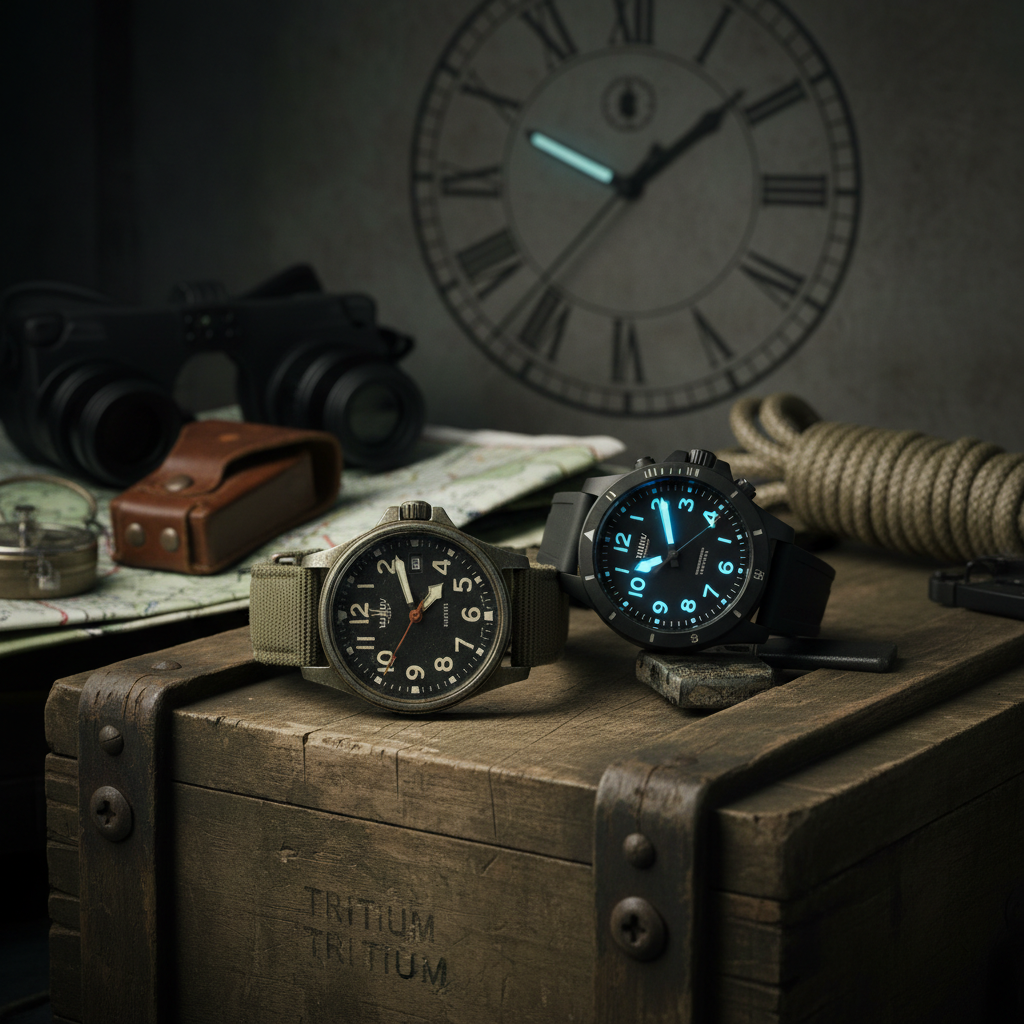
No flashlight. No backlight button. Just a little atomic science keeping the dial visible in the dark.
Imagine putting your watch in a dark drawer.
Hours later, you take it out. Its markers are still glowing—even though you never charged them under a lamp.
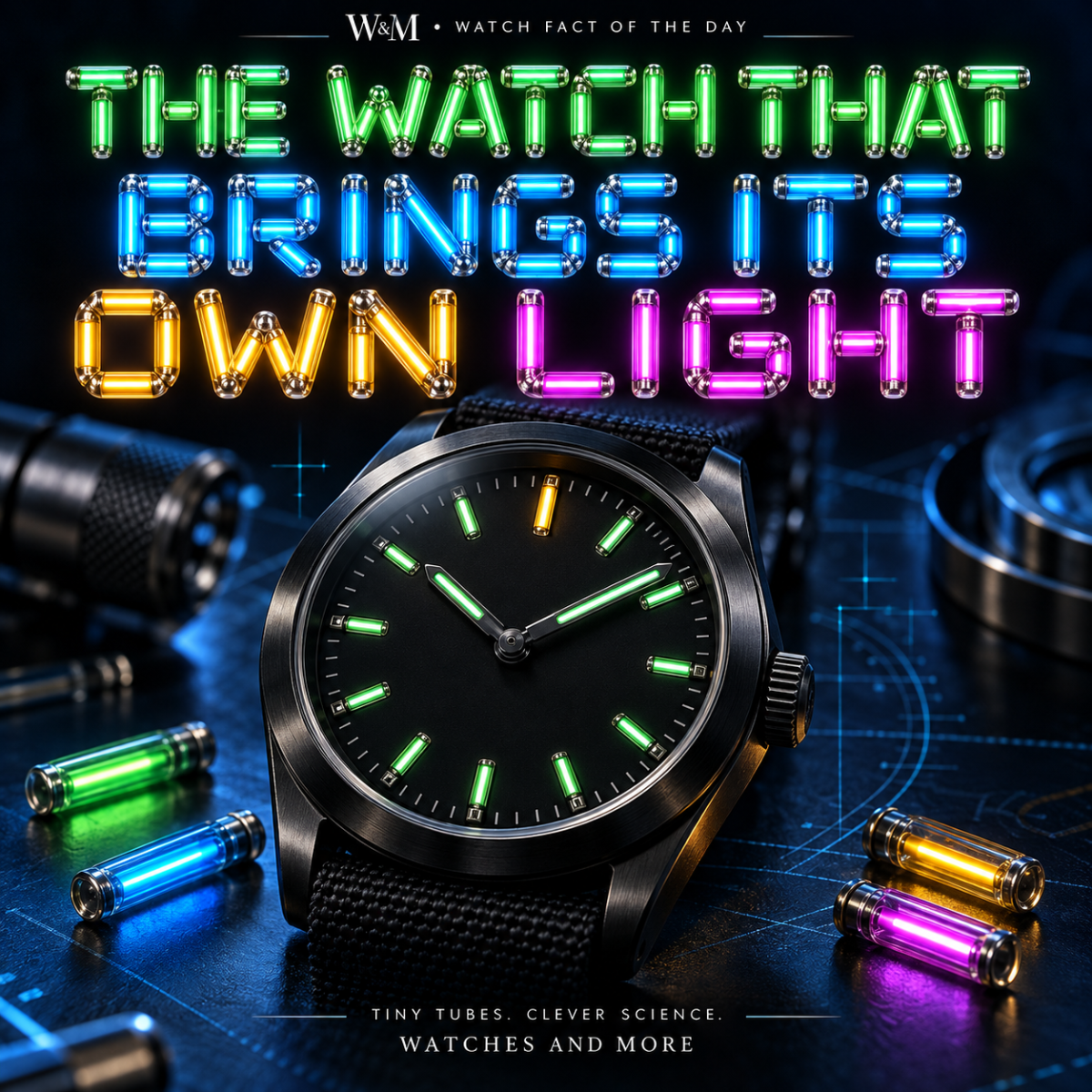
For watches fitted with tritium gas tubes, that’s the everyday magic: miniature light sources that generate their own illumination.
It’s a fascinating meeting of watchmaking, glass engineering, and physics. And those little glowing bars give the dial a character all its own.
🔬 Tiny Tubes, Clever Science
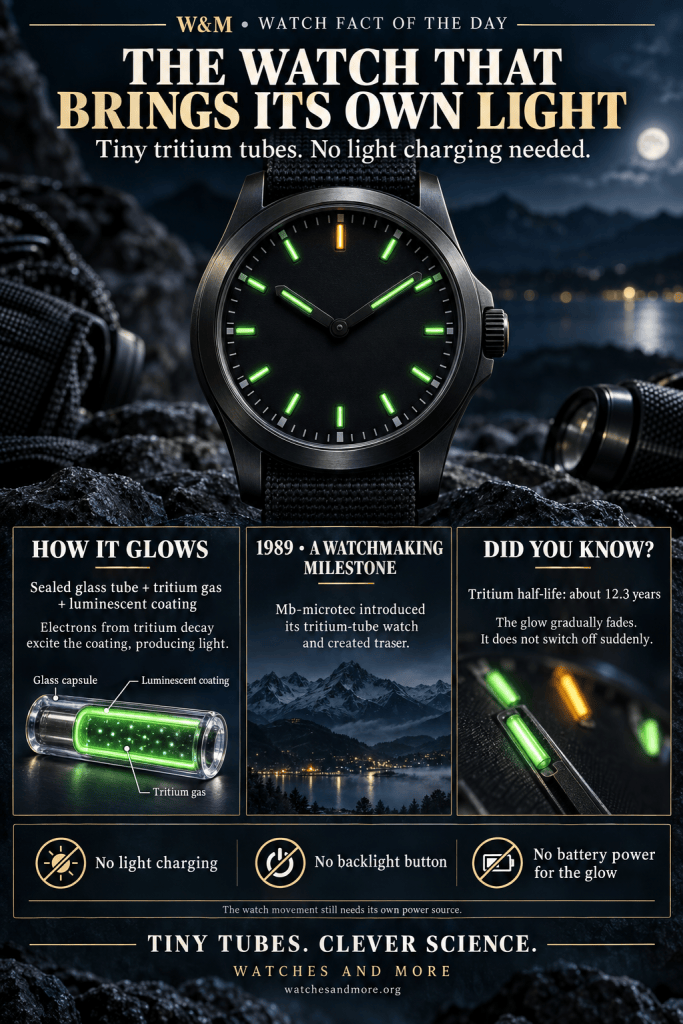
A tritium light tube is a miniature sealed glass capsule. Inside is tritium gas, while the inner surface carries a luminescent coating.
Tritium is a radioactive isotope of hydrogen. As it decays, it releases electrons that excite the coating, producing light. The coating determines the colour of the glow.
The result is wonderfully practical: illumination that needs no external light to charge it and no electricity from the watch battery.
The watch movement still needs its own power source. The glowing tubes handle their lighting independently.
Tiny capsules. Big idea.
⏱️ A Documented Watchmaking Milestone
Swiss specialist mb-microtec traces its history to 1969. Its official timeline identifies 1989 as the year it developed and introduced its self-illuminating watch, leading to the creation of the traser brand.
That milestone belongs to the story of sealed gas-tube illumination.
It’s worth keeping the terminology straight: tritium luminous paint and tritium gas tubes are different ways of using radioactive energy to produce light. A painted luminous marker isn’t a miniature glass capsule.
The tubes brought a distinctive physical element to the watch face—small components that could be positioned where readability mattered.
🌙 A Dial That Brings Its Own Light
Luminox provides a familiar example of this approach. Its watches place self-powered micro-gas tubes on the hands and hour markers, with tubes also used on bezels where required. They glow without needing exposure to an external light source.
For the wearer, the appeal is simple.
You can check the time in darkness without first reaching for a light or pressing a button.
For a designer, there’s another attraction: the little bars become part of the dial’s visual language. They can give it an instrument-like appearance, with the lighting components clearly contributing to its layout.
Function becomes part of the look.
💡 Did You Know?
The glow gradually weakens over time.
Tritium has a half-life of approximately 12.3 years. After that period, roughly half the original tritium remains. Its declining activity contributes to reduced light output as the tubes age.
A half-life isn’t an expiry date. The tubes don’t suddenly switch off on an anniversary.
Their light fades progressively—a reminder that even this remarkable technology follows the clock of physics.
⭐ Why It Matters
Tritium tubes offer an elegant solution to a very ordinary problem: reading the time when there’s little or no light.
They also show how a useful component can shape a product’s identity.
Those visible capsules help create the purposeful appearance associated with many tactical and outdoor watches. Their appeal comes from the connection between what you see and what it does.
It’s watch design with a practical reason behind the glow.
❤️ The W&M Take: A Little Physics on Your Wrist
Some watches impress us with elaborate movements. Others win us over with rugged cases or beautiful dials.
A tritium-tube watch adds another kind of fascination: tiny sealed light sources quietly doing their job in the dark.
No charging ritual for the lume. No button required.
Just a clever piece of engineering that makes an everyday glance at your wrist a little more interesting.
Sometimes the coolest watch feature is the one you appreciate after the lights go out.
⌚ Explore more watch stories:
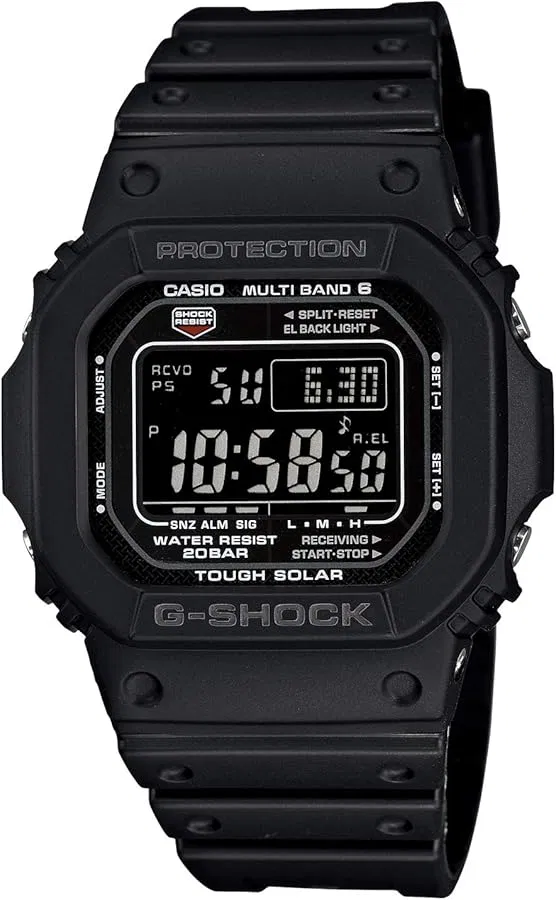
What’s your favourite way to light up a watch: glowing paint, tritium tubes, or a classic digital backlight?
Category: Fun Quirk
Disclaimer: Every effort has been made to keep these watch facts accurate, but the world of horology is full of myths, disputed stories, and fascinating trivia. Consider these facts a starting point for discovery rather than the final word. If you have corrections or additional insights, let us know—we’re always happy to keep the record ticking in the right direction.
🕐 Discover more watch facts, reviews, and buying guides at WatchesAndMore
Read Next
The Radium Girls: The Human Cost of Glowing Watch Dials
The Niagara Watch: An Unusual Approach to Dial Lighting
Join the Conversation
Do you prefer tritium tubes, luminous paint, or a digital backlight? Share your thoughts in the comments.
Explore watches in the W&M Watch Database.



📚 Sources & Further Reading
Further reading: Fondation de la Haute Horlogerie — watchmaking glossary