📅 Monday, October 5, 2026
At the beginning of the 16th century, clocks were beginning to do something extraordinary:
THEY WERE LEAVING THE TABLE.
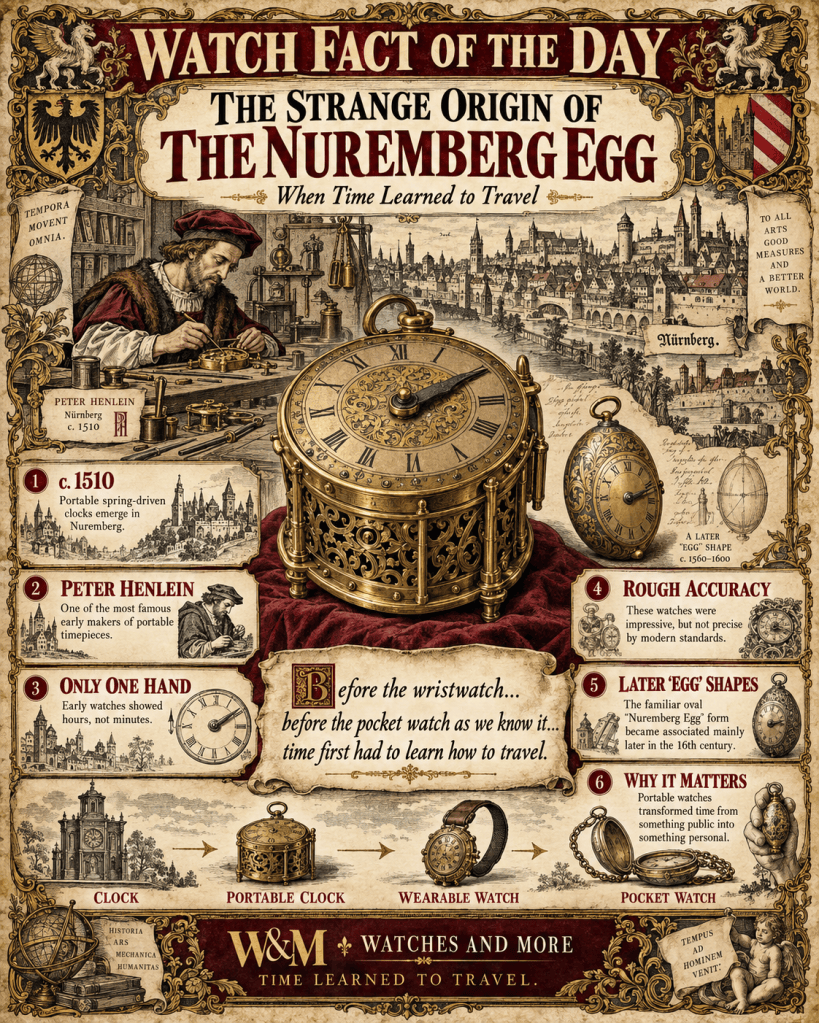
Spring-driven mechanisms allowed clockmakers to shrink timekeeping machines enough that wealthy owners could carry them on the body.
Nuremberg became one of the important centers of this emerging craft, and one of its most famous early makers was Peter Henlein.
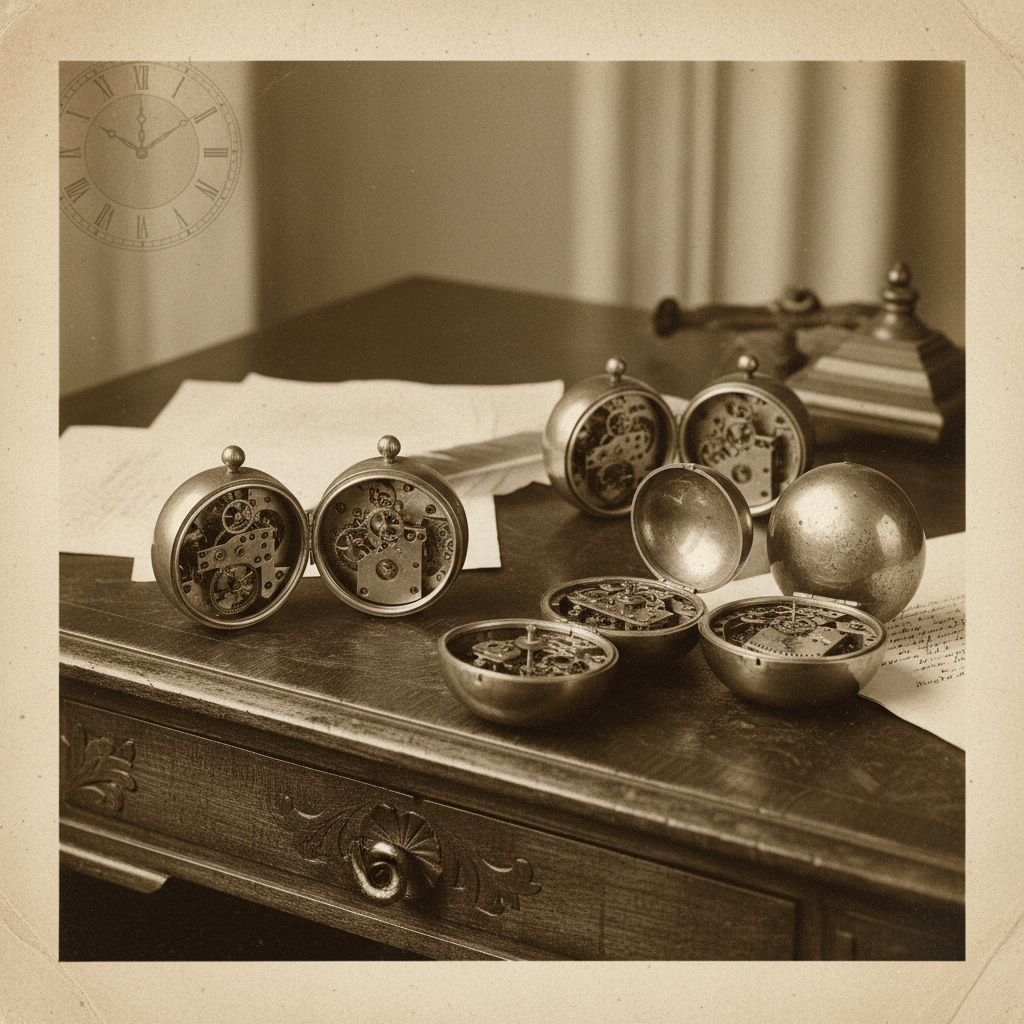
By around 1510, Henlein was producing small portable spring-driven clocks that could continue running while being carried—an impressive achievement at a time when most clocks still depended on weights and fixed installations. Contemporary accounts praised his ability to make tiny multi-wheel clocks that could run while being worn or carried. Wikipedia
But those early devices were not quite the elegant pocket watches we imagine today.
They were often:
thick
drum-shaped
heavy
highly ornamental
and equipped with only:
ONE HOUR HAND.
Their accuracy was crude by modern standards, and they were as much pieces of status jewelry and mechanical curiosity as they were precision instruments. Wikipedia
🥚 So Where Did the “Egg” Come From?
Here’s where the story gets fun.
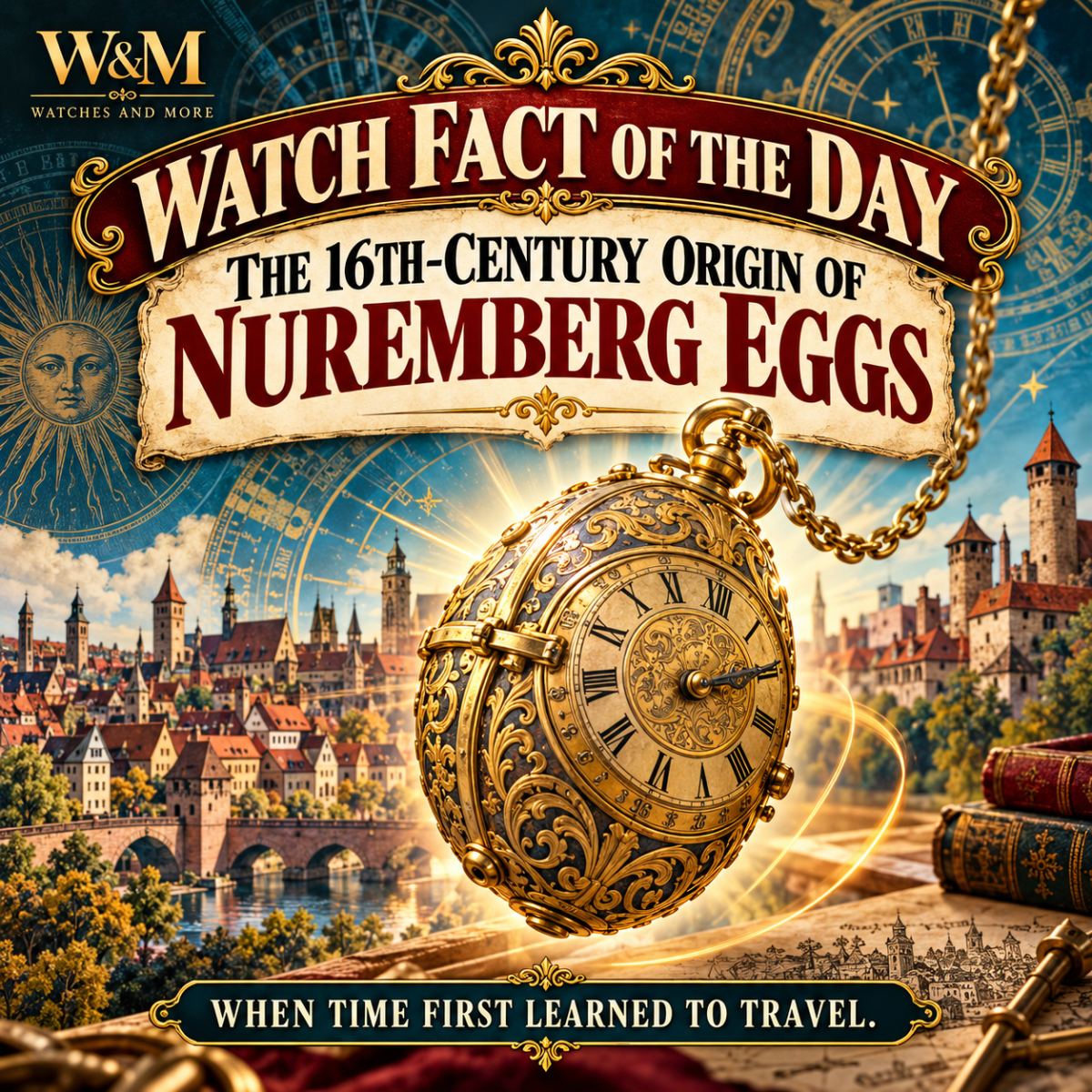
The famous oval watches now called “Nuremberg Eggs” became popular later in the 1500s—well after Henlein’s death in 1542. Historical summaries place the true egg-shaped forms mainly from around the 1580s. Wikipedia
Even the name may not originally have referred to the shape.
One explanation is that the German word “Eierlein”—little egg—developed from a corruption of an older diminutive for “little clock” or “little watch.” Only later did the egg association become literal in the shape of the cases. Wikipedia
So the famous nickname may have helped create the design people later associated with it.
That is wonderfully backwards.
Why Only One Hand?
Early portable watches were not accurate enough to justify a minute hand.
Their regulating systems were primitive, and daily errors could be substantial. Showing minutes would have suggested a precision the mechanism simply did not possess.
So the owner got:
THE HOUR.
APPROXIMATELY.
And that was enough.
This was still revolutionary.
For the first time, a person could carry mechanically measured time with them rather than relying entirely on a public clock, church bell, or fixed domestic clock.
💡 Did You Know?
Portable watches did not begin with Henlein.
The Met traces wearable watch development to around 1500 or slightly earlier, with smaller spring-driven portable clocks existing as early as the mid-15th century. Henlein’s importance was in the remarkable miniaturization and spread of portable timekeeping—not in single-handedly inventing the concept from nothing. The Metropolitan Museum of Art
That distinction actually makes the history more interesting.
This wasn’t one sudden invention.
It was an evolution.
CLOCK → PORTABLE CLOCK → WEARABLE WATCH → POCKET WATCH
⭐ Why It Matters
The so-called Nuremberg Egg represents one of the great transitions in horology.
Before this period, time was mostly something you went somewhere to find.
A tower.
A church.
A room.
A public square.
Portable watches began turning time into something personal.
Something you could wear.
Something you could carry.
Something that belonged to you.
BEFORE THE WRISTWATCH…
BEFORE THE POCKET WATCH AS WE KNOW IT…
TIME FIRST HAD TO LEARN HOW TO TRAVEL.
Category: Watch History
Disclaimer: Every effort has been made to keep these watch facts accurate, but the world of horology is full of myths, disputed stories, and fascinating trivia. Consider these facts a starting point for discovery rather than the final word. If you have corrections or additional insights, let us know—we’re always happy to keep the record ticking in the right direction.
🕐 Discover more watch facts, reviews, and buying guides at WatchesAndMore
🛍️ You Might Also Like
As an Amazon Associate and affiliate partner, WatchesAndMore earns from qualifying purchases.
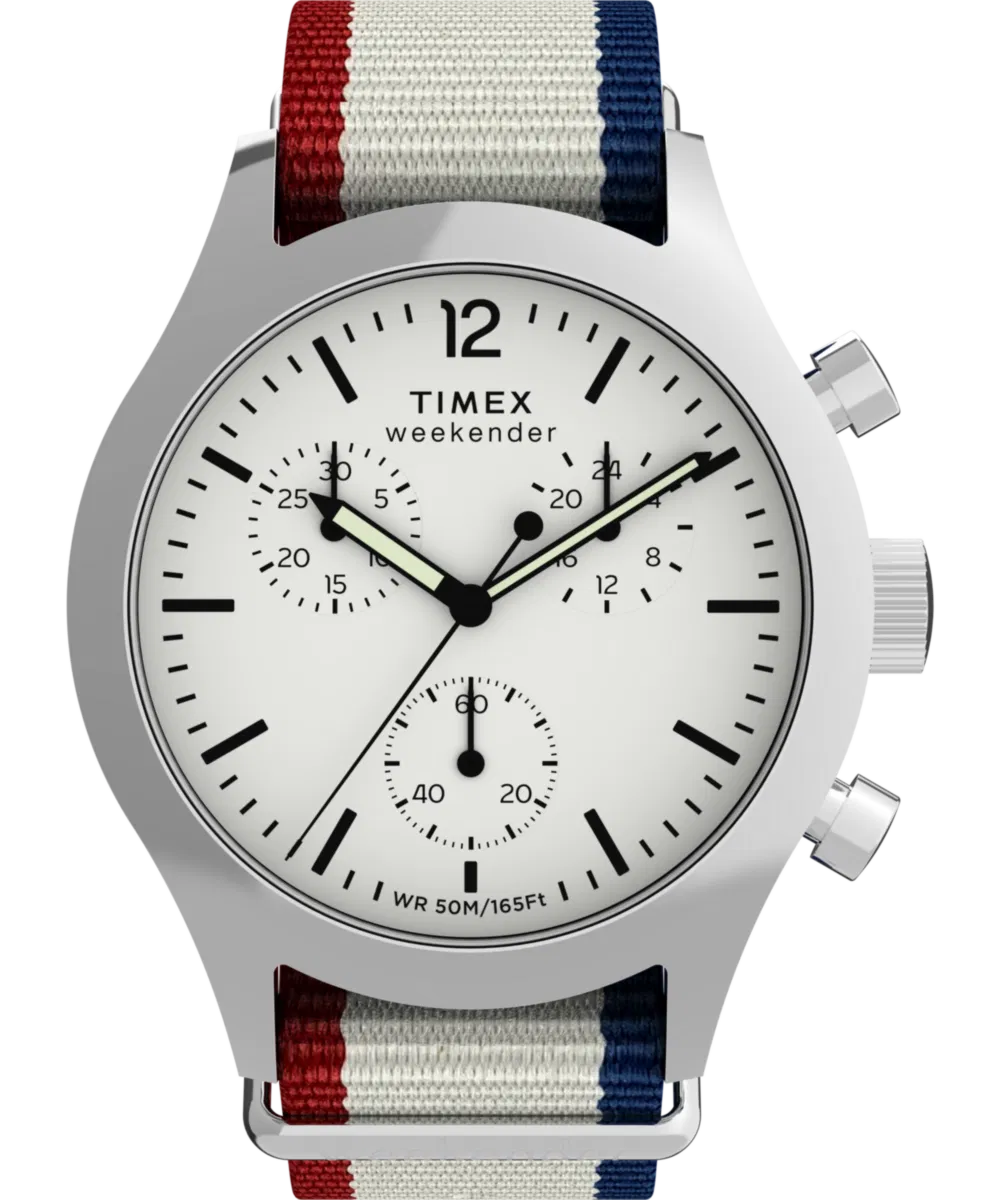
Timex
★★★★★ 4.5 (3,041 reviews)
$79