
Watch Fact of the Day: The Mystery of Urwerk’s Satellite Wandering Hours

URWERK’s innovative timepieces feature a unique rotating satellite complication instead of traditional hands, drawing inspiration from 17th-century night clocks. Co-founders Felix Baumgartner and Martin Frei sought to redefine the display of time, embracing a more fluid representation rather than strict intervals. These watches resemble spacecraft instruments, showcasing wandering-hour satellites that navigate across a minute track, echoing an ancient mechanism designed to be read at night without disturbing sleep. URWERK, established in 1997, combines historical horology with cutting-edge design, creating futuristic watches that still honor their traditional roots. The personal connection to these antique clocks fueled the brand’s creative vision.

Editorial illustration of an avant-garde satellite wandering-hours wristwatch

📅 Thursday, August 20, 2026

Urwerk’s avant-garde timepieces abandoned traditional hands entirely in favor of a rotating satellite complication inspired by 17th-century night clocks built for Pope Alexander VII. Hours are mounted on revolving cubes that sweep across an arched minute track, creating a mesmerizing, spaceship-like display of time passing. Co-founder Felix Baumgartner and designer Martin Frei wanted to break free from conventional dial layouts to represent time as a continuous, organic flow rather than rigid intervals.


At first glance, an URWERK looks less like a mechanical watch and more like an instrument pulled from the cockpit of a spacecraft. Instead of conventional hour and minute hands rotating around a familiar dial, many of the independent watchmaker’s creations use its signature wandering-hour satellite display. Numbered satellites travel around the movement while the active hour sweeps across a graduated minute arc. When its 60-minute journey is complete, another hour takes its place and begins the journey again. It’s mechanical watchmaking transformed into orbital motion.

Yet the concept behind this futuristic display is roughly 350 years old. URWERK traces its inspiration to the wandering-hour night clocks made by the Campani brothers in 17th-century Italy. According to the story recounted by co-founder Felix Baumgartner, a pope wanted a clock that could be read during the night without the noise of a conventional striking clock disturbing his sleep. The solution replaced traditional hands with illuminated hour numerals that travelled successively across a 60-minute scale, with a candle or lamp hidden inside the clock providing illumination.
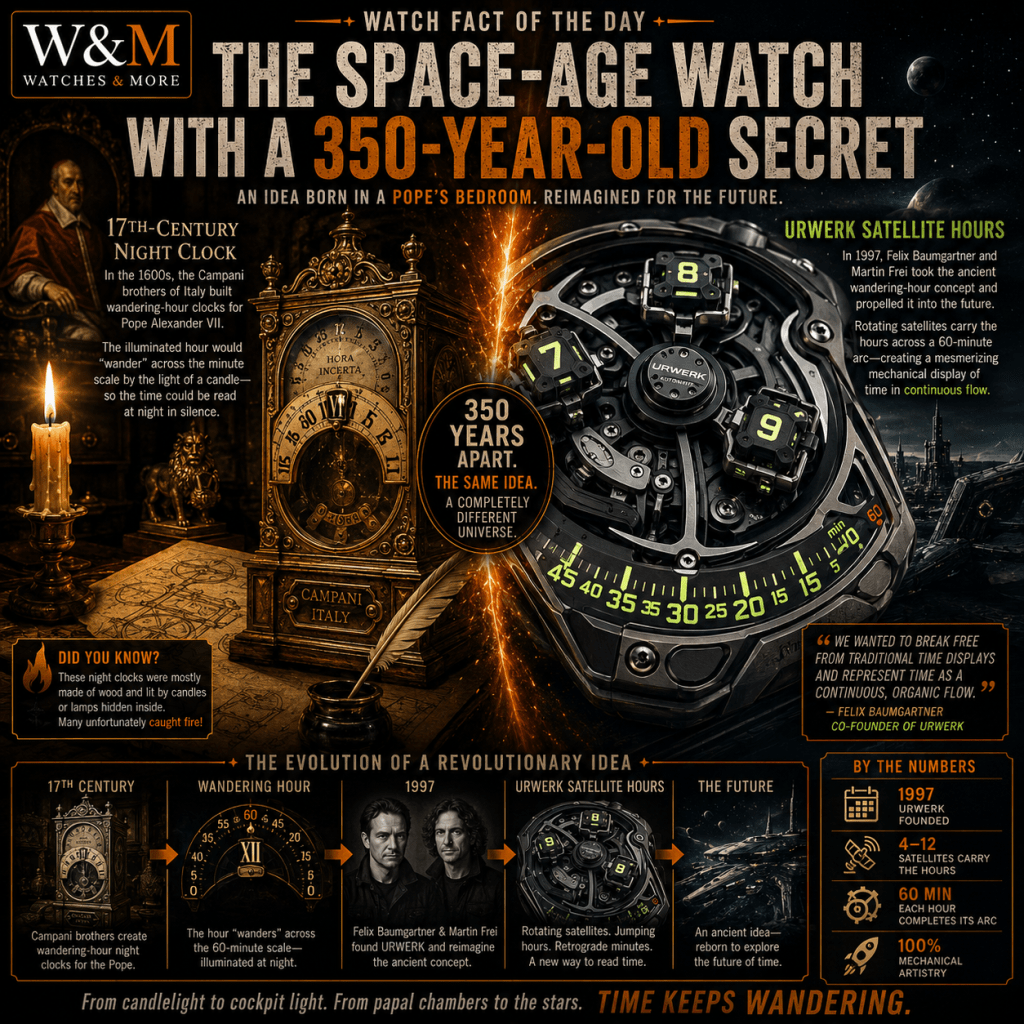
There is an extraordinary personal connection between those antique clocks and URWERK. Felix’s father, Gerhard Baumgartner, was a restorer of historic clocks, and one of the surviving Campani night clocks passed through his workshop. Felix remembers being fascinated by the mechanism as a child. Years later, when Felix Baumgartner and artist/designer Martin Frei began imagining a completely different way of displaying time, that centuries-old wandering-hour principle became part of URWERK’s foundation. The company officially emerged in 1997, and its first UR-101 and UR-102 watches already featured wandering hours.

URWERK then pushed the ancient principle into completely new mechanical territory. In watches such as the UR-103, multiple satellites carrying hour numerals are mounted on a rotating carousel. As the carousel revolves, the satellites themselves rotate into position so the correct hour appears as it travels across the minute sector. Later interpretations became even more spectacular, combining rotating satellites with three-dimensional retrograde minute hands and other mechanisms. The result looks impossibly futuristic, yet its conceptual DNA reaches directly back to candle-lit clocks from the Baroque era.

That combination of old-world horology and radical industrial design is fundamental to URWERK. Baumgartner supplies the deep traditional watchmaking background, while Frei approaches the problem as an artist and designer rather than from within conventional watchmaking rules. URWERK says the pair’s original ambition was to interpret the passage of time differently; Frei has described their early conviction that the wandering hour was the path they wanted to pursue.

💡 Did You Know?

Those original 17th-century night clocks had one spectacular weakness: fire. Their wandering hours could be illuminated from inside by a candle or lamp so the time could be read in darkness—but URWERK notes that many of the largely wooden clocks caught fire. More than three centuries later, that almost-forgotten display became the inspiration for some of the most futuristic mechanical watches ever created.

Category: Fun Quirk

Disclaimer: Every effort has been made to keep these watch facts accurate, but the world of horology is full of myths, disputed stories, and fascinating trivia. Consider these facts a starting point for discovery rather than the final word. If you have corrections or additional insights, let us know—we’re always happy to keep the record ticking in the right direction.

🕐 Discover more watch facts, reviews, and buying guides at WatchesAndMore


🛍️ You Might Also Like

As an Amazon Associate and affiliate partner, WatchesAndMore earns from qualifying purchases.
G-Shock GWM5610-1 Solar Atomic
🔥 Deal of the Day

G-Shock GWM5610-1 Solar Atomic

Casio

★★★★★ 4.8 (5,621 reviews)

$129

Offer expires in


🔥 Grab This Deal →

G-Shock GA2100-1A1 CasiOak


G-Shock GA2100-1A1 CasiOak

Casio

★★★★★ 4.8 (2,156 reviews)

$99


Check Price on Amazon →

Casio Edifice Chronograph


Casio Edifice Chronograph

Casio

★★★★★ 4.7 (1,264 reviews)

$120


Check Price on Amazon →


Browse all expert-reviewed watches →

ETSY Shop
ETSY Shop
Redbubble Shop
Redbubble Shop
More Watch Facts
More Watch Facts

Watch Fact of the Day: The Seiko Turtle’s Surprising Hollywood Star Turn

The Seiko 6105-8110/8119 is iconic, largely thanks to Martin Sheen wearing it in Apocalypse Now, earning it the nickname “Captain Willard.” Launched in the 1970s, this diver watch was known for its ruggedness and water resistance, making it a favorite among U.S. servicemen during the Vietnam War. Its unique design, including a crown-guard and push-and-turn mechanism, contributed to its popularity. While the 6105 isn’t technically the “Turtle,” its legacy paved the way for later models. The watch symbolizes durability, practicality, and a cool connection to both military history and movie fame, proving it’s more than just a pretty face on screen.

Editorial illustration of a vintage Japanese-style diver watch in a cinematic field setting

📅 Wednesday, August 19, 2026

The watch associated with Apocalypse Now is the Seiko 6105-8110/8119, a 150-meter automatic diver introduced around 1970. It is often called the “Captain Willard” today because Martin Sheen wore one as Captain Benjamin Willard in Francis Ford Coppola’s Apocalypse Now. One important correction, though: the 6105 itself is not usually the watch collectors mean by “the Turtle.” That nickname belongs more directly to the later Seiko 6306/6309 cushion-case divers; Seiko itself has described the 6105 as the “father of the Turtle.”

The 6105’s reputation was already being forged long before Hollywood noticed it. Its large asymmetrical case extended protectively around the crown at 4 o’clock, creating one of the most distinctive silhouettes in Seiko’s dive-watch history. The watch offered 150 meters of water resistance, strong luminous markers, a highly legible black dial and a rugged automatic movement built for hard use. Seiko later highlighted the same 1970 diver design for its real-world toughness, noting that Japanese adventurer Naomi Uemura wore one during his extraordinary solo dog-sled journey from Greenland to Alaska in the mid-1970s.

At the same time, the 6105 became a familiar sight among U.S. servicemen during the Vietnam era. It was not a standard government-issued watch in the way some military watches were; rather, soldiers could buy Seiko divers privately because they were relatively affordable, robust and readily available in Asia. Veteran-owned examples with documented Vietnam histories still surface in collections today, and enthusiast research consistently places the 6105 among the watches commonly worn by American servicemen in the region. That distinction matters: the 6105’s military credibility came from actual field use, not from an official procurement contract.

Its case architecture was also technically interesting. Rather than a conventional screw-down crown, the 6105-8110/8119 used a distinctive push-and-turn locking system, with “LOCK” and an arrow marked on the crown. Inside was the 17-jewel automatic calibre 6105B, running at 21,600 vibrations per hour, with quick-set date and hacking seconds, but no conventional hand-winding. At roughly 44 mm, the watch was substantial for its day, yet the short lugs and flowing case made it surprisingly wearable. That asymmetrical crown-guard concept became enormously influential in later Seiko dive-watch design.

Then came Hollywood. During production of Apocalypse Now, a Seiko 6105 was placed on Martin Sheen’s wrist as Captain Willard, a detail watch enthusiasts later recognized as remarkably appropriate for the character. Hodinkee has noted that a U.S. Army officer operating in the film’s Vietnam setting plausibly could have worn a 6105, given how popular the watch was among American servicemen there. The movie’s 1979 release permanently linked the model with Willard, and the collector nickname “Captain Willard” eventually became nearly as recognizable as the reference number itself.

What makes that appearance so effective is that the watch doesn’t look like deliberate product placement. It looks used, practical and completely at home in the environment. That matches the 6105’s real personality: it was never conceived as a luxury statement. It was an accessible Japanese diver designed around durability, visibility and function. Hollywood simply amplified a reputation the watch had already earned in the real world.

The 6105 also sits at a fascinating point in Seiko’s diver evolution. Seiko’s first professional diver, the 62MAS, appeared in 1965, followed by increasingly capable models throughout the decade. The 6105 series replaced the earlier design and ultimately led toward the 6306/6309, whose softer cushion-shaped case became the classic “Turtle.” In other words, the Willard wasn’t merely a cult movie prop; it was an important evolutionary link between Seiko’s earliest dive watches and the design language that would define generations of Seiko tool watches.

Its legacy became so strong that Seiko returned to the design decades later. In 2019, the company released the SLA033, a high-end Prospex recreation of the 1970 diver, explicitly celebrating the historic model and its unique crown-protecting case. Seiko has continued using the basic architecture in later reinterpretations, proof that a shape created for practical protection in 1970 eventually became one of the brand’s most recognizable visual signatures.

💡 Did You Know?

The Seiko 6105’s Hollywood fame is only half the story. Naomi Uemura trusted the same basic 1970 diver design on a 12,000-plus-kilometre solo dog-sled journey across the Arctic, while American servicemen were buying and wearing the watch in Vietnam. Few watches can claim credible links to combat-zone field use, polar exploration and one of cinema’s greatest war films.


Category: Watches on Screen

Disclaimer: Every effort has been made to keep these watch facts accurate, but the world of horology is full of myths, disputed stories, and fascinating trivia. Consider these facts a starting point for discovery rather than the final word. If you have corrections or additional insights, let us know—we’re always happy to keep the record ticking in the right direction.

🕐 Discover more watch facts, reviews, and buying guides at WatchesAndMore


🛍️ You Might Also Like

As an Amazon Associate and affiliate partner, WatchesAndMore earns from qualifying purchases.

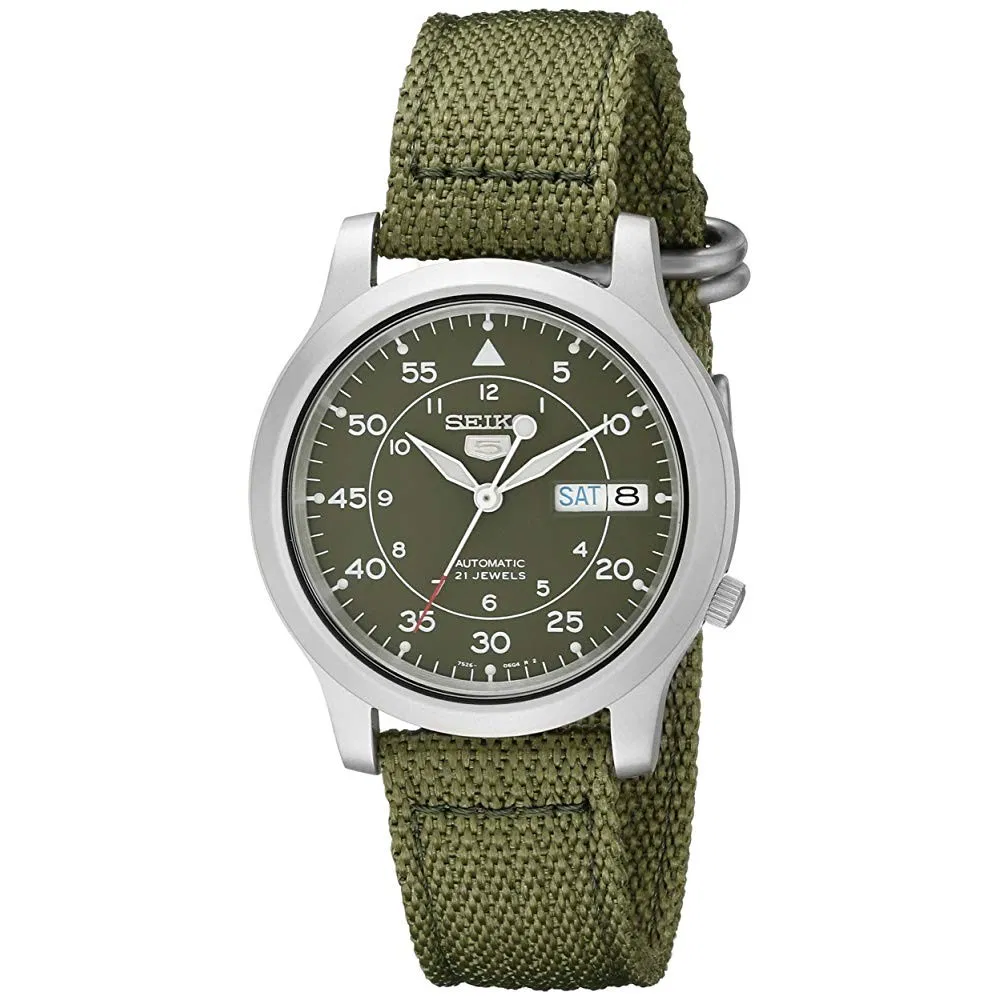
Seiko 5 SNK805 Green Military
🔥 Deal of the Day

Seiko 5 SNK805 Green Military

Seiko

★★★★★ 4.8 (6,961 reviews)

$89

Offer expires in


🔥 Grab This Deal →

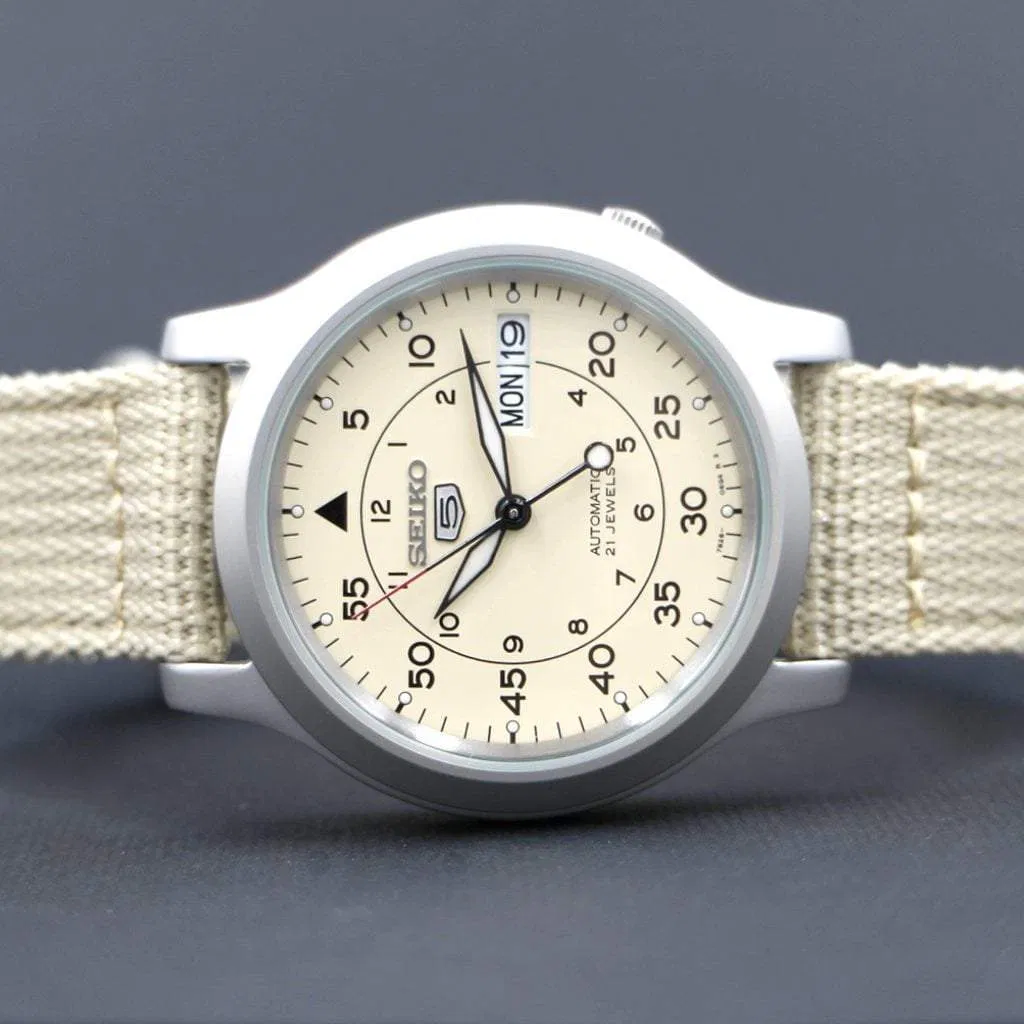
Seiko 5 SNK809 Automatic

Seiko 5 SNK809 Automatic

Seiko

★★★★★ 4.7 (3,289 reviews)

$99


Check Price on Amazon →

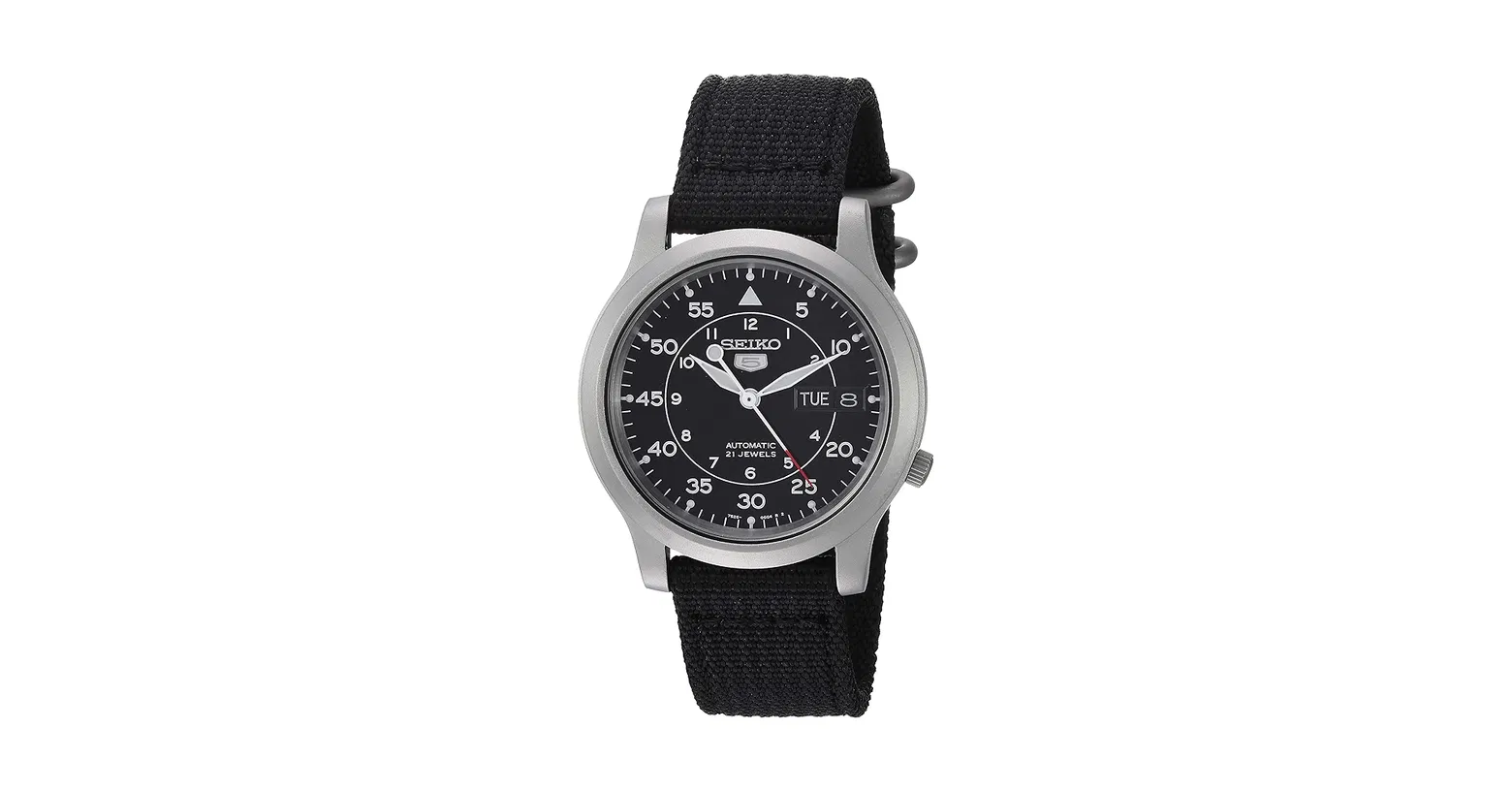
Seiko 5 SNK803 Military

Seiko 5 SNK803 Military

Seiko

★★★★★ 4.7 (7,467 reviews)

$89


Check Price on Amazon →


Browse all expert-reviewed watches →

ETSY Shop
ETSY Shop
Redbubble Shop
Redbubble Shop
More Watch Facts
More Watch Facts

Watch Fact of the Day: The Cartier Crash Was Inspired by a Melted Watch in a Crash

The Cartier Crash watch is a wild icon from the 1960s, rumored to be inspired by a melted timepiece from a car wreck. But forget that legend; its design stems from tweaking another model, the Maxi Oval. Launched in 1967, the Crash was all about breaking away from Paris’s typical styles, showcasing an eccentric shape that bends reality while keeping classic elegance with Roman numerals and precious materials. Over 50 years later, it’s a collector’s dream, with original editions hard to find. The Crash is a beautiful mess in a world full of boring, symmetrical watches, proving that sometimes, chaos can be a masterpiece.

📅 Tuesday, August 18, 2026

The iconic asymmetrical Cartier Crash, born in London during the swinging 1960s, was long rumored to have been inspired by a melted watch brought into the boutique after a horrific car accident. While urban legend often surrounds its surrealist, Salvador Dalí-esque aesthetic, the design actually evolved from the Maxi Oval watch, when Jean-Jacques Cartier and designer Rupert Emmerson twisted and distorted its geometry to create something unlike any conventional wristwatch. The result was a masterpiece of controlled distortion that remains one of the most coveted and eccentric case shapes in haute horlogerie history.

Introduced by Cartier London in 1967, the Crash perfectly reflected the creative energy surrounding the brand’s New Bond Street operation. Jean-Jacques Cartier wanted the London branch to develop its own identity rather than simply imitate what Cartier was producing in Paris. The Crash became perhaps the ultimate expression of that freedom: its elongated case seems to stretch downward on one side and collapse inward on the other, while the familiar Cartier Roman numerals follow the warped contours of the dial.

The famous car-crash origin story only added to the watch’s mystique. According to the legend, a damaged Cartier watch was recovered from a fiery automobile accident and brought to the London boutique, its case supposedly melted into the strange shape that inspired the Crash. It’s a fantastic story—and one that has been repeated for decades—but historical accounts from the Cartier family point instead toward deliberate experimentation with the Maxi Oval’s form. Rather than an accidental design created by fire, the Crash appears to have been an intentional exercise in making a beautifully constructed watch look as though reality itself had somehow distorted it.

Its resemblance to the melting clocks of Salvador Dalí’s The Persistence of Memory has also encouraged comparisons with Surrealism, although the Crash wasn’t simply a Dalí watch translated onto the wrist. What made it extraordinary was the combination of visual chaos with traditional Cartier elegance: Roman numerals, blued hands, precious metal and classical watchmaking were squeezed into a case that seemed to be bending under an invisible force. That contradiction transformed the Crash from an eccentric novelty into one of the most recognizable designs Cartier ever created.

More than half a century later, the Crash has become a genuine collector phenomenon. Original London examples are extraordinarily scarce, while later Paris editions and modern interpretations have introduced the design to new generations of enthusiasts. In a watch industry dominated by circles, rectangles and carefully balanced symmetry, the Crash remains gloriously unconventional—a watch deliberately designed to look as though something had gone terribly wrong, and which became an icon precisely because Cartier got it so right.


Category: Brand Spotlight

Disclaimer: Every effort has been made to keep these watch facts accurate, but the world of horology is full of myths, disputed stories, and fascinating trivia. Consider these facts a starting point for discovery rather than the final word. If you have corrections or additional insights, let us know—we’re always happy to keep the record ticking in the right direction.

🕐 Discover more watch facts, reviews, and buying guides at WatchesAndMore


🛍️ You Might Also Like

As an Amazon Associate and affiliate partner, WatchesAndMore earns from qualifying purchases.

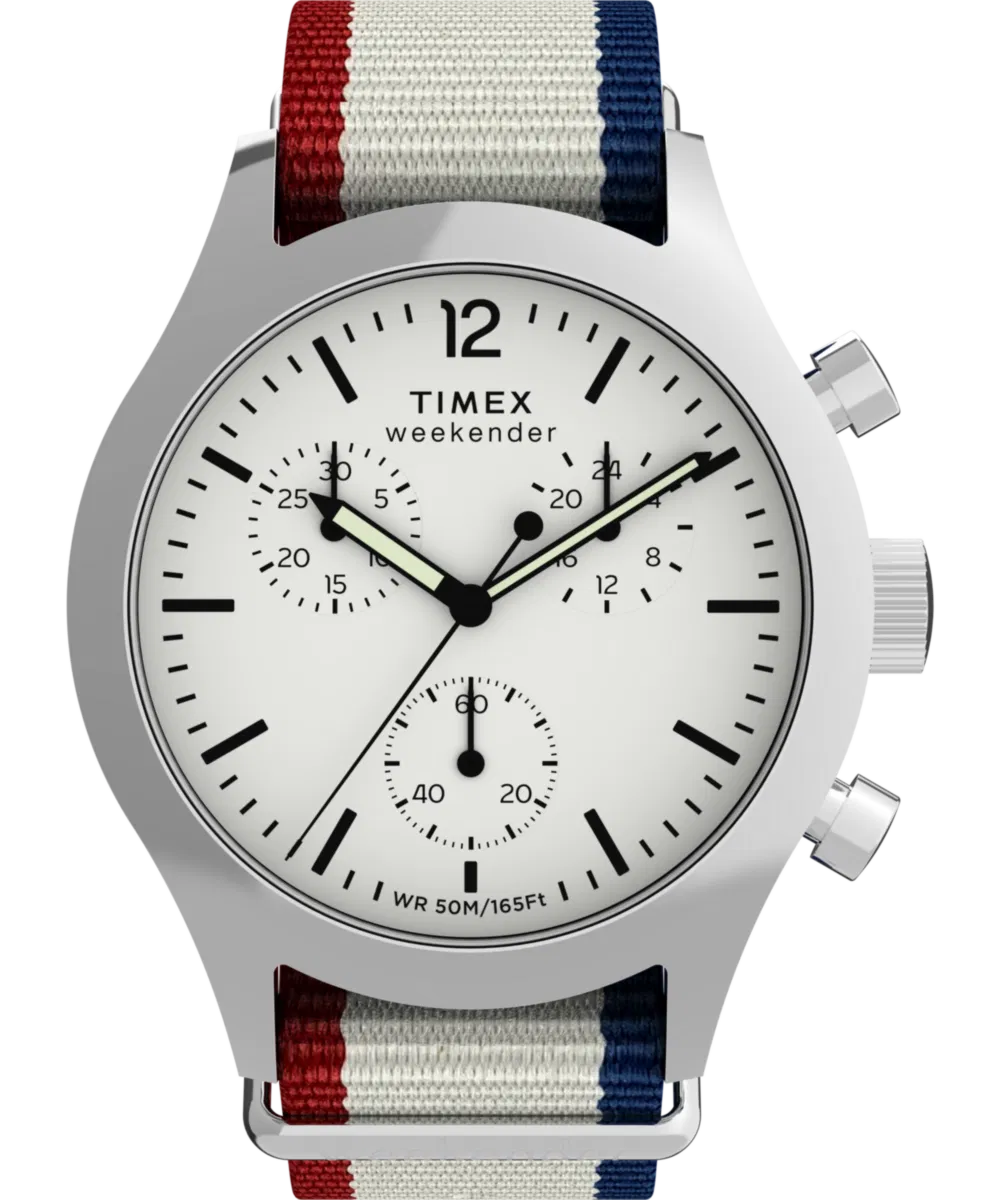
Timex Weekender Chronograph
🔥 Deal of the Day

Timex Weekender Chronograph

Timex

★★★★★ 4.5 (3,041 reviews)

$79

Offer expires in


🔥 Grab This Deal →

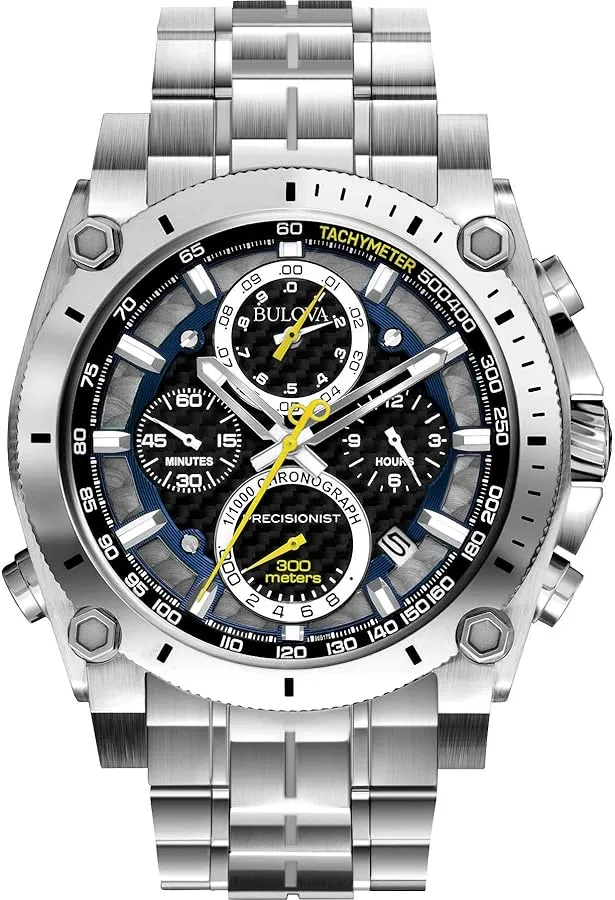
Bulova Precisionist


Bulova Precisionist

Bulova

★★★★★ 4.6 (1,100 reviews)

$219


Check Price on Amazon →

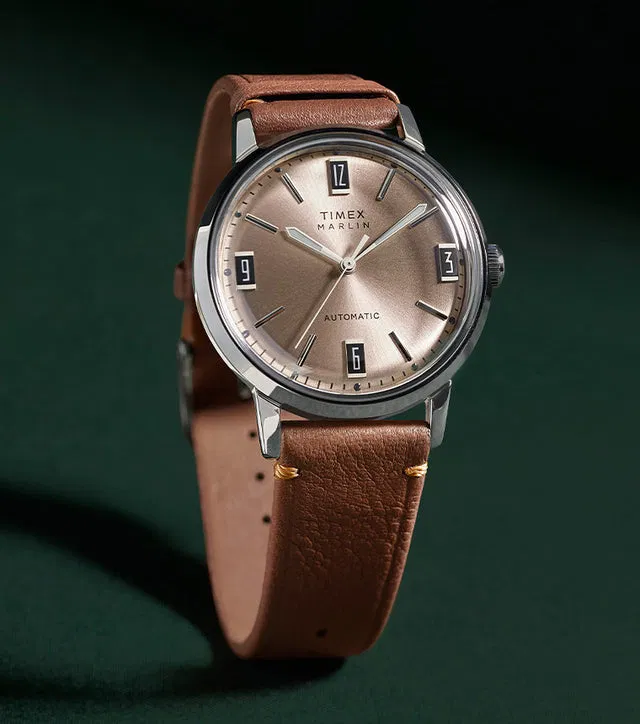
Timex Marlin Automatic 40mm


Timex Marlin Automatic 40mm

Timex

★★★★★ 4.7 (1,106 reviews)

$259


Check Price on Amazon →


Browse all expert-reviewed watches →

ETSY Shop
ETSY Shop
Redbubble Shop
Redbubble Shop
More Watch Facts
More Watch Facts

Watch Fact of the Day: The 1,000-Year Clock Powered by Thermal Expansion

In a remote Texas mountain, the Clock of the Long Now, a brainchild of Danny Hillis and a wallet of Jeff Bezos, is doing its best impersonation of a timekeeping tortoise, set to tick for 10,000 years. Forget batteries; this clock runs on temperature swings and a good manual crank by curious visitors! With its 500-foot height and materials tougher than most relationships—titanium, quartz, and all that jazz—it’s like the Swiss Army knife of clocks. It even whimsically chimes a unique tune every day for millennia. So, swing by, wind it up, and let’s hope your great-great-grandkids enjoy the show!

📅 Monday, August 17, 2026

Designed by Danny Hillis and funded by Jeff Bezos, the Clock of the Long Now is engineered to tick once a year for ten millennia. Instead of conventional mainsprings, it is powered entirely by daily temperature variations, using a mechanical brass and steel linkage to synchronize itself with solar noon.


Hidden deep inside a remote mountain in West Texas, engineers are constructing one of the most extraordinary mechanical timekeepers ever conceived: the Clock of the Long Now, designed to keep time for an astonishing 10,000 years. Conceived by Danny Hillis as a monument to long-term thinking, the immense mechanism occupies a vertical shaft roughly 500 feet tall and is being built from durable materials including titanium, ceramics, quartz, sapphire and stainless steel.

Its power system is even more remarkable. The clock can harvest mechanical energy from the temperature difference between day and night, while visitors can also manually wind its enormous mechanism. Stored energy drives the timekeeping system, and Long Now says the solar system can provide enough winding force to keep its pendulum operating without human intervention for extremely long periods. So rather than saying it is powered entirely by temperature variations, I’d describe it as a clock capable of harvesting thermal energy while also accepting human winding.

But keeping a machine running isn’t enough—it also has to know whether it is still correct. The clock therefore uses the Sun as an astronomical reference. Sunlight enters the mountain and heats a chamber of air, moving a graphite cylinder and producing a mechanical signal used to synchronize the clock to solar noon. An ingenious mechanical Equation of Time Cam compensates for variations caused principally by Earth’s orbital eccentricity and axial tilt.

And this isn’t simply a gigantic clock face. Its mechanical displays are designed to show astronomical and calendrical information, while a mechanical chime generator created with input from musician Brian Eno can produce more than 3.5 million unique bell sequences—one for every day the clock is visited across 10,000 years. The goal isn’t merely to measure time; it’s to make people imagine a future extending thousands of years beyond their own lifetime.

💡 Did You Know?

The clock doesn’t need to spend precious stored energy constantly updating everything a visitor can see. It can internally keep track of the correct time while leaving its display unchanged. When someone eventually arrives and winds the display mechanism, the calendar wheels advance until they catch up with the time the clock has been keeping

Category: Fun Quirk

Disclaimer: Every effort has been made to keep these watch facts accurate, but the world of horology is full of myths, disputed stories, and fascinating trivia. Consider these facts a starting point for discovery rather than the final word. If you have corrections or additional insights, let us know—we’re always happy to keep the record ticking in the right direction.

🕐 Discover more watch facts, reviews, and buying guides at WatchesAndMore


🛍️ You Might Also Like

As an Amazon Associate and affiliate partner, WatchesAndMore earns from qualifying purchases.
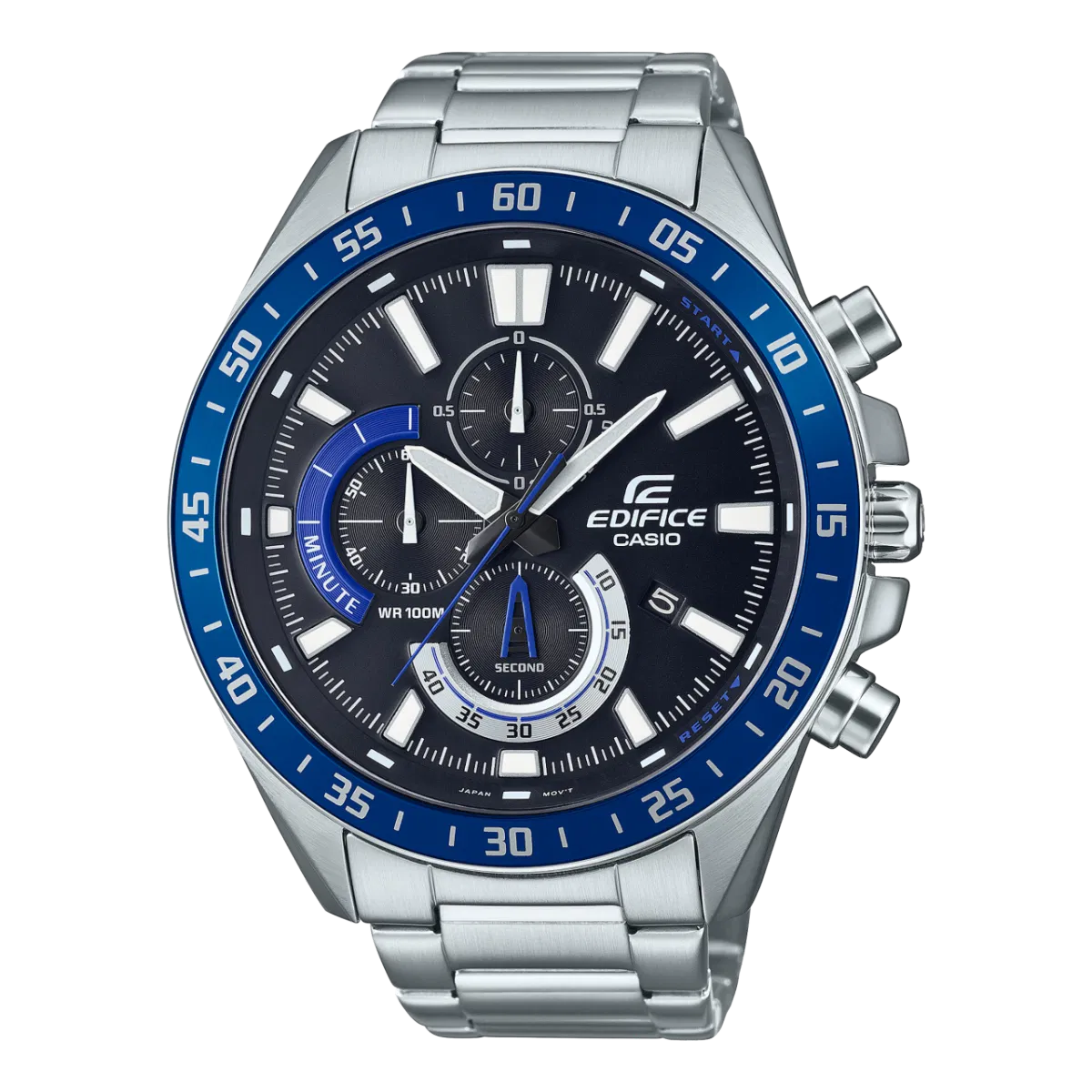
G-Shock GWM5610-1 Solar Atomic
🔥 Deal of the Day

G-Shock GWM5610-1 Solar Atomic

Casio

★★★★★ 4.8 (5,621 reviews)

$129

Offer expires in


🔥 Grab This Deal →

G-Shock GA2100-1A1 CasiOak


G-Shock GA2100-1A1 CasiOak

Casio

★★★★★ 4.8 (2,156 reviews)

$99


Check Price on Amazon →

Casio Edifice Chronograph


Casio Edifice Chronograph

Casio

★★★★★ 4.7 (1,264 reviews)

$120


Check Price on Amazon →


Browse all expert-reviewed watches →

ETSY Shop
ETSY Shop
Redbubble Shop
Redbubble Shop
More Watch Facts
More Watch Facts

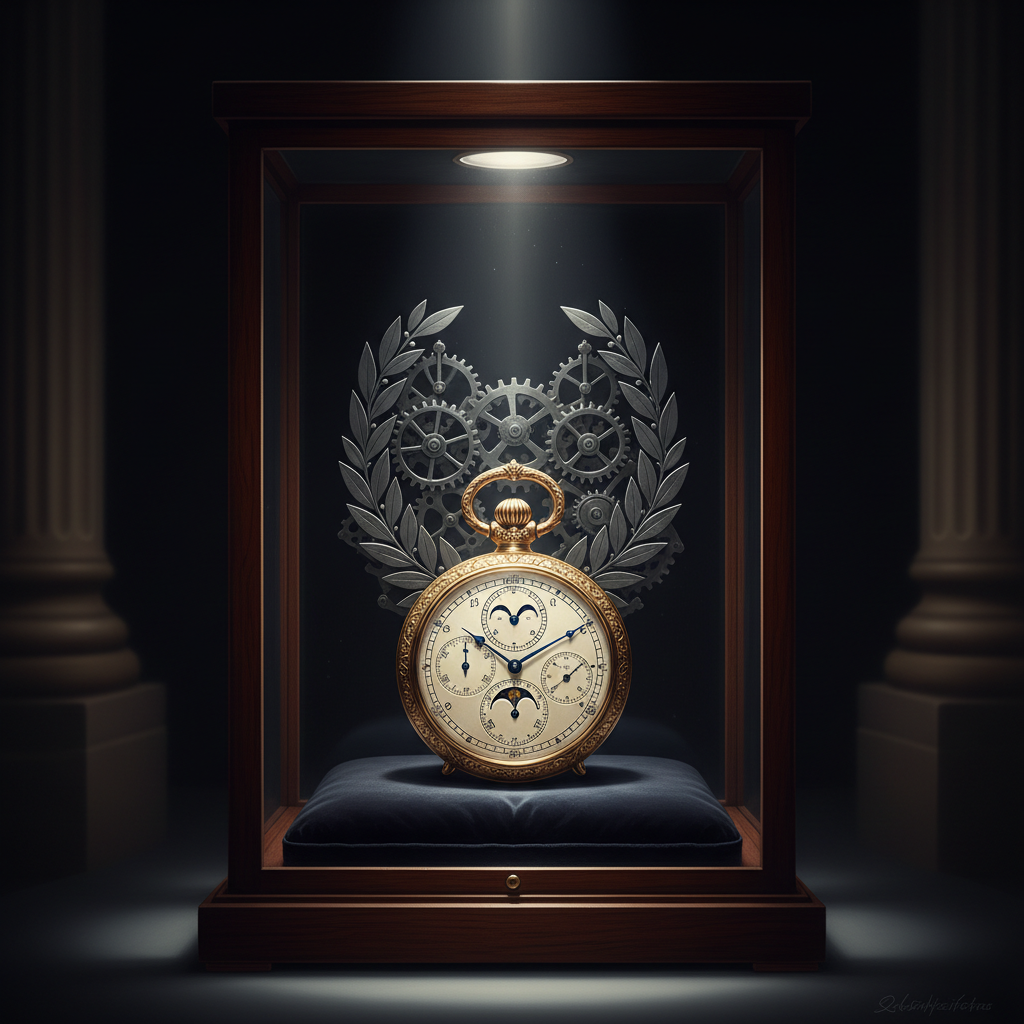
Watch Fact of the Day: The $24 Million Watch With a Secret New York Sky!

So, back in 1933, American banker Henry Graves Jr. commissioned the Patek Philippe Graves Supercomplication, a mind-blowing watch that took eight years to make. This double-sided yellow-gold pocket watch packed 24 complications, including a perpetual calendar and a celestial chart of the night sky above his Manhattan home. It was the world’s most complicated watch for a whopping 56 years! It ended up selling for a jaw-dropping $24 million at a 2014 auction. This watch isn’t just about timekeeping; it showcases the brilliant craftsmanship of a bygone era, long before the tech we have today.

Record Breaker: Sunday, August 16, 2026

📅 Sunday, August 16, 2026

Commissioned for American banker and legendary watch collector Henry Graves Jr., the Patek Philippe Graves Supercomplication emerged from an extraordinary horological rivalry with automobile magnate James Ward Packard. Graves wanted a watch of unprecedented complexity, and Patek Philippe responded with a double-sided yellow-gold pocket watch containing 24 complications and roughly 900 components—all conceived in an era before computer-aided design.

Among its astonishing functions were a perpetual calendar, split-seconds chronograph, minute repeater with Westminster chimes, grande and petite sonnerie, equation of time, sunrise and sunset indications—and one particularly personal complication. The reverse featured a celestial chart depicting the night sky above Graves’s Manhattan residence at 834 Fifth Avenue, transforming the heavens over his own home into a mechanical display he could carry in his pocket.

The project required approximately eight years from beginning to delivery, with the watch finally reaching Graves in 1933. At the time it surpassed every previous horological record and became the world’s most complicated watch—a title it retained for 56 years, until Patek Philippe unveiled the 33-complication Calibre 89 in 1989.

Its story became even more extraordinary decades later. Sotheby’s first sold the Supercomplication in 1999 for $11 million, establishing a world auction record. When it returned to Sotheby’s Geneva on November 11, 2014, five bidders fought over it for approximately 15 minutes before the hammer finally fell at CHF 23,237,000—roughly US$24 million—again setting a world record for a timepiece at auction.

💡 Did You Know?

That celestial display wasn’t simply a generic star chart. It was calculated for the sky above Henry Graves Jr.’s own Manhattan home, making one of the most complicated watches ever constructed extraordinarily personal. More than 90 years later, the Supercomplication remains one of the greatest demonstrations of what watchmakers could accomplish using mechanical engineering, mathematics and craftsmanship—without computers.


Category: Record Breaker

Disclaimer: Every effort has been made to keep these watch facts accurate, but the world of horology is full of myths, disputed stories, and fascinating trivia. Consider these facts a starting point for discovery rather than the final word. If you have corrections or additional insights, let us know—we’re always happy to keep the record ticking in the right direction.

🕐 Discover more watch facts, reviews, and buying guides at WatchesAndMore


🛍️ You Might Also Like

As an Amazon Associate and affiliate partner, WatchesAndMore earns from qualifying purchases.

Casio MDV106-1A Duro
🔥 Deal of the Day

Casio MDV106-1A Duro

Casio

★★★★★ 4.6 (8,934 reviews)

$59

Offer expires in


🔥 Grab This Deal →

Seiko 5 Sports SRPD55


Seiko 5 Sports SRPD55

Seiko

★★★★★ 4.7 (1,247 reviews)

$275


Check Price on Amazon →

Citizen Promaster Diver


Citizen Promaster Diver

Citizen

★★★★★ 4.7 (2,192 reviews)

$299


Check Price on Amazon →

Browse all expert-reviewed watches →

ETSY Shop
ETSY Shop
Redbubble Shop
Redbubble Shop
More Watch Facts
More Watch Facts

Watch Fact of the Day: The Mechanical Watch That Remembered for You!

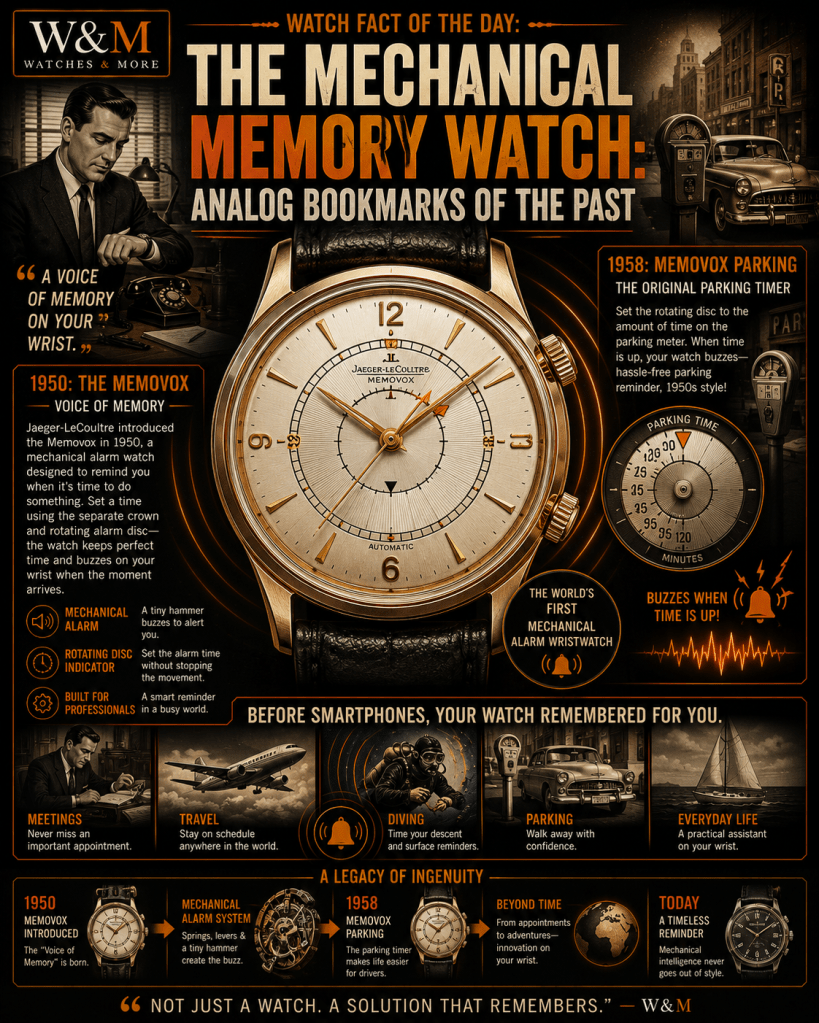
Back in the day, before smartphones made reminders a breeze, Jaeger-LeCoultre dropped the Memovox in 1950, an awesome mechanical watch that buzzed to remind wearers of appointments and meetings. Instead of just telling the time, it used a cool mechanical alarm system built into the gears. By 1958, they leveled up with the Memovox Parking, which alerted drivers when their parking meter was about to expire. Fast forward to today, and while we rely on smart tech, the Memovox is a rad reminder of how ingenious watchmakers were at solving everyday problems with vintage gear.

📅 Saturday, August 15, 2026

Long before smartphones, calendar notifications and digital reminders, mechanical watches could literally remind their owners when it was time to do something. In 1950, Jaeger-LeCoultre introduced the Memovox, a mechanical alarm watch whose name means “voice of memory.” Using a separate crown and rotating central indicator, the wearer could preset a specific time while the watch continued keeping normal time. When that moment arrived, a tiny mechanical hammer caused the watch to buzz on the wrist, creating a remarkably practical analog reminder for meetings, appointments and everyday life.

The Mechanical Memory Watch

The secret was an ingenious mechanical alarm system built directly into the movement. Rather than simply displaying information for the wearer to remember, the Memovox could actively demand their attention when the selected time arrived. Its independently adjustable alarm mechanism stored its own energy and, when triggered, rapidly activated a hammer that produced the Memovox’s unmistakable vibrating sound. In an era of paper appointment books and desk calendars, having a mechanical reminder strapped directly to your wrist was remarkably futuristic.

By 1958, Jaeger-LeCoultre had taken the idea even further with the wonderfully quirky Memovox Parking. Drivers could use markings on its rotating inner disc to set the amount of time remaining on a parking meter. The mechanical alarm would then buzz when the purchased parking time was nearing its end—essentially giving motorists a 1950s mechanical parking notification decades before the smartphone existed. It transformed sophisticated watchmaking into a solution for an incredibly ordinary problem: remembering when it was time to get back to the car.

Today, vibrating phones and smartwatch alerts make reminders seem completely ordinary, but the Memovox demonstrates just how creatively watchmakers once approached the same problem using springs, gears, levers and mechanical ingenuity alone. What began as a practical “voice of memory” for appointments evolved into specialized models designed for everything from parking to travel and diving. More than seven decades later, the Memovox remains a wonderful reminder that mechanical watches weren’t always created simply to tell time—sometimes, they were designed to remember it for you.


💡 Did You Know?

The original Memovox wasn’t simply marketed as an alarm clock for your wrist. Vintage advertising positioned it as a “memory aid” for the busy professional—something that could remind its owner about appointments throughout the day.

Category: Fun Quirk

Disclaimer: Every effort has been made to keep these watch facts accurate, but the world of horology is full of myths, disputed stories, and fascinating trivia. Consider these facts a starting point for discovery rather than the final word. If you have corrections or additional insights, let us know—we’re always happy to keep the record ticking in the right direction.

🕐 Discover more watch facts, reviews, and buying guides at WatchesAndMore


🛍️ You Might Also Like

As an Amazon Associate and affiliate partner, WatchesAndMore earns from qualifying purchases.

G-Shock GWM5610-1 Solar Atomic
🔥 Deal of the Day

G-Shock GWM5610-1 Solar Atomic

Casio

★★★★★ 4.8 (5,621 reviews)

$129

Offer expires in


🔥 Grab This Deal →

G-Shock GA2100-1A1 CasiOak


G-Shock GA2100-1A1 CasiOak

Casio

★★★★★ 4.8 (2,156 reviews)

$99


Check Price on Amazon →

Casio Edifice Chronograph


Casio Edifice Chronograph

Casio

★★★★★ 4.7 (1,264 reviews)

$120


Check Price on Amazon →


Browse all expert-reviewed watches →

ETSY Shop
ETSY Shop
Redbubble Shop
Redbubble Shop
More Watch Facts
More Watch Facts

Watch Fact of the Day: The Accutron’s Tuning Fork Humming Sound of Space!

In 1960, Bulova’s Accutron made traditional watchmakers sweat by ditching the tick for a hum, thanks to its tuning fork vibrating at a whopping 360 times per second. This made it as accurate as a stopwatch on a caffeine high, promising one minute’s delay per month. Unlike other watches that just counted seconds, the Accutron serenaded its wearer with an F-sharp melody. It didn’t just stay on wrists, though; it buzzed into NASA’s heart, timing everything from cockpit instruments to space missions. So, if you’re looking for the ultimate party trick, just bring an Accutron close to your ear and enjoy the high-pitched symphony of timekeeping history!

Fun Quirk: Friday, August 14, 2026

📅 Friday, August 14, 2026

When Bulova introduced the Accutron in 1960, it represented a radical departure from centuries of traditional mechanical watchmaking. Instead of regulating time with a conventional balance wheel and hairspring, the Accutron used an electronically driven tuning fork vibrating 360 times per second. The result was remarkable accuracy for its era—Bulova guaranteed Accutron watches to within approximately one minute per month.

But the Accutron had another unmistakable characteristic: it didn’t tick—it hummed. That rapidly vibrating tuning fork produced a distinctive high-pitched tone, while the seconds hand appeared to glide unusually smoothly around the dial. Accutron describes the characteristic sound as an F-sharp hum, turning the watch’s revolutionary technology into something its owner could actually hear.

And that extraordinary precision soon took Accutron technology far beyond the wrist. Bulova says approximately 2,000 Accutron timers and timing packages were ultimately used across 46 NASA missions, appearing in applications ranging from cockpit instruments to scientific experiment packages. The Accutron Astronaut wristwatch itself went into space aboard Mercury-Atlas 9 in May 1963, while Accutron watches were also used by pilots of the X-15 rocket plane.

So I wouldn’t say simply that the Accutron became “a favorite for NASA’s space missions.” The more fascinating—and accurate—story is that Accutron tuning-fork technology became part of America’s space program, while the Astronaut model itself was worn in space. That’s actually a stronger story.

💡 Did You Know?

Put a vintage Accutron close to your ear and, instead of the familiar tick-tock of a mechanical watch, you can hear the unmistakable hum of its tuning fork. At 360 vibrations per second, the technology that made that sound also helped give Accutron the precision and resilience that made its timing technology valuable during the Space Race.


Category: Fun Quirk

Disclaimer: Every effort has been made to keep these watch facts accurate, but the world of horology is full of myths, disputed stories, and fascinating trivia. Consider these facts a starting point for discovery rather than the final word. If you have corrections or additional insights, let us know—we’re always happy to keep the record ticking in the right direction.

🕐 Discover more watch facts, reviews, and buying guides at WatchesAndMore


🛍️ You Might Also Like

As an Amazon Associate and affiliate partner, WatchesAndMore earns from qualifying purchases.

Bulova Precisionist
🔥 Deal of the Day

Bulova Precisionist

Bulova

★★★★★ 4.6 (1,100 reviews)

$219

Offer expires in


🔥 Grab This Deal →

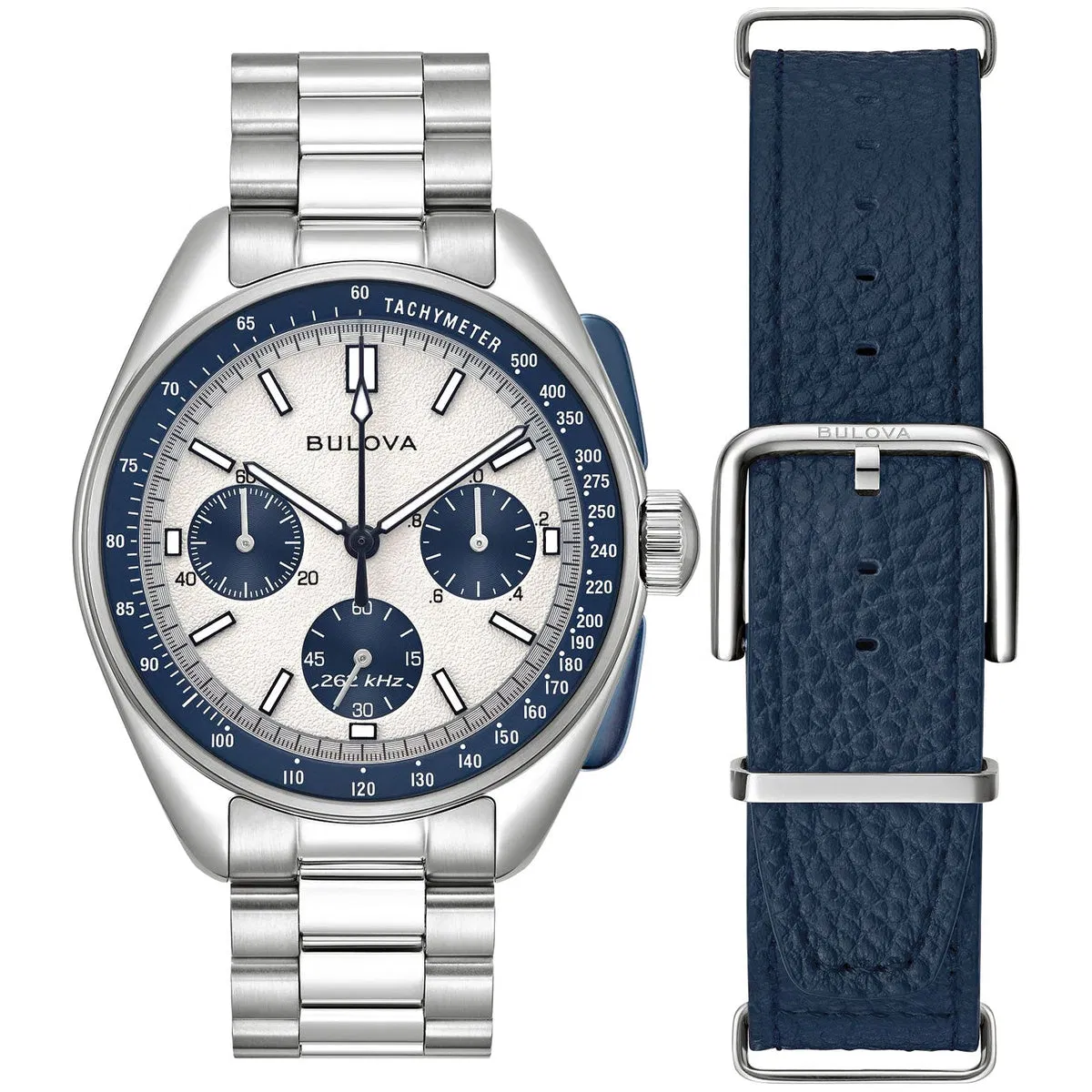
Bulova Lunar Pilot Chronograph


Bulova Lunar Pilot Chronograph

Bulova

★★★★★ 4.6 (810 reviews)

$478


Check Price on Amazon →

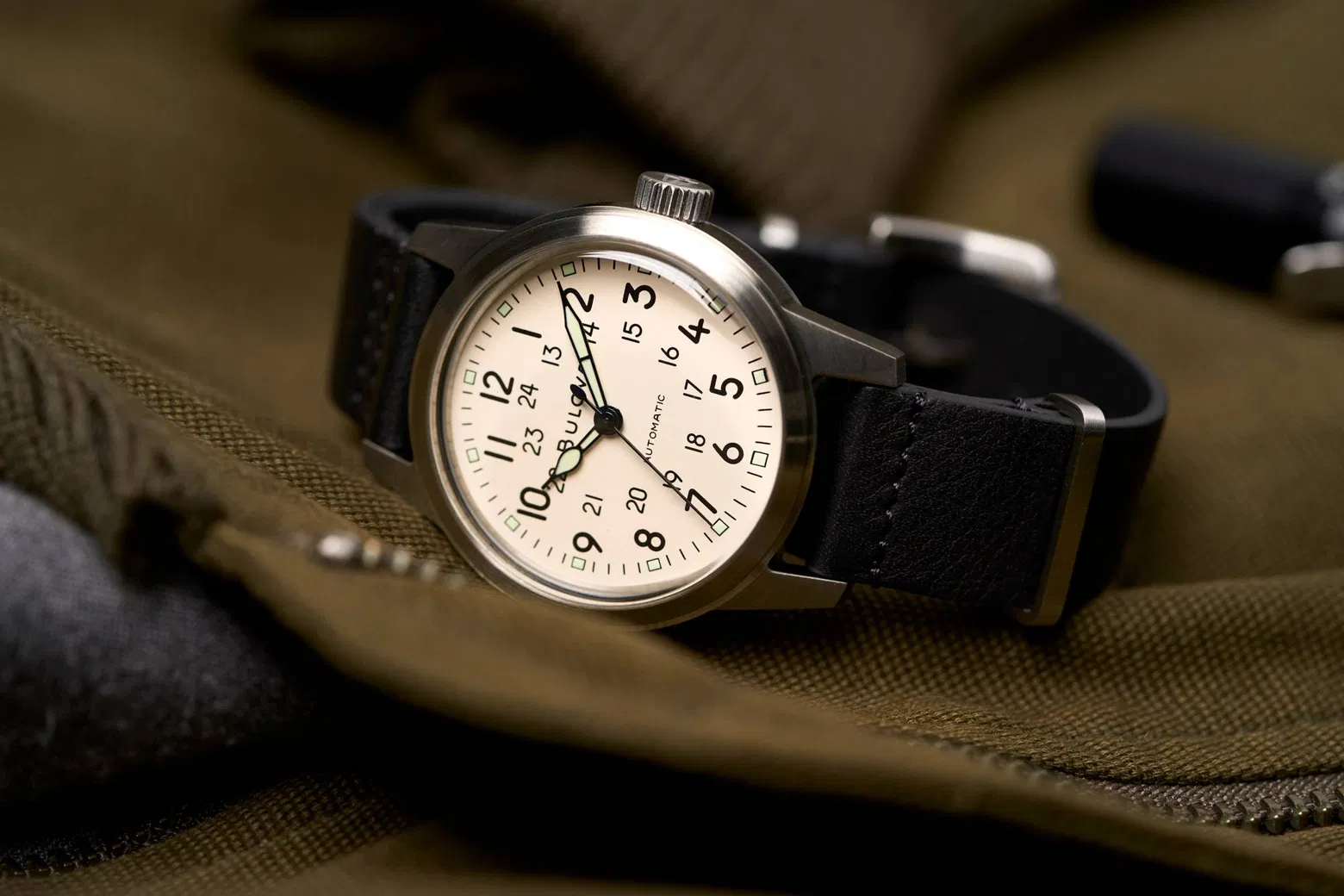
Bulova Military Hack Automatic


Bulova Military Hack Automatic

Bulova

★★★★☆ 4.4 (1,286 reviews)

$450


Check Price on Amazon →


Browse all expert-reviewed watches →

ETSY Shop
ETSY Shop
Redbubble Shop
Redbubble Shop
More Watch Facts
More Watch Facts

Watch Fact of the Day: The First Digital Watch Cost As Much As a Brand-New Car!

In 1970, the Hamilton Pulsar made a grand entrance as the world’s first digital wristwatch, boasting a flashy red LED display and zero moving parts—so if you were hoping for some fancy ticking, think again! Priced at $2,100, it was the bling equivalent of a family car. Rock legends like Elvis and Keith Richards snatched it up, proving that nothing says “I’m a superstar” quite like a watch that screams “futuristic.” Just remember, while these fab facts are entertaining, horology is a world full of myths, so take them with a playful pinch of salt!

Fun Quirk: Thursday, August 13, 2026

📅 Thursday, August 13, 2026

When Hamilton unveiled the Pulsar concept in 1970, it looked less like a conventional watch and more like something transported directly from the future. Gone were the familiar hands and traditional dial. Instead, Pulsar used electronic technology and a dark display that illuminated the time in brilliant red LED numerals at the press of a button. The production Pulsar P1 arrived in 1972, becoming the world’s first electronic digital watch with an LED display.

But being an early adopter of the digital future wasn’t cheap. The first P1 was an extraordinarily luxurious object, with its futuristic electronics housed inside an 18-carat yellow-gold case and bracelet. Its price? A staggering $2,100 in 1972—an amount Hamilton says was comparable to the price of a family car at the time. Only 400 examples were produced, making the original gold Pulsar an exceptionally exclusive piece of Space Age technology.

The Pulsar was unlike virtually anything watch buyers had previously encountered. Pressing a button on the side caused the red LED numerals to illuminate and display the time, while holding the button longer displayed the running seconds. Even setting it felt futuristic: Hamilton says a magnetic bar concealed inside the bracelet was used to adjust the watch.

And it quickly became a celebrity status symbol. Elvis Presley was among the owners of the original 400 gold P1 watches. One year later, Hamilton introduced the more accessible stainless-steel Pulsar P2, which became a major success and appeared on the wrists of figures including Keith Richards, Elton John, Joe Frazier and U.S. President Gerald Ford. So I’d move Keith Richards out of the P1 sentence—Hamilton specifically associates him with the later P2.

💡 Did You Know?

The original Pulsar didn’t continuously display the time. LED technology consumed too much battery power, so the screen normally remained completely dark. You had to press the button to make those famous red numbers appear—turning something as ordinary as checking the time into a tiny Space Age event.


Category: Fun Quirk

Disclaimer: Every effort has been made to keep these watch facts accurate, but the world of horology is full of myths, disputed stories, and fascinating trivia. Consider these facts a starting point for discovery rather than the final word. If you have corrections or additional insights, let us know—we’re always happy to keep the record ticking in the right direction.

🕐 Discover more watch facts, reviews, and buying guides at WatchesAndMore


🛍️ You Might Also Like

As an Amazon Associate and affiliate partner, WatchesAndMore earns from qualifying purchases.

Hamilton Khaki Field Automatic
🔥 Deal of the Day

Hamilton Khaki Field Automatic

Hamilton

★★★★★ 4.6 (1,076 reviews)

$595

Offer expires in


🔥 Grab This Deal →

Hamilton Khaki Aviation Pilot


Hamilton Khaki Aviation Pilot

Hamilton

★★★★★ 4.8 (436 reviews)

$995


Check Price on Amazon →

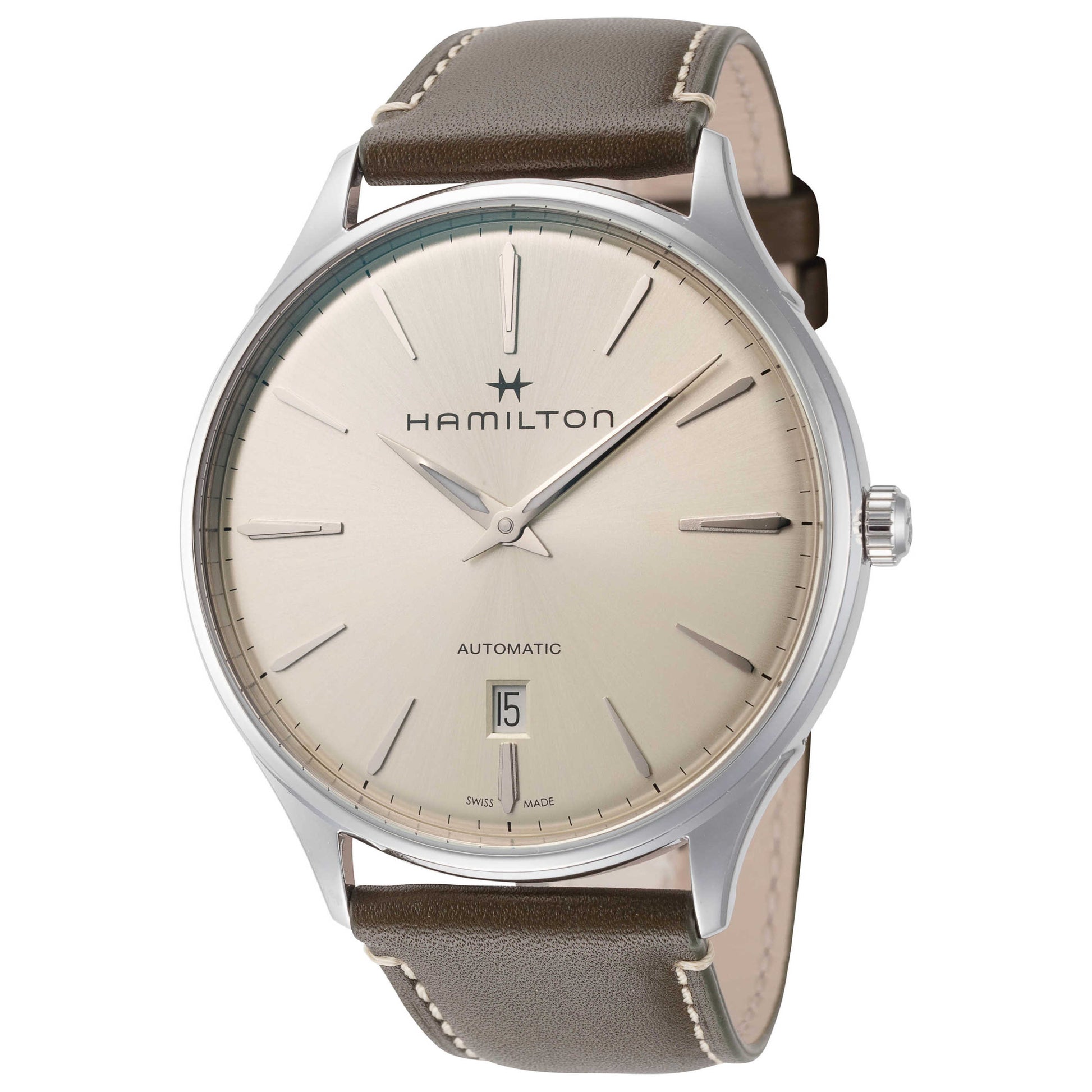
Hamilton Jazzmaster Automatic


Hamilton Jazzmaster Automatic

Hamilton

★★★★★ 4.7 (342 reviews)

$399


Check Price on Amazon →

Also at: Ashford


Browse all 142+ expert-reviewed watches →

ETSY Shop
ETSY Shop
Redbubble Shop
Redbubble Shop
More Watch Facts
More Watch Facts

Watch Fact of the Day: The World’s First Titanium Watch Wasn’t Swiss or Swiss-Made!

In 1970, Citizen made the bold move of launching the X-8 Chronometer, the first titanium wristwatch—because who needs stainless steel when you can rock aerospace-grade titanium? While Swiss watchmakers were busy polishing their gold, Citizen decided to take the road less traveled, battling the “triple trouble” of titanium’s machining quirks to create a watch that weighed less than a feather but looked just as fine. With only 2,000 units made, it was a rare gem in the watch world. Fast forward to today, and titanium is everywhere, proving that sometimes, being ahead of the curve really pays off—unless you’re late for dinner!

Watch History: Wednesday, August 12, 2026

📅 Wednesday, August 12, 2026

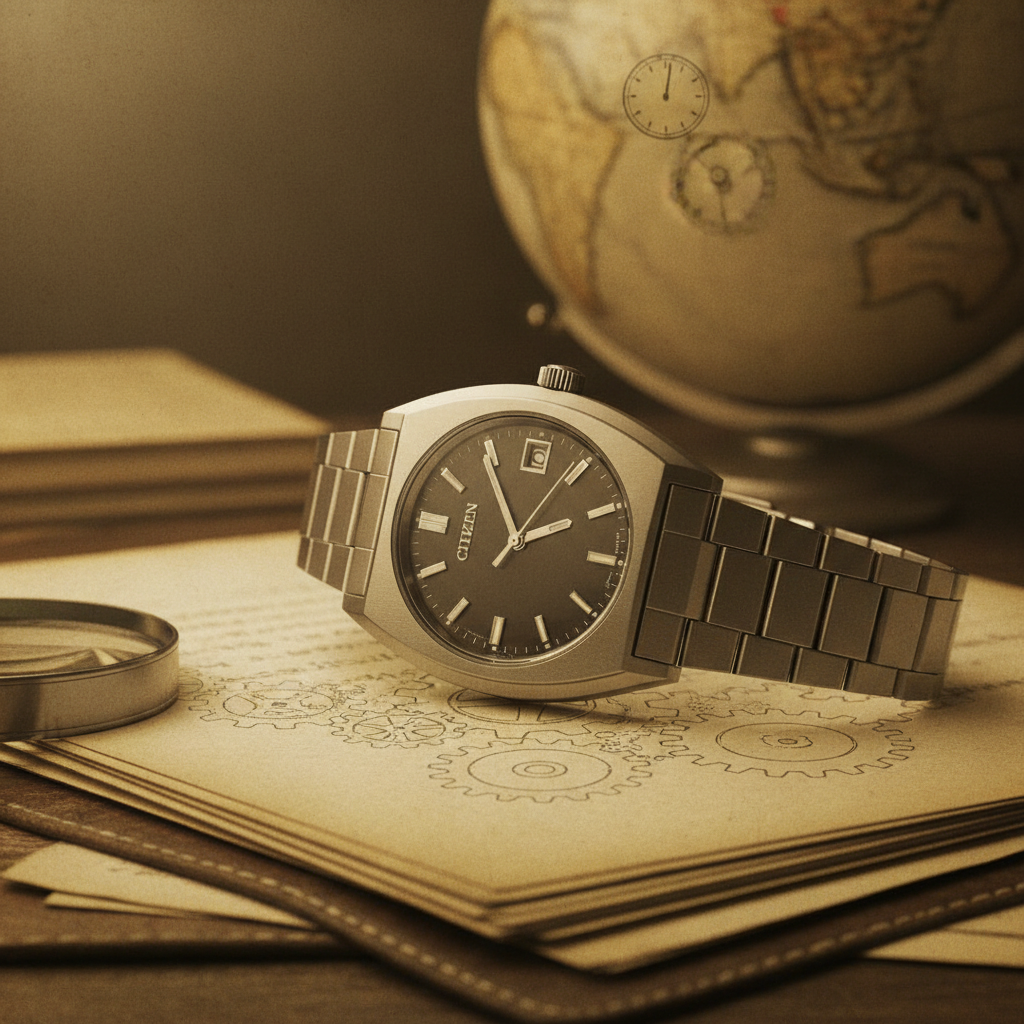
In 1970, Japanese watchmaker Citizen made history by releasing the X-8 Chronometer, recognized as the world’s first titanium wristwatch. While Swiss brands still favored traditional stainless steel and gold, Citizen boldly turned to aerospace-grade titanium—99.6% pure—to harness its lightweight, corrosion-resistant properties. This groundbreaking move not only preceded the Swiss by years but also set the stage for modern high-tech tool watches, long before titanium became a staple in luxury watchmaking.


The timing couldn’t have been better. During the 1960s, the Apollo program had focused global attention on titanium because of its light weight, strength and resistance to corrosion. Citizen’s engineers saw those same characteristics and realized they could make titanium an intriguing material for something far more personal: a wristwatch.

But actually manufacturing one was another matter. Titanium proved so troublesome that Citizen’s engineers nicknamed it “triple trouble” because of the difficulty involved in press-forming, machining and polishing it. Titanium shavings could stick to cutting tools, and achieving the beautifully finished surfaces expected of a watch case presented serious engineering challenges.

The resulting X-8 wasn’t merely an exotic case wrapped around a conventional mechanical watch, either. It belonged to Citizen’s pioneering electronic X-8 family, and the X-8 Chronometer became Citizen’s final electronic watch to receive official certification from the Japan Chronometer Inspection Institute. Production was brief: Citizen says fewer than 2,000 were sold.

More than half a century later, titanium has become a familiar material in everything from serious tool watches to high-end luxury pieces. Citizen itself continued developing the material for decades, eventually combining titanium processing with its Duratect surface-hardening technology to create Super Titanium™.

💡 Did You Know?

Titanium may be famous for being lightweight, but Citizen says pure titanium is about 40% lighter than stainless steel. That meant the 1970 Citizen X-8 Chronometer wasn’t just historically significant for using an exotic Space Age metal—it demonstrated that a watch case could be lighter, corrosion-resistant, and comfortable on the wrist without relying on conventional steel. More than half a century later, titanium has become one of watchmaking’s most desirable high-tech materials. ⌚🚀

Category: Watch History

Disclaimer: Every effort has been made to keep these watch facts accurate, but the world of horology is full of myths, disputed stories, and fascinating trivia. Consider these facts a starting point for discovery rather than the final word. If you have corrections or additional insights, let us know—we’re always happy to keep the record ticking in the right direction.

🕐 Discover more watch facts, reviews, and buying guides at WatchesAndMore


🛍️ You Might Also Like

As an Amazon Associate and affiliate partner, WatchesAndMore earns from qualifying purchases.

Citizen Quartz Classic Silver-Tone
🔥 Deal of the Day

Citizen Quartz Classic Silver-Tone

Citizen

★★★★★ 4.5 (1,407 reviews)

$120

Offer expires in


🔥 Grab This Deal →

Citizen Quartz Two-Tone


Citizen Quartz Two-Tone

Citizen

★★★★★ 4.8 (2,403 reviews)

$90


Check Price on Amazon →


Browse all 142+ expert-reviewed watches →
ETSY Shop
ETSY Shop
Redbubble Shop
Redbubble Shop
More Watch Facts
More Watch Facts

Watch Fact of the Day: Breguet’s Secret Signature: The 18th-Century Anti-Counterfeit Hack

In the late 18th century, watchmaker Abraham-Louis Breguet faced a hilarious dilemma: his watches were so popular that counterfeiters were all over them like cats on a warm laptop. To combat this, he invented a “secret signature” so tiny it could hide in plain sight! Using a fancy engraving method, he created a mark that only the keenest eyes (or best lighting) could spot. Fast forward over two hundred years, and Breguet’s secret signature still ticks on, serving as both an anti-counterfeiting measure and a tribute to Breguet’s original genius. Talk about a watch that’s not just on time, but also a bit sneaky!

Watch History: Tuesday, August 11, 2026

📅 Tuesday, August 11, 2026

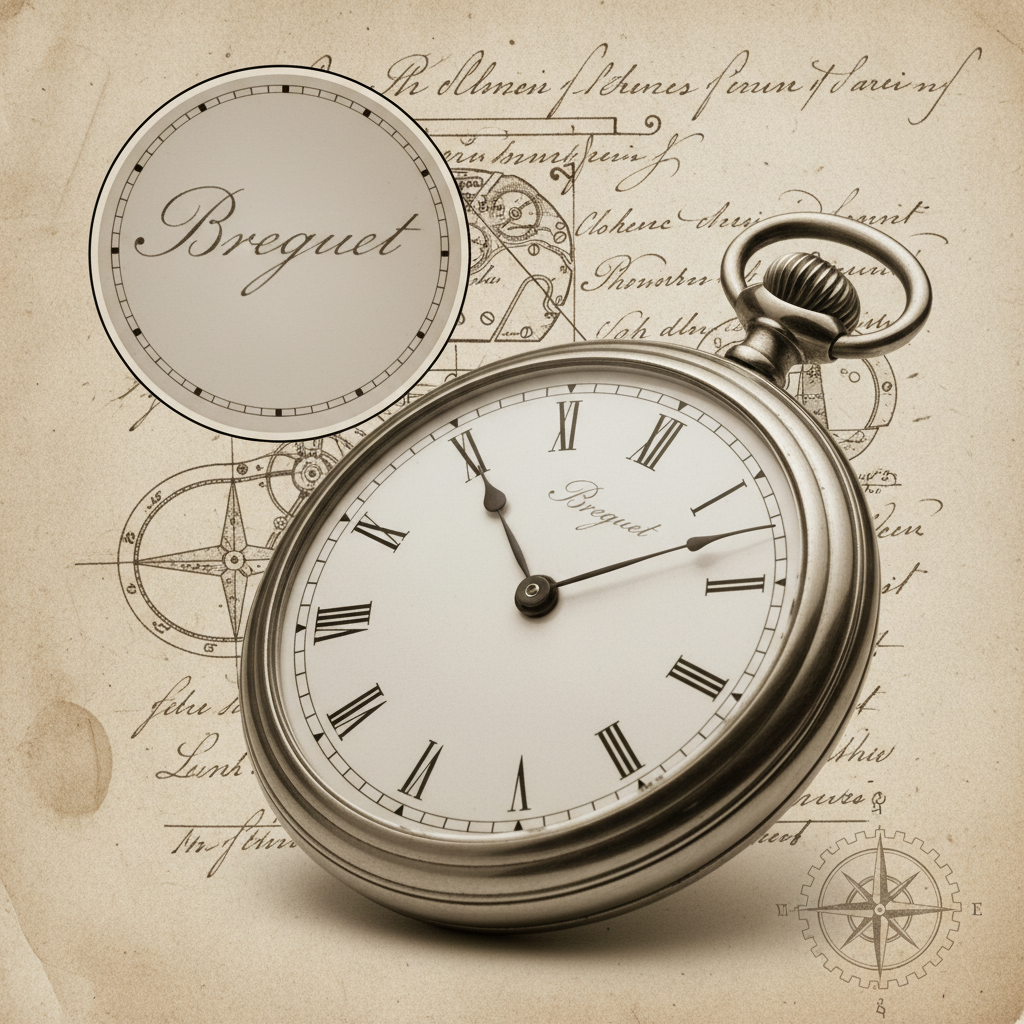
By the late 18th century, Abraham-Louis Breguet had a problem most watchmakers could only dream of: his watches had become so desirable that counterfeiters were copying them. His response was remarkably sophisticated. Around 1795, Breguet began placing an extraordinarily small “secret signature” on the dials of his watches—a subtle authentication mark designed to be exceedingly difficult for imitators to reproduce.

The technique employed a pantograph engraving system and a fine dry/diamond point, allowing a larger master inscription to be reduced to microscopic proportions on the dial. Rather than appearing like an ordinary printed logo, the resulting engraving could virtually disappear under normal viewing conditions and reveal itself when examined carefully under raking or oblique light. Without the appropriate pantograph and master matrix, accurately reproducing it was extremely difficult.

That made the secret signature an ingenious early form of luxury-product authentication. Genuine examples could incorporate Breguet’s name, identifying information and, on certain Souscription watches, the watch number. A Breguet Souscription pocket watch now held by the British Museum, for example, carries a miniature secret inscription below the 12 o’clock position.

More than two centuries later, the tradition survives. Modern Breguet watches can still feature the secret signature—not simply as an anti-counterfeiting measure, but as a connection to Abraham-Louis Breguet’s original craftsmanship and one of watchmaking’s cleverest historical security features.

Category: Watch History

Disclaimer: Every effort has been made to keep these watch facts accurate, but the world of horology is full of myths, disputed stories, and fascinating trivia. Consider these facts a starting point for discovery rather than the final word. If you have corrections or additional insights, let us know—we’re always happy to keep the record ticking in the right direction.

🕐 Discover more watch facts, reviews, and buying guides at WatchesAndMore


🛍️ You Might Also Like

As an Amazon Associate and affiliate partner, WatchesAndMore earns from qualifying purchases.

Timex Weekender Chronograph
🔥 Deal of the Day

Timex Weekender Chronograph

Timex

★★★★★ 4.5 (3,041 reviews)

$79

Offer expires in


🔥 Grab This Deal →

Bulova Precisionist


Bulova Precisionist

Bulova

★★★★★ 4.6 (1,100 reviews)

$219


Check Price on Amazon →

Timex Marlin Automatic 40mm


Timex Marlin Automatic 40mm

Timex

★★★★★ 4.7 (1,106 reviews)

$259


Check Price on Amazon →


Browse all 142+ expert-reviewed watches →
ETSY Shop
ETSY Shop
Redbubble Shop
Redbubble Shop
More Watch Facts
More Watch Facts