
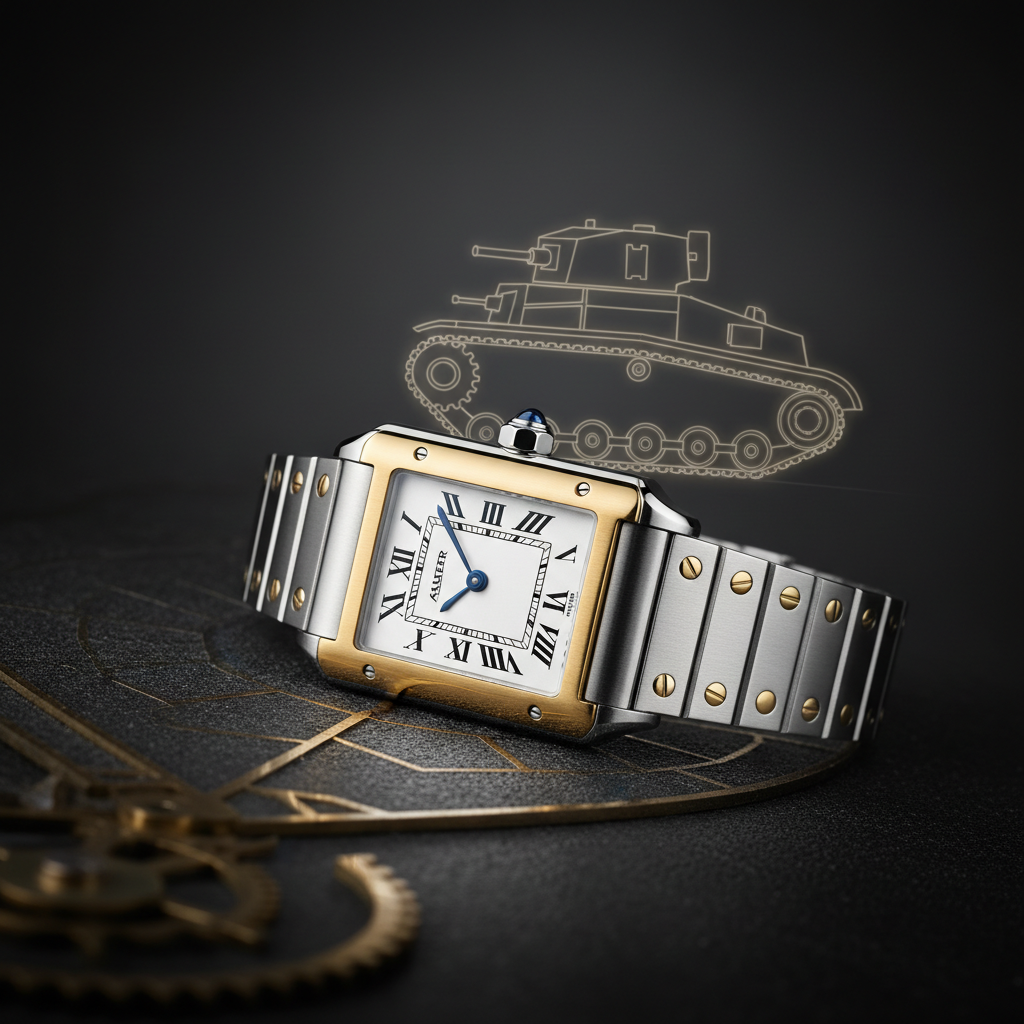
Watch Fact of the Day: The Cartier Tank Was Inspired by a WWI Military Tank

In a twist of historical irony, Louis Cartier reimagined military might into wrist candy when he designed the Cartier Tank in 1917, inspired by a tank’s silhouette. Forget round watches; it’s all about those sleek, parallel brancards representing tank tracks while the case resembles a cozy cabin. This watch isn’t just a pretty face; its bold straight lines and architectural vibe broke the mold of traditional designs and made it a timeless beauty. Over a century later, the Tank still exudes elegance, all while its military origins chuckle in the background. Who knew war machines could look so chic?

Brand Spotlight: Tuesday, September 1, 2026

📅 Tuesday, September 1, 2026

In 1917, while the First World War was still raging across Europe, Louis Cartier created one of the most enduring shapes in watchmaking history. Rather than following the traditional round form of the pocket watch, Cartier drew inspiration from the stark geometry of a military tank viewed from above. The result was a wristwatch whose architecture transformed the machinery of war into something remarkably refined. Denali Development

Look at a Cartier Tank from above and the connection becomes much easier to see. According to Cartier, the watch’s two long parallel brancards represent the tank’s tracks, while the central case corresponds to the vehicle’s cabin. Those brancards became one of the Tank’s defining visual signatures and remain fundamental to the design more than a century later. Denali Development

Infographic detailing the history and design inspiration of the Cartier Tank watch, highlighting its connection to military tanks from World War I and showcasing different models over the years.

But Louis Cartier did more than borrow the silhouette of an armored vehicle. The Tank introduced an important design principle: the case flows directly into the bracelet or strap attachments without interrupting the visual rhythm. Cartier describes the design as moving from the square of the dial toward the rectangle of the bracelet, creating an unusually unified relationship between case and strap. Cartier

That geometry was radical for its time. Watches still carried much of the visual language of round pocket watches, while the Tank embraced straight lines, symmetry and architectural proportions. Its rectangular dial, Roman numerals, chemin-de-fer minute track and distinctive parallel sides helped create a watch that looked unmistakably modern—yet would prove remarkably resistant to changing fashion.

The Tank also became the foundation for an entire family of designs. Cartier continued experimenting with its proportions, eventually producing interpretations including the Tank Louis Cartier, Tank Américaine and Tank Française, while retaining those fundamental parallel brancards that visually connect them to the original idea. Denali Development

More than a century later, that’s perhaps the greatest surprise of the Tank. A design whose inspiration came from one of the most imposing machines of World War I became an enduring symbol of elegance, restraint and sophisticated watch design.

💡 Did You Know?

The Tank’s military inspiration isn’t merely watch-world folklore. Cartier itself describes the design using exactly this visual relationship: the brancards correspond to the tracks and the case to the vehicle’s cabin.


Category: Brand Spotlight

Disclaimer: Every effort has been made to keep these watch facts accurate, but the world of horology is full of myths, disputed stories, and fascinating trivia. Consider these facts a starting point for discovery rather than the final word. If you have corrections or additional insights, let us know—we’re always happy to keep the record ticking in the right direction.

🕐 Discover more watch facts, reviews, and buying guides at WatchesAndMore


🛍️ You Might Also Like

As an Amazon Associate and affiliate partner, WatchesAndMore earns from qualifying purchases.
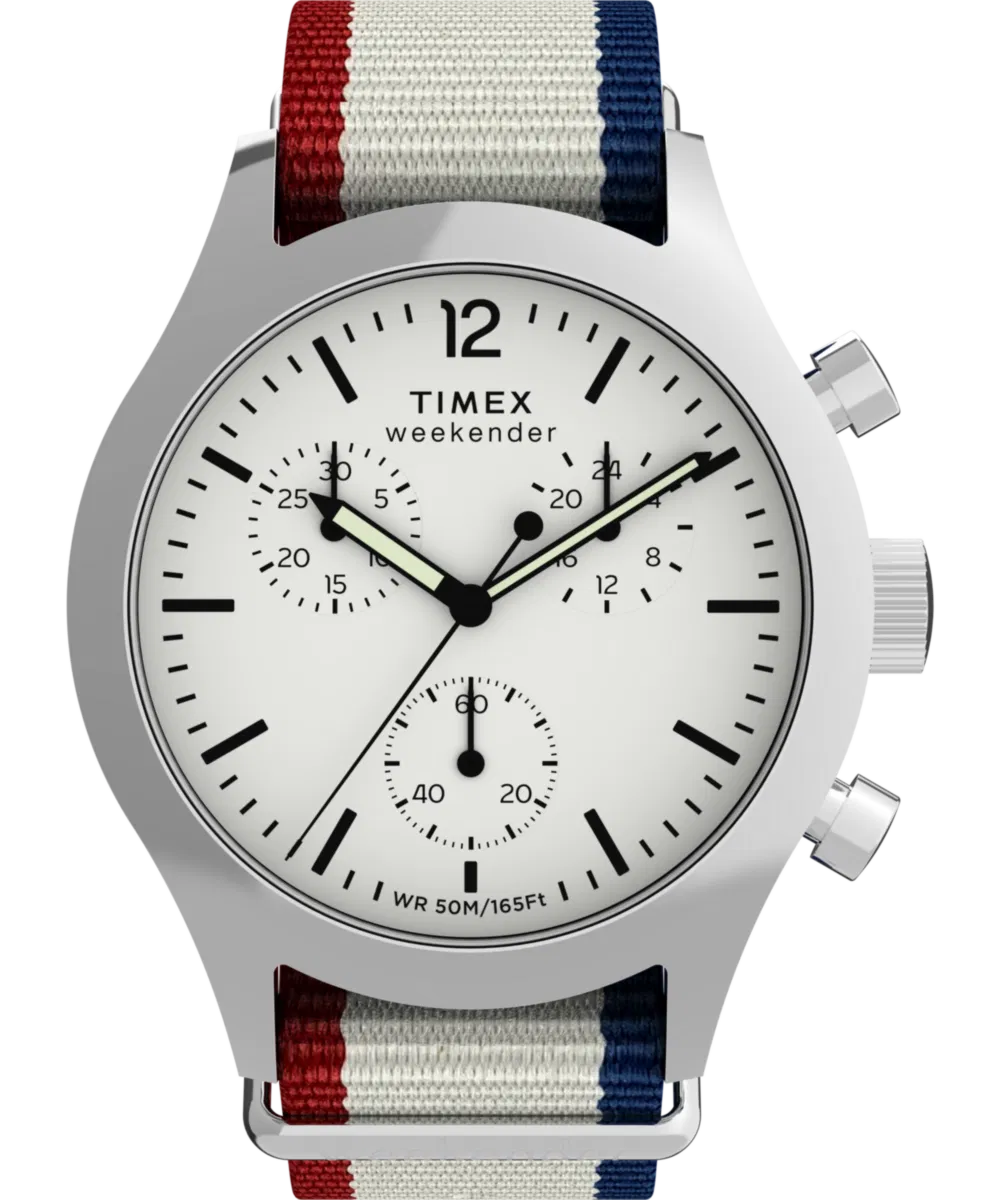
Timex Weekender Chronograph
🔥 Deal of the Day

Timex Weekender Chronograph

Timex

★★★★★ 4.5 (3,041 reviews)

$79
Offer expires in


🔥 Grab This Deal →

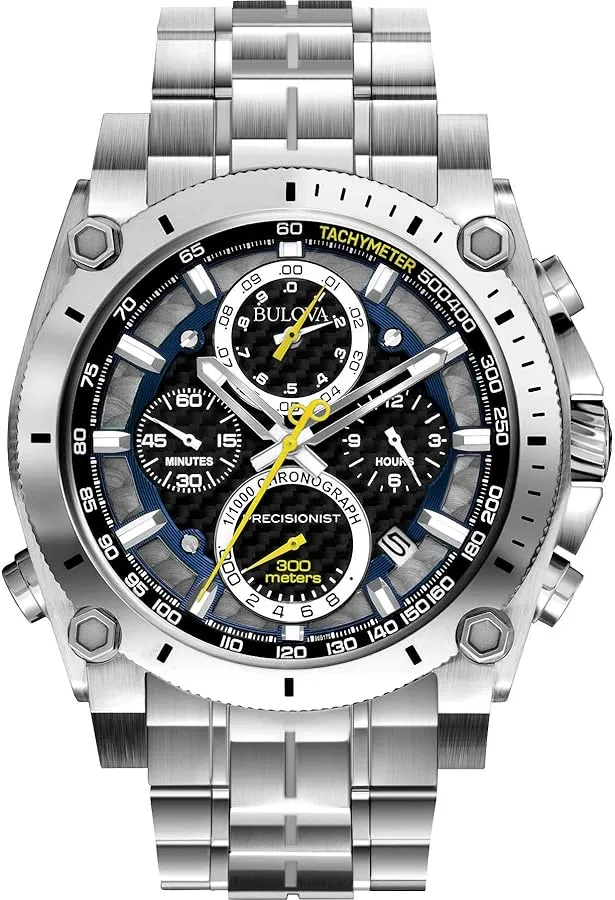
Bulova Precisionist


Bulova Precisionist

Bulova

★★★★★ 4.6 (1,100 reviews)

$219


Check Price on Amazon →

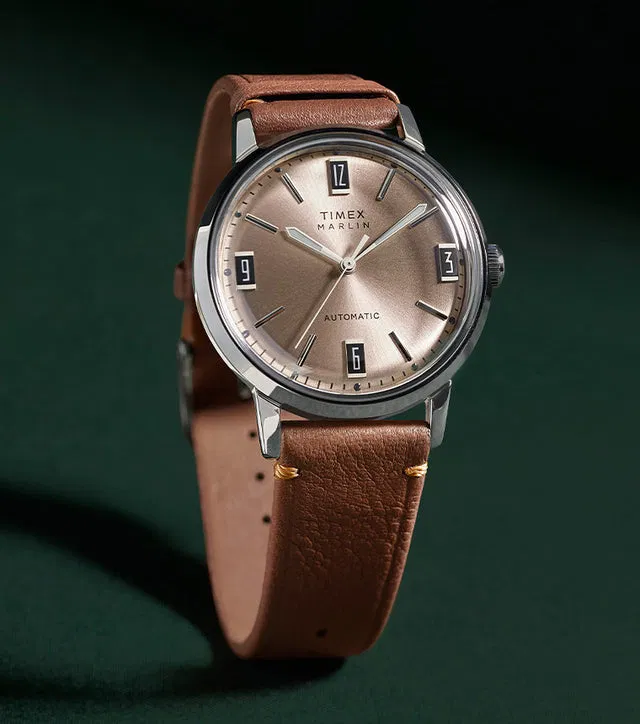
Timex Marlin Automatic 40mm


Timex Marlin Automatic 40mm

Timex

★★★★★ 4.7 (1,106 reviews)

$259


Check Price on Amazon →


Browse all 142+ expert-reviewed watches →

ETSY Shop
ETSY Shop
Redbubble Shop
Redbubble Shop
More Watch Facts
More Watch Facts

Watch Fact of the Day: The Mystery of the First Wristwatch Made for a Woman

Long before wristwatches became standard for men during World War I, Abraham-Louis Breguet crafted what is widely considered the first known wristwatch in histo

Watch History: Monday, August 31, 2026

📅 Monday, August 31, 2026

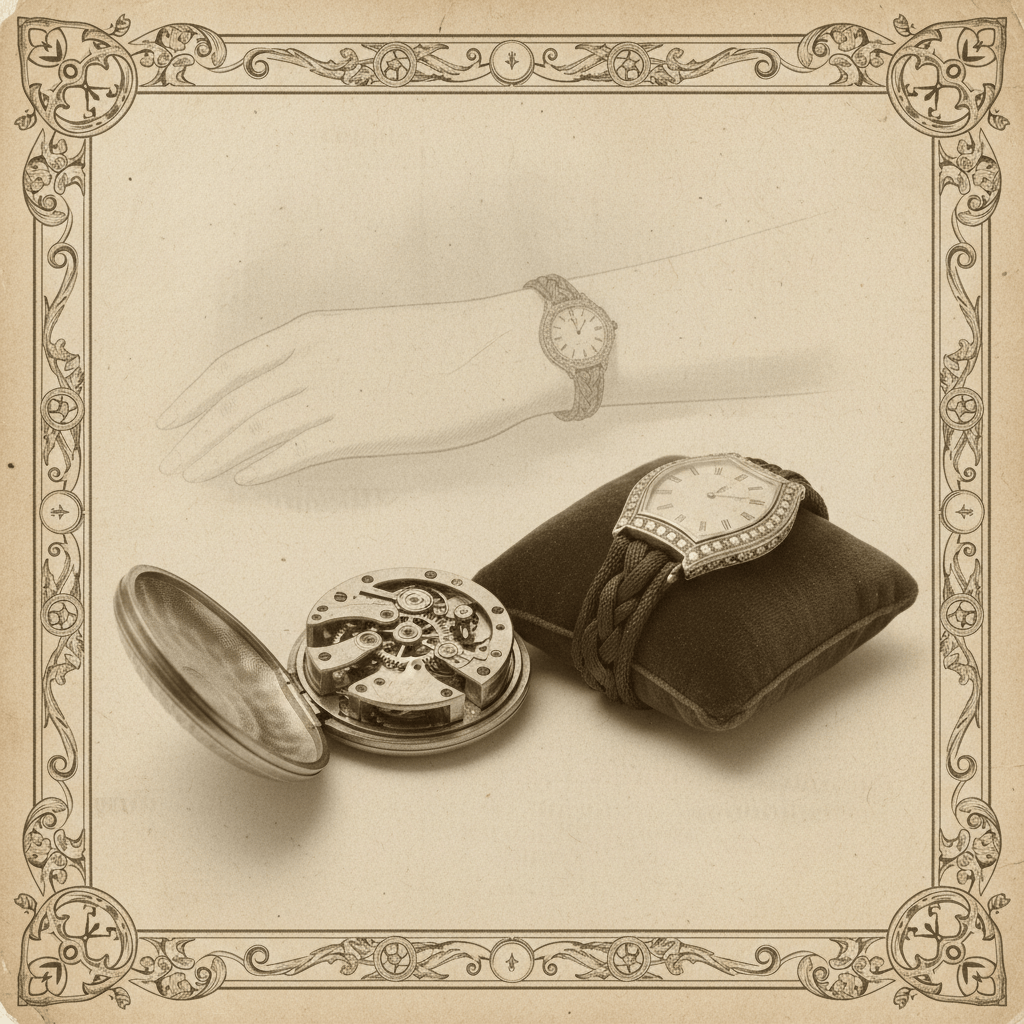
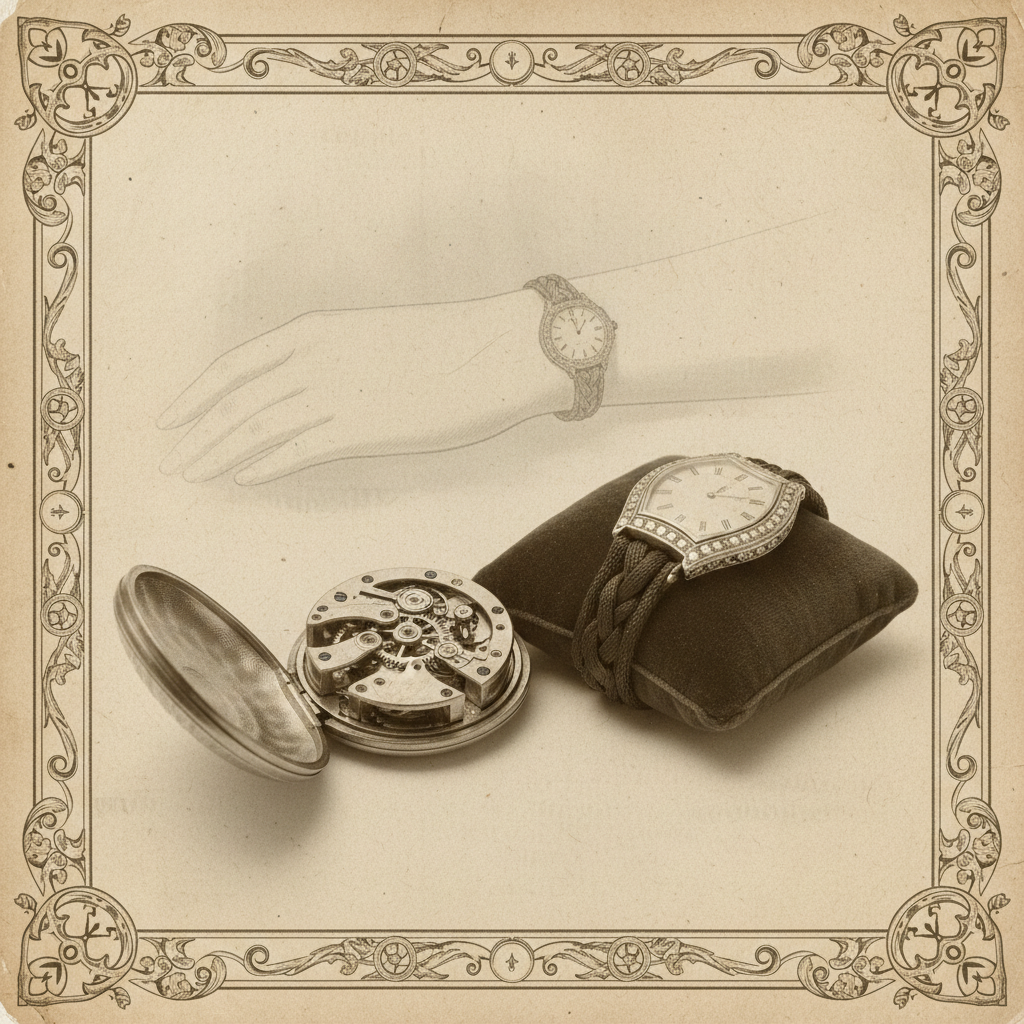
Long before wristwatches became standard for men during World War I, Abraham-Louis Breguet crafted what is widely considered the first known wristwatch in history for Caroline Murat, the Queen of Naples, in 1810. This extraordinary timepiece was an oval-shaped complication featuring a repeating movement and a thermometer, mounted on a sophisticated hair-and-gold thread bracelet. It took over two years to create, redefining timepieces as exquisite wearable jewelry for women decades before men adopted the style.


Long before wristwatches became commonplace—and nearly a century before they became standard equipment for men—Caroline Murat, Queen of Naples and younger sister of Napoleon Bonaparte, commissioned Abraham-Louis Breguet to create a watch specifically designed to be worn on the wrist. The order was entered into Breguet’s records on June 8, 1810, making Breguet No. 2639 what the manufacture describes as the first known wristwatch in history. Montres Breguet

The surviving commission book is wonderfully specific. Caroline ordered a repeating watch for a bracelet at a price of 5,000 francs. Breguet’s manufacturing records describe the resulting creation as an exceptionally thin repeating watch with complications, with an oblong/oval form and a thermometer, mounted on a wristlet made from hair intertwined with gold thread. This wasn’t simply a pocket watch attached to a strap—it was conceived specifically for the wrist. Montres Breguet

And it wasn’t an overnight project. The watch was commissioned in 1810, paid for in 1811 and finally delivered in 1812. That timeline is more precise than saying simply that Breguet “made it in 1810”: 1810 marks the commission and beginning of the story, while 1812 marks the delivery of the completed watch. Montres Breguet

Caroline Murat was no casual customer, either. Between 1808 and 1814, Breguet records that she purchased 34 clocks and watches, making her one of Abraham-Louis Breguet’s most important patrons. Yet No. 2639 was something altogether different. At a time when watches were overwhelmingly carried rather than worn on the wrist, Breguet was effectively treating the wrist itself as part of the design problem—combining complicated watchmaking with jewelry and wearable ergonomics. Montres Breguet

Here’s where the story earns the word “Mystery.” The original watch is no longer known to survive, and Breguet’s archives contain no surviving sketch of its exterior. Important details—including its exact dimensions, dial configuration, bracelet shape and fastening system—remain unknown. What we know comes largely from Breguet’s meticulous commission, manufacturing and later service records. Montres Breguet

And remarkably, the paper trail doesn’t end in 1812. On March 8, 1849, Breguet No. 2639 resurfaced in the company’s repair register when Countess Louise Rasponi—Caroline Murat’s daughter—brought the watch in for repair. That later service record helped preserve evidence of a watch whose physical whereabouts would ultimately become a mystery. Montres Breguet

⭐ Why It Matters

There’s a wonderful reversal of conventional watch history here. The wristwatch wasn’t originally established as a masculine tool that was later adapted for women. One of the earliest—and according to Breguet’s archives, the first known watch specifically conceived for the wrist—was created for a woman more than a century before the wristwatch became the dominant way people wore time.

Category: Watch History

Disclaimer: Every effort has been made to keep these watch facts accurate, but the world of horology is full of myths, disputed stories, and fascinating trivia. Consider these facts a starting point for discovery rather than the final word. If you have corrections or additional insights, let us know—we’re always happy to keep the record ticking in the right direction.

🕐 Discover more watch facts, reviews, and buying guides at WatchesAndMore


🛍️ You Might Also Like

As an Amazon Associate and affiliate partner, WatchesAndMore earns from qualifying purchases.

Timex Weekender Chronograph
🔥 Deal of the Day

Timex Weekender Chronograph

Timex

★★★★★ 4.5 (3,041 reviews)

$79

Offer expires in


🔥 Grab This Deal →

Bulova Precisionist


Bulova Precisionist

Bulova

★★★★★ 4.6 (1,100 reviews)

$219


Check Price on Amazon →

Timex Marlin Automatic 40mm


Timex Marlin Automatic 40mm

Timex

★★★★★ 4.7 (1,106 reviews)

$259


Check Price on Amazon →


Browse all 142+ expert-reviewed watches →

Watch Fact of the Day: The Steel Patek That Shocked the Auction World

Patek Philippe is renowned for precious metals, but when a unique stainless steel Grandmaster Chime was forged for charity, it shattered expectations. Featuring

The Steel Patek That Shocked the Auction World

📅 Sunday, August 30, 2026

Patek Philippe is renowned for precious metals, but when a unique stainless steel Grandmaster Chime was forged for charity, it shattered expectations. Featuring 20 complications and a reversible case, this one-of-a-kind masterpiece fetched a staggering $31.19 million at a 2019 auction, making it the most expensive wristwatch ever sold.


Patek Philippe is synonymous with precious metals and traditional haute horlogerie, but in 2019 the manufacture created something deliberately extraordinary for the Only Watch charity auction: Grandmaster Chime Reference 6300A-010, the first and only version of the Grandmaster Chime produced in stainless steel. In a world where steel would normally be considered less intrinsically valuable than gold or platinum, its uniqueness made it considerably more tantalizing to collectors. Christie’s

And this wasn’t simply a special case wrapped around an ordinary watch. The Grandmaster Chime contains an astonishing 20 complications, making it Patek Philippe’s most complicated wristwatch. Among them are five acoustic functions: grande sonnerie, petite sonnerie, minute repeater, an alarm that actually strikes the programmed time, and a date repeater capable of acoustically sounding the date on demand. Patek identifies the alarm-with-time-strike and date repeater as patented world exclusives. Patek Philippe SA

Then there’s the case itself. The enormous 47.7 mm stainless-steel case uses a patented reversing mechanism, allowing the wearer to rotate the watch and display either of its two faces. One side features a rose-gold-colored dial with applied Breguet numerals; the calendar side is black ebony. Despite the steel exterior, Christie’s specifies that the actual dial plates are made from 18K solid gold. Christie’s

Patek made the Only Watch edition unmistakably unique in another wonderfully unsubtle way. On the alarm subdial appeared three words:

“THE ONLY ONE.”

And it really was. Reference 6300A-010 was created specifically for Only Watch 2019, with Christie’s describing it as the one and only stainless-steel Grandmaster Chime. Christie’s

Then came November 9, 2019, at Christie’s in Geneva. The bidding climbed through territory normally associated with historically important paintings rather than wristwatches. When it finally ended, the hammer had reached an extraordinary:

CHF 31,000,000

That was approximately US$31.1 million, and it established a new world auction record for any watch, not merely a wristwatch. The previous wristwatch auction record had belonged to Paul Newman’s Rolex Daytona, while the famous Patek Philippe Henry Graves Supercomplication had held the broader watch record. The steel Grandmaster Chime surpassed them both. Christie’s

And there’s another reason the result mattered: Only Watch is a charity auction. The event was established to raise funds for research into Duchenne muscular dystrophy, and Christie’s reported that the 2019 auction generated CHF 38,593,000 in total. That means this single Patek accounted for the overwhelming majority of the entire sale’s proceeds. Christie’s

⭐ Why It Matters

The extraordinary irony is that steel helped make the watch more valuable, not less. In ordinary material terms, stainless steel is nowhere near as precious as gold or platinum. But collectors weren’t buying raw material—they were competing for uniqueness, complication, provenance and historical significance.

Category: Record Breaker

Disclaimer: Every effort has been made to keep these watch facts accurate, but the world of horology is full of myths, disputed stories, and fascinating trivia. Consider these facts a starting point for discovery rather than the final word. If you have corrections or additional insights, let us know—we’re always happy to keep the record ticking in the right direction.

🕐 Discover more watch facts, reviews, and buying guides at WatchesAndMore


🛍️ You Might Also Like

As an Amazon Associate and affiliate partner, WatchesAndMore earns from qualifying purchases.

Casio MDV106-1A Duro
🔥 Deal of the Day

Casio MDV106-1A Duro

Casio

★★★★★ 4.6 (8,934 reviews)

$59

Offer expires in


🔥 Grab This Deal →

Seiko 5 Sports SRPD55


Seiko 5 Sports SRPD55

Seiko

★★★★★ 4.7 (1,247 reviews)

$275


Check Price on Amazon →

Citizen Promaster Diver


Citizen Promaster Diver

Citizen

★★★★★ 4.7 (2,192 reviews)

$299


Check Price on Amazon →


Browse all expert-reviewed watches →

Watch Fact of the Day: The Mystery of the Movado Polyplan’s Angled Movement

Back in 1912, Movado unleashed the Polyplan, a wristwatch that curved and twisted the rules of horology into a pretzel. Unlike flat movements that play nice, the Polyplan’s guts danced across three levels, fitting the wrist like a glove while making any watchmaker cringe in terror at the thought of repairs. Imagine trying to fix a Rubik’s Cube one-handed! Movado wasn’t just thinking outside the box; they flipped the box and sculpted it to the wrist. Fast forward a century, and their quirky innovation seems almost futuristic. Who knew wristwatches could be so avant-garde, or that they’d make a pocket watch feel ancient?

Fun Quirk: Saturday, August 29, 2026

📅 Saturday, August 29, 2026

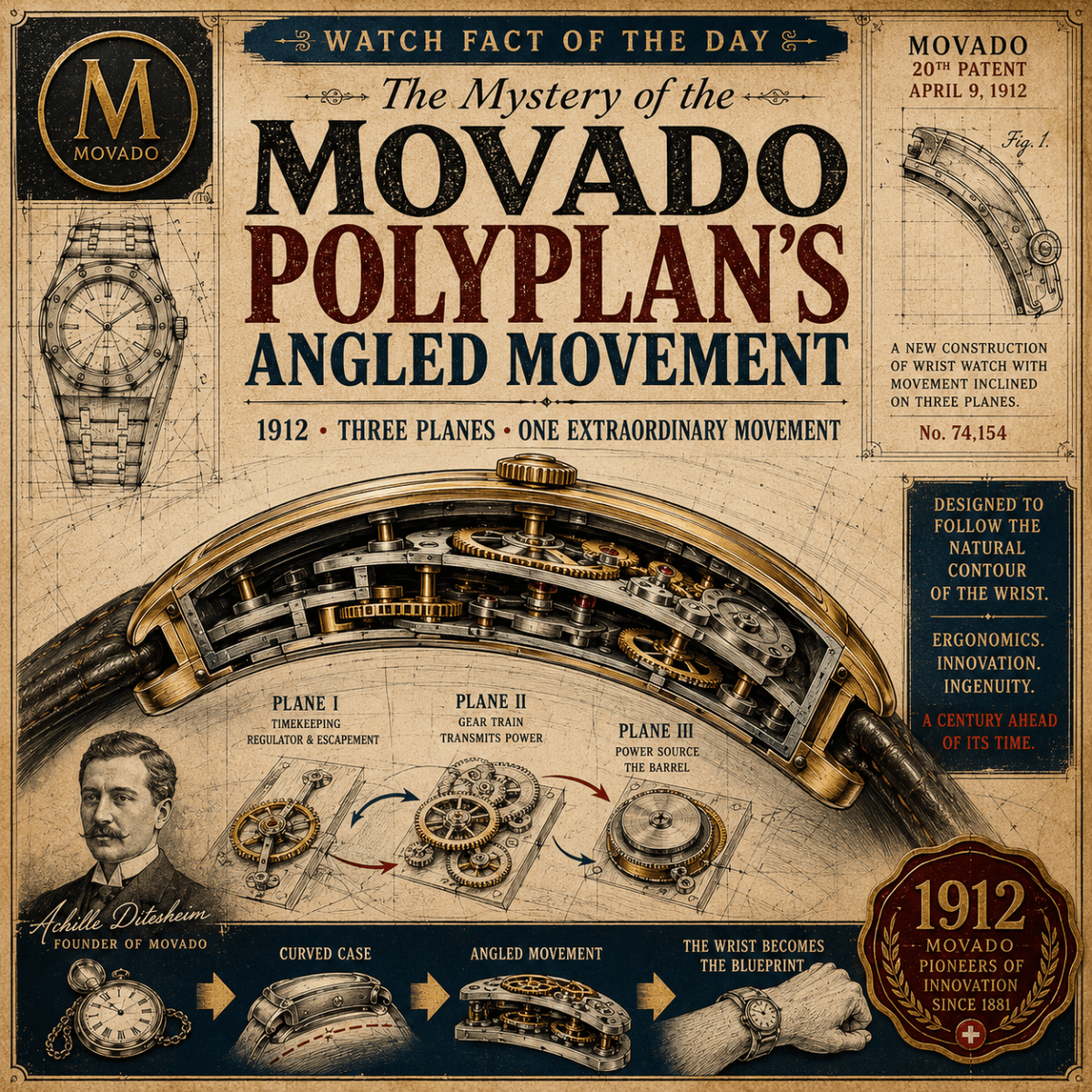
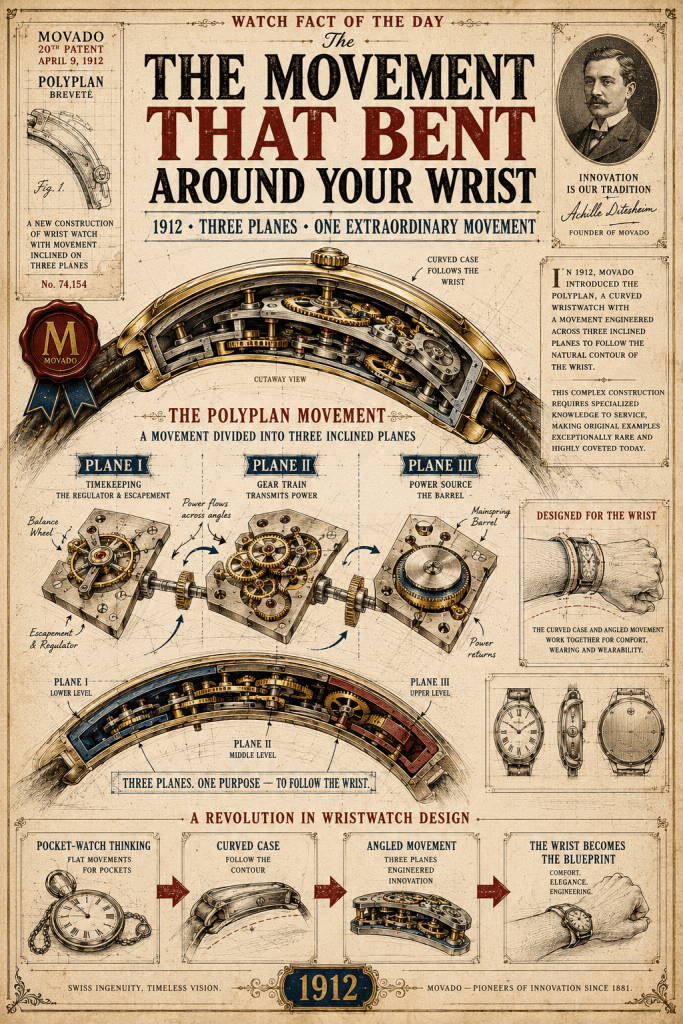
In 1912, Movado introduced the Polyplan, an extraordinary wristwatch featuring a curved case and a specially engineered movement divided into three inclined planes to fit the wrist ergonomically. Because of this complex construction, watchmakers found them nearly impossible to service, making surviving original examples some of the rarest and most coveted vintage curiosities today.


In 1912, Movado introduced one of the strangest and most ingenious early wristwatch constructions ever attempted: the Polyplan. Rather than placing an ordinary flat movement inside a curved case, Movado engineered the movement itself around the shape of the watch. Its components were arranged across three separate planes positioned at angles to one another, allowing the entire mechanism to follow a case curved around the natural contour of the wrist. The breakthrough was significant enough to earn Movado its 20th patent that year. Movado

That distinction is what makes the Polyplan so fascinating. A conventional movement wants to occupy a single flat plane: mainspring, gear train, escapement and balance are normally organized around one relatively straightforward architecture. The Polyplan instead treated the movement almost like a tiny mechanical structure built around a bend. Different functional sections occupied different levels, yet they still had to transmit power reliably from one part of the movement to another.

The result was an extraordinarily futuristic idea for 1912. Wristwatches themselves were still fighting for acceptance in an era dominated by pocket watches, yet Movado was already asking a remarkably modern ergonomic question: why should the wrist conform to the watch when the watch could conform to the wrist? The elongated curved case hugged the arm rather than sitting like a small flat pocket watch strapped on top of it. Movado’s own history describes the movement as being angled specifically to follow the wrist’s natural contours. Movado

And this is where I’d slightly soften one part of our original fact. I couldn’t verify from a strong primary source that watchmakers historically considered Polyplans “nearly impossible to service.” It’s completely believable that their unusual architecture makes restoration exceptionally specialized, but I’d present that as a consequence of the construction rather than a documented period claim. The safer—and arguably cooler—point is that servicing one requires dealing with a movement whose geometry is fundamentally unlike an ordinary flat calibre.

The Polyplan also wasn’t the end of Movado’s experimentation with wrist-conforming movements. The company later developed the Curviplan, which Movado describes as a reinterpretation of the Polyplan concept in a slimmer form, again using a movement carefully designed to exploit the available space inside the case. The Polyplan therefore wasn’t simply an eccentric one-off—it established an engineering idea that Movado would revisit. Movado

Today, the Polyplan feels almost startlingly contemporary. Modern watchmakers regularly talk about ergonomics, integrated architecture and designing movements specifically around unusual cases. Movado was wrestling with precisely that challenge more than a century ago. Instead of taking a movement and designing a watch around it, the Polyplan effectively reversed the equation: design the watch for the human wrist—and engineer the movement to fit.

📖 Collector’s Note

The name itself gives away the secret: Polyplan—multiple planes. The watch wasn’t merely curved on the outside. Its mechanical architecture was deliberately divided across three inclined planes inside. That’s why a side-profile or cutaway illustration tells the Polyplan story far better than a normal straight-on photograph ever could.

Category: Fun Quirk

Disclaimer: Every effort has been made to keep these watch facts accurate, but the world of horology is full of myths, disputed stories, and fascinating trivia. Consider these facts a starting point for discovery rather than the final word. If you have corrections or additional insights, let us know—we’re always happy to keep the record ticking in the right direction.

🕐 Discover more watch facts, reviews, and buying guides at WatchesAndMore


🛍️ You Might Also Like

As an Amazon Associate and affiliate partner, WatchesAndMore earns from qualifying purchases.

G-Shock GWM5610-1 Solar Atomic
🔥 Deal of the Day

G-Shock GWM5610-1 Solar Atomic

Casio

★★★★★ 4.8 (5,621 reviews)

$129

Offer expires in


🔥 Grab This Deal →

G-Shock GA2100-1A1 CasiOak


G-Shock GA2100-1A1 CasiOak

Casio

★★★★★ 4.8 (2,156 reviews)

$99


Check Price on Amazon →

Casio Edifice Chronograph


Casio Edifice Chronograph

Casio

★★★★★ 4.7 (1,264 reviews)

$120


Check Price on Amazon →


Browse all expert-reviewed watches →

Watch Fact of the Day: The Watch Designed in One Night

Legendary watch designer Gérald Genta received an urgent call at 4:00 PM from Audemars Piguet’s managing director demanding an unprecedented steel luxury sports

Fun Quirk: Friday, August 28, 2026

📅 Friday, August 28, 2026

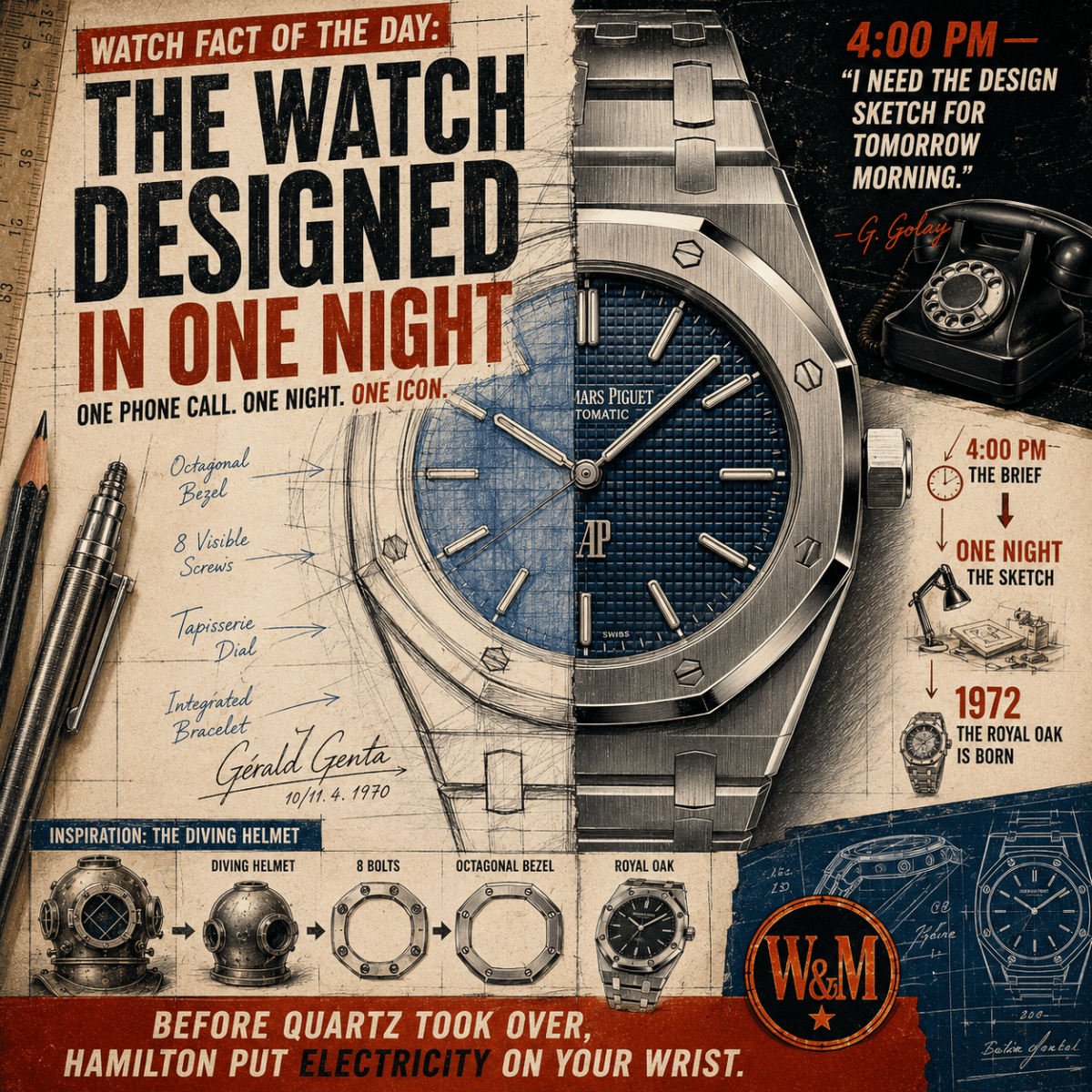
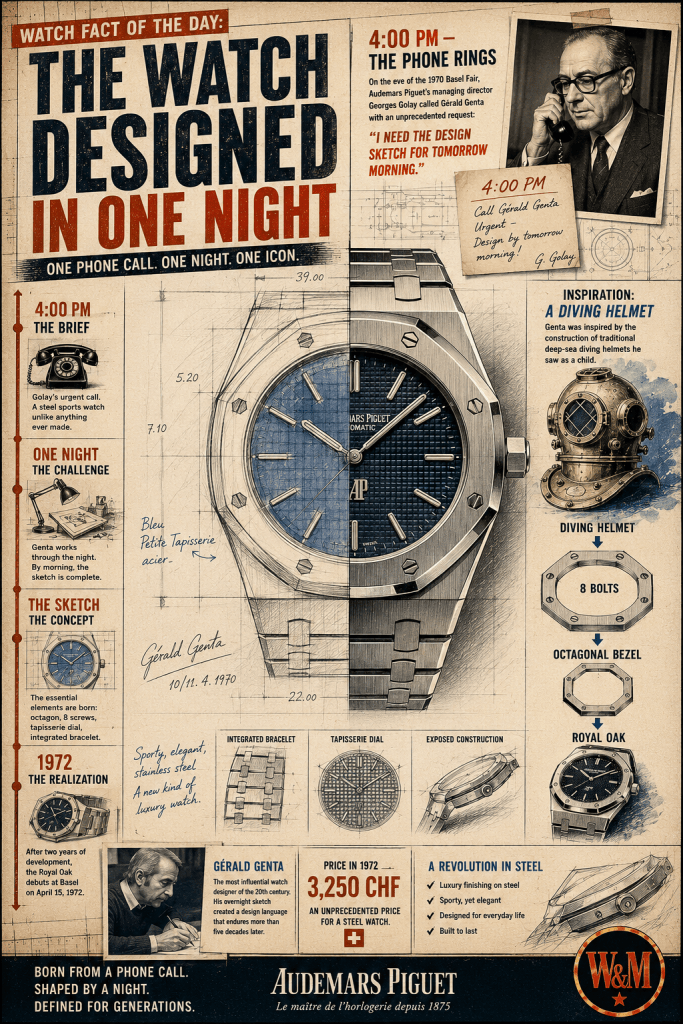
Legendary watch designer Gérald Genta received an urgent call at 4:00 PM from Audemars Piguet’s managing director demanding an unprecedented steel luxury sports watch by the next morning. Drawing inspiration from a traditional deep-sea diving helmet, Genta sketched the iconic octagonal, screw-accented design overnight.


On the eve of the 1970 Basel Fair, Audemars Piguet managing director Georges Golay gave Gérald Genta one of the most consequential rush jobs in watchmaking history. At approximately 4:00 PM, Golay called the legendary designer and asked for something audacious: a steel sports watch unlike anything that had existed before. There was one catch—he wanted the design by the following morning. Genta went to his drawing board and, in a single night, produced the basic form of what would become the Audemars Piguet Royal Oak. AP Chronicles

The request itself reflected changing tastes. Three distributors working with Audemars Piguet had identified demand for a watch that could somehow combine sportiness, elegance and stainless steel at a level normally associated with precious-metal luxury watches. This was a radical proposition around 1970. Instead of treating steel merely as a practical material, the eventual Royal Oak would treat it almost like precious metal, using exceptionally elaborate finishing to turn the case and bracelet into part of the luxury proposition. AP Chronicles

Genta found his inspiration in an unusual childhood memory. He recalled watching a diver being fitted with a traditional diving helmet near Geneva’s Pont de la Machine. The helmet’s bolts and protective rubber seal had fascinated him because the diver’s life literally depended upon that construction remaining watertight. When Golay asked for the unprecedented sports watch, that memory returned. Genta translated the industrial language of the diving helmet into an octagonal bezel, eight visible fasteners and a visible gasket. AP Chronicles

And Genta didn’t stop with the bezel. His overnight drawing already contained many of the elements that would define the finished Royal Oak: the dramatic case, integrated bracelet with tapering links, blue patterned dial and exposed construction details. AP’s archive identifies the surviving original as a gouache-and-pencil drawing on card, produced during the night of April 10–11, 1970. The remarkable thing isn’t merely that Genta produced a rough concept overnight—the essential visual DNA of the Royal Oak was already there. AP Chronicles

But the Royal Oak wasn’t immediately ready for customers. Turning Genta’s sketch into an actual watch proved enormously challenging, particularly because of the complicated steel case and integrated bracelet. Case makers were sufficiently concerned about manufacturing the design that early development work involved more malleable gold before the final steel execution. The bracelet itself became an extraordinary manufacturing challenge, with differently sized components required to achieve its distinctive taper. AP Chronicles

After roughly two years of development, the finished Royal Oak finally made its official debut at the Basel Fair on April 15, 1972. The original Reference 5402 measured approximately 39 mm—large enough for the era to acquire the famous “Jumbo” nickname—and combined its radical exterior with the ultra-thin automatic Calibre 2121. AP describes the launch as genuinely polarizing: some observers were shocked by the unconventional watch, while others immediately recognized its appeal. AP Chronicles

The gamble ultimately changed the vocabulary of luxury watch design. Instead of hiding screws, seams and structural elements, the Royal Oak celebrated them. Instead of disguising stainless steel as something more precious, it demonstrated that steel itself could become luxurious through design and finishing. And instead of separating an elegant watch from a sports watch, Genta created an object intended to inhabit both worlds. More than five decades later, Audemars Piguet still describes those lines—sketched in one night—as the foundation of a recognizable design language that has endured for generations. Audemars Piguet

✏️ Did You Know?

There’s an especially wonderful twist in Genta’s recollection: he said he actually misunderstood Golay’s brief. Genta thought he had heard a request for a steel sports watch with unprecedented water resistance, which helped trigger his memory of the diving helmet. That apparent misunderstanding contributed to the exposed gasket, eight fasteners and industrial architecture that became some of the most recognizable details in modern watchmaking.

Category: Fun Quirk

Disclaimer: Every effort has been made to keep these watch facts accurate, but the world of horology is full of myths, disputed stories, and fascinating trivia. Consider these facts a starting point for discovery rather than the final word. If you have corrections or additional insights, let us know—we’re always happy to keep the record ticking in the right direction.

🕐 Discover more watch facts, reviews, and buying guides at WatchesAndMore


🛍️ You Might Also Like

As an Amazon Associate and affiliate partner, WatchesAndMore earns from qualifying purchases.

G-Shock GWM5610-1 Solar Atomic
🔥 Deal of the Day

G-Shock GWM5610-1 Solar Atomic

Casio

★★★★★ 4.8 (5,621 reviews)

$129

Offer expires in


🔥 Grab This Deal →

G-Shock GA2100-1A1 CasiOak


G-Shock GA2100-1A1 CasiOak

Casio

★★★★★ 4.8 (2,156 reviews)

$99


Check Price on Amazon →

Casio Edifice Chronograph


Casio Edifice Chronograph

Casio

★★★★★ 4.7 (1,264 reviews)

$120


Check Price on Amazon →


Browse all 142+ expert-reviewed watches →

Watch Fact of the Day: The Mystery of Rolex’s First Deep-Sea Record

So, back in 1960, Jacques Piccard and Don Walsh took a wild dive in the Trieste bathyscaphe to the Mariana Trench, bringing along an experimental Rolex Deep Sea Special strapped to the outside. This watch handled insane pressures over 10,000 meters deep, proving Rolex’s mechanical genius. When they surfaced after 8.5 hours, the watch was still ticking accurately—like a champ! Fast forward to 2012, filmmaker James Cameron took his own dive, bringing along the vintage watch as a lucky charm. Rolex later launched a production version, tying it all back to those epic deep-sea adventures. Talk about a legacy!

📅 Monday, August 24, 2026

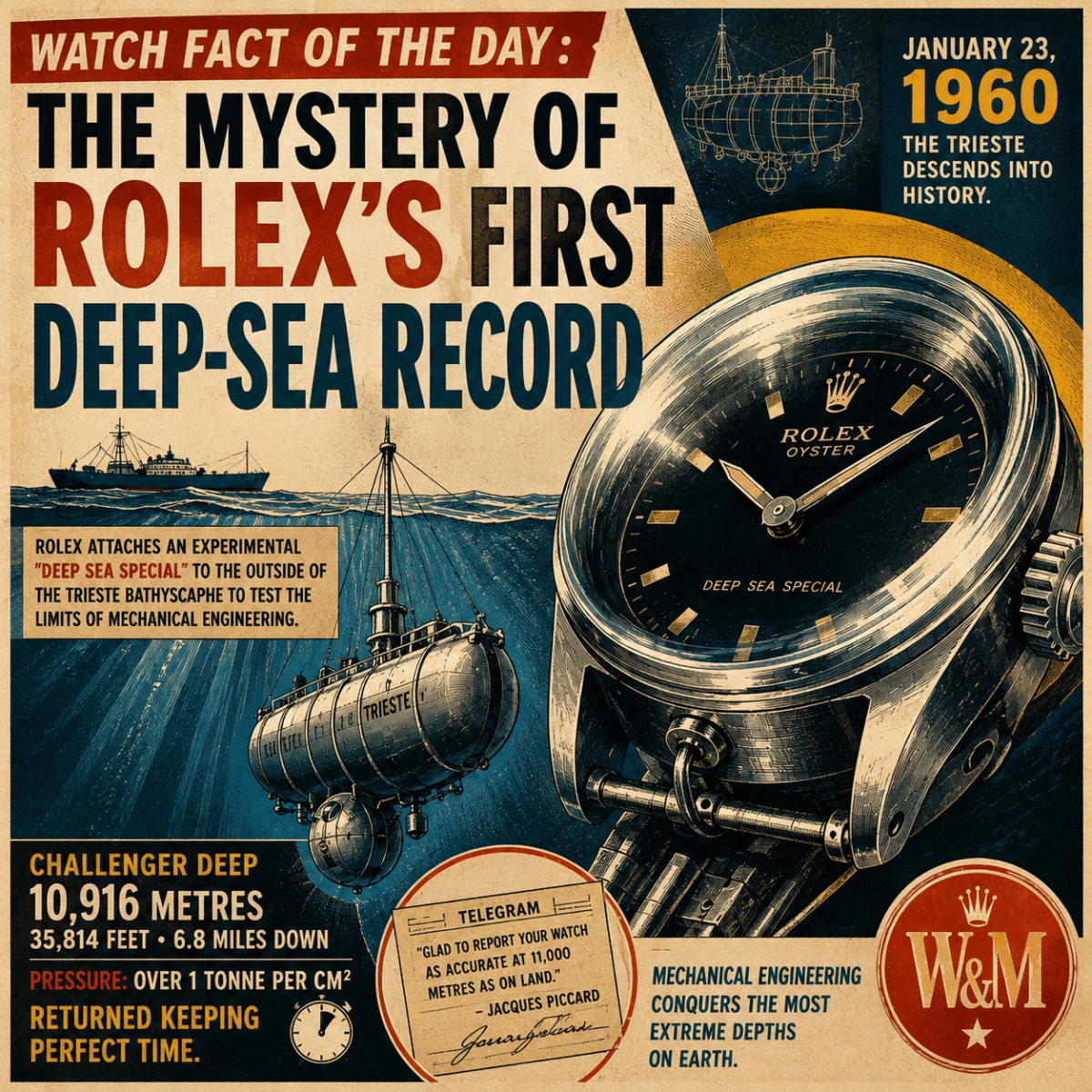
Long before the Deepsea Challenge went to the Mariana Trench, Rolex attached an experimental ‘Deep Sea Special’ watch to the outside of the Trieste bathyscaphe in 1960. The massive bubble-domed timepiece withstood a crushing pressure of over seven miles down in the Challenger Deep and continued ticking normally. When the hatch opened, the watch proved that mechanical engineering could conquer the most extreme depths on Earth.


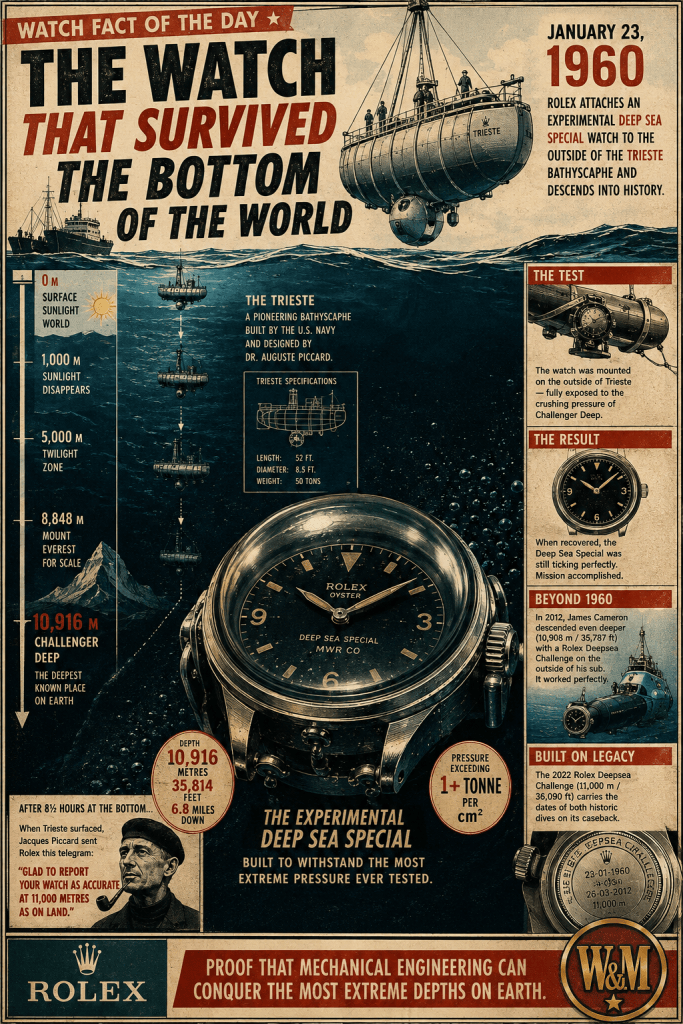
On January 23, 1960, Swiss oceanographer Jacques Piccard and U.S. Navy Lieutenant Don Walsh climbed aboard the experimental bathyscaphe Trieste and began descending into the Mariana Trench. Their destination was Challenger Deep, the deepest known region of Earth’s oceans. Strapped not safely inside the pressure sphere, but deliberately to the outside of the vessel, was an experimental Rolex unlike anything intended for an ordinary wrist: the Deep Sea Special.

The watch was the culmination of years of experimentation. During the 1950s, Rolex had developed successive Deep Sea Special prototypes specifically to explore the limits of waterproof watch construction. For the extraordinary pressure anticipated at Challenger Deep, the watch used a remarkably thick, highly domed crystal, giving the prototype its unmistakable almost bubble-like appearance. Rolex says the third Deep Sea Special was created specifically to withstand the extreme conditions of the Mariana Trench.

Then the Trieste kept going down.

1,000 metres.
5,000 metres.
8,000 metres.
10,000 metres.

Eventually Piccard and Walsh reached a record 10,916 metres — 35,814 feet, or roughly 6.8 miles — beneath the Pacific Ocean. That’s deeper than Mount Everest is tall, with roughly another two kilometres to spare. At that depth, Rolex says the Deep Sea Special endured pressure exceeding one tonne per square centimetre.

And remember where the watch was.

There was no protective pressure cabin around it. While Piccard and Walsh survived inside the Trieste’s heavily reinforced pressure sphere, the Deep Sea Special was exposed directly to the abyssal environment on the exterior of the bathyscaphe. Its case and crystal therefore had to resist the crushing pressure of Challenger Deep while maintaining the sealed environment necessary for the mechanical movement inside.

After approximately eight and a half hours beneath the sea, the Trieste returned to the surface. The experimental watch was recovered—and Rolex reports that it had kept perfect time. The result was dramatic proof that a properly engineered mechanical wristwatch case could remain watertight under one of the most hostile pressure environments accessible on Earth.

Piccard then sent Rolex a telegram that became part of watchmaking folklore:

“Glad to report your watch as accurate at 11,000 metres as on land.”

That is Rolex’s documented wording of Piccard’s message following the dive.

The Story Didn’t End in 1960

For more than half a century, the Trieste achievement stood essentially alone. Then, on March 26, 2012, filmmaker and explorer James Cameron descended solo to Challenger Deep aboard the DEEPSEA CHALLENGER. Once again, an experimental Rolex was mounted outside the submersible—this time the enormous Rolex Deepsea Challenge, engineered for waterproofness to 12,000 metres. Rolex says it remained accurate at more than 10,000 metres and emerged unscathed.

And there’s a wonderful connection between the two expeditions: Cameron actually carried a 1960 Deep Sea Special inside his cockpit during the 2012 dive. He called the vintage watch the “Old Lady” and described it as his good-luck charm—a sister watch to the Deep Sea Special that had made the original journey aboard Trieste 52 years earlier.

That heritage eventually reached a production wristwatch. In 2022, Rolex introduced the titanium Deepsea Challenge, guaranteed waterproof to 11,000 metres (36,090 feet). Its caseback carries the dates 23-01-1960 and 26-03-2012, permanently connecting the production model to the Trieste and Cameron expeditions.

💡 Did You Know?

The famous Deep Sea Special wasn’t tucked into the Trieste’s cockpit as a souvenir—it was attached to the exterior specifically so that the ocean could attack it with essentially the same immense environmental pressure confronting the bathyscaphe itself. At Challenger Deep, Rolex records pressure of more than one tonne per square centimetre, yet when the watch returned to daylight, its mechanical movement was still keeping time

Category: Military Watches

Disclaimer: Every effort has been made to keep these watch facts accurate, but the world of horology is full of myths, disputed stories, and fascinating trivia. Consider these facts a starting point for discovery rather than the final word. If you have corrections or additional insights, let us know—we’re always happy to keep the record ticking in the right direction.

🕐 Discover more watch facts, reviews, and buying guides at WatchesAndMore


🛍️ You Might Also Like

As an Amazon Associate and affiliate partner, WatchesAndMore earns from qualifying purchases.

G-Shock GWM5610-1 Solar Atomic
🔥 Deal of the Day

G-Shock GWM5610-1 Solar Atomic

Casio

★★★★★ 4.8 (5,621 reviews)

$129

Offer expires in


🔥 Grab This Deal →

G-Shock GA2100-1A1 CasiOak


G-Shock GA2100-1A1 CasiOak

Casio

★★★★★ 4.8 (2,156 reviews)

$99


Check Price on Amazon →

Seiko 5 SNK805 Green Military


Seiko 5 SNK805 Green Military

Seiko

★★★★★ 4.8 (6,961 reviews)

$89


Check Price on Amazon →


Browse all expert-reviewed watches →
ETSY Shop
ETSY Shop
Redbubble Shop
Redbubble Shop
More Watch Facts
More Watch Facts

Watch Fact of the Day: The Watch Dial That Turned Time Into Art

So, the Movado Museum dial is this super iconic watch face designed by Nathan George Horwitt back in 1947. It’s all about that minimalist vibe with just a gold dot at 12 o’clock, symbolizing the sun at noon. Rather than cluttering up the dial with numbers, Horwitt wanted to focus on the flow of time like a sundial. It wasn’t just a trend; this design became a part of Movado’s identity and eventually got a spot at the Museum of Modern Art, marking it as a significant piece in watch history. Talk about less is more!

📅 Sunday, August 23, 2026

Designed by Bauhaus-influenced artist Nathan George Horwitt in 1947, the iconic Movado Museum dial features a single gold dot at 12 o’clock representing the sun at high noon. While Movado eventually adopted it as their signature look, the design was originally created with the philosophical goal of representing time as a continuous movement rather than mathematical intervals. It became the first watch dial ever acquired by the Museum of Modern Art in New York.


In 1947, American industrial designer Nathan George Horwitt created one of the most radical watch dials of the 20th century by doing something almost unthinkable: he removed virtually everything. No numerals. No conventional hour markers. No decorative clutter. Against the stark dial remained only the hands and a single circular marker at 12 o’clock. Horwitt’s minimalist creation would eventually become inseparable from Movado and one of the most instantly recognizable designs in modern watchmaking.

But that solitary dot wasn’t merely minimalist decoration. Horwitt looked back to perhaps humanity’s oldest method of measuring the day: the sundial. Movado explains that the dot represents the sun at high noon—and the moon at midnight. Rather than covering the dial with numbers that divide time into discrete units, Horwitt stripped the display back to a relationship between the movement of the hands and one celestial reference point.

That makes the Museum Dial a fascinating paradox. It looks futuristic, yet its central idea reaches back thousands of years. A mechanical watch—one of humanity’s most sophisticated timekeeping machines—was visually reduced to something reminiscent of watching a shadow travel around a sundial beneath the sun. Movado describes Horwitt’s design as an exploration of the concept of time that removed unnecessary complications and returned time-telling to its origins.

But Here’s Where the Story Gets Really Interesting…

The dial wasn’t originally born as simply another Movado model. MoMA’s own collection identifies the 1947 object as Nathan George Horwitt’s “Wristwatch Face” and lists its manufacturer as Vacheron & Constantin—Le Coultre Watches, Inc., Switzerland. The museum records it as white gold with an enameled dial and credits it as a gift from Horwitt himself. That makes the early history considerably more interesting than the simplified version in which Horwitt simply designed “the Movado dial” in 1947.

Horwitt’s design subsequently became deeply associated with Movado, and the company transformed that extraordinarily sparse visual language into its defining identity. Today the Museum concept appears throughout Movado’s collections, and the company says versions of the design can be found in more than 20 art institutions around the world.

Then came the achievement that gave the design its enduring name. In 1960, the Museum Dial entered the permanent collection of New York’s Museum of Modern Art. Movado describes it as the first watch dial accepted into MoMA’s permanent collection, while MoMA’s current catalogue confirms the object number 335.1960, its 1947 design date and Horwitt as its designer.

There’s something wonderfully appropriate about that recognition. Most watchmakers spend enormous effort adding information to a dial—indices, scales, complications, subdials and displays. Horwitt achieved immortality by doing almost exactly the opposite. He took nearly everything away.

Category: Brand Spotlight

Disclaimer: Every effort has been made to keep these watch facts accurate, but the world of horology is full of myths, disputed stories, and fascinating trivia. Consider these facts a starting point for discovery rather than the final word. If you have corrections or additional insights, let us know—we’re always happy to keep the record ticking in the right direction.

🕐 Discover more watch facts, reviews, and buying guides at WatchesAndMore


🛍️ You Might Also Like

As an Amazon Associate and affiliate partner, WatchesAndMore earns from qualifying purchases.

Timex Weekender Chronograph
🔥 Deal of the Day

Timex Weekender Chronograph

Timex

★★★★★ 4.5 (3,041 reviews)

$79

Offer expires in


🔥 Grab This Deal →

Bulova Precisionist


Bulova Precisionist

Bulova

★★★★★ 4.6 (1,100 reviews)

$219


Check Price on Amazon →

Timex Marlin Automatic 40mm


Timex Marlin Automatic 40mm

Timex

★★★★★ 4.7 (1,106 reviews)

$259


Check Price on Amazon →


Browse all expert-reviewed watches →

ETSY Shop
ETSY Shop
Redbubble Shop
Redbubble Shop
More Watch Facts
More Watch Facts

Watch Fact of the Day: The Mickey Mouse Watch Saved a Major American Watchmaker

In the midst of the Great Depression, the Ingersoll-Waterbury company was flipping through bankruptcy brochures when it struck gold: a licensing deal with Walt Disney to create a Mickey Mouse watch. Picture this: a watch with Mickey’s arms as the hour and minute hands, turning time-telling into a cartoon caper! Priced originally at $3.25 (the absurdity of spending that during a depression!), it sold like hotcakes, with 11,000 flying off shelves on launch day. This little wristwatch didn’t just save a company; it set the stage for Timex! Who knew a mouse could save a business and become a time-telling icon?

📅 Saturday, August 22, 2026

During the depths of the Great Depression in 1933, the Ingersoll-Waterbury company was facing imminent bankruptcy. Their fortunes completely turned around when they secured a license from Walt Disney to produce the first Mickey Mouse watch, featuring the character’s hands as the hour and minute indicators. Selling for just $2.50, the watch became a massive cultural phenomenon that sold over two million units in just a few years, saving the company from ruin and eventually evolving into modern-day Timex.


In 1933, during the darkest years of the Great Depression, Connecticut’s Waterbury Clock Company was in serious financial trouble. The company had already acquired the American Ingersoll business after its earlier collapse, and by 1932 Waterbury itself had entered receivership. Then came an unlikely lifeline: a licensing agreement with Walt Disney Enterprises to manufacture a watch starring America’s increasingly famous cartoon mouse. Historical documentation credits the resulting Mickey Mouse watches with helping save Waterbury from receivership.

The design was wonderfully simple—and incredibly clever. Mickey Mouse stood in the center of the dial, with his two arms serving as the hour and minute hands, while a small seconds display featured three tiny Mickey figures seemingly chasing one another around the dial. It effectively turned the act of telling time into animation on the wrist, helping establish a formula that generations of character watches would follow.

And here’s our first important correction: the original wristwatch wasn’t launched at $2.50. Disney’s own D23 history records an initial price of $3.25, subsequently reduced to $2.95; a companion Mickey Mouse pocket watch sold for $1.50. That may sound inexpensive today, but in Depression-era America it still represented a meaningful purchase—which makes what happened next even more extraordinary.

The public went absolutely crazy for it. Macy’s reportedly sold 11,000 Mickey Mouse watches on the first day, and Connecticut History reports that more than two million were sold within roughly a year and a half. The Walt Disney Family Museum gives another often-cited figure of 2.5 million within two years. Waterbury’s workforce expanded dramatically as demand exploded; by 1935, contemporary reporting credited Mickey with helping the company add thousands of workers.

The story gets even better. In 1939, when organizers of the New York World’s Fair created a time capsule intended to represent 20th-century American civilization to people thousands of years in the future, an Ingersoll Mickey Mouse watch was among the objects selected for inclusion. A children’s novelty watch had become such a recognizable symbol of its era that someone decided future civilization needed to see one.

And then comes the connection to one of America’s most famous watch names. Waterbury Clock eventually became U.S. Time, and U.S. Time ultimately became Timex. So saying that the Mickey Mouse watch single-handedly “created Timex” would oversimplify a much longer corporate history—but its enormous Depression-era success was an important chapter in the survival of the company that ultimately carried that lineage forward. Even the National Register documentation for Timex’s corporate headquarters specifically describes the Disney contract as having saved Waterbury from receivership.

💡 Did You Know?

By 1957, the Mickey Mouse watch had travelled an astonishing distance from its desperate Depression-era beginnings: the 25-millionth Mickey Mouse watch was presented to Walt Disney. What began as a licensing gamble for a struggling Connecticut manufacturer had grown into one of the most successful character-watch stories in history.

Category: Brand Spotlight

Disclaimer: Every effort has been made to keep these watch facts accurate, but the world of horology is full of myths, disputed stories, and fascinating trivia. Consider these facts a starting point for discovery rather than the final word. If you have corrections or additional insights, let us know—we’re always happy to keep the record ticking in the right direction.

🕐 Discover more watch facts, reviews, and buying guides at WatchesAndMore


🛍️ You Might Also Like

As an Amazon Associate and affiliate partner, WatchesAndMore earns from qualifying purchases.

Timex Weekender Chronograph
🔥 Deal of the Day

Timex Weekender Chronograph

Timex

★★★★★ 4.5 (3,041 reviews)

$79

Offer expires in


🔥 Grab This Deal →

Timex Marlin Automatic 40mm


Timex Marlin Automatic 40mm

Timex

★★★★★ 4.7 (1,106 reviews)

$259


Check Price on Amazon →

Timex Waterbury Classic Chrono 40mm


Timex Waterbury Classic Chrono 40mm

Timex

★★★★☆ 4.4 (2,880 reviews)

$140


Check Price on Amazon →


Browse all expert-reviewed watches →
ETSY Shop
ETSY Shop
Redbubble Shop
Redbubble Shop
More Watch Facts
More Watch Facts

Watch Fact of the Day: The 24-Hour Dial That Refused to Tell Time Normally

So, the Glycine Airman, launched in 1953, flipped the watch game by using a 24-hour display instead of the usual 12-hour format. This was a pilot’s dream, designed after feedback from a real aviator who wanted a watch that could track dual time zones and had features like automatic winding and a calendar. The watch became essential for military pilots during the Vietnam War, helping them easily differentiate between day and night hours. Even though it looks quirky to civilians, it was engineered perfectly for how pilots needed to view time. Plus, you might be surprised when you first see where noon is on the dial!

📅 Friday, August 21, 2026

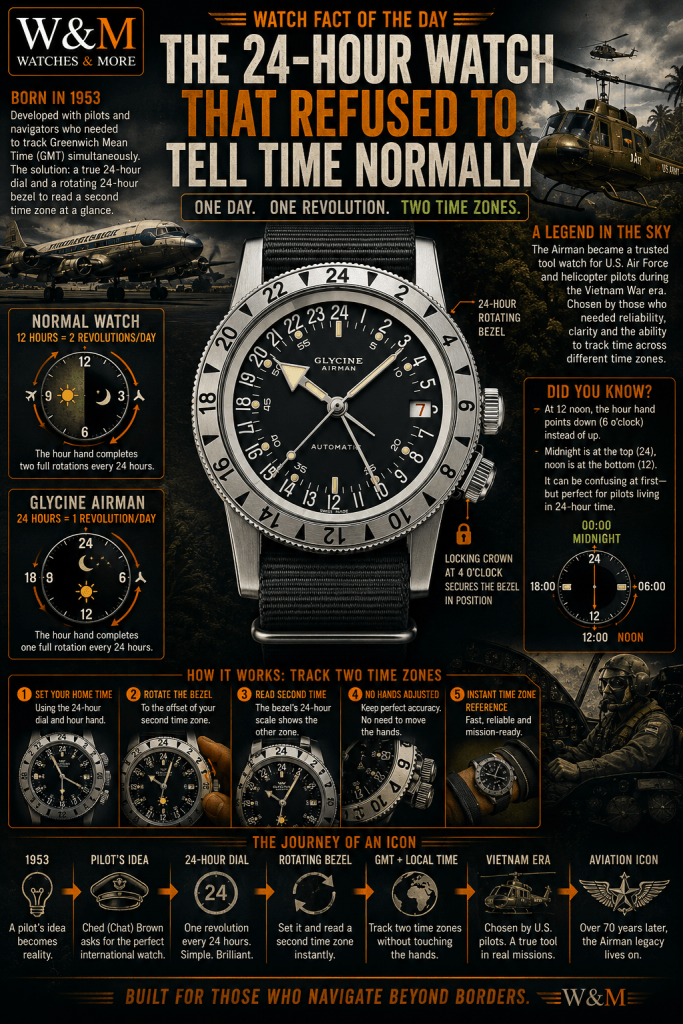
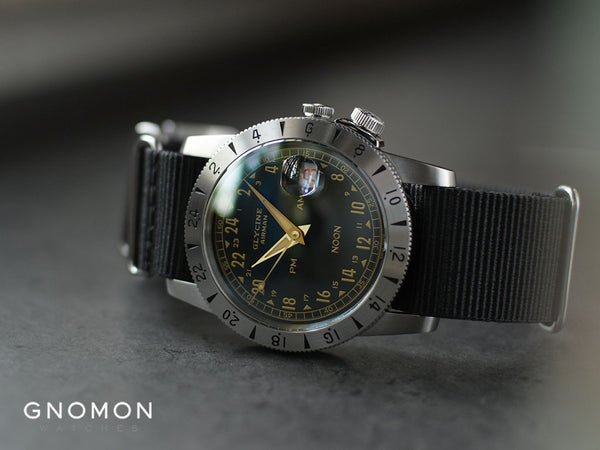
In 1953, Glycine introduced a pilot’s watch that deliberately broke one of watchmaking’s most familiar rules. Instead of an hour hand circling the dial twice every day, the original Glycine Airman used a true 24-hour display, meaning its hour hand completed just one revolution every 24 hours. Midnight sat at the top of the dial, while noon appeared at the bottom—a layout that could initially look completely backwards to anyone accustomed to an ordinary watch, but made perfect sense to aviators working in 24-hour time.

Even better, the Airman was reportedly born from an actual pilot’s request. During a 1953 flight from Bangkok to Calcutta, Glycine representative Samuel Glur spoke with pilot Ched/Chat Brown, who described the watch international flight crews needed: automatic winding, a calendar, a 24-hour dial and an external rotating 24-hour bezel. Pilots increasingly operated using Greenwich Mean Time, so the proposed arrangement would allow them to keep one reference on the dial and use the bezel to read another time zone. Glycine took the idea back to Switzerland, developed the concept and launched the Airman that same year.

Its solution to dual-time tracking was beautifully simple. The Airman didn’t originally need a separate GMT hand: the same hour hand could be read against both the fixed 24-hour dial and the independently positioned 24-hour bezel. Rotate the bezel by the appropriate offset and the watch could simultaneously indicate another time zone without disturbing the actual timekeeping hands. A small crown around 4 o’clock locked the friction bezel into position, preventing an accidental knock from changing the pilot’s reference time.

That practicality helped turn the Airman into a genuine aviation tool. During the Vietnam War era, it became especially popular among American military aviators, including helicopter pilots, who valued its instant distinction between daytime and nighttime hours and ability to follow a second time zone. Surviving watches and veteran histories have helped cement that association, but the distinction is important: its military reputation wasn’t simply created by advertising—the Airman became famous because servicemen actually bought and wore the watches in the field.

There were other wonderfully clever details. Later vintage Airmen gained an extended “tail” on the hour hand that helped translate the unusual 24-hour display into familiar 12-hour time at a glance. The watch also developed a hacking mechanism for more precise synchronization—exactly the sort of practical feature that mattered to aviation and military users. What looked eccentric to civilians was actually a dial engineered around the way its intended users thought about time.

💡 Did You Know?

At 12 noon, the original Airman’s hour hand points straight down at 6 o’clock rather than straight up at 12. That’s not a mistake: because the hour hand takes an entire day to complete one revolution, the top of the dial represents midnight and the bottom represents midday. For someone wearing a normal 12-hour watch their entire life, reading an original Airman for the first time can genuinely make you question what time it is.

Category: Military Watches

Disclaimer: Every effort has been made to keep these watch facts accurate, but the world of horology is full of myths, disputed stories, and fascinating trivia. Consider these facts a starting point for discovery rather than the final word. If you have corrections or additional insights, let us know—we’re always happy to keep the record ticking in the right direction.

🕐 Discover more watch facts, reviews, and buying guides at WatchesAndMore


🛍️ You Might Also Like

As an Amazon Associate and affiliate partner, WatchesAndMore earns from qualifying purchases.

Glycine Airman Automatic GMT
🔥 Deal of the Day

Glycine Airman Automatic GMT

Glycine

★★★★★ 4.6 (97 reviews)

$674

Offer expires in


🔥 Grab This Deal →

Also at: Ashford

G-Shock GWM5610-1 Solar Atomic


G-Shock GWM5610-1 Solar Atomic

Casio

★★★★★ 4.8 (5,621 reviews)

$129


Check Price on Amazon →

G-Shock GA2100-1A1 CasiOak


G-Shock GA2100-1A1 CasiOak

Casio

★★★★★ 4.8 (2,156 reviews)

$99


Check Price on Amazon →


Browse all expert-reviewed watches →
ETSY Shop
ETSY Shop
Redbubble Shop
Redbubble Shop
More Watch Facts
More Watch Facts

Watch Fact of the Day: The Mystery of Urwerk’s Satellite Wandering Hours

URWERK’s innovative timepieces feature a unique rotating satellite complication instead of traditional hands, drawing inspiration from 17th-century night clocks. Co-founders Felix Baumgartner and Martin Frei sought to redefine the display of time, embracing a more fluid representation rather than strict intervals. These watches resemble spacecraft instruments, showcasing wandering-hour satellites that navigate across a minute track, echoing an ancient mechanism designed to be read at night without disturbing sleep. URWERK, established in 1997, combines historical horology with cutting-edge design, creating futuristic watches that still honor their traditional roots. The personal connection to these antique clocks fueled the brand’s creative vision.

Editorial illustration of an avant-garde satellite wandering-hours wristwatch

📅 Thursday, August 20, 2026

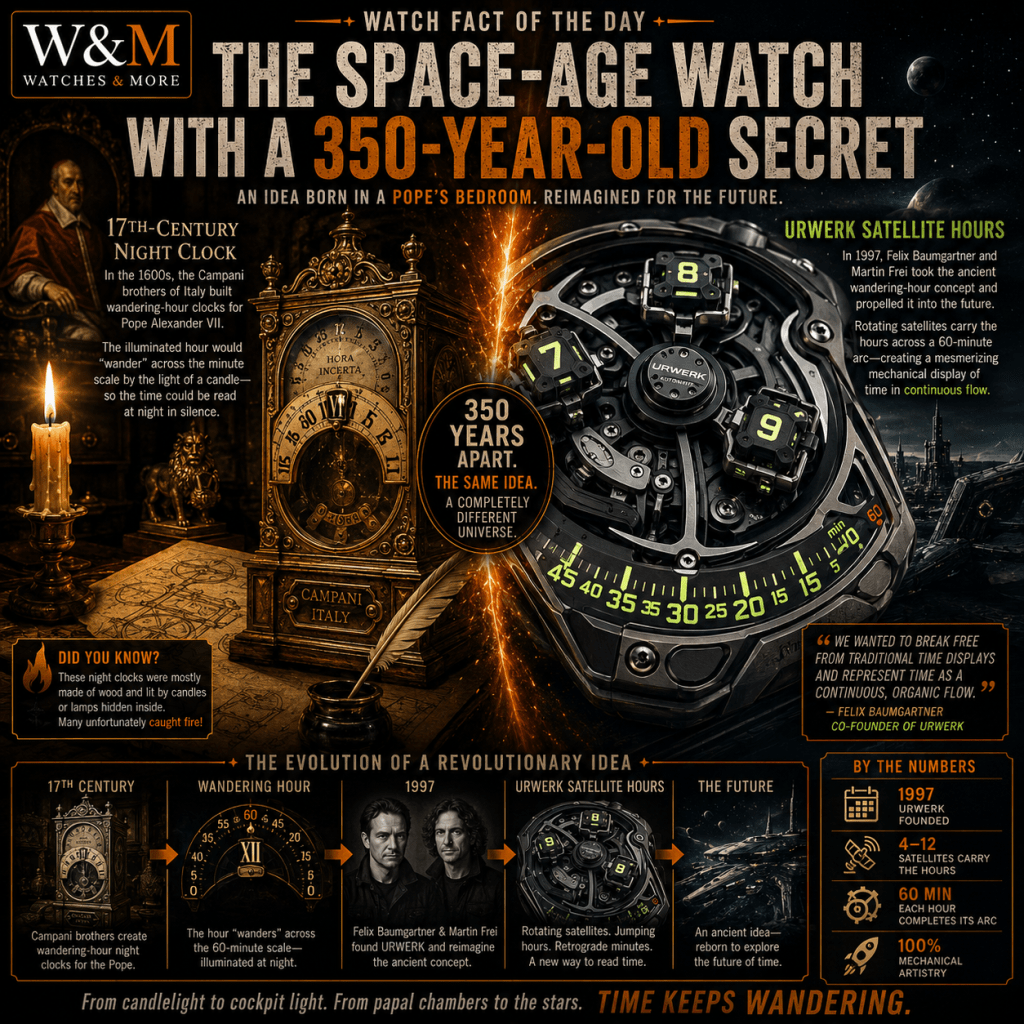
Urwerk’s avant-garde timepieces abandoned traditional hands entirely in favor of a rotating satellite complication inspired by 17th-century night clocks built for Pope Alexander VII. Hours are mounted on revolving cubes that sweep across an arched minute track, creating a mesmerizing, spaceship-like display of time passing. Co-founder Felix Baumgartner and designer Martin Frei wanted to break free from conventional dial layouts to represent time as a continuous, organic flow rather than rigid intervals.


At first glance, an URWERK looks less like a mechanical watch and more like an instrument pulled from the cockpit of a spacecraft. Instead of conventional hour and minute hands rotating around a familiar dial, many of the independent watchmaker’s creations use its signature wandering-hour satellite display. Numbered satellites travel around the movement while the active hour sweeps across a graduated minute arc. When its 60-minute journey is complete, another hour takes its place and begins the journey again. It’s mechanical watchmaking transformed into orbital motion.

Yet the concept behind this futuristic display is roughly 350 years old. URWERK traces its inspiration to the wandering-hour night clocks made by the Campani brothers in 17th-century Italy. According to the story recounted by co-founder Felix Baumgartner, a pope wanted a clock that could be read during the night without the noise of a conventional striking clock disturbing his sleep. The solution replaced traditional hands with illuminated hour numerals that travelled successively across a 60-minute scale, with a candle or lamp hidden inside the clock providing illumination.

There is an extraordinary personal connection between those antique clocks and URWERK. Felix’s father, Gerhard Baumgartner, was a restorer of historic clocks, and one of the surviving Campani night clocks passed through his workshop. Felix remembers being fascinated by the mechanism as a child. Years later, when Felix Baumgartner and artist/designer Martin Frei began imagining a completely different way of displaying time, that centuries-old wandering-hour principle became part of URWERK’s foundation. The company officially emerged in 1997, and its first UR-101 and UR-102 watches already featured wandering hours.

URWERK then pushed the ancient principle into completely new mechanical territory. In watches such as the UR-103, multiple satellites carrying hour numerals are mounted on a rotating carousel. As the carousel revolves, the satellites themselves rotate into position so the correct hour appears as it travels across the minute sector. Later interpretations became even more spectacular, combining rotating satellites with three-dimensional retrograde minute hands and other mechanisms. The result looks impossibly futuristic, yet its conceptual DNA reaches directly back to candle-lit clocks from the Baroque era.

That combination of old-world horology and radical industrial design is fundamental to URWERK. Baumgartner supplies the deep traditional watchmaking background, while Frei approaches the problem as an artist and designer rather than from within conventional watchmaking rules. URWERK says the pair’s original ambition was to interpret the passage of time differently; Frei has described their early conviction that the wandering hour was the path they wanted to pursue.

💡 Did You Know?

Those original 17th-century night clocks had one spectacular weakness: fire. Their wandering hours could be illuminated from inside by a candle or lamp so the time could be read in darkness—but URWERK notes that many of the largely wooden clocks caught fire. More than three centuries later, that almost-forgotten display became the inspiration for some of the most futuristic mechanical watches ever created.

Category: Fun Quirk

Disclaimer: Every effort has been made to keep these watch facts accurate, but the world of horology is full of myths, disputed stories, and fascinating trivia. Consider these facts a starting point for discovery rather than the final word. If you have corrections or additional insights, let us know—we’re always happy to keep the record ticking in the right direction.

🕐 Discover more watch facts, reviews, and buying guides at WatchesAndMore


🛍️ You Might Also Like

As an Amazon Associate and affiliate partner, WatchesAndMore earns from qualifying purchases.

G-Shock GWM5610-1 Solar Atomic
🔥 Deal of the Day

G-Shock GWM5610-1 Solar Atomic

Casio

★★★★★ 4.8 (5,621 reviews)

$129

Offer expires in


🔥 Grab This Deal →

G-Shock GA2100-1A1 CasiOak


G-Shock GA2100-1A1 CasiOak

Casio

★★★★★ 4.8 (2,156 reviews)

$99


Check Price on Amazon →

Casio Edifice Chronograph


Casio Edifice Chronograph

Casio

★★★★★ 4.7 (1,264 reviews)

$120


Check Price on Amazon →


Browse all expert-reviewed watches →

ETSY Shop
ETSY Shop
Redbubble Shop
Redbubble Shop
More Watch Facts
More Watch Facts