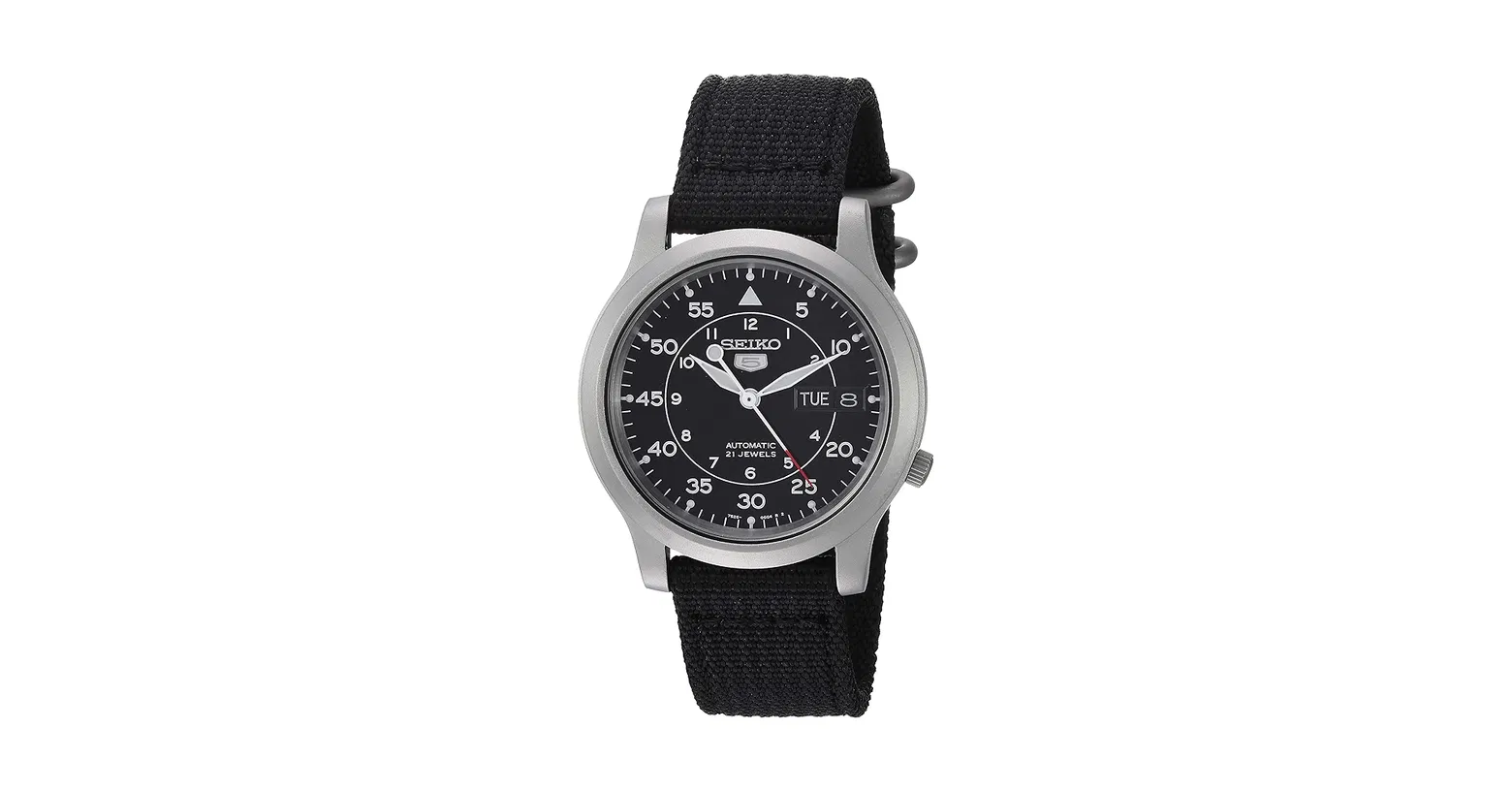
Could a simple digital watch help save a life? Discover the incredible true story of Secret Service Agent Timothy McCarthy’s Seiko A159-4019, the vintage LCD watch caught in the line of fire during the 1981 assassination attempt on President Ronald Reagan. A fascinating piece of horological history that became a symbol of courage and heroism.
The Watch That Saved a President’s Life
📅 Sunday, July 12, 2026
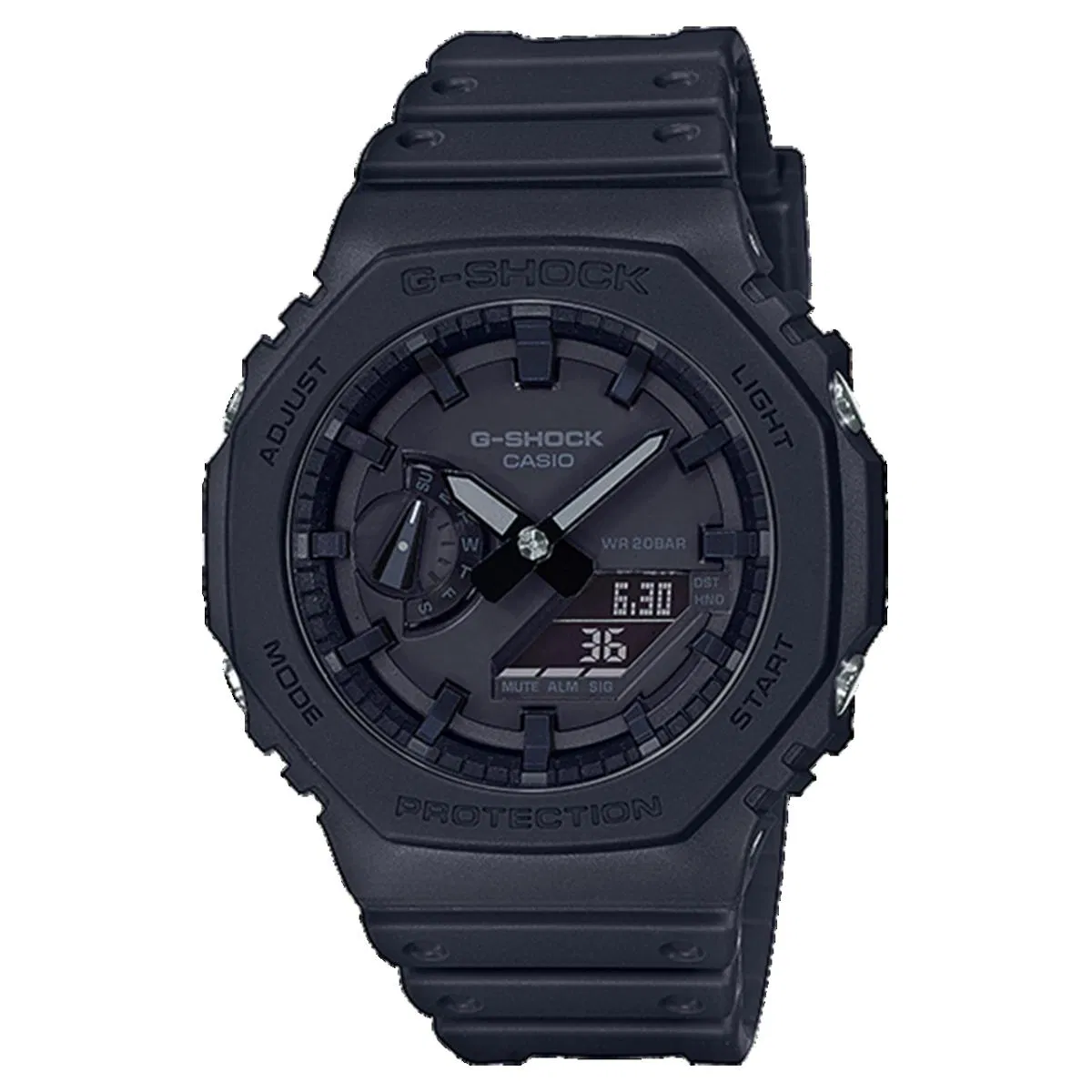
In 1981, during an assassination attempt on President Ronald Reagan, Secret Service agent Timothy McCarthy took a bullet to the chest. The bullet was significantly slowed and deflected by his Seiko watch, preventing a potentially fatal injury to his heart. The watch, a Seiko A159-4019 digital LCD, became an iconic symbol of his bravery and the unexpected protective power of a timepiece.
Seiko A159-4019
On March 30, 1981, Agent McCarthy instinctively stepped between President Reagan and would-be assassin John Hinckley Jr., using his own body as a shield. A .22 caliber bullet struck him in the chest, passing through his left lung before stopping short of his heart. The impact shattered his Seiko digital watch, which absorbed part of the bullet’s energy and became a remarkable piece of Secret Service history. While the watch alone didn’t “save” his life, it undoubtedly played a role in reducing the bullet’s force before it entered his body.
McCarthy made a full recovery and was later awarded the NCAA Award of Valor and the United States Secret Service Valor Award for his extraordinary courage. His damaged Seiko A159-4019 was preserved as a reminder of that dramatic day and has become one of the most famous watches associated with a real-life act of heroism. Unlike watches celebrated for their luxury or technical achievements, this humble digital Seiko earned its place in history through circumstances no engineer could have imagined.
The story also highlights why vintage digital Seikos continue to fascinate collectors. During the late 1970s and early 1980s, Seiko was pioneering LCD technology, producing watches that were rugged, reliable, and packed with cutting-edge features. The A159-4019 wasn’t designed to stop bullets—it was designed to tell time accurately. Yet on one unforgettable afternoon in Washington, D.C., it became part of one of the most extraordinary stories ever connected to a wristwatch, proving that sometimes history chooses the most unlikely objects to become legends.
Disclaimer: Every effort has been made to keep these watch facts accurate, but the world of horology is full of myths, disputed stories, and fascinating trivia. Consider these facts a starting point for discovery rather than the final word. If you have corrections or additional insights, let us know—we’re always happy to keep the record ticking in the right direction.
🛍️ You Might Also Like
As an Amazon Associate and affiliate partner, WatchesAndMore earns from qualifying purchases.
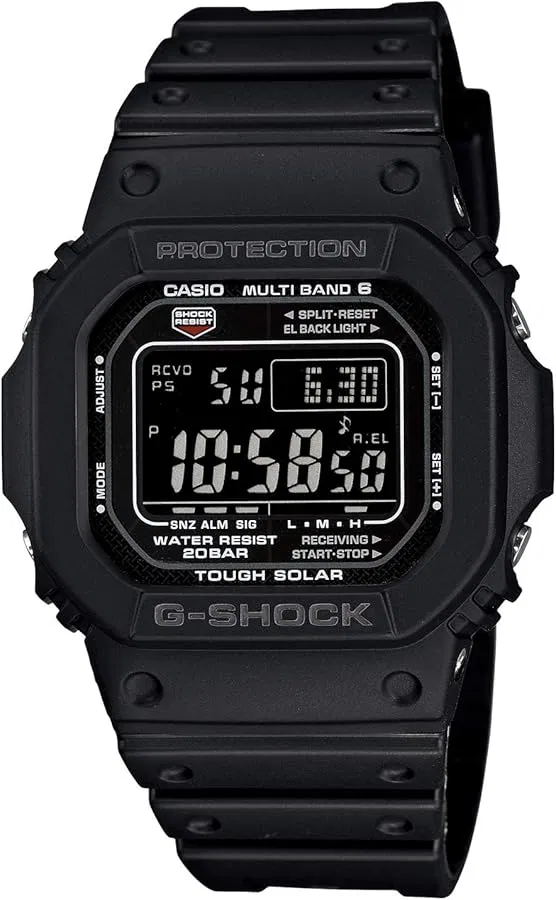
In the magical world of high-end watches, some clever watchmakers sneak in tiny, hand-engraved signatures—like little “Hello, I made this!” notes hidden on the tiniest bridges and plates! These marks are so discreet that they require a microscope to find, much like that snack you’re certain you finished but is mysteriously still lingering in your pantry. Unlike the robots churning out everything else, luxury watches are lovingly crafted by skilled artisans who treat each piece like their own child. So, next time you slip on your shiny timepiece, remember: it’s not just telling time; it’s secretly patting itself on the back!
📅 Saturday, July 11, 2026
Many high-end mechanical movements feature an incredibly tiny, hand-engraved signature or mark from the watchmaker who assembled or regulated it. These ‘secret’ marks are often hidden on a bridge or plate, visible only under high magnification, serving as a personal stamp of craftsmanship and pride that few owners ever discover.
This tradition reflects the deeply personal nature of fine watchmaking. Unlike mass-produced products assembled entirely by machines, many luxury mechanical watches still pass through the hands of skilled artisans who spend hours—or even days—assembling, regulating, and finishing a single movement. A discreet signature, hallmark, or engraved initial is a quiet acknowledgment of the craftsperson behind the masterpiece, even if it remains unseen by the watch’s owner for decades.
Not every luxury watch includes an individual watchmaker’s signature, and the practice varies from brand to brand. Independent watchmakers and prestigious maisons such as Philippe Dufour, Kari Voutilainen, and Greubel Forsey are especially known for celebrating hand craftsmanship, with movements featuring elaborate hand-finishing and, in some cases, personal engravings or signatures. These subtle details remind collectors that every exceptional timepiece is the product of human skill as much as mechanical precision.
For many enthusiasts, discovering one of these hidden marks is like uncovering an artist’s signature on the back of a painting. It creates a personal connection between the owner and the person who painstakingly assembled the movement. In an age of automation, these tiny engravings serve as a powerful reminder that some of the world’s finest watches are still built by hand—one component, one adjustment, and sometimes one nearly invisible signature at a time.
Category: Fun Quirk
Disclaimer: Every effort has been made to keep these watch facts accurate, but the world of horology is full of myths, disputed stories, and fascinating trivia. Consider these facts a starting point for discovery rather than the final word. If you have corrections or additional insights, let us know—we’re always happy to keep the record ticking in the right direction.
Affiliate Disclosure: WatchesAndMore (watchesandmore.org) is a participant in the Amazon Services LLC Associates Program, an affiliate advertising program designed to provide a means for sites to earn advertising fees by advertising and linking to Amazon.com and Amazon.ca. As an Amazon Associate, we earn from qualifying purchases at no additional cost to you.
In the glamorous world of horology, quartz watches originally cost more than a small car—thanks, Seiko Astron 35SQ, for making our wallets weep on Christmas 1969! These shiny marvels relied on a quartz crystal flickering like it just chugged a double espresso, boasting accuracy that made mechanical counterparts look like they were timing slow-motion races. Fast forward to the ’70s, and voila! What was once an elite luxury turned into a bargain bin favorite, thanks to mass production. The Quartz Crisis had Swiss watchmakers sweating bullets while quartz watches became the everyday go-to. Who knew precision could be so affordable?
📅 Friday, July 10, 2026
Before the ‘Quartz Crisis’ made them ubiquitous and affordable, early quartz watches were incredibly expensive, often costing more than their mechanical counterparts. The first commercially available quartz wristwatch, the Seiko Astron 35SQ, launched on Christmas Day 1969, retailed for 450,000 Yen, which was equivalent to a medium-sized car at the time. This high price reflected the immense research and development costs, as well as the cutting-edge technology involved.
When the Astron debuted, owning a quartz watch was a symbol of technological prestige rather than affordability. The movement relied on a tiny quartz crystal vibrating at an astonishing 8,192 times per second, providing a level of accuracy that mechanical watches simply couldn’t match. At a time when most mechanical watches gained or lost several seconds each day, the Astron promised accuracy measured in seconds per month—a breakthrough that seemed almost unbelievable in 1969.
As manufacturing techniques improved throughout the 1970s, production costs fell dramatically. What began as an exclusive luxury innovation quickly became accessible to everyday consumers. Japanese manufacturers, led by Seiko, Citizen, and Casio, perfected mass production, allowing quartz watches to be sold for a fraction of their original cost. This shift forever changed the watch industry, triggering what became known as the Quartz Crisis, a period during which many traditional Swiss mechanical watchmakers struggled to survive as consumers embraced the affordability and accuracy of quartz technology.
Today, it’s easy to think of quartz watches as the budget option, but history tells a very different story. The first quartz watches represented the cutting edge of engineering and were among the most desirable timepieces money could buy. Their success didn’t diminish mechanical watchmaking—it forced the industry to reinvent itself, ultimately leading to the appreciation of craftsmanship, heritage, and artistry that defines today’s luxury mechanical watches. Sometimes, the technologies we take for granted began life as the world’s most exclusive innovations.
Category: Watch History
Disclaimer: Every effort has been made to keep these watch facts accurate, but the world of horology is full of myths, disputed stories, and fascinating trivia. Consider these facts a starting point for discovery rather than the final word. If you have corrections or additional insights, let us know—we’re always happy to keep the record ticking in the right direction.
The ‘dead beat seconds’ complication is like a watch’s way of pulling a fast one, making every tick sound like it belongs on a quartz model while remaining as mechanical as your uncle’s old car. This tricky feature, which dates back to the 18th century, jumps once per second with precision craftsmanship that leaves watch enthusiasts drooling. Meanwhile, the average Joe might just think, “Oh look, another boring quartz watch!” The beauty lies in its deceptive charm—showing that in horology, not all that ticks is quartz. So, next time you see one of these beauties, remember: appearances can be hilariously misleading!
📅 Thursday, July 9, 2026
A ‘dead beat seconds’ or ‘seconde morte’ complication, often mistaken for a quartz movement due to its ticking second hand, is actually a highly complex mechanical feature. Unlike a typical sweeping mechanical second hand, it precisely jumps once per second, requiring intricate additional gearing to achieve this precise, discrete motion, showcasing advanced horological craftsmanship.
To most people, a ticking second hand is a telltale sign of a quartz watch. That’s what makes the dead beat seconds complication so fascinating—it deliberately mimics that familiar one-second “tick” using nothing more than springs, gears, and a mechanical escapement. Hidden beneath the dial is an ingenious mechanism that stores and releases energy once every second, creating the illusion of an electronic movement while remaining entirely mechanical.
The complication has roots dating back to the 18th century, when precision scientific instruments and observatory clocks required easier-to-read seconds for astronomical observations and timing experiments. By displaying the seconds in distinct one-second intervals rather than a continuous sweep, watchmakers made it simpler to measure elapsed time with greater precision. Today, dead beat seconds remains one of horology’s most uncommon complications, admired by collectors for both its technical difficulty and its understated elegance.
Ironically, a watch enthusiast may become excited to see a second hand ticking once per second, while someone unfamiliar with watches might assume it’s “just another quartz watch.” That contrast is part of the complication’s charm. It quietly demonstrates the ingenuity of mechanical watchmaking, proving that sometimes the most impressive complications are the ones that don’t immediately draw attention to themselves. In the world of horology, appearances can be wonderfully deceptive.
Category: Fun Quirk
Disclaimer: Every effort has been made to keep these watch facts accurate, but the world of horology is full of myths, disputed stories, and fascinating trivia. Consider these facts a starting point for discovery rather than the final word. If you have corrections or additional insights, let us know—we’re always happy to keep the record ticking in the right direction.
Affiliate Disclosure: WatchesAndMore (watchesandmore.org) is a participant in the Amazon Services LLC Associates Program, an affiliate advertising program designed to provide a means for sites to earn advertising fees by advertising and linking to Amazon.com and Amazon.ca. As an Amazon Associate, we earn from qualifying purchases at no additional cost to you.
So, the first wristwatch ever made was crafted by Abraham-Louis Breguet in 1810 for Caroline Murat, Queen of Naples. This fancy oval-shaped watch was pretty revolutionary back then since everyone was using pocket watches. It had a repeater and a thermometer, making it super high-tech for its time. Even though it was made for a queen, wristwatches didn’t catch on for guys until much later—especially during WWI when soldiers needed a quicker way to check the time. This watch set the stage for what would become a global favorite, proving that great ideas often start with just one person.
📅 Wednesday, July 8, 2026
While men commonly wore pocket watches for centuries, the very first known wristwatch was created in 1810 by Abraham-Louis Breguet for Caroline Murat, Queen of Naples and Napoleon Bonaparte’s youngest sister. It was a delicate, oval-shaped repeater watch with a thermometer, designed to be worn on the wrist, marking a pivotal moment in horological history.
At the time, the idea of wearing a watch on the wrist was considered highly unconventional. Gentlemen almost exclusively carried pocket watches, while bracelets were viewed as fashionable jewelry rather than practical timekeeping devices. Caroline Murat’s commission challenged that convention, combining elegant design with remarkable mechanical complexity in a way that was centuries ahead of its time.
Breguet’s workshop records describe the watch as an extraordinary creation, featuring an ultra-thin movement mounted in an elongated oval case and attached to a bracelet woven from gold and hair. Although the original watch has since been lost to history, surviving correspondence and workshop archives provide fascinating insight into one of the most ambitious commissions of the early 19th century. Today, the piece is widely regarded as the world’s first documented wristwatch.
Ironically, it would take more than a hundred years for wristwatches to become the standard for men. During the late 19th century and especially throughout World War I, soldiers discovered that checking the time on a wristwatch was far more practical than reaching into a pocket during combat. What began as a bespoke luxury created for a queen eventually evolved into the preferred style of watch for millions around the world—a reminder that some of history’s greatest innovations begin as bold ideas for just one remarkable person.
What We Know About the Original Watch
According to Breguet’s archives, the original watch featured:
📅 Commissioned on June 8, 1810
👑 Made for Caroline Murat, Queen of Naples
🔔 Quarter repeater complication
🌡️ Built-in thermometer
🥚 Ultra-thin oval case
🪮 Mounted on a bracelet woven from gold thread and human hair
📦 Delivered in 1812
🔢 Breguet No. 2639
It looked Similar to this
Category: Watch History
Disclaimer: Every effort has been made to keep these watch facts accurate, but the world of horology is full of myths, disputed stories, and fascinating trivia. Consider these facts a starting point for discovery rather than the final word. If you have corrections or additional insights, let us know—we’re always happy to keep the record ticking in the right direction.
When it comes to timekeeping, the Moon isn’t just a pretty face in the night sky; it’s also a subtle saboteur of your fancy mechanical watches. That’s right! Lunar tides can ever so slightly warp the Earth’s crust, causing watches to tick off by fractions of a second daily. Sure, this cosmic mischief gets lost amidst the usual watch woes like temperature tantrums and wrist jitters, but hey, it’s an amusing quirk of physics. With inventions like Breguet’s tourbillon, watchmakers have been battling gravity since 1801. So, next time your watch is late, just blame the Moon—much more dramatic, don’t you think?
📅 Tuesday, July 7, 2026
While often overlooked, the gravitational pull of the moon can subtly influence the accuracy of highly precise mechanical watches. Lunar tides cause minute deformations in the Earth’s crust, which in turn can alter the balance wheel’s oscillation frequency by tiny fractions of a second per day. This effect is usually negligible for everyday wear but becomes a measurable factor in ultra-precise chronometers under controlled conditions.
Watch Fact of the Day: The Moon’s Gravity Affects Your Watch’s Accuracy!
Mechanical watches are remarkably sensitive instruments. Their balance wheel oscillates thousands of times every hour, and even the slightest changes in position, temperature, lubrication, or magnetic fields can influence how accurately they keep time. While the Moon’s gravitational effect is vanishingly small compared to these everyday factors, it serves as a fascinating reminder that precision timekeeping exists within a world governed by the laws of physics.
For centuries, watchmakers have worked to reduce the influence of gravity on mechanical movements. One of the most famous innovations is the tourbillon, invented by Abraham-Louis Breguet in 1801. By continuously rotating the escapement and balance wheel, the tourbillon helps average out positional errors caused by Earth’s gravity—a testament to the lengths watchmakers have gone in pursuit of perfect accuracy.
Today, the best mechanical chronometers are regulated to perform within just a few seconds per day, an extraordinary achievement considering they rely entirely on springs, gears, and tiny mechanical components. Whether influenced by gravity, temperature, or simply the motion of your wrist, every mechanical watch is a miniature engineering marvel—quietly keeping time while obeying the same physical forces that govern the planets above us.
Disclaimer: Every effort has been made to keep these watch facts accurate, but the world of horology is full of myths, disputed stories, and fascinating trivia. Consider these facts a starting point for discovery rather than the final word. If you have corrections or additional insights, let us know—we’re always happy to keep the record ticking in the right direction.
In the world of watches, the moon phase complication is like a fancy hat – it started as a necessity but became a stylish trend. Originally, clockmakers used a rotating lunar disc to cover up design flaws, turning their blunders into a celestial display. As time ticked on, watchmakers realized this moon trick could help farmers figure out when to plant crops and sailors avoid sailing into a moonless mess. These days, moon phases aren’t just about practicality; they’re romantic little reminders that your wrist can be both a timepiece and a dreamy connection to the cosmos. Who knew horology could be so poetic?
📅 Monday, July 6, 2026
The moon phase complication, now a beloved and intricate feature on many high-end watches, originated from a practical necessity. Early clockmakers used a rotating disc for the moon to hide imperfections or gaps in the dial’s construction, effectively turning a design challenge into an aesthetic and functional display of celestial motion. This ‘fix’ evolved into one of horology’s most poetic complications.
As clockmaking techniques improved during the 17th and 18th centuries, the moon phase display evolved far beyond its practical origins. Watchmakers realized that a rotating lunar disc could do more than simply conceal part of the mechanism—it could also help farmers, sailors, astronomers, and travellers track the changing phases of the Moon. Long before smartphones and weather apps, knowing the lunar cycle was genuinely useful for navigation, agriculture, and even planning fishing expeditions.
Traditional moon phase watches are surprisingly precise. Most use a 59-tooth gear, allowing two complete lunar cycles to be displayed over 59 days. Since the Moon actually takes 29.53 days to complete one cycle, this simple mechanism is remarkably accurate, requiring only a minor adjustment every two and a half years. More advanced modern moon phase movements can remain accurate for decades—or even centuries—before needing correction.
Today, the moon phase complication is cherished less for its practicality and more for the emotion it brings to a watch. It’s a reminder that mechanical watches are miniature works of art as much as they are instruments for telling time. With every passing day, the tiny moon slowly travels across the dial, connecting the wearer to a celestial rhythm that has guided humanity for thousands of years. Few complications capture the romance of traditional watchmaking quite like a beautifully executed moon phase display.
Disclaimer: Every effort has been made to keep these watch facts accurate, but the world of horology is full of myths, disputed stories, and fascinating trivia. Consider these facts a starting point for discovery rather than the final word. If you have corrections or additional insights, let us know—we’re always happy to keep the record ticking in the right direction.
The journey of the Iron Hour Halocline Diver is a testament to perseverance and passion in the face of adversity. Founder Ivan Ennis sought to create a watch that truly resonates with enthusiasts, prioritizing quality and thoughtful design over marketing gimmicks. Despite the challenges brought on by COVID-19, he remained committed to refining the watch for seven years. The Halocline Diver features a respected Swiss automatic movement and an authentic design that reflects a genuine love for watchmaking. This inspiring story serves as an encouraging reminder that success can arise from determination, making every watch a symbol of resilience and craftsmanship.
Every successful product has a story.
Some begin in a boardroom with unlimited budgets and marketing teams. Others begin in a garage, a basement, or on a kitchen table with nothing more than an idea and an unwillingness to quit.
The story behind the Iron Hour Halocline Diver belongs firmly in the second category.
The Dream
Like many independent watch founders, Ivan Ennis didn’t set out to build another luxury status symbol.
He wanted to create the kind of watch that fellow enthusiasts would genuinely enjoy wearing—one that emphasized quality, honest engineering, and thoughtful design over flashy marketing. Inspired by years of collecting and appreciating mechanical watches, he founded Iron Hour Watch Co. with the goal of delivering a Swiss-made automatic diver that could stand alongside far more expensive competitors.
It was an ambitious vision for an independent founder entering one of the most competitive industries in the world.
Then Everything Changed
The Halocline Diver was preparing to make its debut through Kickstarter in 2020.
On paper, the timing looked promising.
Then COVID-19 changed everything.
Supply chains ground to a halt. Manufacturing schedules became uncertain. Consumer confidence dropped dramatically, and crowdfunding campaigns across countless industries struggled to gain traction.
For many startups, this would have been the end.
Years of planning suddenly collided with circumstances no one could have predicted.
Seven Years, a Pandemic, and a Promise Kept: The Story Behind the Iron Hour Halocline Diver
Walking Away Would Have Been Easier
This is the point where many entrepreneurial stories quietly disappear.
Projects are abandoned.
Websites stop updating.
Social media accounts go silent.
Eventually, everyone moves on.
But Ivan didn’t.
Instead of shelving the project, he continued refining the design, strengthening supplier relationships, and working through the countless challenges that come with bringing a mechanical watch to market.
Progress wasn’t measured in weeks.
It was measured in years.
The vision remained the same even when the timeline changed dramatically.
Seven Years Later…
Today, the Halocline Diver is no longer a concept or a crowdfunding campaign.
It’s a finished watch.
After years of development, engineering, prototyping, and persistence, Iron Hour succeeded in producing the watch that nearly never happened.
In an era of overnight product launches and rapidly changing trends, there’s something refreshing about a founder who simply refused to quit.
The Watch That Refused to Stay on the Drawing Board
The Halocline Diver isn’t trying to reinvent the dive watch.
Instead, it focuses on refining the formula that enthusiasts already love.
Clean proportions, excellent legibility, a purposeful design, and robust construction combine to create a watch that feels equally comfortable on an outdoor adventure, at the office, or as part of an everyday collection.
At its heart is the Sellita SW200-1 Swiss automatic movement, one of the industry’s most respected workhorse calibers. Known for its reliability, accuracy, and ease of servicing, it’s a movement trusted by countless independent and established Swiss brands alike. Choosing a proven movement over chasing novelty reflects the philosophy behind the entire project: prioritize dependability over gimmicks.
The attention to detail is where the Halocline begins to distinguish itself. The case finishing is crisp, the bezel action is reassuringly precise, and the overall design strikes a balance between modern performance and timeless styling. Nothing feels excessive, yet nothing feels overlooked.
Perhaps most importantly, the watch doesn’t feel like it was designed by marketers—it feels like it was designed by someone who genuinely loves watches.
That authenticity is difficult to manufacture.
More Than Specifications
In today’s watch industry, it’s easy to become obsessed with specifications.
Water resistance.
Power reserve.
Movement type.
Case diameter.
Those numbers certainly matter.
But what often creates an emotional connection with a watch is the story behind it.
Every Halocline represents years of emails with suppliers, late-night design revisions, manufacturing challenges, financial uncertainty, and countless decisions that most owners will never see.
When you wear the watch, you’re wearing the result of persistence just as much as precision engineering.
What Entrepreneurs Can Learn
Whether you’re building watches, launching software, opening a small business, or creating content online, the lessons from Iron Hour’s journey are surprisingly universal.
Success rarely follows the timeline we imagine.
Unexpected setbacks happen.
Markets change.
Global events reshape entire industries.
Sometimes the only real competitive advantage is refusing to abandon a worthwhile idea.
Perseverance isn’t glamorous.
It doesn’t generate headlines.
But it’s often the difference between a project that becomes “what could have been” and one that eventually reaches the finish line.
Why Independent Watchmakers Matter
Independent brands are responsible for much of the innovation and creativity we see in modern watchmaking.
Without enormous marketing budgets or century-old histories to rely on, they compete by listening to collectors, obsessing over details, and building products they genuinely believe in.
That passion creates watches with personality.
Every independent success story also strengthens the broader watch community by proving there’s still room for craftsmanship, creativity, and entrepreneurial spirit in an industry dominated by global luxury brands.
Final Thoughts
The Iron Hour Halocline Diver isn’t remarkable simply because it’s another Swiss automatic dive watch.
It’s remarkable because it exists at all.
It represents resilience during one of the most difficult periods modern entrepreneurs have faced.
It demonstrates what can happen when someone refuses to let setbacks define the outcome.
And perhaps that’s the greatest lesson this watch has to offer.
Sometimes the most valuable thing a creator can build isn’t just a product.
It’s the determination to finish what they started.
For entrepreneurs, collectors, and anyone chasing an ambitious goal, that’s a story worth wearing on your wrist.
I invite you to learn more by visiting the Brand Site:
Since the early 2000s, Rolex has secretly etched a tiny laser-engraved coronet (their crown logo) into the sapphire crystal of most of its watches, usually at t
📅 Sunday, July 5, 2026
Since the early 2000s, Rolex has secretly etched a tiny laser-engraved coronet (their crown logo) into the sapphire crystal of most of its watches, usually at the 6 o’clock position. This microscopic detail is almost invisible to the naked eye and serves as a sophisticated anti-counterfeiting measure, making it incredibly difficult for fakes to replicate.
More Watch Facts
The tiny coronet was introduced around 2002 as part of Rolex’s ongoing efforts to combat the growing counterfeit watch market. Unlike hologram stickers or visible serial numbers, the laser-etched crown doesn’t affect the appearance of the watch during normal wear. In most lighting conditions, it’s virtually impossible to see without carefully tilting the crystal or examining it under magnification, which is exactly how Rolex intended it.
While the etched crown is an excellent security feature, it’s important to remember that it should never be used as the sole method of authenticating a Rolex. Modern counterfeiters have become increasingly sophisticated, and some high-quality replicas now attempt to imitate the laser-etched coronet. Professional authentication still relies on examining the movement, serial numbers, case finishing, dial details, and overall build quality alongside the crystal engraving.
Today, the “phantom” crown has become one of those hidden details that Rolex enthusiasts love to point out. It’s a perfect example of the brand’s philosophy—subtle engineering, meticulous craftsmanship, and attention to details that most owners may never even notice. For collectors, discovering the tiny coronet for the first time often feels like uncovering one of Rolex’s best-kept secrets, hidden in plain sight.
Disclaimer: Every effort has been made to keep these watch facts accurate, but the world of horology is full of myths, disputed stories, and fascinating trivia. Consider these facts a starting point for discovery rather than the final word. If you have corrections or additional insights, let us know—we’re always happy to keep the record ticking in the right direction.
Did you know that in 1976, to commemorate the United States Bicentennial, a unique watch was created featuring a miniature, working ‘Liberty Bell’ that would st
📅 Saturday, July 4, 2026
Did you know that in 1976, to commemorate the United States Bicentennial, a unique watch was created featuring a miniature, working ‘Liberty Bell’ that would strike the hours? This highly intricate timepiece was a testament to both American ingenuity and Swiss watchmaking precision, blending patriotic symbolism with horological artistry. It remains a fascinating, albeit lesser-known, piece of watchmaking history tied directly to a pivotal moment for the nation.
NOTE: In Doing Further Research, it appears this was never actually Manufactured, But was indeed an Awesome Concept!
Disclaimer: Every effort has been made to keep these watch facts accurate, but the world of horology is full of myths, disputed stories, and fascinating trivia. Consider these facts a starting point for discovery rather than the final word. If you have corrections or additional insights, let us know—we’re always happy to keep the record ticking in the right direction.
Below is a Render of How it MAY Have looked:
Creating a miniature chiming mechanism small enough to fit inside a wristwatch was an extraordinary engineering challenge. Watchmakers had to carefully design tiny hammers, gongs, and springs that could reliably produce a clear sound without compromising the watch’s accuracy or wearability. These types of complications are among the most difficult to manufacture and are still considered hallmarks of high-end watchmaking today.
More Watch Facts
The Liberty Bell motif also reflected a growing appreciation for commemorative timepieces during the 1970s. Rather than simply printing a patriotic logo on the dial, designers sought to create a watch that celebrated American history through both its appearance and its function. By incorporating a bell that chimed the hours, the watch paid tribute to one of the nation’s most recognizable symbols in a way that was both mechanical and meaningful.
Today, commemorative watches remain popular with collectors, but few are as distinctive as the Liberty Bell concept. Whether honoring historic anniversaries, space missions, sporting events, or royal milestones, these special-edition timepieces offer a snapshot of history on the wrist. The Liberty Bell watch stands as a reminder that great watchmaking isn’t just about telling time—it’s also about preserving stories, celebrating culture, and marking moments that deserve to be remembered.