
Watch Fact of the Day

📅 Friday, October 9, 2026
A curved case can help a watch follow the wrist. Movado changed the architecture of the mechanism inside as well.
The Movado Polyplan asks a simple design question with a difficult mechanical answer: if the wrist is curved, why must the movement remain flat? Solving it required more than reshaping a protective shell.
📐 Three Planes Instead of One
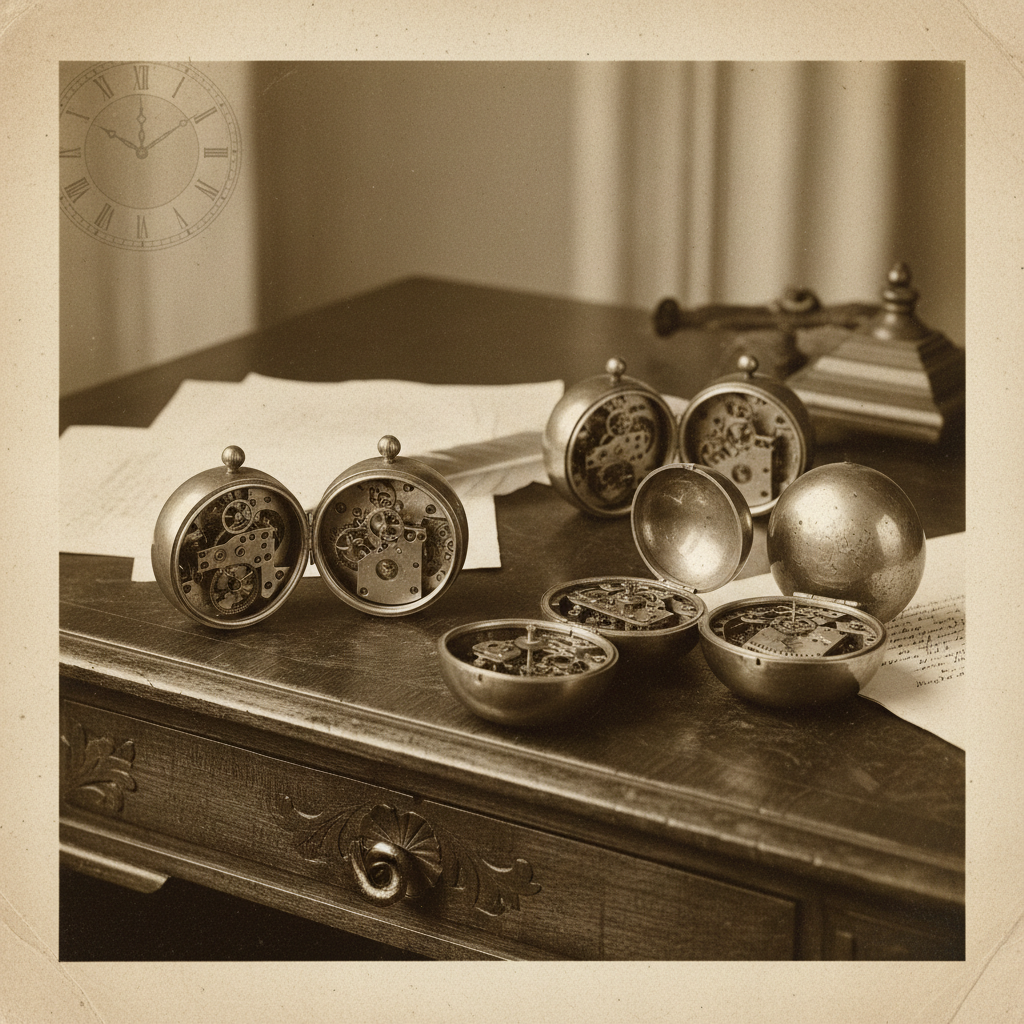
Movado’s official history identifies the Polyplan as its twentieth patent in 1912. The movement was built on three angled planes, allowing it to fit a case shaped around the wrist’s contours.
This is the distinction that makes the design compelling. A curved case may contain a relatively flat mechanism with unused space around it. The Polyplan made the internal layout part of the same design response.
⚙️ When the Interior Follows the Exterior
A movement needs stable supports, a path for transmitting power, and room for its regulating components. Altering its architecture means considering those needs together rather than treating the case as an independent styling exercise.
The Polyplan’s interest is therefore architectural as much as visual. The watch’s outside shape expresses a decision that reaches into its working structure.
⌚ Comfort as a Design Brief
Modern fit discussions often focus on diameter, thickness, and lug-to-lug length. The Polyplan adds another consideration: how the whole object relates to the surface on which it is worn.
It invites us to think of the wrist as the starting point for a watch, rather than simply a place to attach an existing mechanism. That is a useful design lesson well beyond horology.
💡 Did You Know?
Movado’s heritage includes other experiments in form and function, including the Ermeto travel watch and the later Curviplan. The Polyplan belongs within a broader history of questioning the familiar watch format.
⭐ Why It Matters
A clear objective can require changes deep inside an object. Improving its relationship with the wearer may demand more than a new outline or a different strap.
Exact production totals and claims that the watches were impossible to service require separate evidence. The documented three-plane architecture is already remarkable enough to carry the story.
A memorable design can begin with the decision that the mechanism should adapt to its wearer.
📚 Sources & Further Reading
Movado — Official history, The Polyplan
Category: Fun Quirk
Disclaimer: Every effort has been made to keep these watch facts accurate, but the world of horology is full of myths, disputed stories, and fascinating trivia. Consider these facts a starting point for discovery rather than the final word. If you have corrections or additional insights, let us know—we’re always happy to keep the record ticking in the right direction.
🕐 Discover more watch facts, reviews, and buying guides at WatchesAndMore
Read Next
Movado Ermeto: The Travel Watch That Became a Table Clock
Zodiac Astrographic: The 1969 Watch with Floating Hands
Join the Conversation
Would an unusual case shape influence your next watch choice? Share your thoughts in the comments.