

📅 Monday, September 21, 2026
On the evening of May 6, 1937, the German airship LZ 129 Hindenburg approached the Naval Air Station at Lakehurst, New Jersey, after crossing the Atlantic from Frankfurt.
At approximately 7:25 p.m., while the ship was attempting to land, fire appeared near the stern. Within roughly half a minute, the enormous hydrogen-filled airship was engulfed and collapsing toward the ground. Of the 97 people aboard, 35 died, along with one member of the ground crew. HISTORY CHANNEL ITALIA
Among the crew was Walter Banholzer, a 28-year-old engine mechanic from Rottweil, Germany.

Banholzer had worked aboard the Hindenburg during its operational career and was assigned to the starboard aft engine section. At the time of the landing, however, he had been sent forward with several other crewmen to help compensate for the airship being tail-heavy. When the fire erupted, the flames tore rapidly through the ship. Banholzer survived the initial crash but was gravely burned and later died from his injuries. facesofthehindenburg.blogspot.com
What remained from that night included one extraordinary personal object:
His pocket watch.
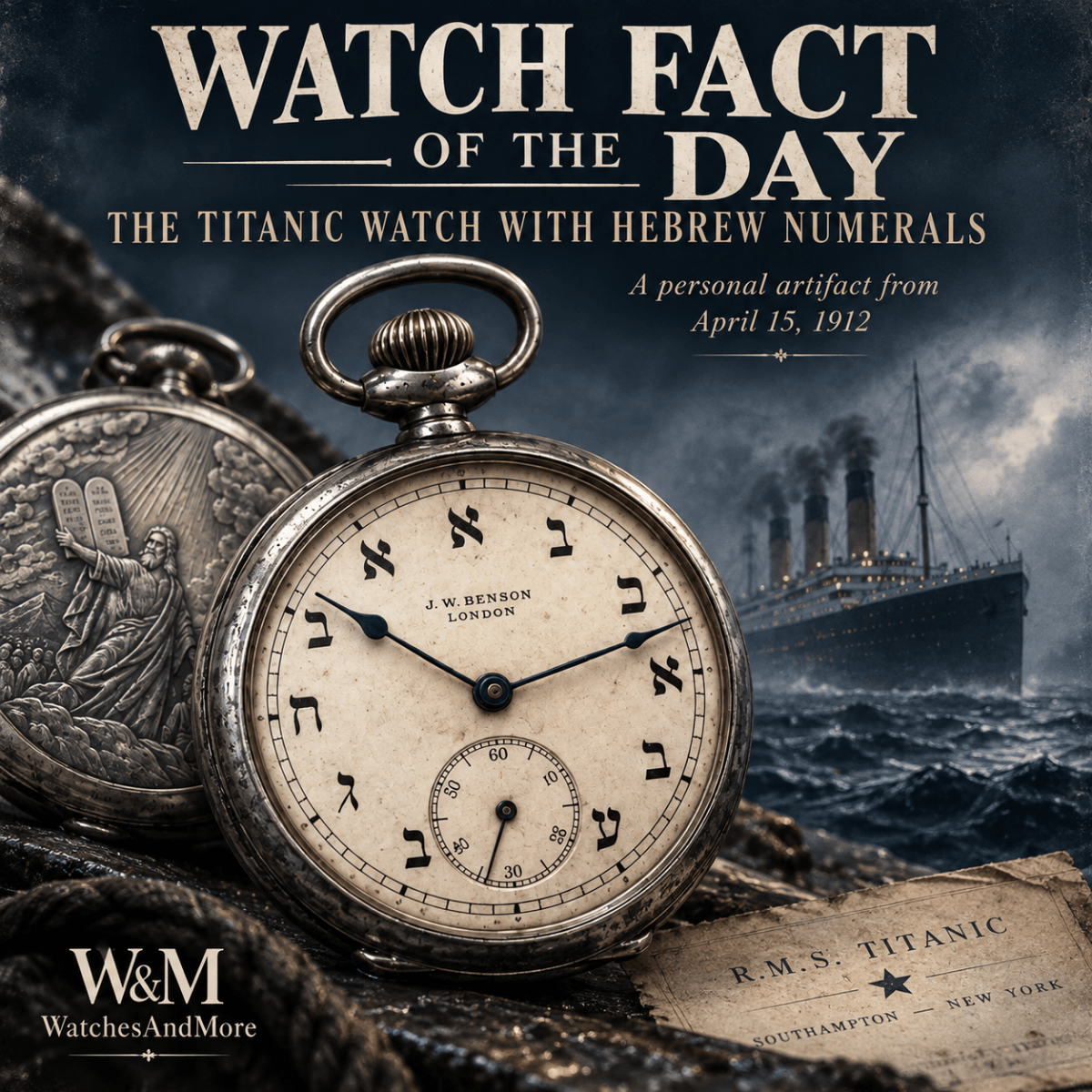
A watch later offered by Hermann Historica was described as Walter Banholzer’s Omega pocket chronograph, carried during the Hindenburg disaster and partially destroyed by fire. The watch bears a 0.900 silver hallmark, the initials “WB” engraved on the cover, a damaged enamel dial with Roman numerals, and a small seconds register at 6 o’clock. It was sold with supporting photographs and family provenance documentation. Invaluable
The condition tells its own story.
The case is scorched.
The enamel dial is damaged.
The movement survived only partially intact.
It is not a pristine collector’s watch.
It is a witness.
💡 Did You Know?
Banholzer’s location aboard the Hindenburg was misunderstood for decades.
Early diagrams placed him in an engine gondola at the time of the fire. Later research using witness testimony and crew-position records showed that he had actually been sent forward toward the bow shortly before the disaster to help trim the tail-heavy airship. facesofthehindenburg.blogspot.com
That detail matters because it brings us closer to the human reality of the final minutes.
He was not simply “aboard the Hindenburg.”
He was working.
Following orders.
Helping prepare the ship to land.
And carrying an ordinary personal timepiece that would outlive him.
⭐ Why It Matters
Historic disasters often become enormous stories.
Names.
Numbers.
Photographs.
Headlines.
The Hindenburg became one of the most recognizable images in aviation history, and the catastrophe helped destroy public confidence in passenger airships. HISTORY CHANNEL ITALIA
But objects like Banholzer’s watch make those events personal again.
Not an airship.
Not a headline.
One mechanic.
One pocket watch.
One evening in 1937.
That is why surviving artifacts matter.
They shrink history back down to human scale.
Category: Military Watches
Disclaimer: Every effort has been made to keep these watch facts accurate, but the world of horology is full of myths, disputed stories, and fascinating trivia. Consider these facts a starting point for discovery rather than the final word. If you have corrections or additional insights, let us know—we’re always happy to keep the record ticking in the right direction.
🕐 Discover more watch facts, reviews, and buying guides at WatchesAndMore
🛍️ You Might Also Like
As an Amazon Associate and affiliate partner, WatchesAndMore earns from qualifying purchases.