

Watch Fact of the Day: The Pocket Watch That Survived the Hindenburg Disaster

When the Hindenburg airship burst into flames in Lakehurst, New Jersey, in 1937, passenger Ernst Wendler carried a gold pocket watch in his vest. Miraculously r

Military Watches: Monday, September 21, 2026

📅 Monday, September 21, 2026

On the evening of May 6, 1937, the German airship LZ 129 Hindenburg approached the Naval Air Station at Lakehurst, New Jersey, after crossing the Atlantic from Frankfurt.

At approximately 7:25 p.m., while the ship was attempting to land, fire appeared near the stern. Within roughly half a minute, the enormous hydrogen-filled airship was engulfed and collapsing toward the ground. Of the 97 people aboard, 35 died, along with one member of the ground crew. HISTORY CHANNEL ITALIA

Among the crew was Walter Banholzer, a 28-year-old engine mechanic from Rottweil, Germany.

A vintage pocket watch that survived the Hindenburg disaster, showing signs of damage and history, surrounded by newspaper clippings and facts about the event. The background features an image of the Hindenburg in flames with a timeline of the disaster.

Banholzer had worked aboard the Hindenburg during its operational career and was assigned to the starboard aft engine section. At the time of the landing, however, he had been sent forward with several other crewmen to help compensate for the airship being tail-heavy. When the fire erupted, the flames tore rapidly through the ship. Banholzer survived the initial crash but was gravely burned and later died from his injuries. facesofthehindenburg.blogspot.com

What remained from that night included one extraordinary personal object:

His pocket watch.

A watch later offered by Hermann Historica was described as Walter Banholzer’s Omega pocket chronograph, carried during the Hindenburg disaster and partially destroyed by fire. The watch bears a 0.900 silver hallmark, the initials “WB” engraved on the cover, a damaged enamel dial with Roman numerals, and a small seconds register at 6 o’clock. It was sold with supporting photographs and family provenance documentation. Invaluable

The condition tells its own story.

The case is scorched.

The enamel dial is damaged.

The movement survived only partially intact.

It is not a pristine collector’s watch.

It is a witness.

💡 Did You Know?

Banholzer’s location aboard the Hindenburg was misunderstood for decades.

Early diagrams placed him in an engine gondola at the time of the fire. Later research using witness testimony and crew-position records showed that he had actually been sent forward toward the bow shortly before the disaster to help trim the tail-heavy airship. facesofthehindenburg.blogspot.com

That detail matters because it brings us closer to the human reality of the final minutes.

He was not simply “aboard the Hindenburg.”

He was working.

Following orders.

Helping prepare the ship to land.

And carrying an ordinary personal timepiece that would outlive him.

⭐ Why It Matters

Historic disasters often become enormous stories.

Names.

Numbers.

Photographs.

Headlines.

The Hindenburg became one of the most recognizable images in aviation history, and the catastrophe helped destroy public confidence in passenger airships. HISTORY CHANNEL ITALIA

But objects like Banholzer’s watch make those events personal again.

Not an airship.

Not a headline.

One mechanic.

One pocket watch.

One evening in 1937.

That is why surviving artifacts matter.

They shrink history back down to human scale.


Category: Military Watches

Disclaimer: Every effort has been made to keep these watch facts accurate, but the world of horology is full of myths, disputed stories, and fascinating trivia. Consider these facts a starting point for discovery rather than the final word. If you have corrections or additional insights, let us know—we’re always happy to keep the record ticking in the right direction.

🕐 Discover more watch facts, reviews, and buying guides at WatchesAndMore


🛍️ You Might Also Like

As an Amazon Associate and affiliate partner, WatchesAndMore earns from qualifying purchases.
G-Shock GWM5610-1 Solar Atomic
🔥 Deal of the Day

G-Shock GWM5610-1 Solar Atomic

Casio

★★★★★ 4.8 (5,621 reviews)

$129

Offer expires in


🔥 Grab This Deal →

G-Shock GA2100-1A1 CasiOak


G-Shock GA2100-1A1 CasiOak

Casio

★★★★★ 4.8 (2,156 reviews)

$99


Check Price on Amazon →

Seiko 5 SNK805 Green Military


Seiko 5 SNK805 Green Military

Seiko

★★★★★ 4.8 (6,961 reviews)

$89


Check Price on Amazon →


Browse all 142+ expert-reviewed watches →

Watch Fact of the Day: The Military Watch That Made Darkness Its Specialty

Luminox watches are like that friend who never runs out of battery—talk about commitment! Forget the fuss of charging or hunting for a button in the dark; these watches flaunt Luminox Light Technology that continuously glows thanks to self-powered micro gas light tubes. You can read the time even if it’s pitch black, and they last up to 25 years. Collaborating with Navy SEALs back in the day, Luminox ensured your watch is as tough as your morning coffee. So, when the lights go out, just look down and bask in your illuminated wrist, knowing time waits for no one—especially not for a dead battery!

Military Watches: Sunday, September 20, 2026

📅 Sunday, September 20, 2026

Most luminous watches need one of two things.

They either need to be charged by light, or they need electrical power to illuminate the display.

Luminox took a different route.

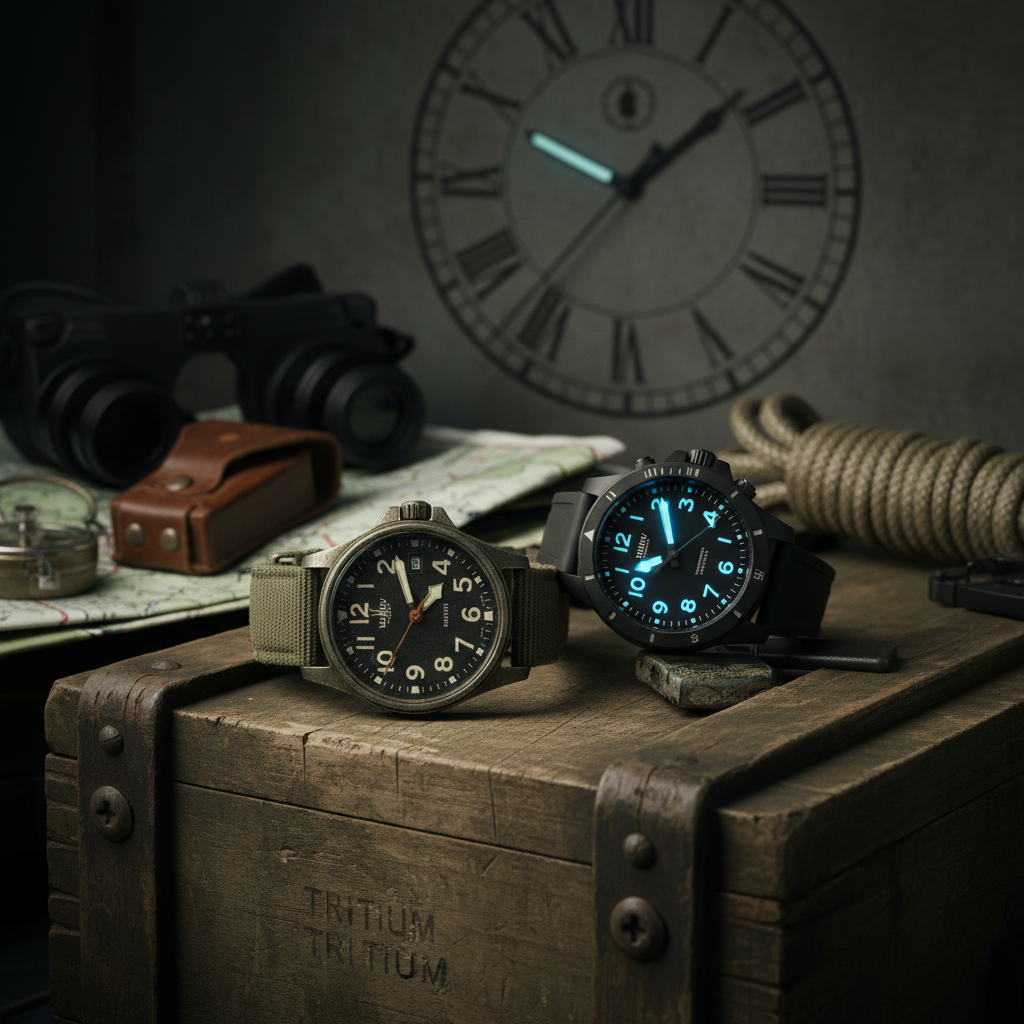
Its signature Luminox Light Technology, or LLT, uses tiny self-powered micro gas light tubes installed on the hands, hour markers and, on some models, the bezel. These borosilicate glass capsules remain illuminated continuously, allowing the watch to be read in complete darkness without pressing a button or first exposing it to a light source. Luminox Watches

And the duration is remarkable.

Luminox says the system provides visibility for up to:

25 YEARS

The intensity is guaranteed to remain constant for the first ten years, after which the glow gradually becomes weaker as the gas loses energy. Luminox Watches

That distinction matters because conventional photoluminescent materials work differently.

A material such as Super-LumiNova® must first absorb energy from natural or artificial light. It then releases that stored energy gradually, typically remaining visibly luminous for a matter of hours.

Luminox’s system is simply:

ALWAYS ON.

No charging.

No button.

No additional battery consumption.

Just continuous visibility. Luminox Watches

🌙 Then the Navy SEAL Connection Happened

Luminox had been producing high-visibility sports watches since 1989.

Then, in 1992, Chief Nick North, the Assistant Research, Development, Test and Evaluation officer for the Navy SEALs, was tasked with finding a more dependable watch for night missions.

According to Luminox, North discovered the company’s illumination technology and worked with Luminox to develop a watch specifically for SEAL use. Luminox Watches

The result became the Original Navy SEAL 3000 Series, first introduced commercially in 1994.

Its combination of:

continuous night visibility

light weight

rugged construction

water resistance

made it one of the watches most closely associated with the Luminox identity. Luminox Canada

💡 Did You Know?

The name Luminox itself tells you exactly what the company wanted to represent.

LUMI — derived from light

NOX — Latin for night

In other words:

LIGHT IN THE DARK.

That philosophy became the brand’s defining feature. Luminox Watches

⭐ Why It Matters

The important innovation wasn’t simply that Luminox made a bright watch.

It was that the watch could remain immediately readable without depending on the wearer to do anything first.

That distinction matters in environments where visibility has to be instant.

No:

“Did I charge the lume?”

No:

“Where’s the illumination button?”

Instead:

LOOK DOWN.

READ THE TIME.

That practicality helped transform self-powered micro-gas illumination from a specialized technology into one of the most recognizable features in modern tactical-watch design.

1989 — LUMINOX BEGINS

1992 — NAVY SEAL COLLABORATION

1994 — ORIGINAL 3000 SERIES

UP TO 25 YEARS OF CONTINUOUS GLOW


Category: Military Watches

Disclaimer: Every effort has been made to keep these watch facts accurate, but the world of horology is full of myths, disputed stories, and fascinating trivia. Consider these facts a starting point for discovery rather than the final word. If you have corrections or additional insights, let us know—we’re always happy to keep the record ticking in the right direction.

🕐 Discover more watch facts, reviews, and buying guides at WatchesAndMore


🛍️ You Might Also Like

As an Amazon Associate and affiliate partner, WatchesAndMore earns from qualifying purchases.

G-Shock GWM5610-1 Solar Atomic
🔥 Deal of the Day

G-Shock GWM5610-1 Solar Atomic

Casio

★★★★★ 4.8 (5,621 reviews)

$129

Offer expires in


🔥 Grab This Deal →

G-Shock GA2100-1A1 CasiOak


G-Shock GA2100-1A1 CasiOak

Casio

★★★★★ 4.8 (2,156 reviews)

$99


Check Price on Amazon →

Seiko 5 SNK805 Green Military


Seiko 5 SNK805 Green Military

Seiko

★★★★★ 4.8 (6,961 reviews)

$89


Check Price on Amazon →


Browse all expert-reviewed watches →

Watch Fact of the Day: The 3D-Printed Titanium Watch That Breaks Traditional Design Rules

The emergence of metal 3D printing marks a transformative revolution in watchmaking, allowing designers to create intricate structures that were previously impossible with traditional methods. Techniques like Selective Laser Melting enable the construction of lightweight yet robust titanium cases, offering innovative designs such as the TAG Heuer Monaco Split-Seconds Chronograph Air 1. Brands like Panerai and independent artisans are also embracing this technology, incorporating unique aesthetics and complex geometries into their creations. This evolution not only expands creative potential but also harmonizes modern manufacturing with traditional craftsmanship, rejuvenating the world of horology with exciting new possibilities.

Fun Quirk: Saturday, September 19, 2026

📅 Saturday, September 19, 2026

For most of watchmaking history, a metal case began as a solid piece of material.

Steel, gold, or titanium would be cut, drilled, milled, turned, and polished until the unwanted material was removed and the final shape emerged.

Metal 3D printing reverses that entire idea.

Instead of carving a watch case out of a solid block, technologies such as Selective Laser Melting (SLM) and Direct Metal Laser Sintering (DMLS) build titanium structures layer by microscopic layer from metal powder. A laser selectively fuses each layer according to a digital model until a complete three-dimensional component exists. TAG Heuer Official Magazine

And that changes what watch designers are physically capable of making.

Traditional machining works beautifully when cutting tools can reach the surfaces that need to be removed. But it becomes far more difficult when designers want internal cavities, enclosed channels, skeletal lattices, deep undercuts, or organic structures hidden inside a case.

Additive manufacturing can simply build those forms into the component from the beginning.

DON’T CUT THE EMPTY SPACE OUT.

BUILD THE EMPTY SPACE IN.

That sounds subtle, but it is a huge shift.

One striking modern example is the TAG Heuer Monaco Split-Seconds Chronograph Air 1, introduced in 2025. Its Grade 5 titanium case is produced using Selective Laser Melting, allowing TAG Heuer to create a dramatically hollowed architecture that the company says would be impossible to manufacture conventionally. The resulting case is less a traditional metal shell and more like a miniature structural chassis inspired by performance engineering. TAG Heuer Official Magazine

Panerai has been exploring a similar idea for years.

Its DMLS titanium cases are built layer by layer from titanium powder and can contain internal cavities that reduce mass while preserving the strength required from a large sports-watch case. Recent technical reporting on Panerai’s DMLS construction cites the brand’s claim that these cases can be about 25% lighter than conventional titanium versions of comparable design, while remaining more than 50% lighter than steel. Time and Watches

Independent watchmakers are pushing the aesthetic side even further.

Dutch brand Holthinrichs uses 3D-printed Grade 5 titanium to create skeletal lugs, complex architectural surfaces, and case geometries shaped by founder Michiel Holthinrichs’ background in architecture. Some models deliberately leave portions of the raw printed texture visible beside hand-polished surfaces, turning the manufacturing process itself into part of the design language. Fratello Watches

And emerging makers such as Apiar have used additive manufacturing to create titanium cases from thousands of extremely thin layers, including open lattice structures that would be considerably harder to realize through conventional machining alone. WatchPro USA

💡 Did You Know?

One of the most fascinating advantages of metal 3D printing is that a watch case can be solid where strength is required and hollow where material contributes little.

That means designers can think more like aerospace engineers:

LOAD PATHS → STRUCTURE

UNNECESSARY MASS → REMOVE IT

INTERNAL SPACE → ENGINEER IT

COMPLEXITY → PRINT IT

Instead of asking:

“CAN A CUTTING TOOL REACH THIS?”

they can ask:

“CAN WE DRAW IT IN 3D?”

That is a fundamentally different design philosophy.

⭐ Why It Matters

For centuries, watch design has been constrained partly by the tools used to manufacture watches.

Lathes encourage certain forms.

Milling machines encourage others.

Stamping creates another set of possibilities.

Additive manufacturing introduces a completely new vocabulary.

HOLLOW STRUCTURES

INTERNAL LATTICES

ORGANIC GEOMETRY

ULTRA-LIGHT TITANIUM

SHAPES THAT CAN’T EASILY BE MILLED

And here’s the part I love:

The finished object can still be hand-finished by traditional craftspeople.

So once again, new technology isn’t necessarily replacing traditional watchmaking.

It’s giving traditional finishing and mechanical horology new shapes to work with.

LASERS BUILD THE FORM.

HUMAN HANDS FINISH IT.


Category: Fun Quirk

Disclaimer: Every effort has been made to keep these watch facts accurate, but the world of horology is full of myths, disputed stories, and fascinating trivia. Consider these facts a starting point for discovery rather than the final word. If you have corrections or additional insights, let us know—we’re always happy to keep the record ticking in the right direction.

🕐 Discover more watch facts, reviews, and buying guides at WatchesAndMore


🛍️ You Might Also Like

As an Amazon Associate and affiliate partner, WatchesAndMore earns from qualifying purchases.

G-Shock GWM5610-1 Solar Atomic
🔥 Deal of the Day

G-Shock GWM5610-1 Solar Atomic

Casio

★★★★★ 4.8 (5,621 reviews)

$129

Offer expires in


🔥 Grab This Deal →

G-Shock GA2100-1A1 CasiOak


G-Shock GA2100-1A1 CasiOak

Casio

★★★★★ 4.8 (2,156 reviews)

$99


Check Price on Amazon →

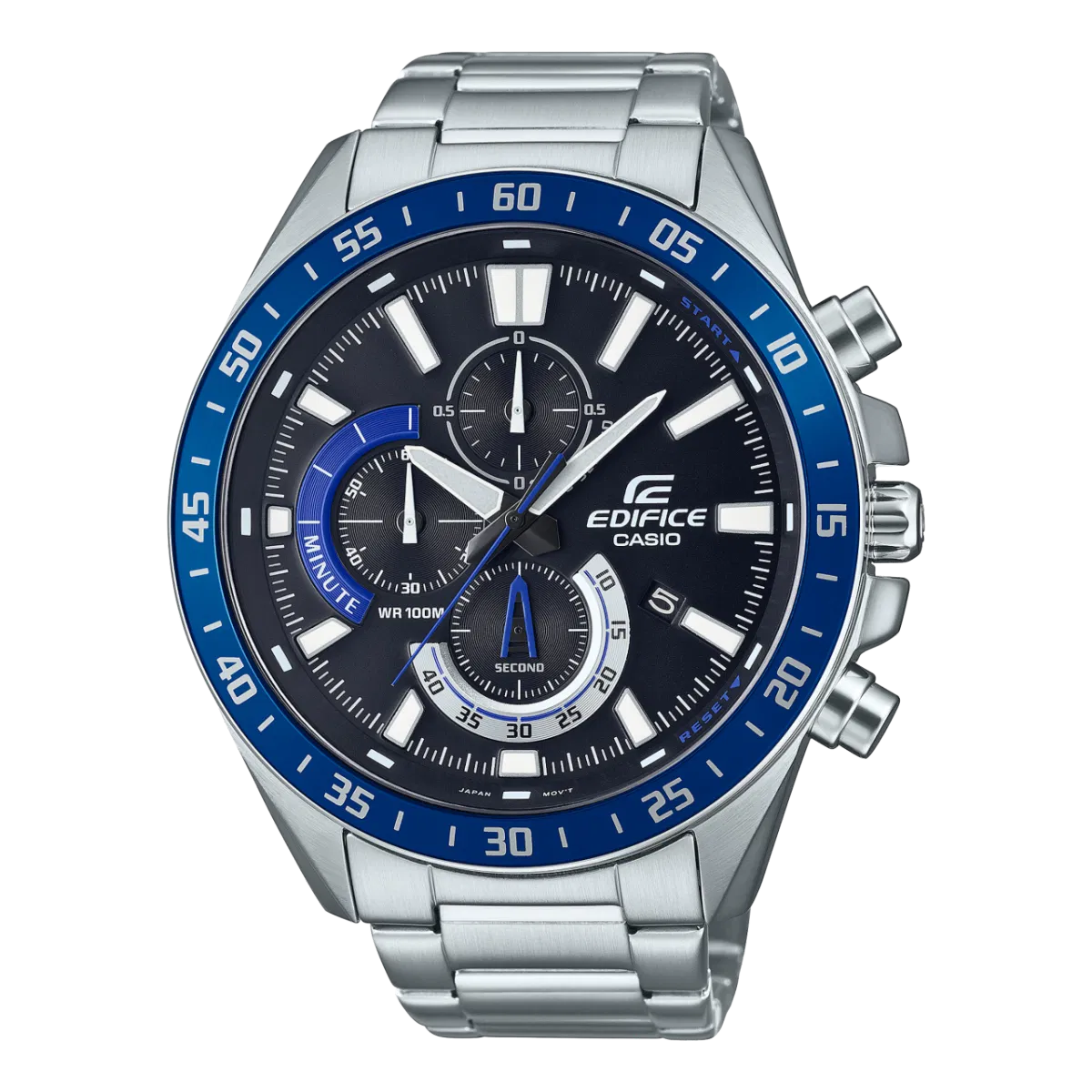
Casio Edifice Chronograph


Casio Edifice Chronograph

Casio

★★★★★ 4.7 (1,264 reviews)

$120


Check Price on Amazon →


Browse all expert-reviewed watches →

Watch Fact of the Day: G-SHOCK Was Born From a Watch That Shattered on the Floor

In 1981, Casio engineer Kikuo Ibe faced every watch owner’s nightmare: his prized timepiece shattered. Instead of mourning, he rallied his team to create a watch that wouldn’t drop dead at the slightest fall. Enter Project Tough and the hilariously ambitious “Triple 10”: drop it from 10 meters, keep it water-resistant to 10 bars, and ensure it has a 10-year battery life. After two years and 200 prototypes, they introduced the G-SHOCK, which was tough enough for a third-floor restroom launch pad. This sturdy watch not only survived impacts but also redefined what we expect from timepieces—no longer just delicate jewelry but rugged companions!

Brand Spotlight: Friday, September 18, 2026

📅 Friday, September 18, 2026

In 1981, Casio engineer Kikuo Ibe experienced the kind of accident every watch owner dreads. A treasured mechanical wristwatch associated with his father fell from his wrist and shattered when it hit the floor. At the time, watches were generally treated as delicate precision instruments, and breaking one after a hard impact was considered almost inevitable. Ibe began wondering why it had to be that way.

His response was astonishingly simple.

He submitted an internal proposal containing essentially one idea:

MAKE A WATCH THAT DOESN’T BREAK WHEN DROPPED.

Casio approved the challenge, and Project Team Tough was formed in 1981. The team consisted of only three people, including Ibe, and they began trying to create something the conventional watch industry regarded as almost absurd: a wristwatch designed around toughness rather than delicacy.

The development target became known as the “Triple 10” concept:

10-METER DROP RESISTANCE

10-BAR WATER RESISTANCE

10-YEAR BATTERY LIFE

Those numbers weren’t simply marketing copy. They gave the engineers a concrete definition of what a truly tough watch ought to achieve. Interestingly, Casio notes that the first production G-SHOCK, the DW-5000C, did not literally match all three original targets: it offered 20-bar water resistance and a rated battery life of about seven years, while its shock resistance was validated through established impact standards. The Triple 10 concept was the development ideal that drove the project.

Then came the punishment.

Over roughly two years, Ibe and his team built and destroyed more than 200 prototypes. One of their primary test sites was not some sophisticated laboratory shock rig—it was the third-floor restroom window of Casio’s research facility, approximately 10 meters above the ground. Ibe repeatedly threw prototypes out the window, walked downstairs, examined what had broken, reinforced the failed component, and tried again.

Early solutions were almost comical. Ibe initially believed that simply surrounding the watch with enough soft material would protect it, but the amount of cushioning required turned some prototypes into objects roughly the size of a softball. Eventually, the team developed a multi-stage shock-absorbing architecture in which the crucial electronic module was effectively suspended and protected from direct impact.

The breakthrough led to the launch of the first G-SHOCK DW-5000C in 1983.

Its rugged urethane exterior, hollow protective case structure, and unmistakably functional design represented a complete reversal of the traditional assumption that a precision watch needed to be treated gently. Instead of asking the wearer to protect the watch, G-SHOCK was designed to protect itself.

And that changed far more than Casio probably imagined.

G-SHOCK went on to become a global phenomenon, embraced by everyone from professionals working in harsh environments to skateboarders, musicians, collectors, military personnel, athletes, and streetwear culture. By 2017, Casio had shipped more than 100 million G-SHOCK watches worldwide.

💡 Did You Know?

The famous 10-meter drop target partly explains why Ibe chose that restroom window.

Casio quotes him remembering that a normal ground-floor window would have been enough for testing an ordinary watch—but the third-floor restroom was about 10 meters high, which conveniently matched the kind of round-number engineering target he wanted.

So the development process was essentially:

DROP IT.

⬇️

SEE WHAT BROKE.

⬇️

FIX THAT PART.

⬇️

DROP IT AGAIN.

More than 200 times.

⭐ Why It Matters

The genius of G-SHOCK wasn’t simply that Casio made a stronger watch.

It was that Kikuo Ibe challenged one of watchmaking’s most basic assumptions:

WHY SHOULD A WATCH HAVE TO BE DELICATE?

One broken family watch led to a radically different design philosophy.

A watch could be precise and tough.

Electronic and rugged.

Practical and cool.

The first G-SHOCK didn’t merely survive impacts.

It helped redefine what people expected a wristwatch to survive.

1981 — A WATCH SHATTERS

200+ PROTOTYPES ARE DESTROYED

1983 — G-SHOCK IS BORN


Category: Brand Spotlight

Disclaimer: Every effort has been made to keep these watch facts accurate, but the world of horology is full of myths, disputed stories, and fascinating trivia. Consider these facts a starting point for discovery rather than the final word. If you have corrections or additional insights, let us know—we’re always happy to keep the record ticking in the right direction.

🕐 Discover more watch facts, reviews, and buying guides at WatchesAndMore


🛍️ You Might Also Like

As an Amazon Associate and affiliate partner, WatchesAndMore earns from qualifying purchases.
G-Shock GWM5610-1 Solar Atomic
🔥 Deal of the Day

G-Shock GWM5610-1 Solar Atomic

Casio

★★★★★ 4.8 (5,621 reviews)

$129

Offer expires in


🔥 Grab This Deal →

G-Shock GA2100-1A1 CasiOak


G-Shock GA2100-1A1 CasiOak

Casio

★★★★★ 4.8 (2,156 reviews)

$99


Check Price on Amazon →

Casio Edifice Chronograph


Casio Edifice Chronograph

Casio

★★★★★ 4.7 (1,264 reviews)

$120


Check Price on Amazon →


Browse all expert-reviewed watches →

Watch Fact of the Day: The Titanic Pocket Watch with Hebrew Numerals

Sinai Kantor’s pocket watch, recovered from the Titanic wreckage, is a poignant artifact of human tragedy and resilience. This Swiss-made timepiece bears Hebrew numerals and an embossed depiction of Moses, connecting deeply to Kantor’s Jewish identity. As a second-class passenger, Sinai aimed to start anew in America with his wife, Miriam, who survived the disaster. The watch stopped around 2:25 a.m., leaving a haunting reminder of that fateful night. Its sale at auctions for impressive sums underscores its significance as a personal relic amidst the Titanic’s vast history, humanizing a tale often told through cold statistics.

Watch Fact of the Day: The Titanic Pocket Watch with Hebrew Numerals

📅 Thursday, September 17, 2026

Among the many personal objects recovered after the sinking of the RMS Titanic, one pocket watch stands out for both its appearance and the story of the man who carried it.

The watch belonged to Sinai Kantor, a 34-year-old Jewish immigrant from Vitebsk in the Russian Empire who was traveling to New York with his 24-year-old wife, Miriam. The couple boarded Titanic at Southampton as second-class passengers, hoping to begin a new life in America. Sinai was a furrier and reportedly intended to sell furs to help finance further study after their arrival. Miriam survived the disaster; Sinai did not.

What makes Kantor’s watch extraordinary is its unmistakably personal design.

The Swiss-made, open-face pocket watch has Hebrew letters in place of conventional numerals around the dial. Its back cover carries an embossed scene of Moses holding the Ten Commandments, making the watch not only a timekeeper but also an object closely connected to Kantor’s Jewish identity.

When Titanic sank in the North Atlantic in the early hours of April 15, 1912, Kantor was among the passengers who lost their lives. His body was later recovered by the cable ship CS Mackay-Bennett, and the pocket watch was among the belongings ultimately returned to his widow. Surviving documentation lists a “silver watch and strap” among his recovered effects, helping establish the watch’s provenance.

An illustrated article about Sinai Kantor's Titanic pocket watch, featuring Hebrew numerals. The image includes a vintage photo of Kantor, details about the watch's history, and its significance as a personal artifact from the Titanic disaster.

More than a century in salt water left its mark.

The hands are now almost completely deteriorated, the dial is stained, and the movement shows extensive rust. Yet dried water marks on the dial have been interpreted as indicating that the watch stopped at approximately 2:25 a.m. — only a few minutes after Titanic disappeared beneath the surface. That detail should be treated as an interpretation of the surviving marks rather than absolute proof of the exact moment the mechanism stopped, but it adds an undeniably haunting dimension to the object.

The watch has also become a significant Titanic collectible.

In 2018, Heritage Auctions sold it for $57,500. Then in 2023, it appeared at auction again and sold for £97,000, roughly $118,700 at the time. The dramatic increase reflects not just the watch itself, but the importance collectors place on objects with strong provenance and a deeply documented personal story.

💡 Did You Know?

Sinai and Miriam Kantor were not traveling as wealthy first-class passengers.

They were second-class immigrants heading toward a new life in New York.

Miriam survived in Lifeboat No. 12, while Sinai’s body was recovered days later. His effects eventually made their way back to her after considerable administrative effort.

That makes this watch much more than Titanic memorabilia.

It is one of the few surviving personal objects that still connects us directly to an individual passenger.

⭐ Why It Matters

Titanic is often remembered through statistics:

more than 1,500 dead
one enormous ship
one catastrophic night

But objects like Sinai Kantor’s pocket watch bring the story back down to human scale.

A watch.

A husband.

A wife.

A journey toward a new life.

A dial marked with Hebrew letters.

A back cover showing Moses and the Ten Commandments.

And a movement scarred by the Atlantic more than a century ago.

THE SHIP BECAME HISTORY.

THE WATCH REMAINED PERSONAL.


Category: Watch History

Disclaimer: Every effort has been made to keep these watch facts accurate, but the world of horology is full of myths, disputed stories, and fascinating trivia. Consider these facts a starting point for discovery rather than the final word. If you have corrections or additional insights, let us know—we’re always happy to keep the record ticking in the right direction.

🕐 Discover more watch facts, reviews, and buying guides at WatchesAndMore


🛍️ You Might Also Like

As an Amazon Associate and affiliate partner, WatchesAndMore earns from qualifying purchases.

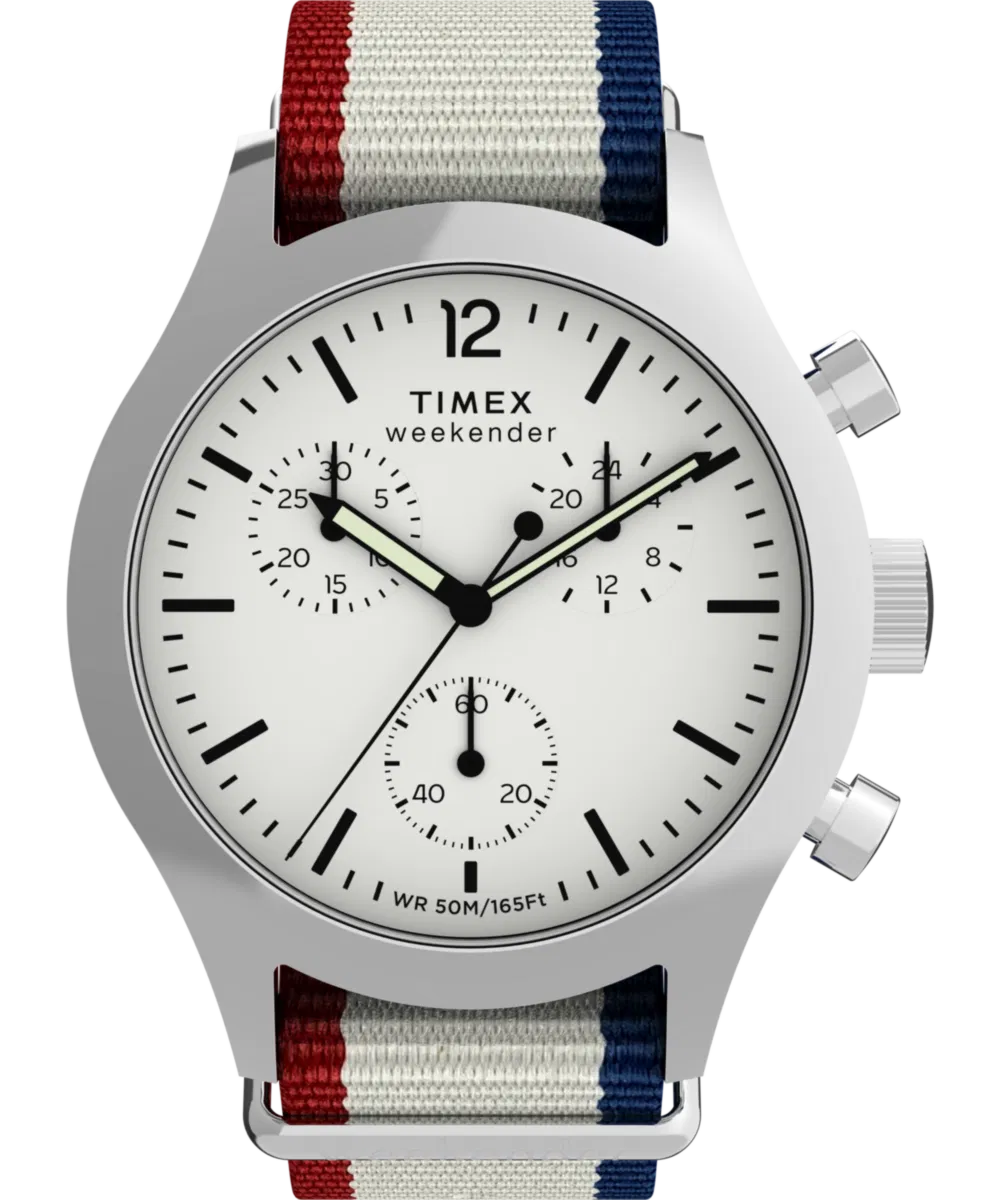
Timex Weekender Chronograph
🔥 Deal of the Day

Timex Weekender Chronograph

Timex

★★★★★ 4.5 (3,041 reviews)

$79

Offer expires in


🔥 Grab This Deal →

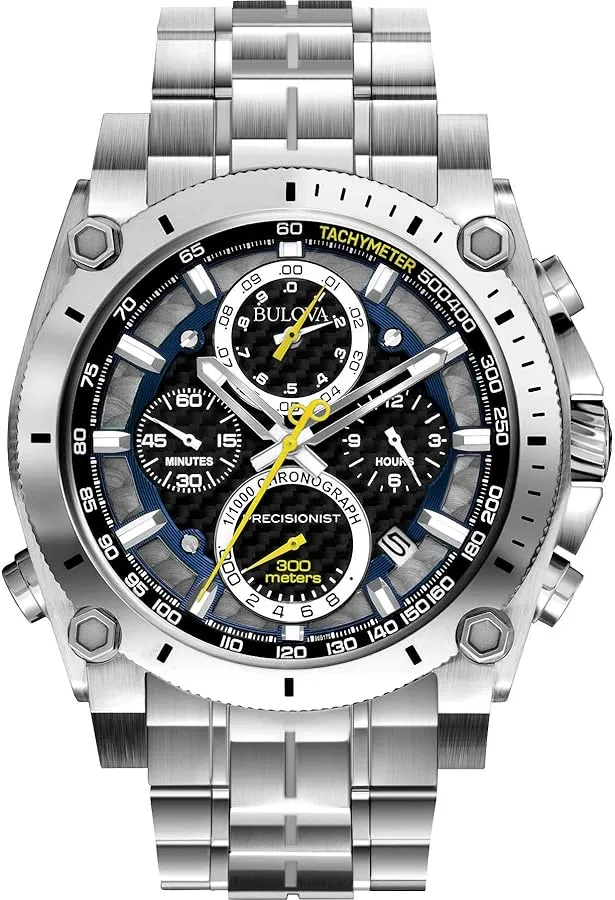
Bulova Precisionist


Bulova Precisionist

Bulova

★★★★★ 4.6 (1,100 reviews)

$219


Check Price on Amazon →

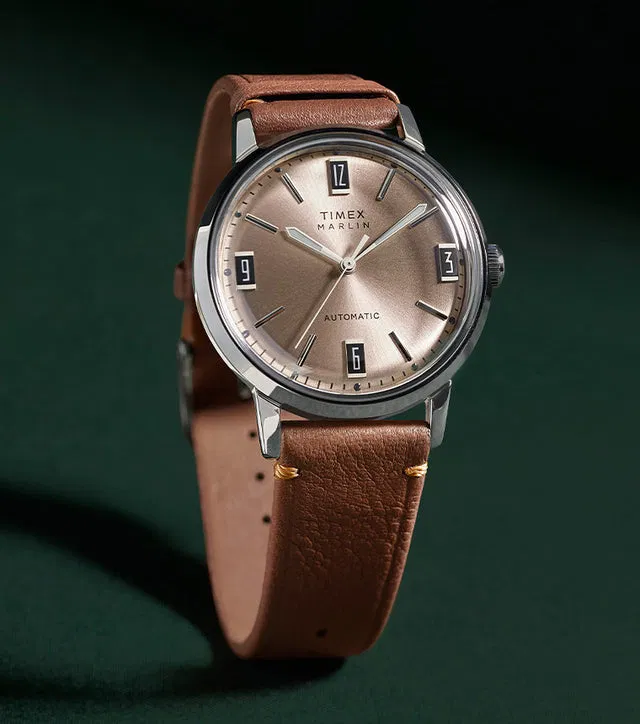
Timex Marlin Automatic 40mm


Timex Marlin Automatic 40mm

Timex

★★★★★ 4.7 (1,106 reviews)

$259


Check Price on Amazon →


Browse all 142+ expert-reviewed watches →

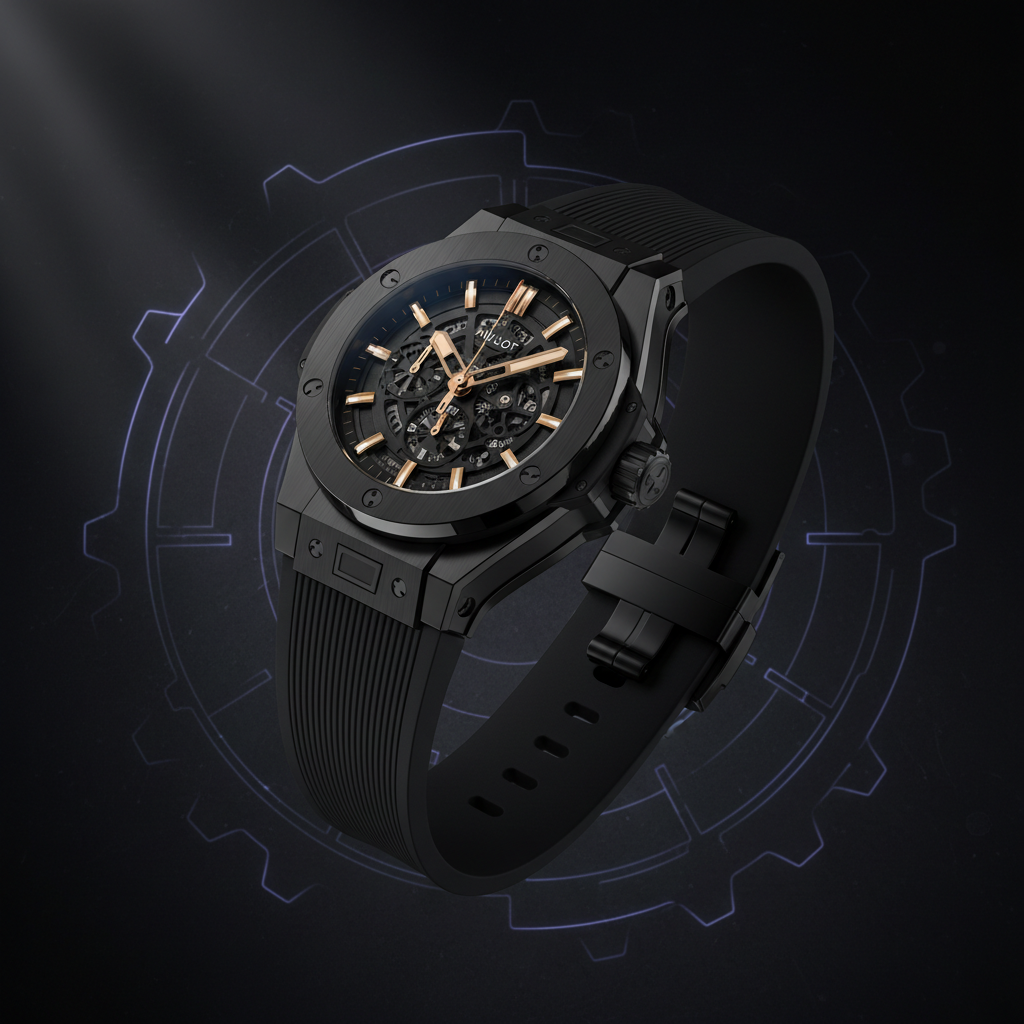
Watch Fact of the Day: Hublot Pioneered Luxury Rubber Straps

In 1980, Carlo Crocco revolutionized luxury watchmaking by introducing Hublot, the first watch to combine gold with a rubber strap, challenging traditional norms. This innovative blend not only transformed perceptions of materials in high-end timepieces but also ignited a movement known as the “Art of Fusion.” Crocco’s design, inspired by a ship’s porthole, emphasized the beauty in contrast, creating a lasting impact on the industry. Today, rubber straps are ubiquitous in luxury collections, proving that daring creativity can reshape conventions. Hublot’s legacy continues to inspire, encouraging a bold approach to design that merges sophistication with modernity.

Brand Spotlight: Wednesday, September 16, 2026

📅 Wednesday, September 16, 2026

Today, seeing a six-figure luxury watch on a rubber strap barely raises an eyebrow.

In 1980, it was borderline heresy.

When Italian entrepreneur Carlo Crocco introduced the first Hublot, he paired a gold luxury watch with a black natural-rubber strap—a combination that challenged one of the most traditional assumptions in Swiss watchmaking. Precious metals belonged on leather or matching metal bracelets. Rubber belonged on utilitarian sports equipment. Crocco decided they belonged together. Hublot

The watch itself was inspired by a ship’s porthole—“hublot” in French—with a round bezel secured by visible screws, a minimalist black dial, and an integrated rubber strap flowing directly from the case. The contrast was the whole point: refined gold above, modern rubber below. Hublot

And the strap wasn’t an afterthought.

Historical Hublot material says Crocco spent roughly three years developing the natural-rubber strap, refining its comfort, durability, and fit before the watch’s 1980 launch. Adfpr

That matters because Hublot wasn’t simply putting a cheap strap on an expensive watch.

It was deliberately redefining what a luxury material combination could look like.

GOLD + RUBBER

At the time, those two materials seemed to belong to completely different worlds.

And that tension became Hublot’s identity.

💡 Did You Know?

The original concept became the seed of what Hublot would later call the:

ART OF FUSION

The philosophy was bigger than rubber itself.

It was the idea that watchmaking could deliberately combine materials that traditional luxury normally kept apart:

gold + rubber
ceramic + metal
carbon + precious materials
sapphire + mechanical watchmaking

Jean-Claude Biver later made that distinction explicit: the message wasn’t simply rubber—it was fusion. Hodinkee

That first 1980 watch was therefore much more important than it might look today.

Because now?

Rubber straps are everywhere in high-end watchmaking.

Patek Philippe, Richard Mille, IWC, Chanel, Hermès and many others have embraced sporty elastomer or composite straps in luxury collections. What once looked shocking became normal. South China Morning Post

⭐ Why It Matters

Hublot’s early success came from asking a very simple design question:

Why should luxury materials only be combined in traditional ways?

Crocco didn’t make rubber luxurious by pretending it was leather.

He made the contrast itself luxurious.

That was the breakthrough.

PRECIOUS GOLD.

INDUSTRIAL RUBBER.

ONE WATCH.

And that combination helped establish one of the strongest material philosophies in modern watch design.

1980 — GOLD MEETS RUBBER

THE RULEBOOK BREAKS

THE ART OF FUSION BEGINS


Category: Brand Spotlight

Disclaimer: Every effort has been made to keep these watch facts accurate, but the world of horology is full of myths, disputed stories, and fascinating trivia. Consider these facts a starting point for discovery rather than the final word. If you have corrections or additional insights, let us know—we’re always happy to keep the record ticking in the right direction.

🕐 Discover more watch facts, reviews, and buying guides at WatchesAndMore


🛍️ You Might Also Like

As an Amazon Associate and affiliate partner, WatchesAndMore earns from qualifying purchases.
Timex Weekender Chronograph
🔥 Deal of the Day

Timex Weekender Chronograph

Timex

★★★★★ 4.5 (3,041 reviews)

$79

Offer expires in


🔥 Grab This Deal →

Bulova Precisionist


Bulova Precisionist

Bulova

★★★★★ 4.6 (1,100 reviews)

$219


Check Price on Amazon →

Timex Marlin Automatic 40mm


Timex Marlin Automatic 40mm

Timex

★★★★★ 4.7 (1,106 reviews)

$259


Check Price on Amazon →


Browse all expert-reviewed watches →

Watch Fact of the Day: The Jaeger-LeCoultre Atmos Runs on Air Alone

Imagine a clock that runs on room temperature changes instead of batteries, motors, or your daily winding efforts—enter the Jaeger-LeCoultre Atmos! This genius contraption, dating back to 1928, uses a sealed capsule that flexes with temperature shifts, cranking itself up like a lazy friend who suddenly remembers they owe you lunch. With just a 1°C change, it can keep ticking for 48 hours, consuming less energy than a light bulb. So, if you want to impress your guests with a clock that’s basically a temperature leech, the Atmos is the way to go—just don’t forget to keep your thermostat cozy!

Fun Quirk: Tuesday, September 15, 2026

📅 Tuesday, September 15, 2026

Imagine a mechanical clock that you never plug in, never replace a battery in, and normally never wind by hand.

That is the extraordinary idea behind the Jaeger-LeCoultre Atmos.

Its mechanism traces back to an invention by Jean-Léon Reutter in 1928, later developed and brought to market by Jaeger-LeCoultre during the 1930s. Instead of depending on a conventional winding routine, the Atmos captures tiny changes in the temperature of the room around it and converts those changes into mechanical energy.

At the heart of the system is a hermetically sealed capsule connected to the clock’s mainspring mechanism. As the surrounding temperature rises or falls, the material inside the capsule expands or contracts. That movement flexes a membrane and gradually winds the clock.

No motor.

No wall plug.

No daily winding ritual.

Just:

TEMPERATURE CHANGES → CAPSULE MOVES → MAINSPRING WINDS → CLOCK KEEPS RUNNING

Jaeger-LeCoultre says a change of only 1°C in ambient temperature can provide approximately 48 hours of power reserve. That is possible because the Atmos consumes an astonishingly small amount of energy. Its slow-moving ring-shaped balance operates at just 0.02 Hz, and the manufacture says it consumes roughly 250 times less energy than the balance of a conventional wristwatch.

That efficiency is really the secret.

The Atmos does not produce energy from nothing.

Instead, it needs so little energy that ordinary temperature fluctuations in a room can supply enough mechanical work to keep it operating. Jaeger-LeCoultre even calculates that approximately 60 million Atmos clocks would consume the same amount of energy as a single 15-watt light bulb.

And that gives the Atmos one of the most poetic operating principles in horology.

A sunny afternoon warms the room slightly.

Night arrives and the temperature falls.

The sealed capsule responds.

The mechanism quietly winds itself.

The clock continues.

💡 Did You Know?

The Atmos became so closely associated with Swiss craftsmanship that it was used as an official gift of the Swiss Confederation and became known as the “President’s Clock.” Jaeger-LeCoultre notes that heads of state and prominent visitors to Switzerland received examples during the 20th century.

But the part I love most is still the engineering.

A temperature change most of us would never even notice—

1°C

—can give the Atmos enough stored energy for roughly:

48 HOURS OF TIMEKEEPING.

⭐ Why It Matters

Most mechanical timepieces are designed around storing energy that we deliberately give them.

Wind the crown.

Wind the key.

Move your wrist.

Replace the battery.

The Atmos takes a completely different approach.

It quietly harvests energy already present in the environment.

That makes it less like a conventional clock and more like a tiny mechanical energy-harvesting machine.

NO BATTERY.

NO ELECTRIC MOTOR.

NO DAILY WINDING.

Just:

TEMPERATURE → ENERGY → TIME


Category: Fun Quirk

Disclaimer: Every effort has been made to keep these watch facts accurate, but the world of horology is full of myths, disputed stories, and fascinating trivia. Consider these facts a starting point for discovery rather than the final word. If you have corrections or additional insights, let us know—we’re always happy to keep the record ticking in the right direction.

🕐 Discover more watch facts, reviews, and buying guides at WatchesAndMore


🛍️ You Might Also Like

As an Amazon Associate and affiliate partner, WatchesAndMore earns from qualifying purchases.

G-Shock GWM5610-1 Solar Atomic
🔥 Deal of the Day

G-Shock GWM5610-1 Solar Atomic

Casio

★★★★★ 4.8 (5,621 reviews)

$129

Offer expires in


🔥 Grab This Deal →

G-Shock GA2100-1A1 CasiOak


G-Shock GA2100-1A1 CasiOak

Casio

★★★★★ 4.8 (2,156 reviews)

$99


Check Price on Amazon →

Casio Edifice Chronograph


Casio Edifice Chronograph

Casio

★★★★★ 4.7 (1,264 reviews)

$120


Check Price on Amazon →


Browse all 142+ expert-reviewed watches →

Watch Fact of the Day: The 1970s LED Watch Designed for Drivers

In the wild and wacky world of 1970s watches, the Bulova Computron strutted onto the scene like a flashy futuristic disco ball. With its dazzling red LED display angled right at your face, this timepiece was less “watch” and more “dashboard for your wrist.” Forget wrist rotations; just a quick side glance got you the time while you cruised at breakneck speeds. No round dials, no hands, just pure electric glory in a trapezoidal shape. Basically, if you wanted to feel like a space-age driver while checking the time, the Computron was your ticket to the future—one battery-saving light show at a time!

Fun Quirk: Monday, September 14, 2026

📅 Monday, September 14, 2026

Introduced in the mid-1970s, the Bulova Computron became one of the most futuristic digital watches of its era. Instead of placing the display flat on top of the wrist like a conventional watch, Bulova angled the glowing red LED readout toward the wearer—an arrangement that made it especially easy to glance at while driving.

The Computron’s shape was unlike almost anything else on the market. Its trapezoidal case, integrated bracelet, and recessed red LED display looked more like a piece of automotive instrumentation than a traditional wristwatch. In an era obsessed with space-age design, electronic technology, and the promise of a computerized future, the Computron looked exactly like a watch from tomorrow.


That angled display gave it a practical advantage. Rather than rotating the wrist dramatically to see the time, the wearer could glance toward the side of the case. This made the Computron especially appealing to motorists and helped cement its reputation as one of the classic “driver’s watches” of the digital age.

Like most early LED watches, the display was not continuously illuminated. LEDs consumed significant battery power, so the wearer typically activated the display only when needed. Press a control, and the dark face suddenly came alive with glowing red numerals—a tiny electronic light show on the wrist.

💡 Did You Know?
The Computron’s design was almost the opposite of a normal watch.
Traditional watches are built around the idea that the dial should face directly upward.

The Computron asked a different question:

WHAT IF THE DISPLAY FACED YOU INSTEAD?
That one design decision transformed the watch from a simple digital timekeeper into something that felt more like a dashboard instrument worn on the wrist.


⭐ Why It Matters
The Computron is a perfect example of how radically watch design changed during the 1970s.
This was a period when brands were no longer limited by the visual language of mechanical movements, round dials, and traditional hands. Electronic technology gave designers permission to rethink what a watch could look like.
The Computron embraced that freedom completely.

NO HANDS.
NO ROUND DIAL.
NO TRADITIONAL WATCH SHAPE.

Just:
RED LEDs.
ANGLED DISPLAY.
PURE 1970s FUTURISM.


Category: Fun Quirk

Disclaimer: Every effort has been made to keep these watch facts accurate, but the world of horology is full of myths, disputed stories, and fascinating trivia. Consider these facts a starting point for discovery rather than the final word. If you have corrections or additional insights, let us know—we’re always happy to keep the record ticking in the right direction.

🕐 Discover more watch facts, reviews, and buying guides at WatchesAndMore


🛍️ You Might Also Like

As an Amazon Associate and affiliate partner, WatchesAndMore earns from qualifying purchases.

Oris Aquis Date Green MOP
🔥 Deal of the Day

Oris Aquis Date Green MOP

Oris

★★★★★ 4.8 (87 reviews)

$1165

Offer expires in


🔥 Grab This Deal →

Also at: Watchmaxx

Oris Big Crown ProPilot Timer GMT


Oris Big Crown ProPilot Timer GMT

Oris

★★★★★ 4.8 (92 reviews)

$1350


Check Price on Amazon →

Also at: Watchmaxx

Oris Divers Sixty-Five Chronograph


Oris Divers Sixty-Five Chronograph

Oris

★★★★★ 4.9 (67 reviews)

$1760


Check Price on Amazon →

Also at: Watchmaxx


Browse all 142+ expert-reviewed watches →

Watch Fact of the Day: The 19th-Century Timekeeper That Used Mercury to Stay Accurate

Back in the day, clockmakers were on a mission to combat the effects of temperature on their timepieces. They created mercurial pendulums, where mercury in a jar at the bottom adjusted to heat changes, keeping clocks accurate. This nifty solution was a big deal before the advent of quartz and atomic clocks. While it was an impressive engineering feat, mercury wasn’t the safest material to work with. Eventually, better and safer methods replaced it, but the mercurial pendulum remains a cool example of how creativity and science played a role in crafting precise timepieces. Horology has always been about innovation, not just gears!

Fun Quirk: Sunday, September 13, 2026

📅 Sunday, September 13, 2026

Long before modern alloys and electronic regulation, precision clockmakers searched for clever ways to fight one of timekeeping’s greatest enemies: temperature. As the weather changed, pendulum rods expanded and contracted, altering a clock’s rate. To solve the problem, some 19th-century regulators and observatory clocks used a mercurial pendulum, in which a jar of mercury at the bottom of the pendulum helped offset those changes. As the pendulum rod expanded downward in warmer temperatures, the mercury’s surface rose upward, compensating for the shift and helping the clock maintain far better accuracy.

The idea was both elegant and scientifically ingenious. Rather than fighting physics directly, clockmakers used one physical reaction to counteract another. This made mercurial pendulums an important step in the long quest for precision timekeeping, especially in observatory and regulator clocks where even tiny errors mattered. Before quartz and atomic timekeeping, this was cutting-edge technology—proof that great horology has always been as much about clever engineering as beautiful craftsmanship.

Of course, mercury came with obvious drawbacks. It was heavy, delicate to handle, and hazardous by modern standards, which meant these systems were never especially practical outside high-precision clockmaking. Over time, improved compensation pendulums and safer materials replaced them. Still, the mercurial pendulum remains one of the most fascinating examples of watchmakers and clockmakers using the science of their era to solve the eternal problem of keeping better time.

💡 Did You Know?

The mercurial pendulum wasn’t designed to make a clock run faster or slower on its own—it was designed to help the clock stay consistent as temperatures changed. That distinction made it a major breakthrough for scientific and observatory-grade timekeeping.

⭐ Why It Matters

This story shows that horology has never been just about gears and springs. It has always been about creative problem-solving. Long before computers and electronics, clockmakers were already using chemistry, physics, and materials science to chase greater precision.


Category: Fun Quirk

Disclaimer: Every effort has been made to keep these watch facts accurate, but the world of horology is full of myths, disputed stories, and fascinating trivia. Consider these facts a starting point for discovery rather than the final word. If you have corrections or additional insights, let us know—we’re always happy to keep the record ticking in the right direction.

🕐 Discover more watch facts, reviews, and buying guides at WatchesAndMore


🛍️ You Might Also Like

As an Amazon Associate and affiliate partner, WatchesAndMore earns from qualifying purchases.

G-Shock GWM5610-1 Solar Atomic
🔥 Deal of the Day

G-Shock GWM5610-1 Solar Atomic

Casio

★★★★★ 4.8 (5,621 reviews)

$129

Offer expires in


🔥 Grab This Deal →

G-Shock GA2100-1A1 CasiOak


G-Shock GA2100-1A1 CasiOak

Casio

★★★★★ 4.8 (2,156 reviews)

$99


Check Price on Amazon →

Casio Edifice Chronograph


Casio Edifice Chronograph

Casio

★★★★★ 4.7 (1,264 reviews)

$120


Check Price on Amazon →


Browse all 142+ expert-reviewed watches →

Watch Fact of the Day: The Legend of Hanhart’s Iconic Red Chronograph Pusher

Ah, the infamous red pusher on a Hanhart pilot’s chronograph! It’s like the watch world’s version of a “don’t touch” sign, ensuring pilots don’t accidentally reset their crucial timing—because, you know, hitting the wrong button could be a bit of a timing disaster. Introduced in 1939, this vibrant button has also spawned a whimsical legend: a lovesick pilot had his button painted red with nail polish by his girlfriend, so he’d think of her while soaring through the skies. Whether true or not, it’s a fun tale that adds sparkle to an otherwise serious timepiece. One button, two stories—talk about a ticking mystery!

Watch Fact of the Day: The Legend of Hanhart’s Iconic Red Chronograph Pusher

📅 Saturday, September 12, 2026

Look at a classic Hanhart pilot’s chronograph and one detail immediately jumps out.

That red pusher. 🔴

It has become such a recognizable part of Hanhart’s design language that today it almost functions as a visual signature for the German watchmaker.

But unlike many decorative flourishes in watchmaking, the red button originally had a very practical purpose.

In 1939, Hanhart introduced its Tachy Tele and legendary Calibre 41 pilot chronographs following the company’s first series-produced Calibre 40 chronograph of 1938. Some of these early watches featured a distinctive red-lacquered chronograph pusher. Hanhart Chronographen

The reason was simple:

DON’T PRESS THIS BY ACCIDENT.

For a pilot relying on elapsed time, accidentally resetting the chronograph could erase an important timing measurement. The bright signal color made the reset control immediately recognizable and warned the wearer against pressing it unintentionally. Hanhart itself says the feature was intended to prevent pilots from inadvertently resetting their stopped time. Hanhart Chronographen

But that’s only half the story.

Because somewhere along the way, that little red button acquired one of the most romantic legends in watchmaking.

❤️ The Nail Polish Legend

According to Hanhart’s own telling of the folklore, a pilot prepared to leave home for another flight.

After saying goodbye, he later looked down at his Hanhart chronograph in the hangar and discovered something unexpected.

One of the pushers had been painted red with nail polish by the woman he loved.

The idea was that whenever he looked at the red button during his mission, he would think of her—and remember to return safely home. Hanhart Chronographen

There’s just one problem.

Nobody knows whether it actually happened.

And wonderfully, Hanhart itself acknowledges that uncertainty. On its current 417 ES Heritage material, the manufacture tells the romantic story and then explicitly says that it is unclear whether the legend is true. Hanhart Chronographen

That distinction is important for our Watch Fact.

We have:

DOCUMENTED HISTORY: 🔴
The red pusher served as a visual warning against accidentally resetting the chronograph.

And:

HOROLOGICAL FOLKLORE: ❤️
A pilot’s lover supposedly painted the button with red nail varnish so he would think of her and return safely.

Put those two stories together and you get one of watchmaking’s great little mysteries.

💡 Did You Know?

The red pusher wasn’t merely an aesthetic choice on watches equipped with a flyback chronograph.

A flyback allows the running chronograph to be reset and restarted immediately with a single press. That makes the function extremely useful when timing consecutive events—but it also makes an accidental press particularly consequential.

On modern Hanhart flyback models, the company still explains the red reset pusher as a warning against unintentionally resetting the elapsed time. Hanhart Chronographen

So that tiny splash of color was effectively an early form of human-interface design:

BLACK PUSHER → OPERATE

🔴 RED PUSHER → THINK BEFORE YOU PRESS

And that was happening on a mechanical wristwatch in 1939.

⭐ Why It Matters

This is exactly the kind of story that makes vintage watches fascinating.

You could look at the red pusher and assume:

“That’s just Hanhart’s design signature.”

But behind that tiny detail is an entire story involving aviation, chronograph functionality, cockpit usability, wartime-era watchmaking—and possibly even a bottle of red nail polish.

What began as a practical warning eventually became something much bigger:

A TRADEMARK.

A LEGEND.

A SYMBOL OF HANHART.

And Hanhart continues using the red-pusher identity today. Its modern watches reinterpret the feature using contemporary materials, including red HyCeram® on some current models. Hanhart Chronographen

ONE RED BUTTON.

TWO STORIES.

ONE HOROLOGICAL LEGEND.

And BBC Creative Department is already halfway through the infographic. 😂🔥

This one should look like a 1939 German aviation magazine × pilot’s flight log × wartime mechanical-instrument advertisement.

Almost everything is monochrome:

charcoal • aged ivory • aircraft aluminium • faded leather • black-and-white photography

Except for ONE THING.

🔴 THE PUSHER.

Brilliant deep red.

Centerpiece: enormous vintage Hanhart pilot chronograph, slightly angled, with the red reset button practically glowing against the otherwise desaturated image.

On one side:

THE DOCUMENTED PURPOSE

✈️ PILOT TIMING
↓
⏱️ CHRONOGRAPH RUNNING
↓
🔴 RED = DON’T RESET ACCIDENTALLY

On the other:

THE LEGEND

💅 RED NAIL POLISH
↓
❤️ REMEMBER HER
↓
✈️ COME HOME SAFELY

And across the top:

WHY WAS THIS BUTTON PAINTED RED?

Then the bottom payoff:

FUNCTION BECAME TRADITION.

TRADITION BECAME A LEGEND.

Ohhhhh yeah.


Category: Military Watches

Disclaimer: Every effort has been made to keep these watch facts accurate, but the world of horology is full of myths, disputed stories, and fascinating trivia. Consider these facts a starting point for discovery rather than the final word. If you have corrections or additional insights, let us know—we’re always happy to keep the record ticking in the right direction.

🕐 Discover more watch facts, reviews, and buying guides at WatchesAndMore


🛍️ You Might Also Like

As an Amazon Associate and affiliate partner, WatchesAndMore earns from qualifying purchases.

G-Shock GWM5610-1 Solar Atomic
🔥 Deal of the Day

G-Shock GWM5610-1 Solar Atomic

Casio

★★★★★ 4.8 (5,621 reviews)

$129

Offer expires in


🔥 Grab This Deal →

G-Shock GA2100-1A1 CasiOak


G-Shock GA2100-1A1 CasiOak

Casio

★★★★★ 4.8 (2,156 reviews)

$99


Check Price on Amazon →

Seiko 5 SNK805 Green Military


Seiko 5 SNK805 Green Military

Seiko

★★★★★ 4.8 (6,961 reviews)

$89


Check Price on Amazon →


Browse all 142+ expert-reviewed watches →