A Dirty Dozen watch carries clues in its dial and caseback. Learn what those markings reveal—and why condition and service history need context.
Watch Fact of the Day
A military watch can tell a second story after you turn it over.
The twelve British military watches known as the Dirty Dozen share a recognizable appearance. But examining the markings and replacement parts can be just as revealing as admiring the dial.
🔎 Start with the Purpose
These were working instruments supplied by twelve Swiss manufacturers for British service. Their common features followed practical requirements. The black dial and contrasting numerals were designed to communicate time clearly, rather than distinguish a fashionable collection.
🏹 The Arrow and the Three Letters
The broad arrow is associated with government property. On these watches, the W.W.W. designation identifies Watch, Wrist, Waterproof. Other numbers on the back can distinguish military identification from the manufacturer’s serial numbering.
Those markings are clues, not a complete biography. A number or arrow alone cannot establish every detail of where a watch served. Provenance requires evidence beyond a suggestive engraving.
⚒️ Why Originality Can Be Complicated
A service workshop’s first responsibility was to return equipment to use. Preserving every original component for future collectors was a different priority. Replacement dials, hands, and other parts can therefore become part of a watch’s working history.
That distinction creates an interesting tension. Collectors may prefer untouched examples, while a repaired watch may more visibly demonstrate a long service life. Condition and historical interest are related questions, but they are not identical.
💡 Did You Know?
The name Dirty Dozen came from collecting culture, borrowing the title of the later film. It is a convenient label for a group of twelve suppliers, rather than the official wording of the watches’ wartime designation.
⭐ Why It Matters
Learning to read an object carefully is part of enjoying watch history. The most satisfying story is the one its evidence supports: its construction, markings, records, and changes over time.
A clean dial may be attractive, but a complete assessment asks more. Does the caseback belong with the watch? Are the hands consistent with the example? What documentation explains the replacements? Those questions encourage curiosity rather than an instant conclusion.
Turn a military watch over, and the research often begins where the time display ends.
Disclaimer: Artwork descriptions reflect an editorial interpretation. Product formats, colours, pricing and availability can change; check the current seller listing before ordering.
Explore how a utilitarian digital watch became the ultimate symbol of street style, hip-hop culture, and urban fashion. From skate parks to fashion runways.
When Casio engineer Kikuo Ibe designed the first G-Shock in 1983, he was solving a practical problem: creating a watch that wouldn’t break when dropped. He couldn’t have predicted that his indestructible timepiece would become one of the most influential fashion accessories of the past four decades, transcending its tool watch origins to become a genuine cultural icon embraced by everyone from skateboarders to luxury fashion designers.
Hip-Hop’s Adoption
G-Shock’s journey into fashion began in the late 1980s and early 1990s when hip-hop artists discovered the watches. The oversized, bold designs perfectly complemented the era’s aesthetic of excess and authenticity. Artists like N.W.A., Public Enemy, and later Jay-Z were photographed wearing G-Shocks, cementing the watch’s status as a symbol of street credibility. Unlike luxury watches that signaled wealth, G-Shock represented authenticity—a tool watch that worked, worn by people who did real things.
Skate Culture Connection
Simultaneously, G-Shock found a home in skate culture. Skateboarders needed watches that could survive repeated impacts, and G-Shock delivered. The watches became as essential as skate shoes and decks. This grassroots adoption by skaters—who were simultaneously influencing mainstream fashion—helped propel G-Shock from niche tool watch to cultural phenomenon. Collaborations with skate brands like Thrasher and Supreme further solidified this connection.
High Fashion Embraces G-Shock
The 2010s saw something remarkable: luxury fashion houses began collaborating with G-Shock. Brands like A Bathing Ape (BAPE), Stüssy, and even high-end designers created limited-edition G-Shocks that sold out instantly. These collaborations validated what streetwear enthusiasts had known for decades—G-Shock’s design language was genuinely compelling. The watches appeared on fashion runways, in Vogue editorials, and on the wrists of fashion influencers. G-Shock had completed its journey from tool watch to fashion statement.
The Democratization of Style
What makes G-Shock’s fashion impact unique is its accessibility. While luxury watches create exclusivity through price, G-Shock creates inclusivity through availability. Anyone can afford a G-Shock, yet wearing one carries genuine style credibility. This democratization of fashion—where a $100 watch can be as stylish as a $10,000 one—represents a fundamental shift in how we think about fashion. G-Shock proved that good design, authenticity, and functionality matter more than price tags.
G-Shock’s impact on streetwear and fashion extends far beyond watches. It demonstrated that utilitarian design could be beautiful, that tool watches could be fashion statements, and that authenticity resonates more than luxury. Today, G-Shock occupies a unique space: simultaneously a serious tool watch for professionals and a fashion accessory for style-conscious individuals. This duality—functional yet fashionable, affordable yet desirable—is G-Shock’s greatest achievement and the reason it remains relevant four decades after its creation.
💡 Did You Know?
The movement, case, dial and strap contribute different things to a watch’s character. Comparing those parts separately can reveal why two similar-looking watches feel different to own.
⭐ Why It Matters
The details are most useful when connected to the wearer’s needs and the design’s purpose. This story offers another way to look beyond the name on the dial.
Disclaimer: Every effort has been made to keep these watch facts accurate, but the world of horology includes disputed stories and changing product information. Treat this article as a starting point for discovery and consult the linked records or manufacturer information for the exact timepiece. Corrections and additional evidence are welcome in the comments.
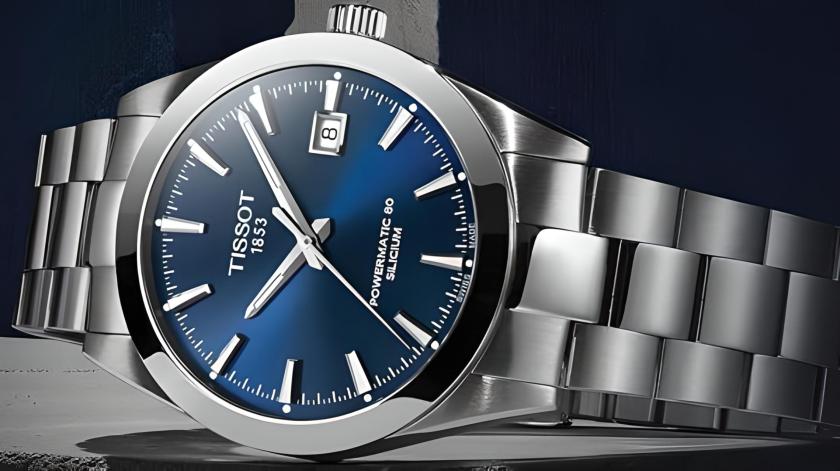
At $950, the Tissot Gentleman Powermatic 80 delivers 80 hours of power reserve, a sapphire crystal, and Swiss automatic movement. Is it the best value Swiss dress watch you can buy?
Tissot Gentleman Powermatic 80
The question of whether the Tissot Gentleman Powermatic 80 is a ‘giant killer’ is one that gets asked repeatedly in watch enthusiast circles. The answer, after spending time with it, is: yes — with some important caveats. At $950, it sits at the entry point of the Swiss luxury watch market, and it delivers specifications that would cost significantly more from brands like Longines, Certina, or Hamilton. The 80-hour power reserve alone is a genuine differentiator.
What Is the Tissot Gentleman Powermatic 80?
The Gentleman is Tissot’s flagship dress watch — a 40mm automatic with a clean, versatile dial design that works equally well with a suit and with jeans. The Powermatic 80 designation refers to the movement inside: the ETA C07.111, a Swiss-made automatic calibre with an 80-hour power reserve. This is the same movement family used across the Swatch Group’s mid-range brands, including Longines and Hamilton.
The current generation (T127.407) is available in multiple dial colours: blue, silver, and black are the most popular. The blue dial with stainless steel bracelet is the definitive configuration — it is the version that most often appears in ‘best dress watches under $1,000’ roundups.
Key Specifications
| Specification | Detail |
| Case Size | 40mm diameter |
| Case Material | Stainless steel |
| Movement | Powermatic 80 (ETA C07.111) |
| Water Resistance | 100m |
| Crystal | Sapphire (anti-reflective coating) |
| Strap/Bracelet | Stainless steel bracelet |
| Lug Width | 21mm |
| Power Reserve | 80 hours |
| Accuracy | ±4 seconds per day |
The 21mm lug width is the one specification that gives some buyers pause — aftermarket straps in 21mm are less common than 20mm or 22mm. Tissot sells official straps for the Gentleman, but third-party options are more limited.
The Powermatic 80 Movement: Why 80 Hours Matters
The standard power reserve for most automatic watches is 38-42 hours. This means that if you take the watch off on Friday evening, it will have stopped by Sunday morning. The Powermatic 80’s 80-hour reserve changes this calculus entirely — you can take it off Friday evening and it will still be running Monday morning.
For a dress watch that might only be worn on weekdays, this is a genuinely practical advantage. You do not need a watch winder, and you do not need to reset the time and date every Monday. The watch is simply ready when you are.
The movement also features a silicon balance spring, which makes it more resistant to magnetic fields than traditional steel springs. This is increasingly relevant in a world full of electronic devices.
The Gentleman’s design philosophy is restraint. The dial is clean — applied indices, simple hands, date window at 3 o’clock. There is nothing superfluous. This is not a watch that demands attention; it is a watch that rewards close inspection.
The 40mm case is the ideal size for a dress watch — large enough to be noticed, small enough to disappear under a shirt cuff. The brushed and polished finishing on the case and bracelet is executed to a standard that exceeds what you typically find at this price point. The sapphire crystal with anti-reflective coating gives the dial excellent legibility in all lighting conditions.
The blue dial variant has a subtle sunburst finish that catches the light differently throughout the day. It is one of the most visually interesting dials available under $1,000.
How It Compares to the Competition
The Gentleman’s direct competitors are the Hamilton Jazzmaster Viewmatic, the Longines Record, and the Certina DS-1 Powermatic 80.
| Feature | Tissot Gentleman PM80 | Hamilton Jazzmaster | Longines Record |
The Gentleman wins on power reserve versus the Hamilton and on price versus the Longines. The Hamilton is a strong alternative if you prefer a slightly larger case and a more classic aesthetic.
Who Should Buy the Tissot Gentleman Powermatic 80?
The Gentleman is the right watch for someone who wants a genuine Swiss automatic dress watch without paying luxury watch prices.
**Buy the Gentleman if you:**
– Want a Swiss-made automatic dress watch under $1,000
– Value the 80-hour power reserve for weekend storage
– Want sapphire crystal and anti-reflective coating
– Need a versatile watch that works for business and casual occasions
**Consider alternatives if you:**
– Have a budget under $500 (look at Seiko Presage or Orient Bambino)
– Want a sport watch rather than a dress watch (look at Seiko Prospex or G-Shock)
– Need a larger case (look at Hamilton Jazzmaster at 42mm)
The Tissot Gentleman Powermatic 80 is one of the best value propositions in Swiss watchmaking. An 80-hour power reserve, sapphire crystal, and Swiss automatic movement for under $1,000 — this is a watch that genuinely punches above its weight class. If you are ready to step into Swiss automatic territory, the Gentleman is the place to start.
Not sure if a dress watch is right for you? Try our Watch Advisor for personalized recommendations.
Find Your Perfect Watch
Affiliate Disclosure: WatchesAndMore (watchesandmore.org) is a participant in the Amazon Services LLC Associates Program, an affiliate advertising program designed to provide a means for sites to earn advertising fees by advertising and linking to Amazon.com and Amazon.ca. As an Amazon Associate, we earn from qualifying purchases at no additional cost to you.
💡 Did You Know?
Power reserve describes how long a wound watch can keep running. Accuracy describes how closely it keeps time; the two specifications answer different questions.
Disclaimer: Every effort has been made to keep these watch facts accurate, but the world of horology includes disputed stories and changing product information. Treat this article as a starting point for discovery and consult the linked records or manufacturer information for the exact timepiece. Corrections and additional evidence are welcome in the comments.
Borgel’s screw-in case helped protect pocket watches from dust and moisture. Its actual construction is more interesting than a disputed first-waterproof-watch claim.
Watch Fact of the Day
Before a watch could become an everyday companion outdoors, somebody had to stop the outside world getting inside.
Dust and damp were serious enemies of a mechanical movement. François Borgel’s 1891 case patent addressed that problem through a construction that reduced the openings in the watch case.
⚙️ A Case That Opens at the Front
Researcher David Boettcher documents Swiss patent CH4001 and reproduces the construction. The case middle and back were made as one piece. A threaded carrier held the movement, dial, and hands and screwed into the front.
This corrects the earlier description of separate screw-down front and back components. The absence of an opening back was part of the design’s point: one potential entry path had been removed.
🔩 Why the Threads Mattered
The front assembly tightened into the case, bringing the bezel against the case edge. Instead of relying on several hinged openings, the arrangement concentrated access at one principal joint.
The winding stem needed its own solution because the movement rotated during installation. Borgel’s split-stem arrangement accommodated that construction. A seemingly simple protective shell therefore affected the way the movement was fitted and operated.
⌚ From Pocket to Wrist
Borgel cases were used for pocket watches before appearing on wristwatches. The design later became associated with officers’ watches and the demanding conditions of the First World War.
It is safer to describe this as an important step in protection than to declare it the first waterproof watch ever made. Such a claim requires comparing earlier patents, surviving objects, and the meaning of waterproof in each period.
💡 Did You Know?
Borgel was a case maker. A watch bearing the case maker’s trademark could contain a movement supplied by another company. The name inside a case and the name associated with the movement do not always identify the same maker.
⭐ Why It Matters
Watch history is also the history of suppliers and protective engineering. A movement’s accuracy means little if moisture or contamination prevents it from functioning.
Borgel’s contribution rewards looking beyond the dial. The case architecture was a technical idea in its own right, shaping how the complete watch could be assembled and used.
Sometimes the breakthrough surrounds the movement rather than sitting inside it.
Disclaimer: Every effort has been made to keep these watch facts accurate, but the world of horology includes disputed stories and changing product information. Treat this article as a starting point for discovery and consult the linked records or manufacturer information for the exact timepiece. Corrections and additional evidence are welcome in the comments.
Certina just launched the DS Super PH2000M — a 2,000-metre titanium dive watch under $1,500 that doubles the depth rating of its legendary predecessor. We also look at what else is moving in the watch world this month: Tissot’s new Seastar 2000 Pro, the latest from Seiko, and why Swiss tool watches are having a serious moment.
Certina doesn’t shout. The Swiss brand — founded in Grenchen in 1888 and part of the Swatch Group since 1983 — has spent the better part of a century building serious tool watches for people who actually use them. No celebrity ambassadors, no hype drops, no waiting lists. Just well-engineered Swiss watches at prices that make sense. This month, Certina made some noise. The brand launched the **DS Super PH2000M** — a 2,000-metre titanium dive watch priced under $1,500 — and in doing so, set a new benchmark for what’s achievable at this price point. We also look at what else is happening in the watch world right now, because June 2026 is turning out to be a genuinely interesting month.
Certina DS Super PH2000M: 2,000 Metres for Under $1,500
The **DS Super PH2000M** is Certina’s most technically ambitious watch in decades. Announced on June 12, 2026, it takes the brand’s legendary DS (Double Security) platform and pushes it to a depth rating of **2,000 metres** — double the 1,000-metre rating of the original DS Super PH500M from the 1960s, and ten times the 200-metre rating of the current DS PH200M.
Here’s what makes it remarkable:
**Grade 2 Titanium Case** — At 44mm, the case is substantial but surprisingly wearable thanks to titanium’s low density. The material also offers excellent corrosion resistance in saltwater environments, which matters when you’re talking about serious dive use.
**Ceramic Bezel Insert** — A unidirectional rotating bezel with a ceramic insert provides scratch resistance and precise dive timing. The orange triangle at 12 o’clock is a nod to the original DS Super from the 1960s.
**Powermatic 80 with Nivachron Balance Spring** — The movement is Certina’s best: the Powermatic 80 running at 21,600 vph with an 80-hour power reserve, but upgraded with a **Nivachron balance spring** — a paramagnetic alloy that resists magnetic fields without the need for a soft-iron inner case. In practical terms, this means the watch keeps better time near phones, laptops, and airport security scanners.
**Helium Escape Valve** — Essential for saturation diving, where watches are stored in pressurised chambers for days at a time. The HEV allows helium molecules (which penetrate the case during saturation) to escape safely during decompression, preventing the crystal from being blown off.
**Price: CHF 1,235** (approximately $1,350 USD at current exchange rates). US retail pricing has not been officially confirmed at time of writing, but it’s expected to land in the $1,300–$1,450 range.
**Our Take:** The DS Super PH2000M is a serious watch for serious divers — but it’s also a compelling value proposition for collectors who want a technically impressive Swiss tool watch without paying Omega Seamaster Planet Ocean prices. At $1,350, it undercuts the Omega Seamaster 300M by roughly $2,000 while offering a higher depth rating, titanium construction, and an 80-hour power reserve. That’s a remarkable achievement.
The Certina DS PH200M: Still the Best Swiss Diver Under $900
While the DS Super PH2000M grabs the headlines, it’s worth revisiting the watch that anchors Certina’s dive lineup: the **DS PH200M**. This is our current Watch of the Week, and for good reason.
The DS PH200M is a 1967 reissue — a faithful recreation of Certina’s original dive watch, the one that went on Himalayan expeditions and into the Sealab ocean research project. The modern version keeps the vintage proportions (42.8mm, matte black dial, red crosshairs, aluminium bezel) while upgrading the internals to the Powermatic 80 movement with its 80-hour power reserve and sapphire crystal.
At **$840 on Amazon** (ASIN: B08KTX5R1F), it’s the most compelling Swiss automatic diver under $900. The competition at this price point — Tissot Seastar 1000, Mido Ocean Star, Hamilton Khaki Navy — is strong, but the DS PH200M’s combination of vintage character, movement quality, and brand heritage gives it an edge that’s hard to quantify but easy to feel.
**Key specs:**
– 42.8mm stainless steel case
– Powermatic 80 (80-hour power reserve, hacking, hand-winding)
Tissot Seastar 2000 Pro: The Benchmark Gets an Upgrade
Tissot launched the **Seastar 2000 Pro** in late June 2026, and it’s a significant update to one of the most popular dive watches in the mid-range market. The original Seastar 1000 has been a go-to recommendation for years — Swiss-made, 300-metre water resistance, and priced around $500. The new 2000 Pro takes that formula and upgrades it substantially.
**What’s new:**
– Depth rating increased to **600 metres** (up from 300m)
– New **ceramic bezel insert** (replacing the aluminium insert on the 1000)
– **Powermatic 80 movement** (up from the ETA 2824-2 in the original)
– Helium escape valve
– Slightly larger case at 45mm
**Price:** Approximately **$750–$850** (US pricing TBC). That’s a meaningful step up from the Seastar 1000’s ~$500 price point, but the upgrades justify it — particularly the ceramic bezel and the movement upgrade to Powermatic 80.
**Our Take:** The Seastar 2000 Pro is now the direct competitor to the Certina DS PH200M at similar price points. Both are Swiss-made, both use the Powermatic 80, both offer excellent water resistance. The Tissot has a more modern aesthetic and the ceramic bezel; the Certina has more vintage character and a stronger brand story in the dive watch space. Both are excellent choices — and the fact that you can have this conversation at under $900 is a testament to how good Swiss watchmaking has become at this price tier.
Something interesting is happening in the watch market right now. After years of the conversation being dominated by Grand Seiko, micro-brands, and the endless CasiOak discourse, Swiss tool watches in the $500–$1,500 range are having a genuine moment.
Several factors are converging:
**The Powermatic 80 effect.** When ETA introduced the Powermatic 80 movement — with its 80-hour power reserve and improved accuracy — it gave Swiss brands a genuine technical story to tell at accessible price points. Certina, Tissot, Hamilton, and Mido all use variants of this movement, and it’s genuinely excellent. An 80-hour power reserve means you can take the watch off Friday evening and put it back on Monday morning and it’ll still be running.
**The titanium accessibility window.** Grade 2 titanium cases used to be reserved for watches costing $2,000+. The DS Super PH2000M at ~$1,350 in titanium is a sign that material costs have come down enough for Swatch Group brands to offer titanium at genuinely accessible price points.
**The vintage revival.** The DS PH200M, the Tissot Seastar, the Hamilton Khaki Navy — all of these watches draw directly from 1960s and 1970s tool watch design. The vintage aesthetic resonates with buyers who want something with character rather than the generic brushed-and-polished sports watch look that dominated the 2010s.
**The value gap.** The price gap between a $900 Swiss automatic diver and a $3,000 Omega Seamaster has never been more apparent — or more difficult to justify. When a Certina DS PH200M offers 80% of the Seamaster’s specification at 30% of the price, the value proposition becomes very hard to ignore.
What to Buy Right Now: The Swiss Diver Value Ladder
If you’re in the market for a Swiss automatic dive watch, here’s how we’d structure the decision in June 2026:
**$500–$900: Certina DS PH200M ($840)** — Our current Watch of the Week. Powermatic 80, 200M, vintage 1967 design, sapphire crystal. The best value in Swiss diving watches right now. [Check on Amazon →](https://www.amazon.com/dp/B08KTX5R1F?tag=ijgprojects06-20)
**$750–$900: Tissot Seastar 2000 Pro (~$800)** — The new challenger. Ceramic bezel, Powermatic 80, 600M. More modern aesthetic than the Certina.
**$1,300–$1,500: Certina DS Super PH2000M (~$1,350)** — The new benchmark. Grade 2 titanium, Powermatic 80 with Nivachron spring, 2,000M, helium escape valve. Exceptional value for a serious dive watch.
**$3,000+: Omega Seamaster 300M** — The reference point. Excellent watch, but the value gap versus the options above has never been wider.
*All prices are approximate and subject to change. Affiliate links are used where available — clicking them supports WatchesAndMore at no extra cost to you.*
Certina is quietly having one of its best years in recent memory. The DS Super PH2000M is a landmark watch for the brand — a genuine technical achievement at an accessible price point — and the DS PH200M continues to be one of the best value propositions in Swiss watchmaking. The broader market is moving in an interesting direction: Swiss tool watches in the $500–$1,500 range are better than they’ve ever been, and the value gap versus luxury alternatives has never been wider.
If you’re considering a Certina DS PH200M, check our [Watch Advisor](/watch-finder) for a personalised recommendation — or browse our [Dive Watches guide](/blog/best-dive-watches-under-500) for a broader look at the best divers at every price point.
*Affiliate links are used where available — clicking them supports WatchesAndMore at no extra cost to you.*
💡 Did You Know?
The movement, case, dial and strap contribute different things to a watch’s character. Comparing those parts separately can reveal why two similar-looking watches feel different to own.
Disclaimer: Every effort has been made to keep these watch facts accurate, but the world of horology includes disputed stories and changing product information. Treat this article as a starting point for discovery and consult the linked records or manufacturer information for the exact timepiece. Corrections and additional evidence are welcome in the comments.
Water resistance developed through case construction, sealing, and testing. Explore Borgel’s early approach and the Rolex Oyster’s famous public demonstration.
Watch Fact of the Day
Making a watch run accurately was one challenge. Keeping rain, dust, and damp away from its mechanism was another.
The history of water-resistant watches is more interesting than a single invention or advertising slogan. It involves a series of practical questions about where moisture enters and how an owner can still wind and set a protected watch.
💧 Every Opening Is a Design Problem
A case needs a crystal, a way to reach the movement, and controls extending to the outside. Each connection has to be considered. Protecting the back alone does not solve the problem if another opening remains vulnerable.
That is why case construction belongs in the story of watchmaking alongside escapements and balance springs. Protection determines where a precision instrument can be used.
🔩 An Earlier Approach: Borgel
François Borgel’s 1891 screw-case design used a one-piece back and middle, with the movement assembly screwed in from the front. David Boettcher’s research documents the patent and explains how reducing the number of joints improved protection against dust and damp.
This provides a concrete example before the Rolex Oyster. It does not justify calling every early protective case a dive watch or treating every historical waterproof claim as equivalent.
🌊 The Oyster and Public Confidence
Rolex dates the Oyster to 1926 and emphasizes the sealed case as a milestone. Its history connects Mercedes Gleitze’s 1927 Channel swimming demonstration with a major publicity campaign for the watch.
The distinction between developing a construction and demonstrating it publicly matters. An engineering solution must work; an audience must also be persuaded to trust it. The Oyster story brings those two activities together.
💡 Did You Know?
A historical description of a watch as waterproof tells us about its original purpose and claims. It does not establish the present sealing condition of a surviving example many decades later.
⭐ Why It Matters
Water resistance helped expand the places where a wristwatch could be useful. It also shows how innovation can be cumulative: different case makers and manufacturers addressed related weaknesses over time.
Our earlier paragraph referred to a vaguely identified Submarine watch and implied one successful swim settled the entire history. Those claims were too broad. Specific constructions and documented milestones give readers a more reliable account.
A watch becomes a better companion when its case is engineered as carefully as the mechanism it protects.
Disclaimer: Every effort has been made to keep these watch facts accurate, but the world of horology includes disputed stories and changing product information. Treat this article as a starting point for discovery and consult the linked records or manufacturer information for the exact timepiece. Corrections and additional evidence are welcome in the comments.