
📅 Wednesday, August 12, 2026
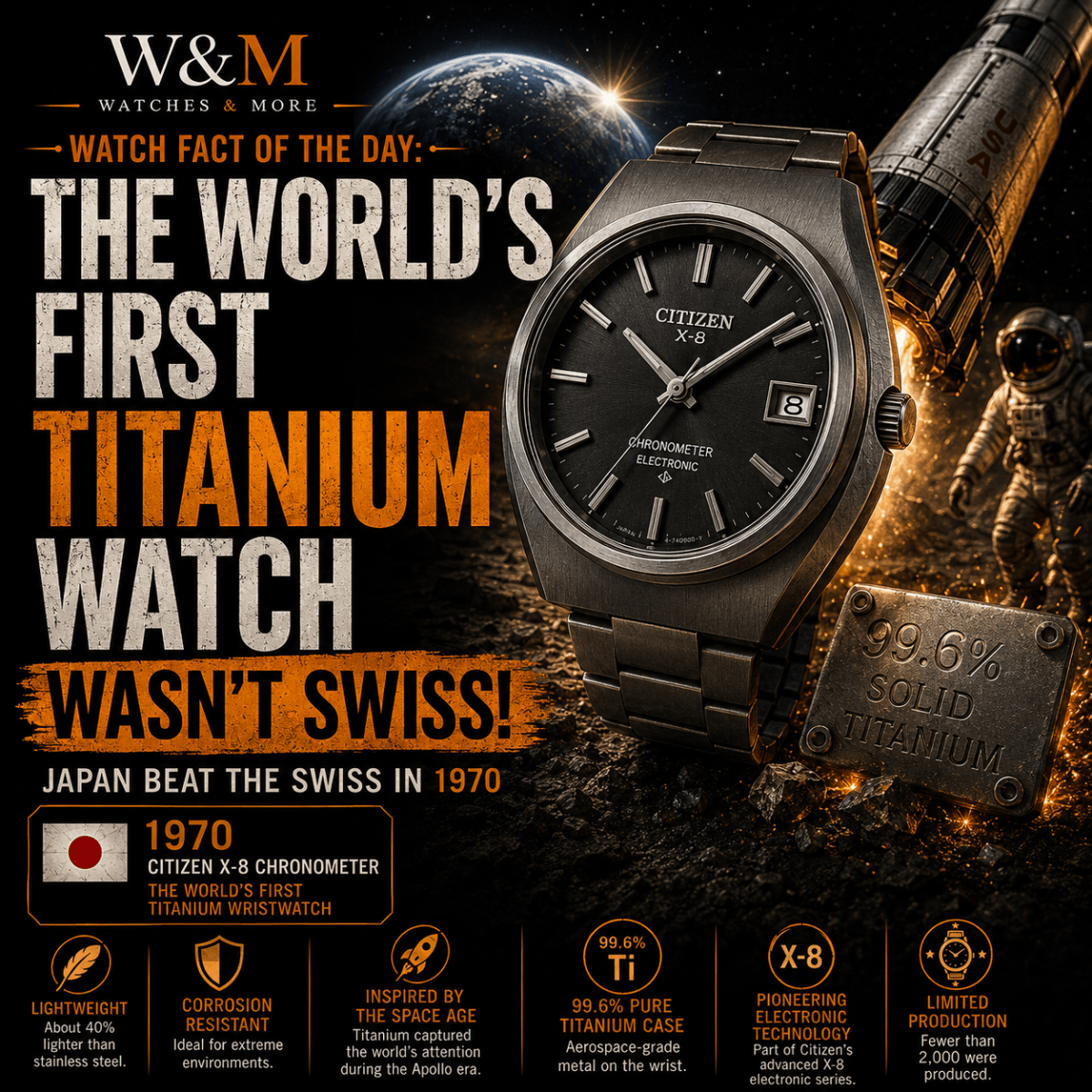
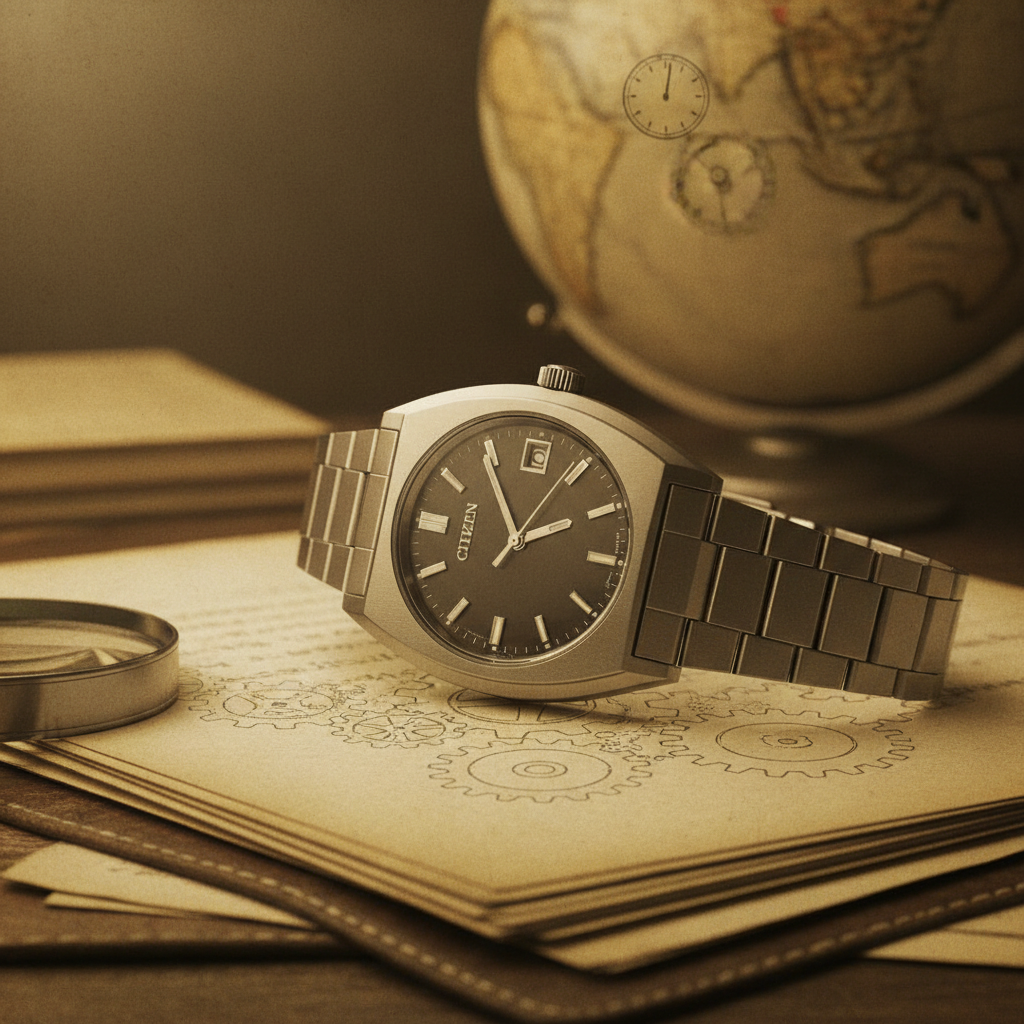
In 1970, Japanese watchmaker Citizen made history by releasing the X-8 Chronometer, recognized as the world’s first titanium wristwatch. While Swiss brands still favored traditional stainless steel and gold, Citizen boldly turned to aerospace-grade titanium—99.6% pure—to harness its lightweight, corrosion-resistant properties. This groundbreaking move not only preceded the Swiss by years but also set the stage for modern high-tech tool watches, long before titanium became a staple in luxury watchmaking.
The timing couldn’t have been better. During the 1960s, the Apollo program had focused global attention on titanium because of its light weight, strength and resistance to corrosion. Citizen’s engineers saw those same characteristics and realized they could make titanium an intriguing material for something far more personal: a wristwatch.
But actually manufacturing one was another matter. Titanium proved so troublesome that Citizen’s engineers nicknamed it “triple trouble” because of the difficulty involved in press-forming, machining and polishing it. Titanium shavings could stick to cutting tools, and achieving the beautifully finished surfaces expected of a watch case presented serious engineering challenges.
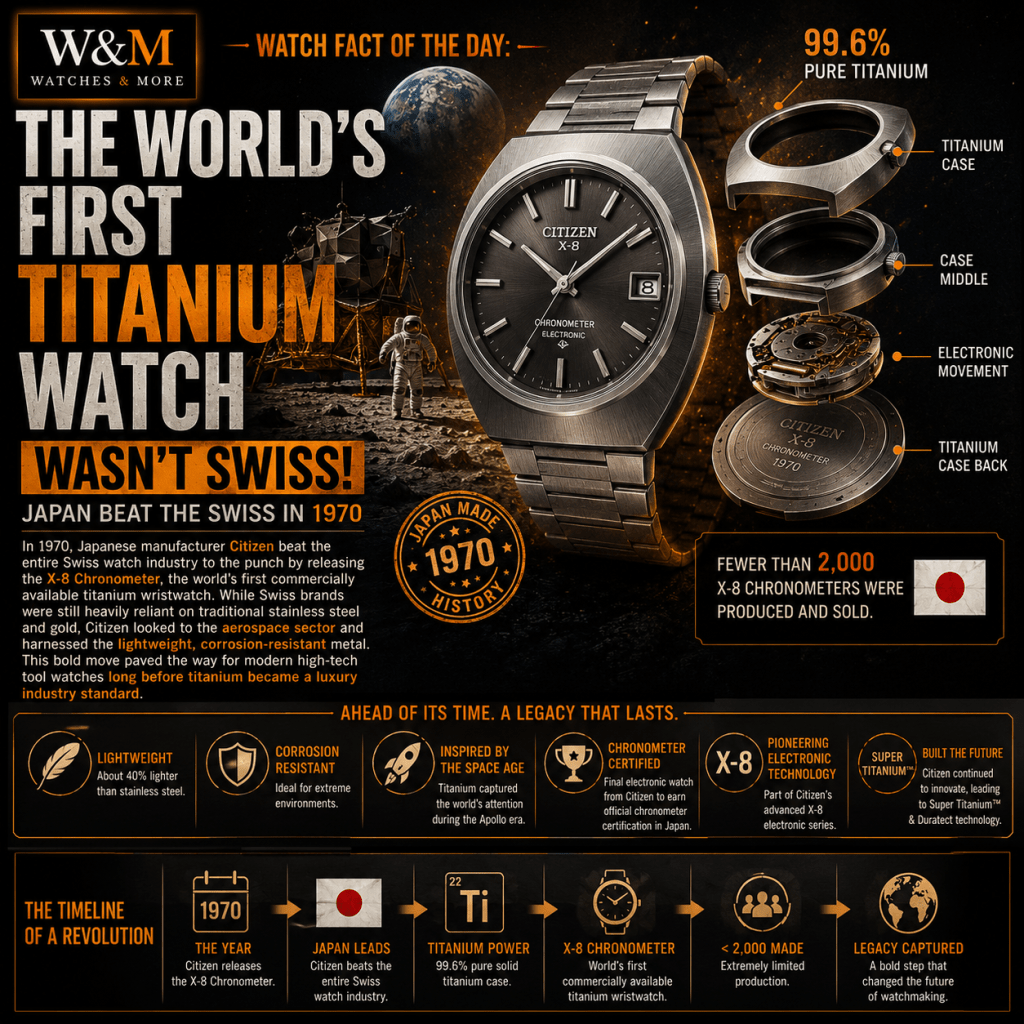
The resulting X-8 wasn’t merely an exotic case wrapped around a conventional mechanical watch, either. It belonged to Citizen’s pioneering electronic X-8 family, and the X-8 Chronometer became Citizen’s final electronic watch to receive official certification from the Japan Chronometer Inspection Institute. Production was brief: Citizen says fewer than 2,000 were sold.
More than half a century later, titanium has become a familiar material in everything from serious tool watches to high-end luxury pieces. Citizen itself continued developing the material for decades, eventually combining titanium processing with its Duratect surface-hardening technology to create Super Titanium™.
💡 Did You Know?
Titanium may be famous for being lightweight, but Citizen says pure titanium is about 40% lighter than stainless steel. That meant the 1970 Citizen X-8 Chronometer wasn’t just historically significant for using an exotic Space Age metal—it demonstrated that a watch case could be lighter, corrosion-resistant, and comfortable on the wrist without relying on conventional steel. More than half a century later, titanium has become one of watchmaking’s most desirable high-tech materials. ⌚🚀
Category: Watch History
Disclaimer: Every effort has been made to keep these watch facts accurate, but the world of horology is full of myths, disputed stories, and fascinating trivia. Consider these facts a starting point for discovery rather than the final word. If you have corrections or additional insights, let us know—we’re always happy to keep the record ticking in the right direction.
🕐 Discover more watch facts, reviews, and buying guides at WatchesAndMore
🛍️ You Might Also Like
As an Amazon Associate and affiliate partner, WatchesAndMore earns from qualifying purchases.

Browse all 142+ expert-reviewed watches →