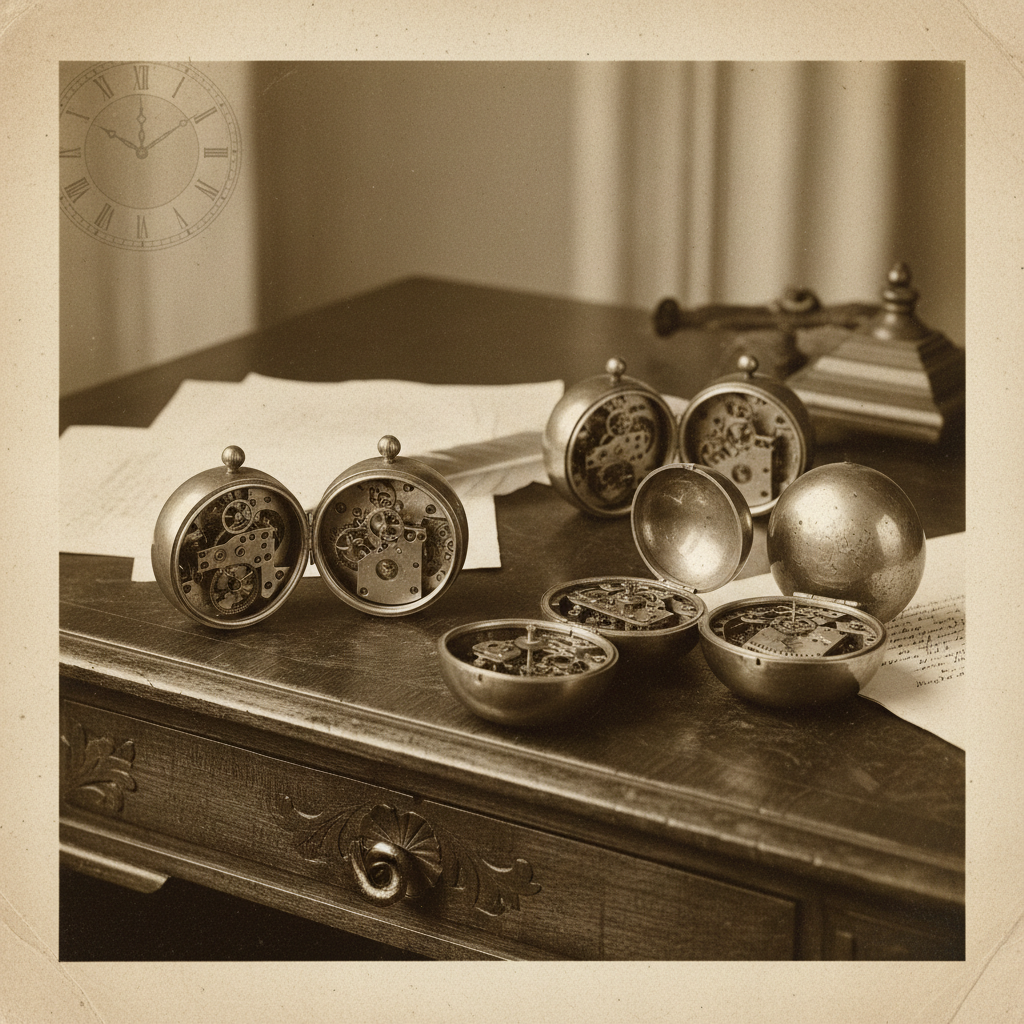

A pocket watch answers one question: what time is it? A combined watch and barometer adds another: what is the air pressure doing? These unusual objects bring two kinds of observation into a single portable case—and the documented examples are fascinating enough without stretching their history.

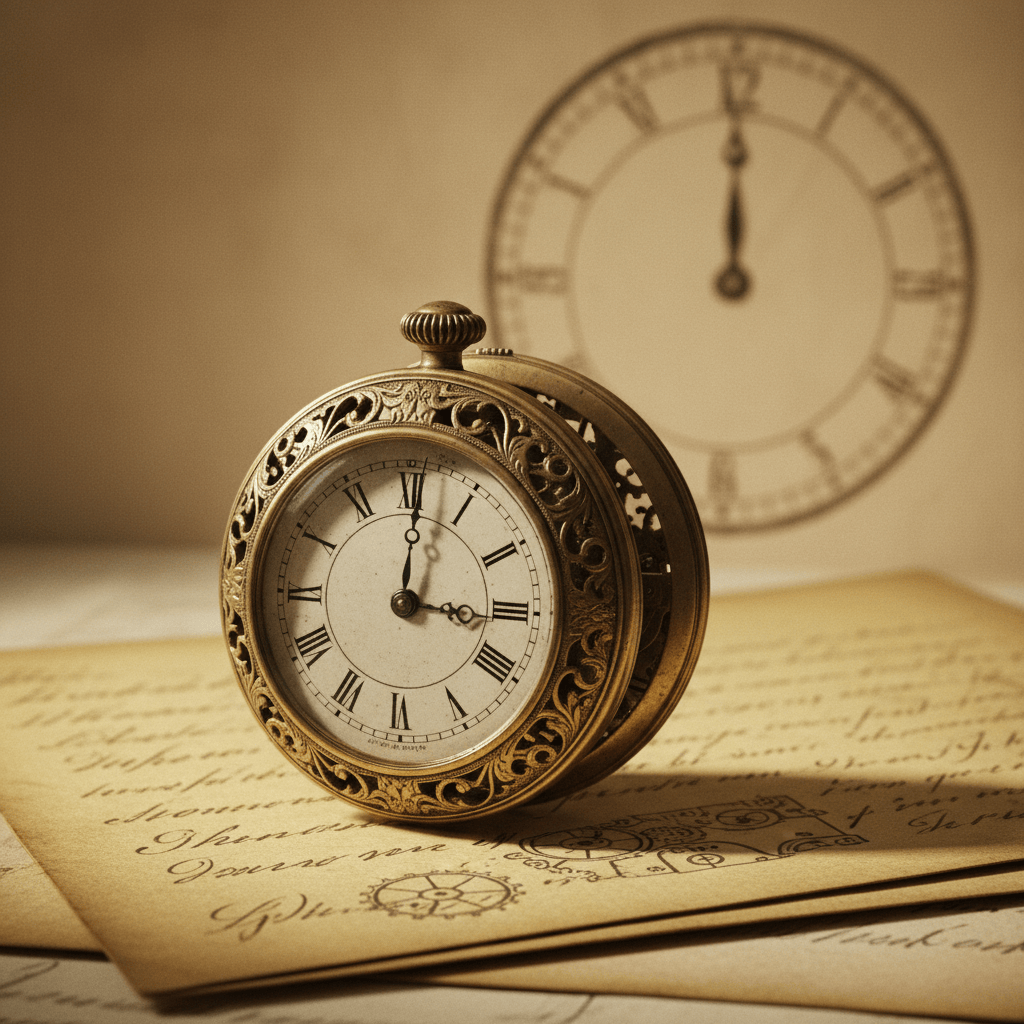
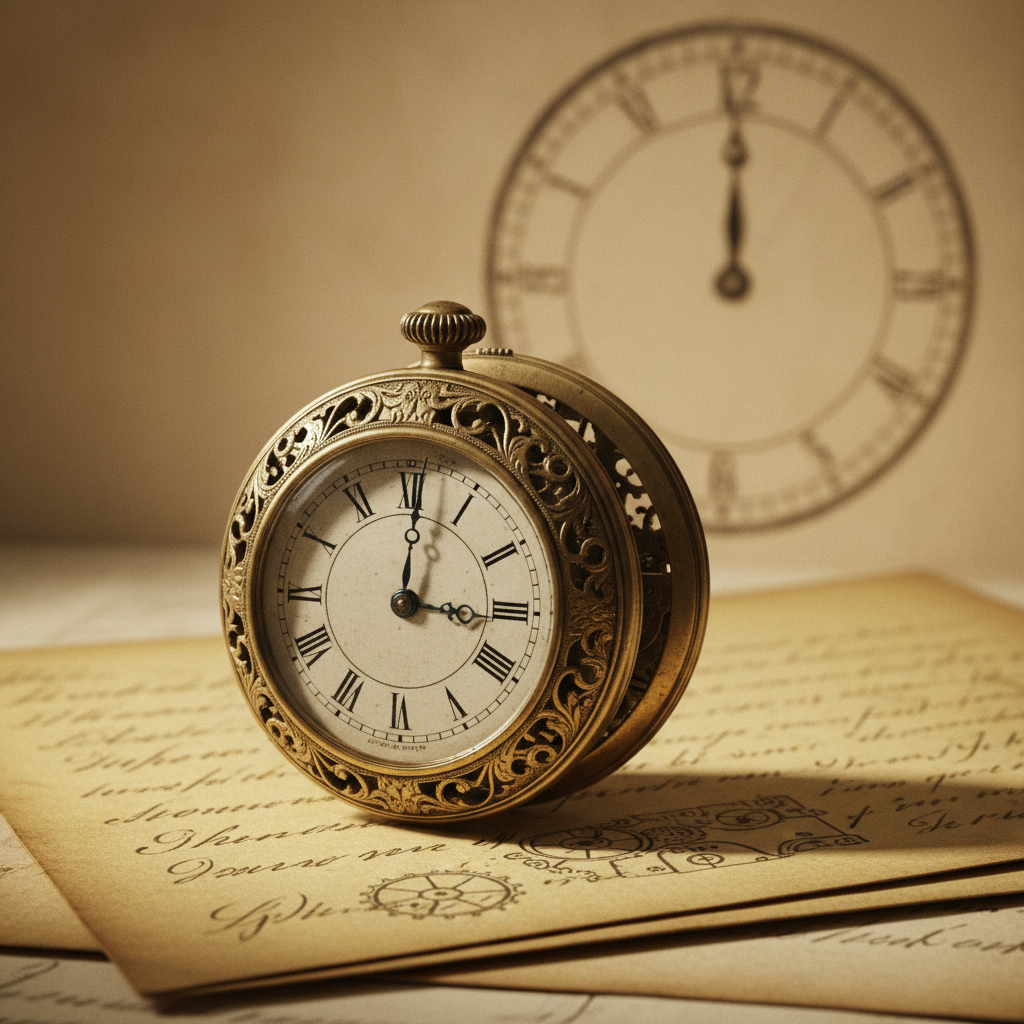
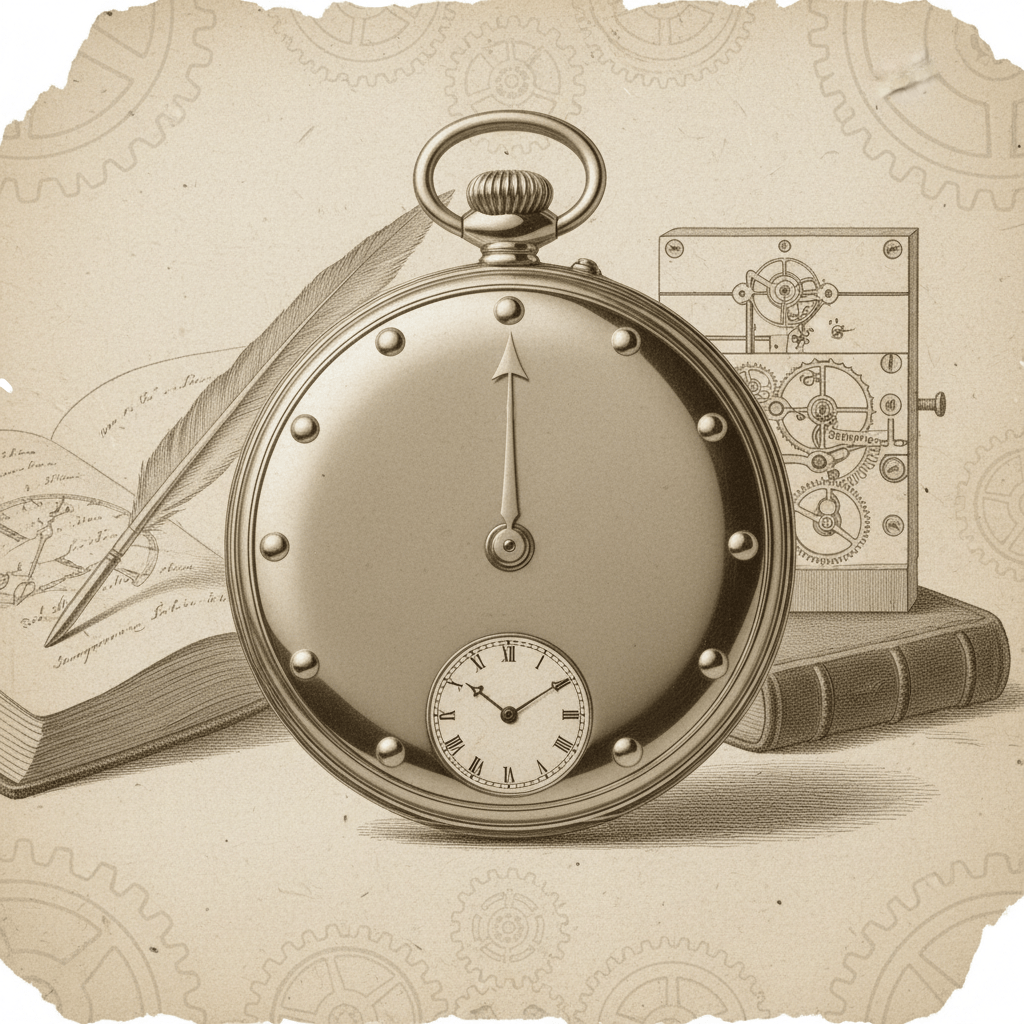
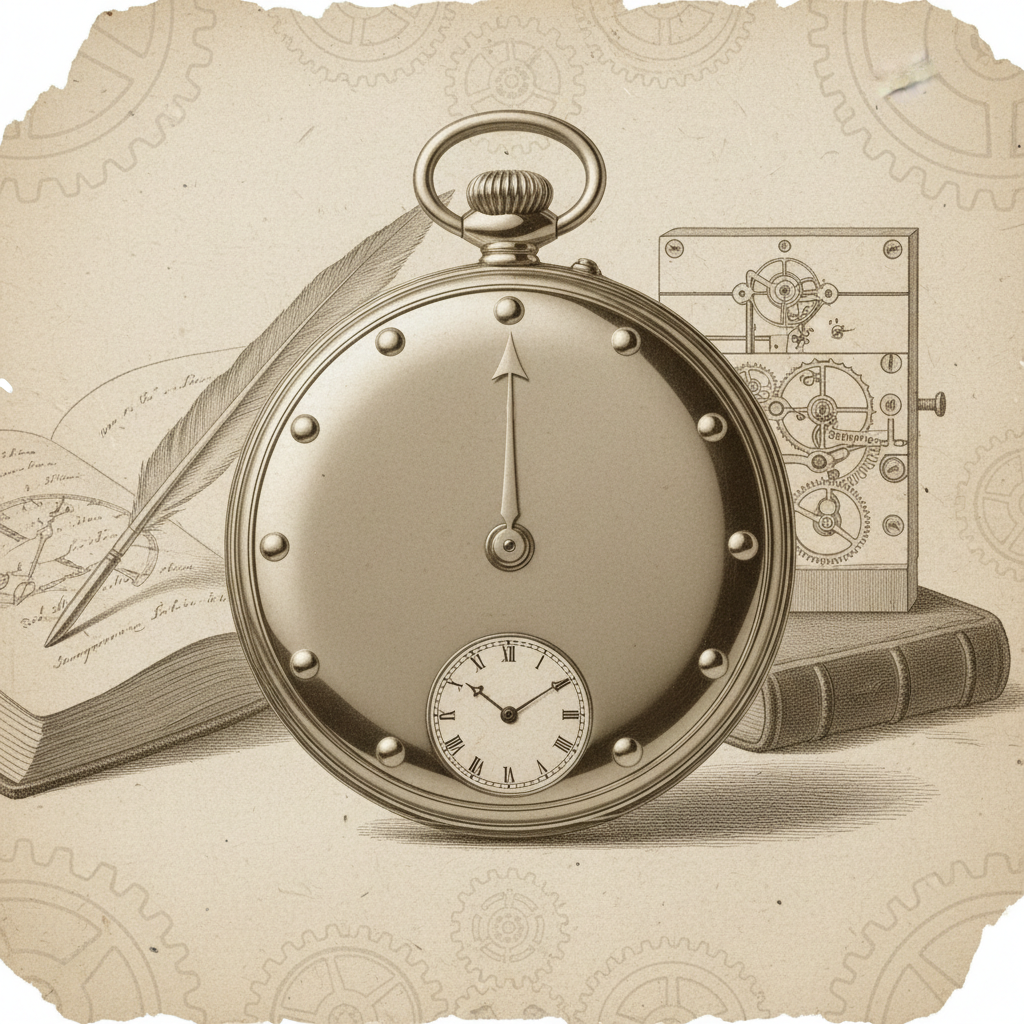
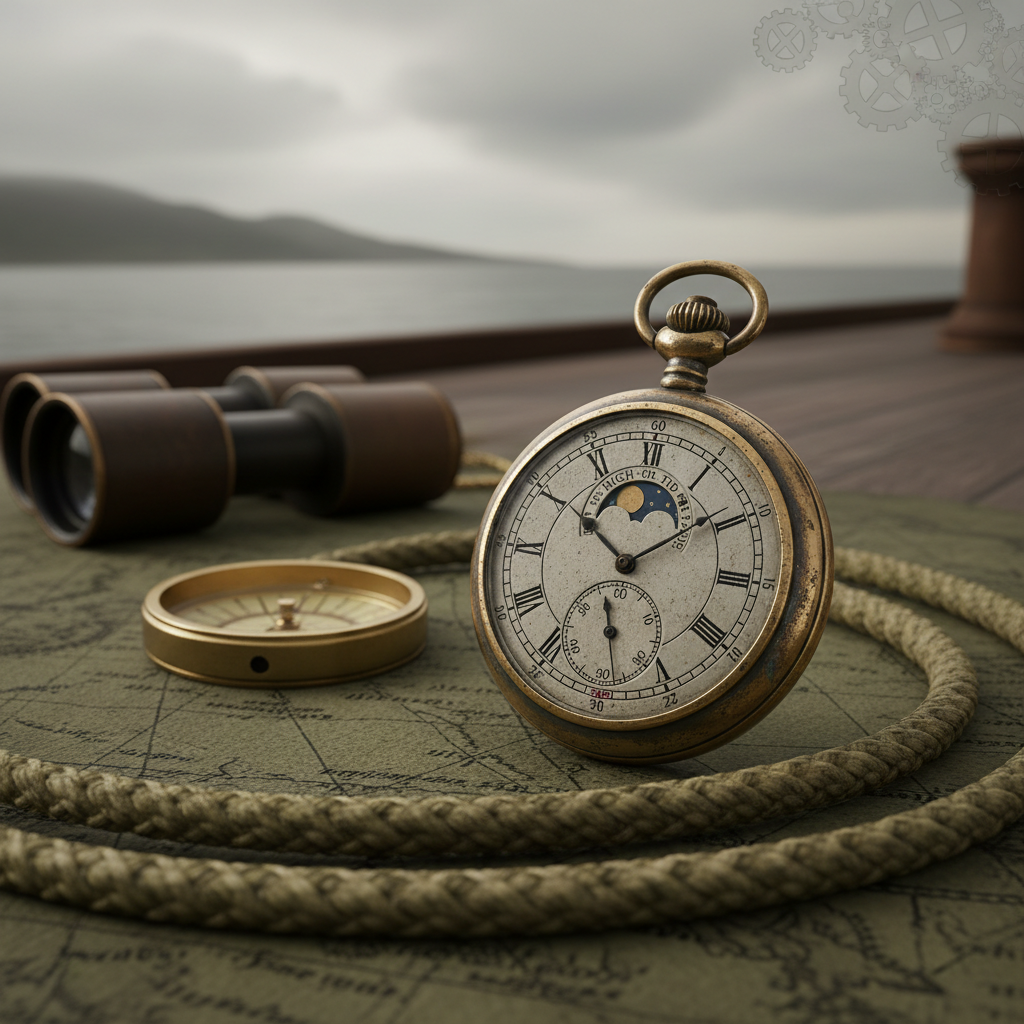
Illustration accompanying this story; not a photograph of either museum or auction example described below.
Two Instruments, One Pocket
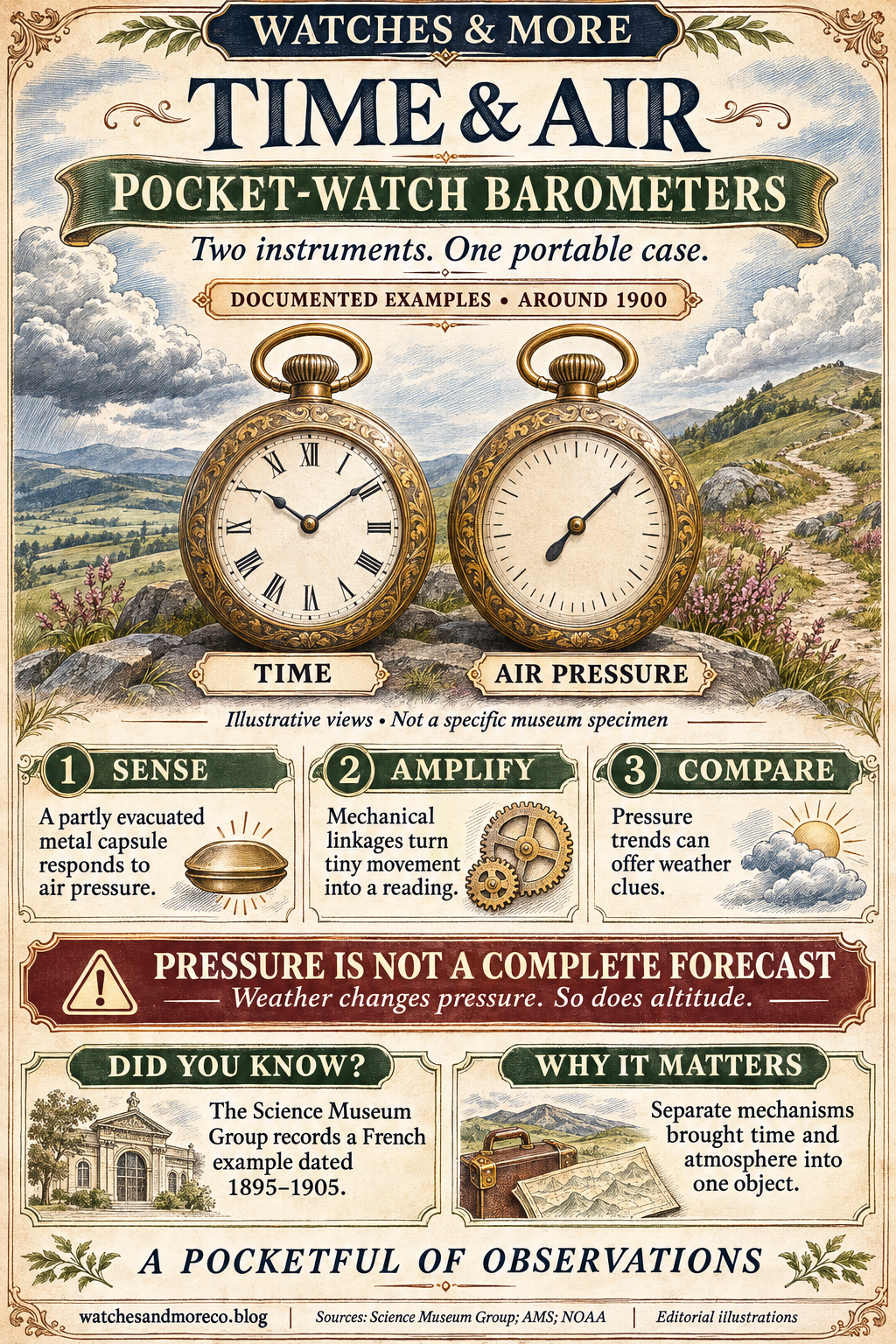
The Science Museum Group records a French combined pocket watch and aneroid barometer dated 1895–1905. Its maker is unknown. A separate Antiquorum catalogue documents a Swiss example made around 1900, with a watch dial and an engraved barometer ring. These records establish real examples around the turn of the twentieth century. They do not establish widespread adoption by mid-century sailors or a standard feature across pocket-watch production.
How an Aneroid Barometer Works
An aneroid barometer measures air pressure without a column of liquid. A partly evacuated metal capsule responds to changes in the surrounding pressure, and mechanical linkages magnify that movement into an indication. The timekeeping movement and the pressure sensor perform different jobs, even when they share a case. That is the appeal: a small object becomes both a clock and an observational instrument.
Weather Clues, With Limits
Pressure trends can help reveal changing atmospheric conditions, but a barometer does not deliver a complete forecast. Air pressure also changes with elevation. Carrying an instrument uphill can produce a different reading even without an approaching storm. To interpret a trend sensibly, you need context, comparable observations, and an understanding of where the reading was taken.
💡 Did You Know?
“Aneroid” identifies a type of pressure instrument, not a special watch movement. In the circa-1900 Swiss example catalogued by Antiquorum, the barometer mechanism sits above the back of the watch movement. The combination is a packaging achievement as much as a dial-design curiosity.
⭐ Why It Matters
These pieces invite us to see a watch as part of a wider history of portable instruments. Today, time, altitude, and weather information can share a screen. A mechanical combination makes that relationship tangible: separate mechanisms, separate limitations, one object in the hand. For collectors, identifying what each display actually measures is more rewarding than treating every extra scale as decoration.
Keep Exploring
Read our Seiko Speedtimer profile for a very different approach to combining useful indications. Explore more timepieces in the WatchesAndMore watch database.
Sources
Science Museum Group: combined pocket watch and aneroid barometer; Antiquorum: Watch Barometer Patent, lot 370; American Meteorological Society: aneroid barometer; NOAA: air pressure.
Your Turn
Would you choose a pocket instrument that tracks the atmosphere, or do you prefer your watch to concentrate on time?
Category: Watch Facts
Disclaimer: Every effort has been made to keep these watch facts accurate, but the world of horology includes disputed stories and changing product information. Treat this article as a starting point for discovery and consult the linked records or manufacturer information for the exact timepiece. Corrections and additional evidence are welcome in the comments.
🕐 Discover more watch facts, reviews, and buying guides at WatchesAndMore.
🛍️ Explore designs, gifts and more at the W&M companion shop.