
📅 Wednesday, July 29, 2026
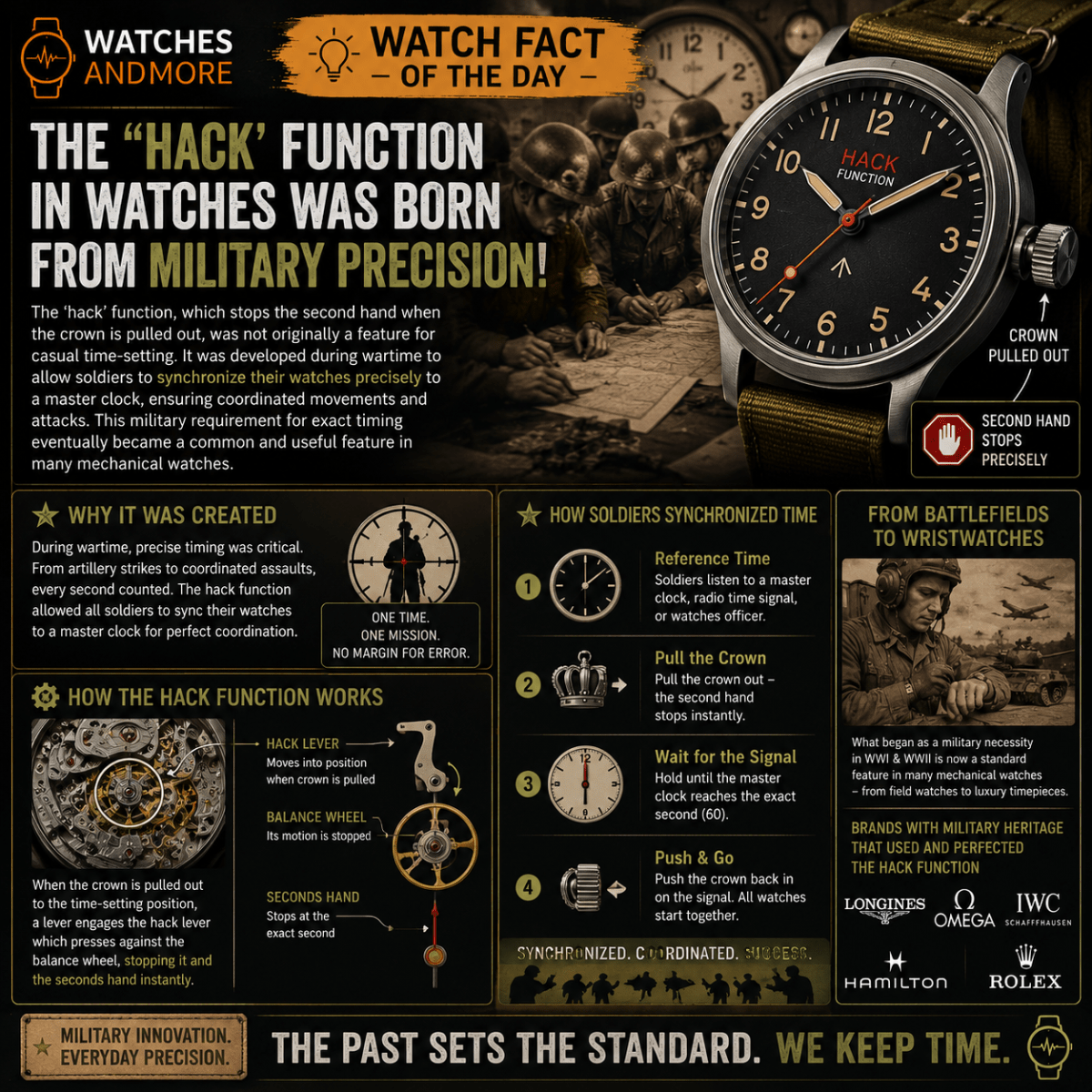
The ‘hack’ function, which stops the second hand when the crown is pulled out, was not originally a feature for casual time-setting. It was developed during wartime to allow soldiers to synchronize their watches precisely to a master clock, ensuring coordinated movements and attacks. This military requirement for exact timing eventually became a common and useful feature in many mechanical watches.
The term “hack” comes from the military phrase “hack your watches,” an order given to troops to synchronize their timepieces to the exact second. By stopping the seconds hand, every soldier could wait for the command to resume the movement simultaneously, ensuring perfectly coordinated operations. Whether planning artillery barrages, airborne assaults, or naval maneuvers, precise timing often meant the difference between success and failure.
Early military watches from manufacturers such as Longines, Omega, Hamilton, IWC, and later Rolex incorporated hacking seconds to meet stringent military specifications. During World War II, synchronized timekeeping became essential across all branches of the armed forces. Pilots coordinated bombing runs, navigators calculated precise positions, and infantry units executed attacks based on synchronized watches rather than unreliable battlefield communications.
Today, the hack function is a standard feature on many mechanical watches, from affordable field watches to luxury Swiss timepieces. While most owners use it simply to set their watch accurately against an atomic clock or smartphone, its origins are rooted in one of the most demanding environments imaginable. It’s a small complication with a fascinating history, demonstrating how military innovation often finds its way into everyday life.
💡 Did You Know?
Many modern watch enthusiasts still synchronize their mechanical watches to internet-based atomic clocks or official time signals using the hack function. Pulling the crown at exactly 60 seconds, waiting for the reference clock to roll over to the next minute, and then pushing the crown back in allows the watch to be set almost perfectly to the second—a practice that continues a military tradition dating back more than 80 years.
Category: Watch History
Disclaimer: Every effort has been made to keep these watch facts accurate, but the world of horology is full of myths, disputed stories, and fascinating trivia. Consider these facts a starting point for discovery rather than the final word. If you have corrections or additional insights, let us know—we’re always happy to keep the record ticking in the right direction.
🕐 Discover more watch facts, reviews, and buying guides at WatchesAndMore
🛍️ You Might Also Like
As an Amazon Associate and affiliate partner, WatchesAndMore earns from qualifying purchases.
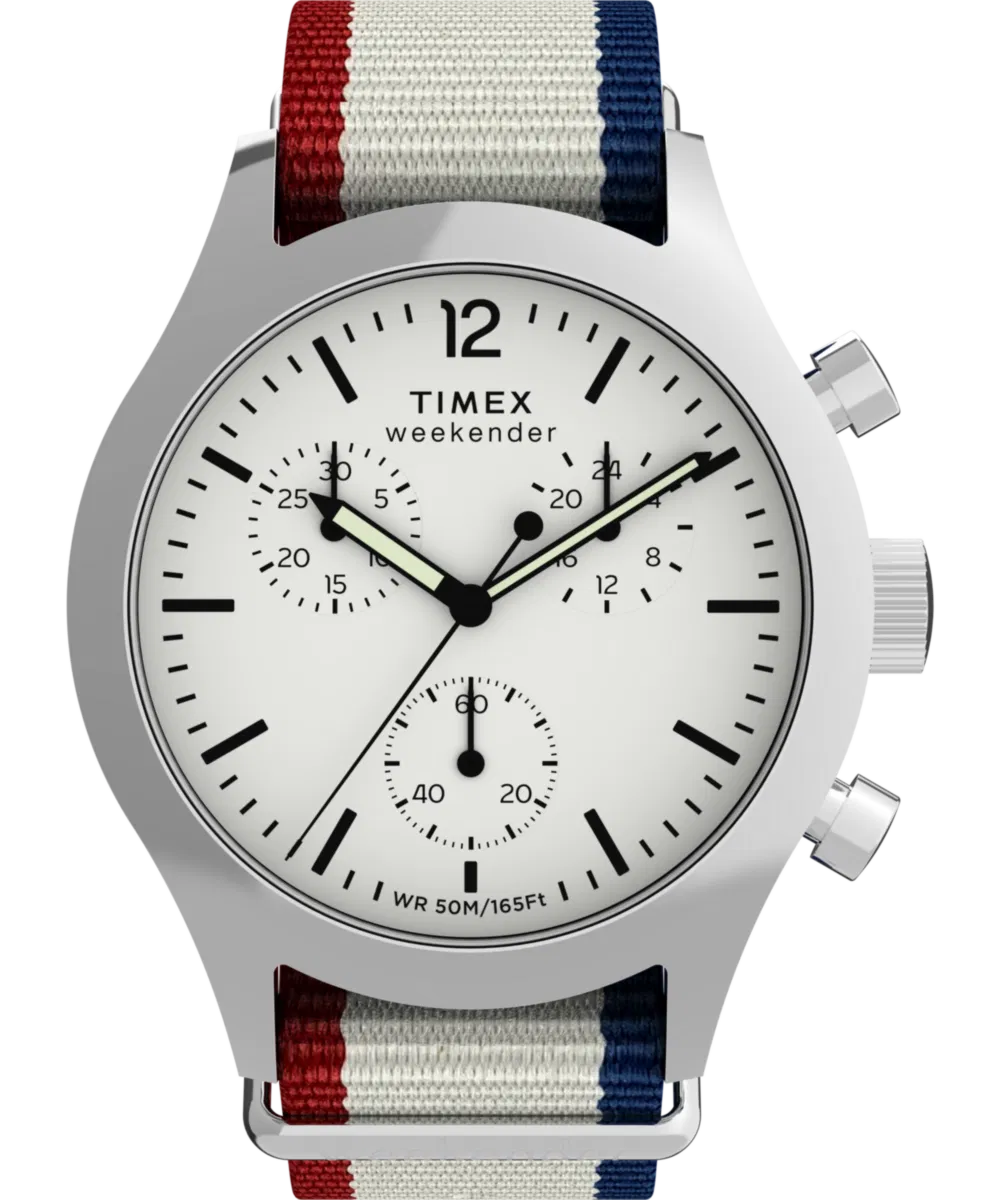
Timex
★★★★★ 4.5 (3,041 reviews)
$79

Browse all 142+ expert-reviewed watches →
☕ Help Support WatchesAndMore
If you enjoyed this article and would like to help support WatchesAndMore, consider visiting my Etsy Shop or browsing my designs on Redbubble. Every purchase helps support the continued creation of watch reviews, historical articles, buying guides, videos, and all the free content you enjoy here on the website and on YouTube.
Your support allows me to spend more time researching fascinating stories from the world of horology, testing new watches, and producing high-quality content for collectors and enthusiasts around the globe. Whether you’re looking for unique watch-themed merchandise or simply want to support the channel, every order is genuinely appreciated. Thank you for being part of the WatchesAndMore community—your support helps keep the passion for watches alive! ⌚🍻





 WatchesAndMoreCO