

📅 Sunday, September 13, 2026
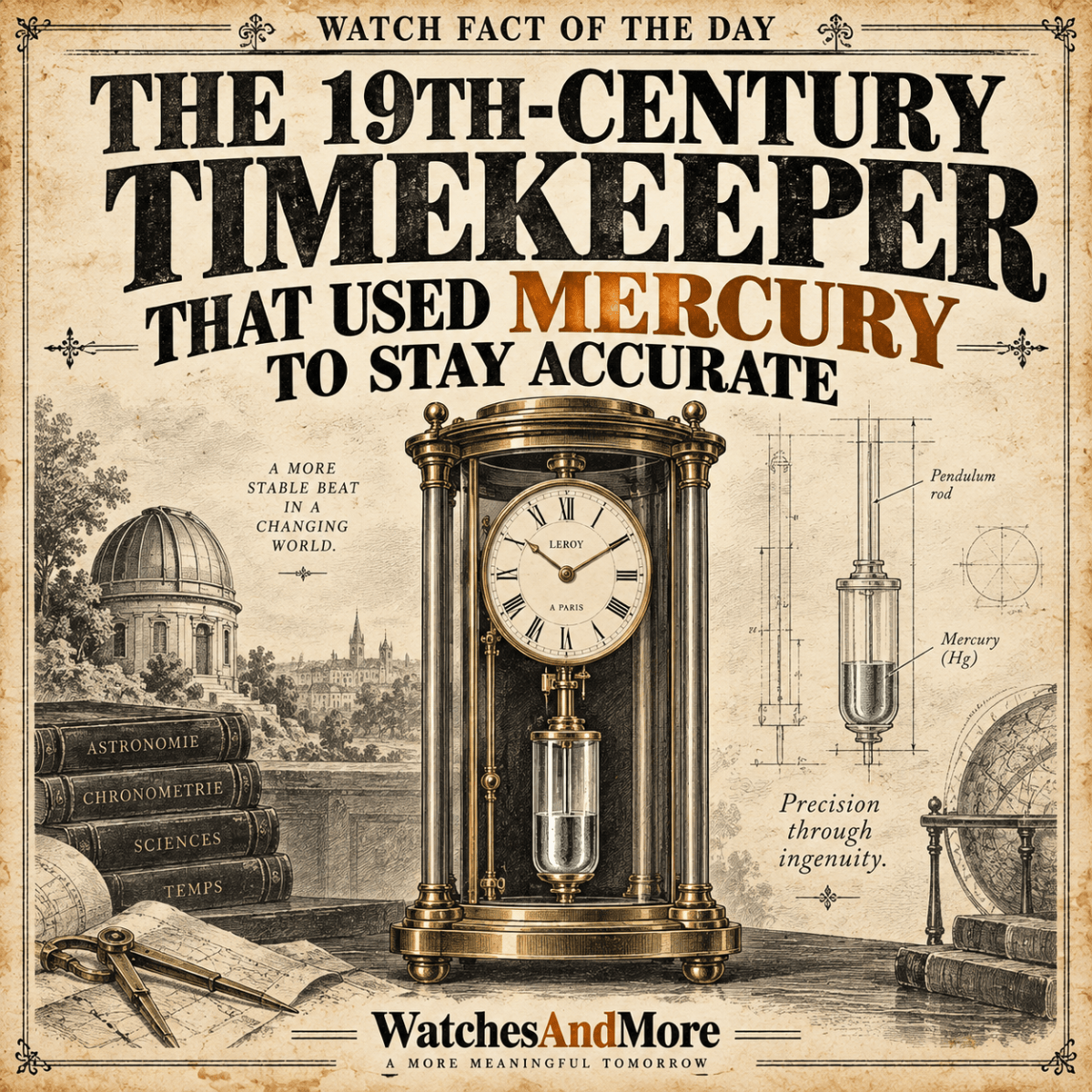
Long before modern alloys and electronic regulation, precision clockmakers searched for clever ways to fight one of timekeeping’s greatest enemies: temperature. As the weather changed, pendulum rods expanded and contracted, altering a clock’s rate. To solve the problem, some 19th-century regulators and observatory clocks used a mercurial pendulum, in which a jar of mercury at the bottom of the pendulum helped offset those changes. As the pendulum rod expanded downward in warmer temperatures, the mercury’s surface rose upward, compensating for the shift and helping the clock maintain far better accuracy.
The idea was both elegant and scientifically ingenious. Rather than fighting physics directly, clockmakers used one physical reaction to counteract another. This made mercurial pendulums an important step in the long quest for precision timekeeping, especially in observatory and regulator clocks where even tiny errors mattered. Before quartz and atomic timekeeping, this was cutting-edge technology—proof that great horology has always been as much about clever engineering as beautiful craftsmanship.
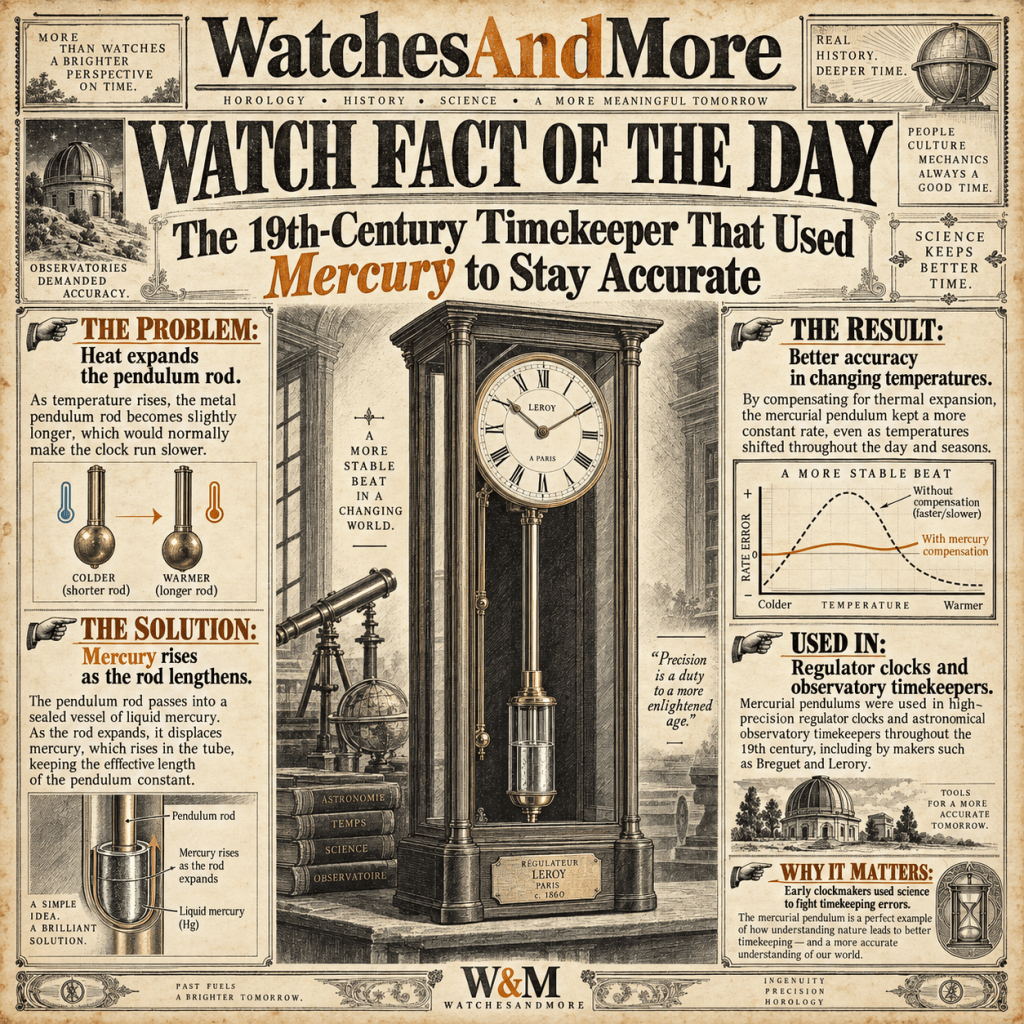
Of course, mercury came with obvious drawbacks. It was heavy, delicate to handle, and hazardous by modern standards, which meant these systems were never especially practical outside high-precision clockmaking. Over time, improved compensation pendulums and safer materials replaced them. Still, the mercurial pendulum remains one of the most fascinating examples of watchmakers and clockmakers using the science of their era to solve the eternal problem of keeping better time.
💡 Did You Know?
The mercurial pendulum wasn’t designed to make a clock run faster or slower on its own—it was designed to help the clock stay consistent as temperatures changed. That distinction made it a major breakthrough for scientific and observatory-grade timekeeping.
⭐ Why It Matters
This story shows that horology has never been just about gears and springs. It has always been about creative problem-solving. Long before computers and electronics, clockmakers were already using chemistry, physics, and materials science to chase greater precision.
Category: Fun Quirk
Disclaimer: Every effort has been made to keep these watch facts accurate, but the world of horology is full of myths, disputed stories, and fascinating trivia. Consider these facts a starting point for discovery rather than the final word. If you have corrections or additional insights, let us know—we’re always happy to keep the record ticking in the right direction.
🕐 Discover more watch facts, reviews, and buying guides at WatchesAndMore
🛍️ You Might Also Like
As an Amazon Associate and affiliate partner, WatchesAndMore earns from qualifying purchases.