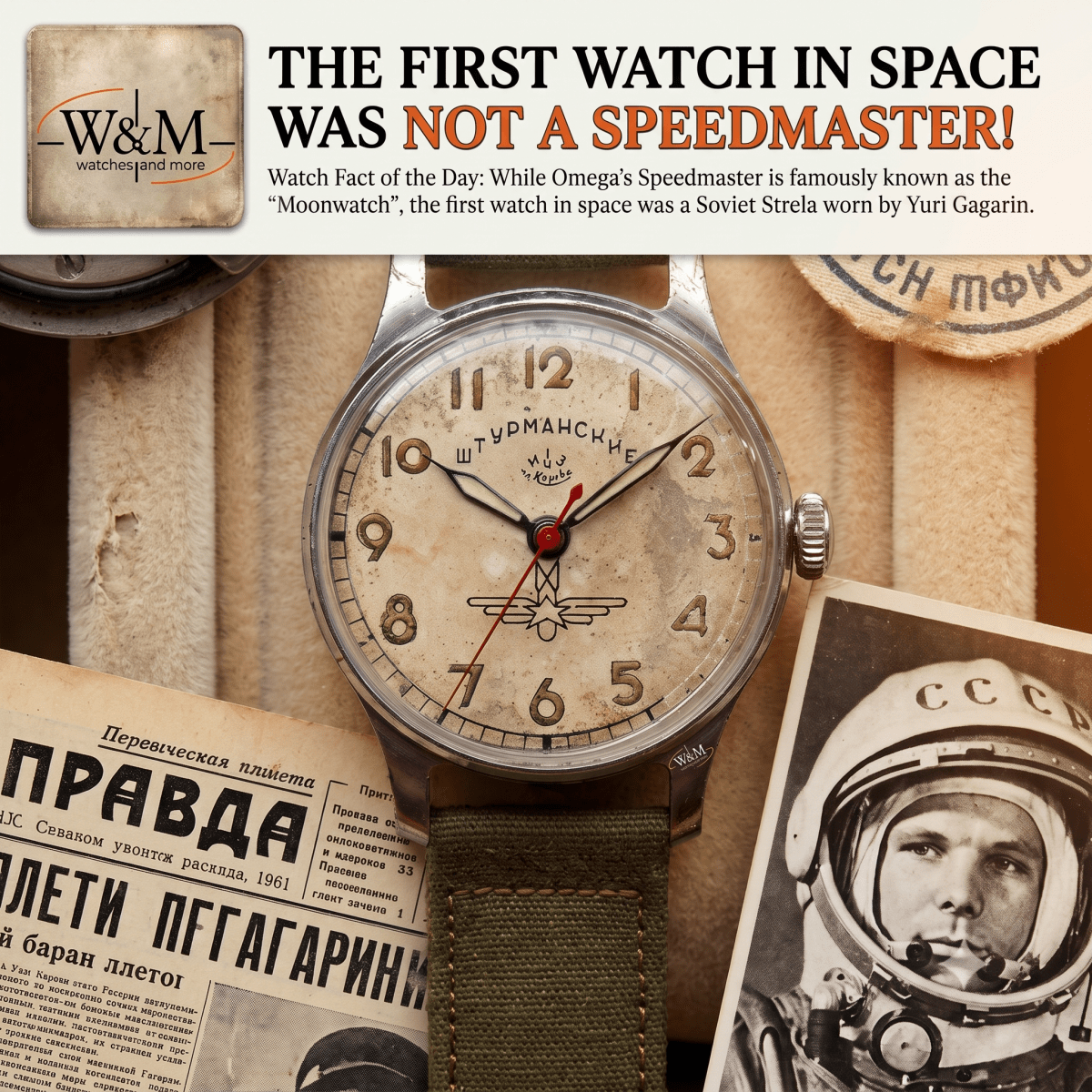
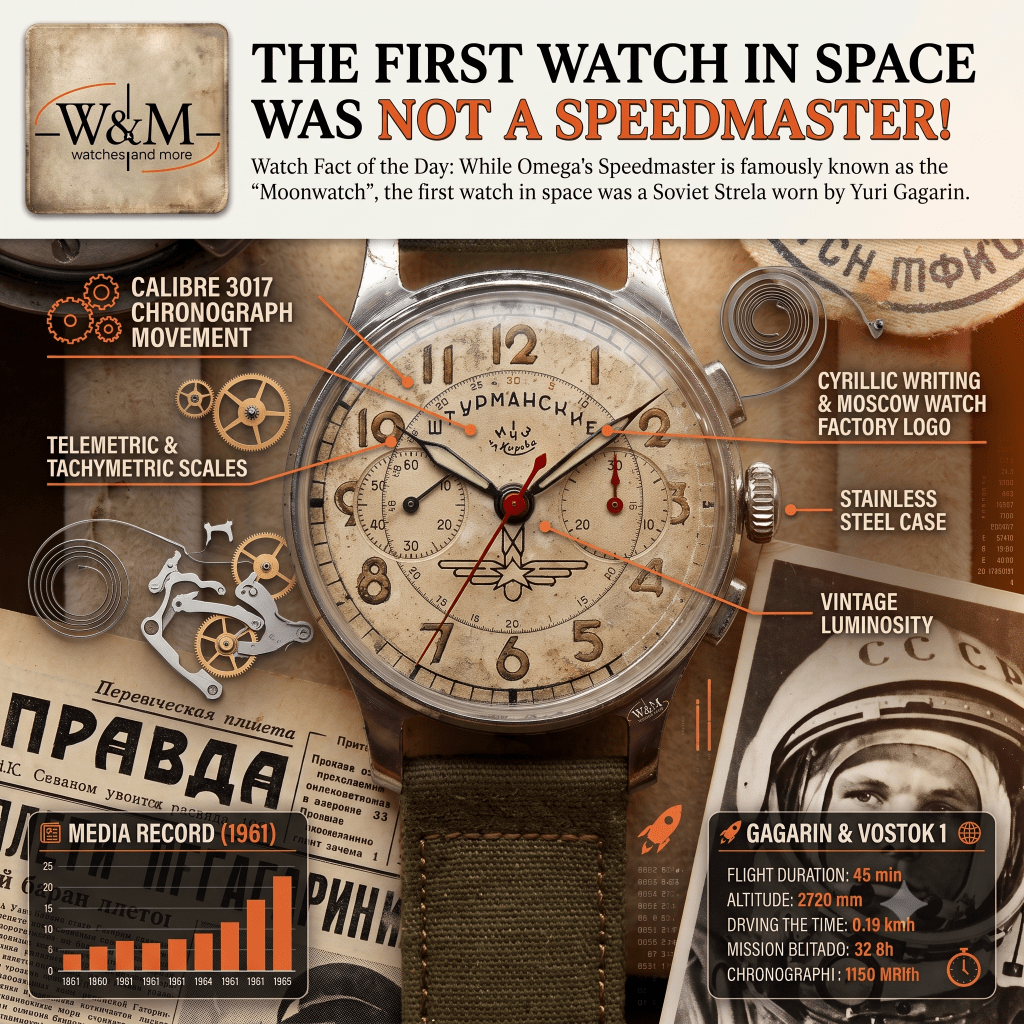
So, here’s the scoop: while the Omega Speedmaster is strutting around as the famous ‘Moonwatch’, it’s actually the Russian Strela that rocked the first space mission, making its debut on Yuri Gagarin’s wrist in 1961. Yep, the Soviets were first! Gagarin’s Vostok 1 mission lasted just 108 minutes, but it was a 108-minute thrill ride that sent humanity into orbit, with the sturdy Strela keeping time like a pro. The Speedmaster didn’t join the space party until 1965, earning its Moonwatch title in 1969. So, while the Speedmaster gets the lunar glory, don’t forget the understated Strela, the original space watch trendsetter!
📅 Tuesday, July 21, 2026
While Omega’s Speedmaster is famously known as the ‘Moonwatch’ and the first watch worn on the Moon, the very first wristwatch to journey into space was actually a Russian Strela, worn by Yuri Gagarin in 1961 during his Vostok 1 mission. This often-overlooked detail highlights the pioneering efforts of Soviet cosmonauts in the early space race. The Strela, a chronograph, predates the Speedmaster’s official qualification for space by several years.
Gagarin’s historic Vostok 1 mission on April 12, 1961, lasted just 108 minutes, but it forever changed human history. As the first person to orbit the Earth, every piece of equipment he carried became part of spaceflight legend—including the watch on his wrist. The Soviet-made Strela chronograph was valued for its robust mechanical construction and precise timekeeping, qualities that made it a dependable companion during one of humanity’s greatest achievements.
The Omega Speedmaster wouldn’t enter the history books until several years later. After rigorous testing by NASA in 1965, the Speedmaster became officially certified for all manned space missions and went on to accompany astronauts throughout the Gemini and Apollo programs. Its defining moment came in 1969 when Buzz Aldrin wore his Speedmaster onto the lunar surface, earning the model its enduring “Moonwatch” nickname. While the Speedmaster became synonymous with lunar exploration, the Strela will always hold the distinction of being among the earliest watches worn during mankind’s first ventures into space.
Today, both watches occupy legendary status in horology, each representing a different chapter of the Space Race. The Strela symbolizes the Soviet Union’s groundbreaking achievement of sending the first human into orbit, while the Speedmaster embodies NASA’s remarkable journey to the Moon. Together, they remind us that some of history’s greatest watches earned their reputations not in display cases or advertisements, but by accompanying explorers into the most unforgiving frontier ever encountered.
🚀 Why It Matters
The story of the first watch in space is a reminder that horological history is often more nuanced than popular legend suggests. While the Speedmaster rightly deserves its place as the Moonwatch, the Strela deserves recognition for accompanying humanity’s very first journey beyond our planet—a milestone that forever changed both space exploration and watchmaking history.
Category: Watch History
Disclaimer: Every effort has been made to keep these watch facts accurate, but the world of horology is full of myths, disputed stories, and fascinating trivia. Consider these facts a starting point for discovery rather than the final word. If you have corrections or additional insights, let us know—we’re always happy to keep the record ticking in the right direction.
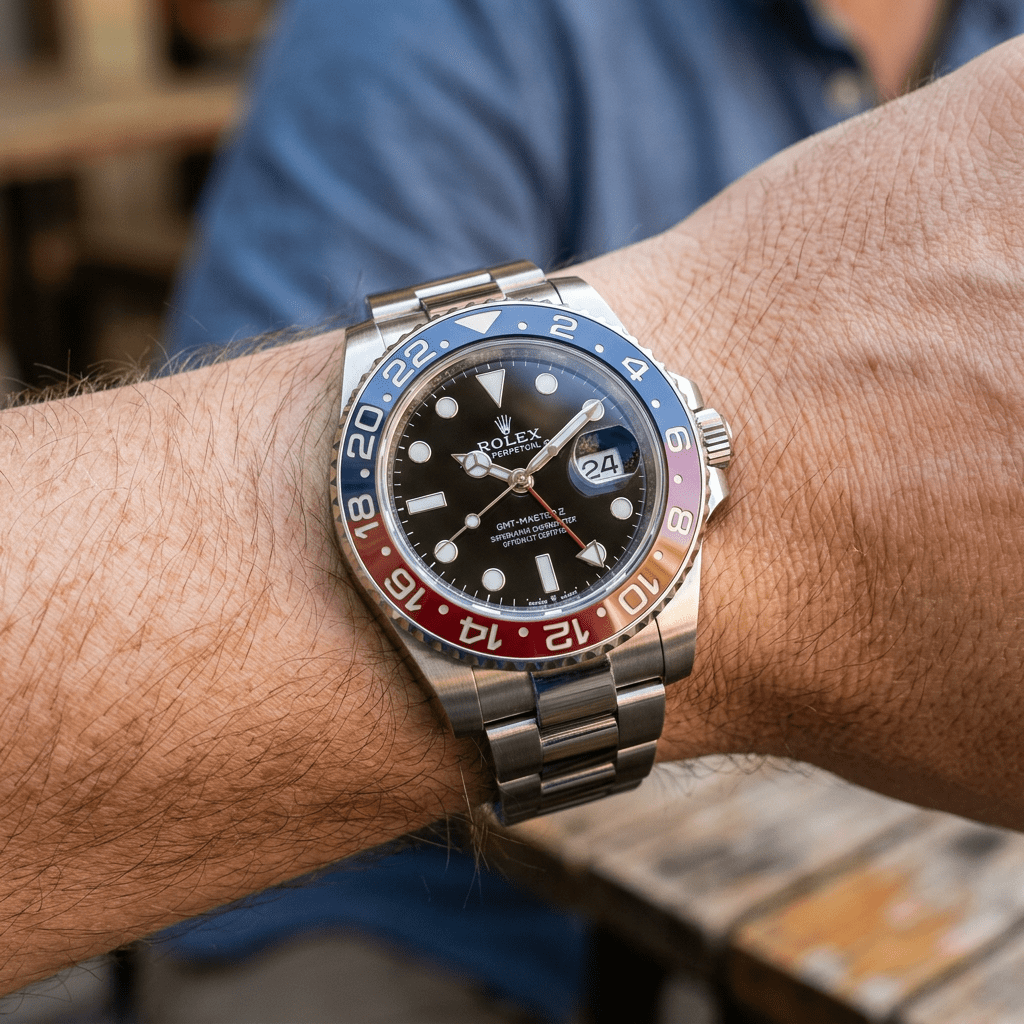
Once upon a time in the 1950s, pilots had a dilemma: how to tell if it was cocktail or coffee time at 30,000 feet. Enter the Rolex GMT-Master with its dizzying blue and red ‘Pepsi’ bezel, a brilliant dual-tone decision that transformed navigation into a colorful affair. Designed to help aviators avoid costly blunders, it echoed the Pepsi logo, leading collectors to nickname it the “Pepsi” bezel. Fast forward, and this practical watch feature turned into one of the most coveted horological icons. Who knew that saving pilots from time zone confusion could lead to a frenzy in watch fashion! Cheers to that!
📅 Friday, July 17, 2026
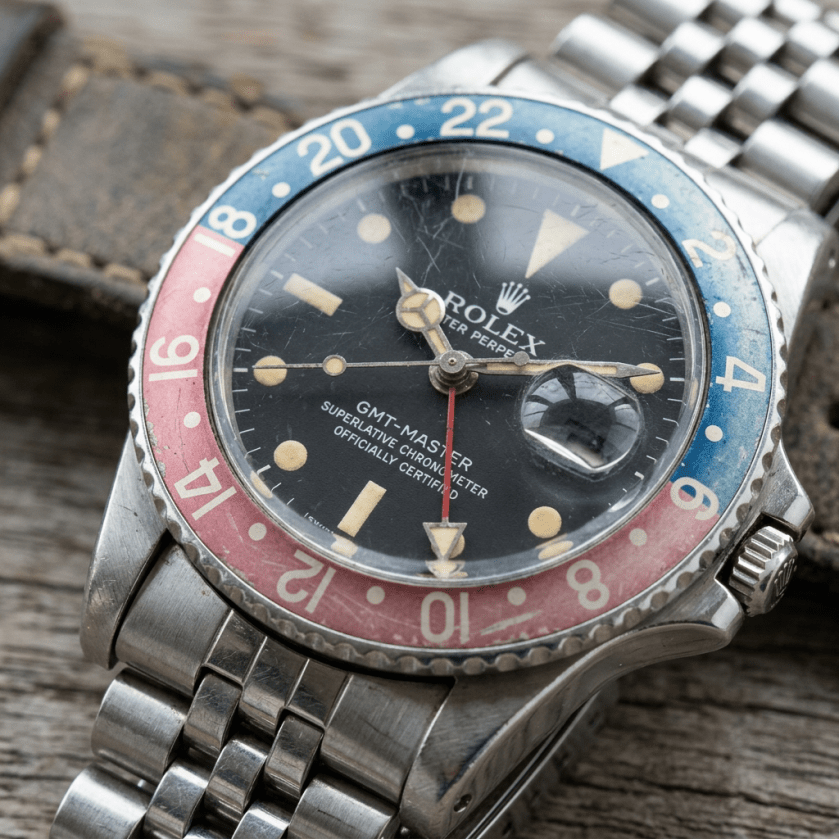
The iconic blue and red ‘Pepsi’ bezel, famously associated with the Rolex GMT-Master, was originally developed for a practical reason: to distinguish between day and night hours for pilots. The red portion indicated daylight hours, while the blue represented nighttime, making it easier for aviators to track time across multiple zones. Its distinctive color combination was a functional design choice that unexpectedly became one of horology’s most recognizable and beloved aesthetic features.
A close-up of a vintage Rolex GMT-Master watch showcasing its aged bezel and worn dial.
The story began in the 1950s when commercial aviation was rapidly expanding and international pilots needed an easier way to keep track of multiple time zones. Working closely with Pan American World Airways (Pan Am), Rolex introduced the GMT-Master in 1954 with a rotating 24-hour bezel and an additional GMT hand. The two-tone bezel wasn’t chosen simply because it looked attractive—it allowed pilots to instantly distinguish between daytime and nighttime hours at a glance, reducing the chance of costly navigation errors during long-haul flights.
Over the decades, the blue-and-red bezel took on a life of its own. Collectors affectionately nicknamed it the “Pepsi” bezel because its colors resembled the famous soft drink’s logo, a nickname that Rolex never officially adopted but enthusiasts embraced worldwide. The success of the Pepsi bezel inspired a whole family of colorful GMT nicknames, including the “Coke” (red and black), “Batman” (blue and black), and “Root Beer” (brown and black), proving just how influential a functional design decision had become.
Today, the Pepsi bezel is one of the most recognizable features in all of watchmaking. Modern ceramic versions are incredibly difficult to manufacture because creating a perfectly crisp, two-color ceramic insert requires advanced engineering and precision. What started as a practical solution for airline pilots has evolved into one of the most sought-after and enduring design icons in horological history—a perfect example of how great functionality can become timeless style.
Category: Watch History
Disclaimer: Every effort has been made to keep these watch facts accurate, but the world of horology is full of myths, disputed stories, and fascinating trivia. Consider these facts a starting point for discovery rather than the final word. If you have corrections or additional insights, let us know—we’re always happy to keep the record ticking in the right direction.
So, the Jaeger-LeCoultre Reverso watch is a total classic that came out in the 1930s, designed to save watch faces during polo matches. British officers in India were tired of breaking their watches, so they asked Jacques-David LeCoultre for a solution. Enter César de Trey, who teamed up with LeCoultre and designer René-Alfred Chauvot to create the flip case that protects the crystal. This rugged design soon became an Art Deco icon with a sleek look and personalization options. Today, the Reverso is still a luxury favorite, proving great design lasts.
📅 Wednesday, July 15, 2026
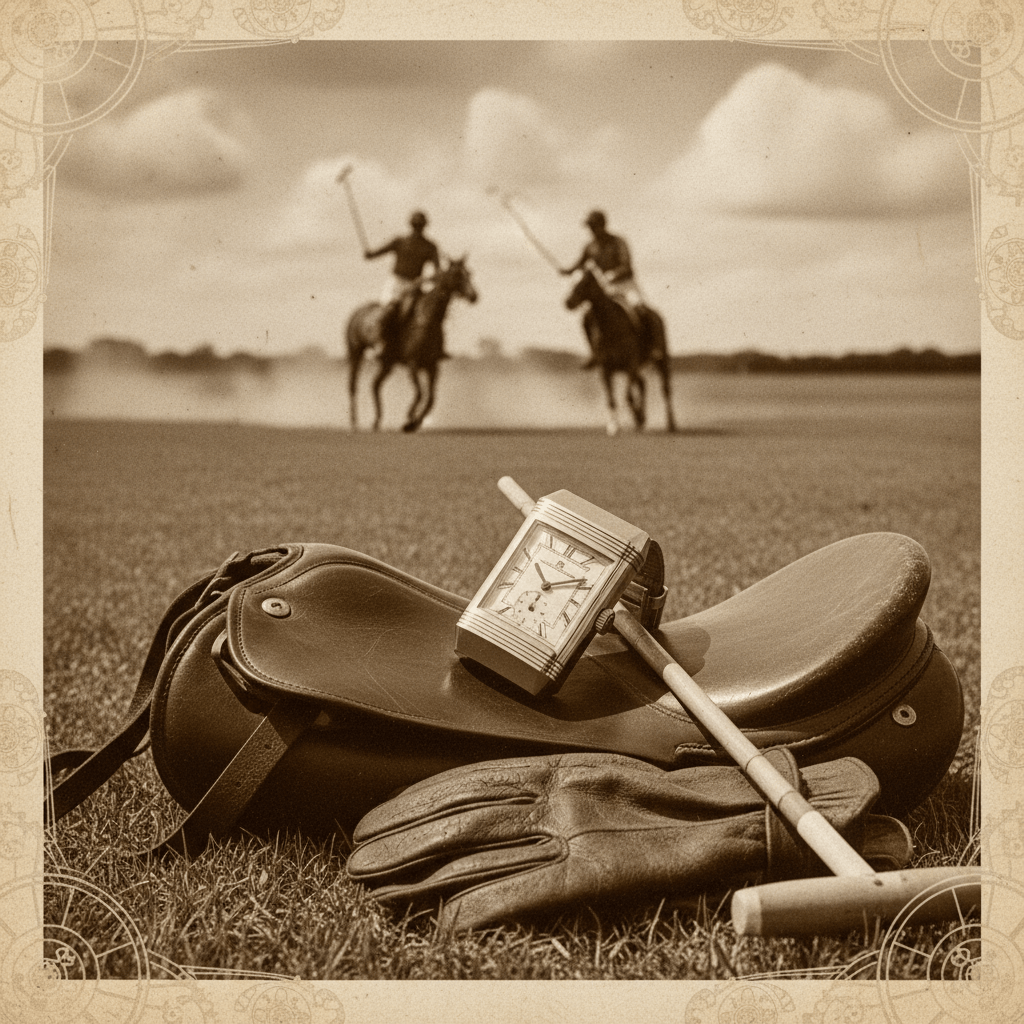
The iconic Jaeger-LeCoultre Reverso watch, famous for its swiveling case, was originally conceived in the early 1930s to protect the watch crystal during rough-and-tumble polo matches. British officers stationed in India, tired of smashing their watch faces during games, challenged Jacques-David LeCoultre to create a timepiece that could withstand the sport. The solution was a case that could flip over, presenting a solid metal back to absorb impacts.
French businessman César de Trey recognized the need after hearing complaints from polo players during a trip to India. He worked with Jaeger-LeCoultre and designer René-Alfred Chauvot, who patented the ingenious reversible case in 1931. The mechanism allowed the watch to slide within its frame and rotate 180 degrees, protecting the delicate crystal in seconds. It was a simple yet revolutionary solution that perfectly blended engineering with elegance.
Although the Reverso was born as a rugged sports watch, it quickly found a second life as a symbol of Art Deco sophistication. Its clean rectangular case, sharp geometric lines, and reversible back made it popular well beyond the polo field. Owners soon discovered they could personalize the solid caseback with engravings, family crests, military insignias, or commemorative messages, transforming each watch into a unique heirloom.
Today, the Reverso is celebrated as one of the most recognizable luxury watches ever created. While few owners will ever wear one during a polo match, its ingenious reversible case remains a reminder that some of horology’s greatest icons began not as fashion statements, but as practical solutions to real-world problems. Nearly a century later, the Reverso continues to prove that exceptional design never goes out of style.
Category: Watch History
Disclaimer: Every effort has been made to keep these watch facts accurate, but the world of horology is full of myths, disputed stories, and fascinating trivia. Consider these facts a starting point for discovery rather than the final word. If you have corrections or additional insights, let us know—we’re always happy to keep the record ticking in the right direction.
Once upon a time, those tiny inscriptions on watch dials were like secret codes for horology aficionados—before Swiss regulations put a foot down. A tiny ‘SWISS’ or ‘SWISS A.T.’ was a cheeky way for watchmakers to hint, “Hey, this movement’s legit, even if the casing had a little globetrotting adventure!” Fast forward a few decades, and collectors are scouring the 6 o’clock spot for clues like detectives on a caffeine high. Who knew a few measly letters could be the difference between vintage treasure and knock-off trash? In a world obsessed with precision, even watchmakers understand that good things come in small (and sometimes almost invisible) packages!
📅 Tuesday, July 14, 2026
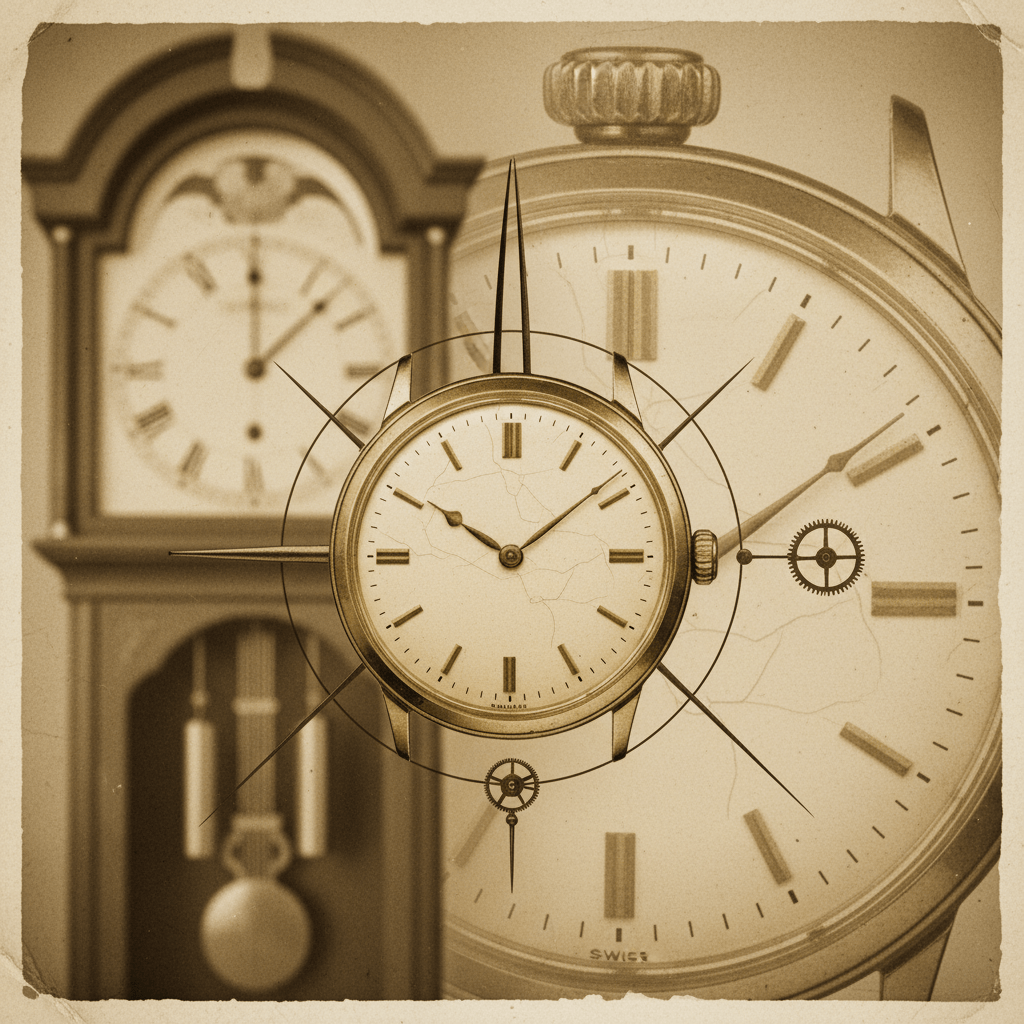
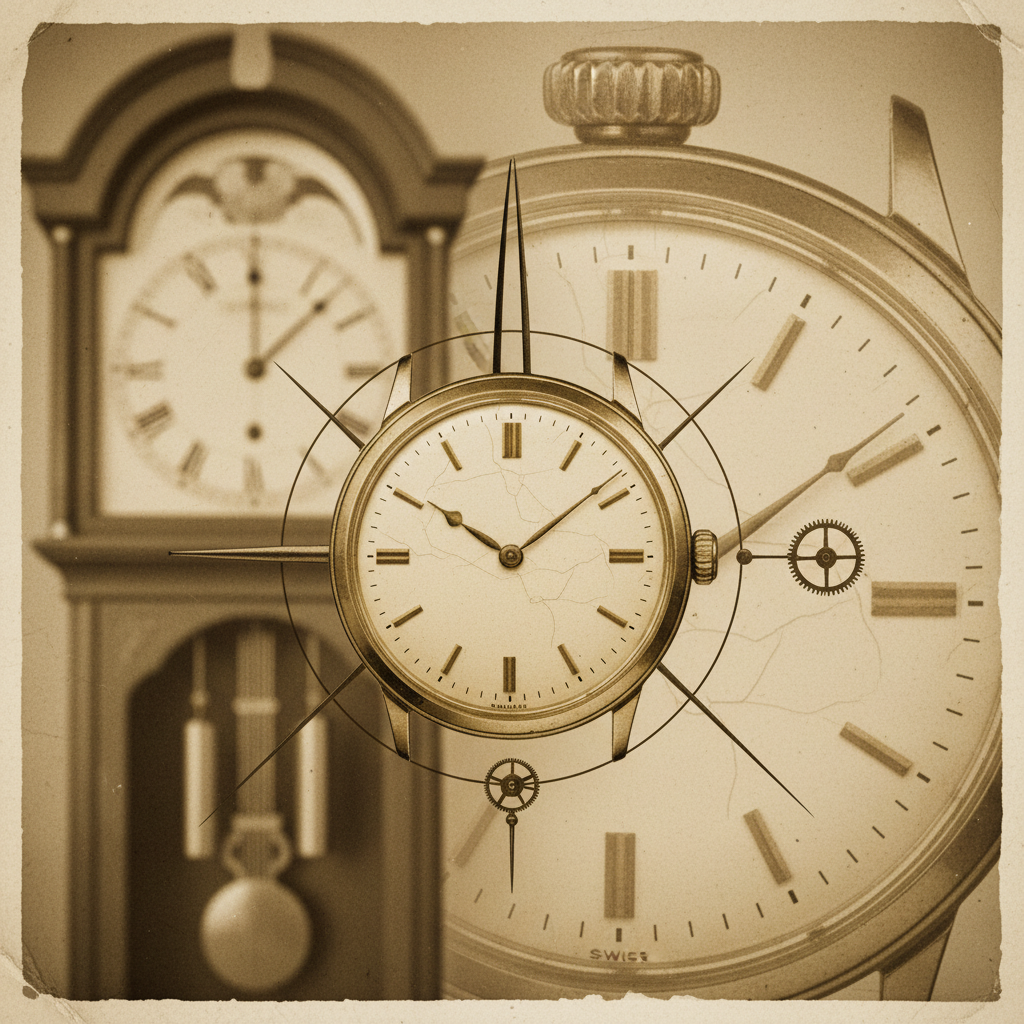
Before the ‘Swiss Made’ regulation became standardized, some watchmakers discreetly marked their dials with a tiny ‘SWISS’ or ‘SWISS A.T.’ (for ‘Swiss Ancien Temps’ or ‘Old Swiss’) near the 6 o’clock position. This was often done to indicate that the movement was indeed Swiss, even if the watch was cased or assembled elsewhere, a subtle nod to its origin before stricter labeling laws took hold.
That tiny inscription eventually became one of the most recognizable details in luxury watchmaking. As the reputation of Swiss craftsmanship grew throughout the 20th century, the word “Swiss” evolved from a simple country-of-origin marking into a symbol of precision, reliability, and quality. Collectors today often inspect the small text beneath the 6 o’clock marker because it can reveal valuable clues about a watch’s age, authenticity, and production era.
Over the decades, the markings themselves changed to reflect new materials and evolving regulations. Vintage watches may feature inscriptions such as “T SWISS T” or “SWISS T < 25,” indicating the use of tritium lume, while modern watches typically display “SWISS MADE” after stricter legal standards were introduced. These tiny details help collectors identify whether a dial is original, replaced, or refinished—making a few millimeters of text surprisingly important in the world of horology.
Today, that nearly invisible word at the bottom of the dial represents more than geography. It reflects generations of Swiss innovation, craftsmanship, and watchmaking tradition. For enthusiasts, reading the tiny inscription at 6 o’clock is often the first step in uncovering a watch’s story, proving that some of the most important details in horology are also the easiest to overlook.
Category: Watch History
Disclaimer: Every effort has been made to keep these watch facts accurate, but the world of horology is full of myths, disputed stories, and fascinating trivia. Consider these facts a starting point for discovery rather than the final word. If you have corrections or additional insights, let us know—we’re always happy to keep the record ticking in the right direction.
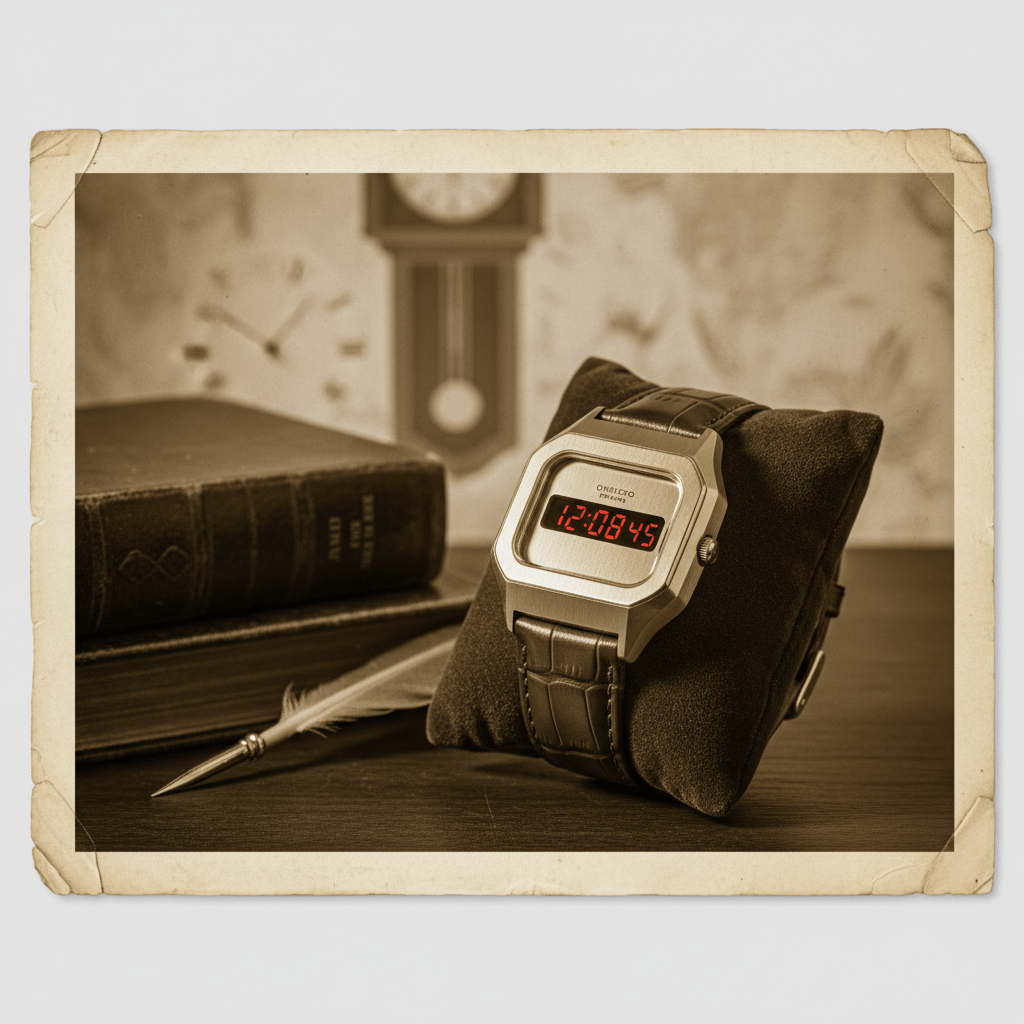
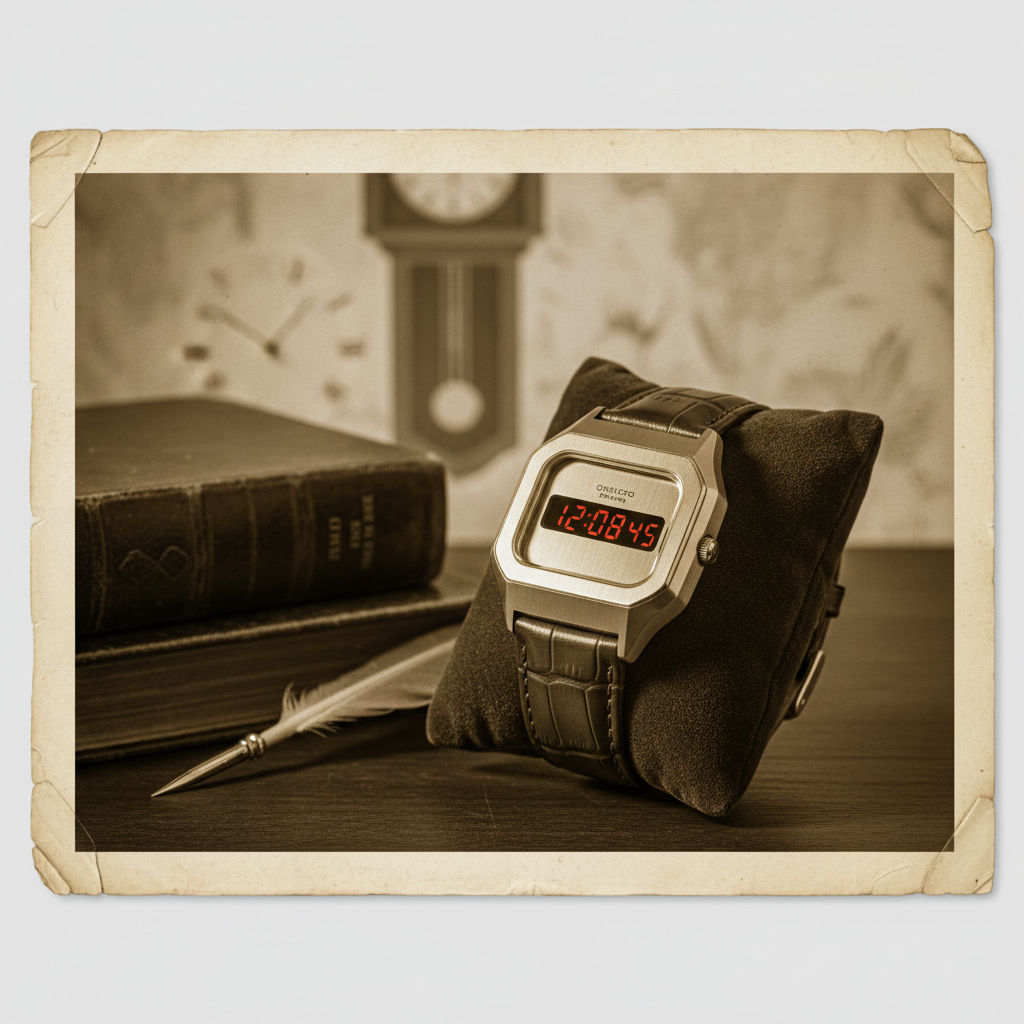
In the glamorous world of horology, quartz watches originally cost more than a small car—thanks, Seiko Astron 35SQ, for making our wallets weep on Christmas 1969! These shiny marvels relied on a quartz crystal flickering like it just chugged a double espresso, boasting accuracy that made mechanical counterparts look like they were timing slow-motion races. Fast forward to the ’70s, and voila! What was once an elite luxury turned into a bargain bin favorite, thanks to mass production. The Quartz Crisis had Swiss watchmakers sweating bullets while quartz watches became the everyday go-to. Who knew precision could be so affordable?
📅 Friday, July 10, 2026
Before the ‘Quartz Crisis’ made them ubiquitous and affordable, early quartz watches were incredibly expensive, often costing more than their mechanical counterparts. The first commercially available quartz wristwatch, the Seiko Astron 35SQ, launched on Christmas Day 1969, retailed for 450,000 Yen, which was equivalent to a medium-sized car at the time. This high price reflected the immense research and development costs, as well as the cutting-edge technology involved.
When the Astron debuted, owning a quartz watch was a symbol of technological prestige rather than affordability. The movement relied on a tiny quartz crystal vibrating at an astonishing 8,192 times per second, providing a level of accuracy that mechanical watches simply couldn’t match. At a time when most mechanical watches gained or lost several seconds each day, the Astron promised accuracy measured in seconds per month—a breakthrough that seemed almost unbelievable in 1969.
As manufacturing techniques improved throughout the 1970s, production costs fell dramatically. What began as an exclusive luxury innovation quickly became accessible to everyday consumers. Japanese manufacturers, led by Seiko, Citizen, and Casio, perfected mass production, allowing quartz watches to be sold for a fraction of their original cost. This shift forever changed the watch industry, triggering what became known as the Quartz Crisis, a period during which many traditional Swiss mechanical watchmakers struggled to survive as consumers embraced the affordability and accuracy of quartz technology.
Today, it’s easy to think of quartz watches as the budget option, but history tells a very different story. The first quartz watches represented the cutting edge of engineering and were among the most desirable timepieces money could buy. Their success didn’t diminish mechanical watchmaking—it forced the industry to reinvent itself, ultimately leading to the appreciation of craftsmanship, heritage, and artistry that defines today’s luxury mechanical watches. Sometimes, the technologies we take for granted began life as the world’s most exclusive innovations.
Category: Watch History
Disclaimer: Every effort has been made to keep these watch facts accurate, but the world of horology is full of myths, disputed stories, and fascinating trivia. Consider these facts a starting point for discovery rather than the final word. If you have corrections or additional insights, let us know—we’re always happy to keep the record ticking in the right direction.
So, the first wristwatch ever made was crafted by Abraham-Louis Breguet in 1810 for Caroline Murat, Queen of Naples. This fancy oval-shaped watch was pretty revolutionary back then since everyone was using pocket watches. It had a repeater and a thermometer, making it super high-tech for its time. Even though it was made for a queen, wristwatches didn’t catch on for guys until much later—especially during WWI when soldiers needed a quicker way to check the time. This watch set the stage for what would become a global favorite, proving that great ideas often start with just one person.
📅 Wednesday, July 8, 2026
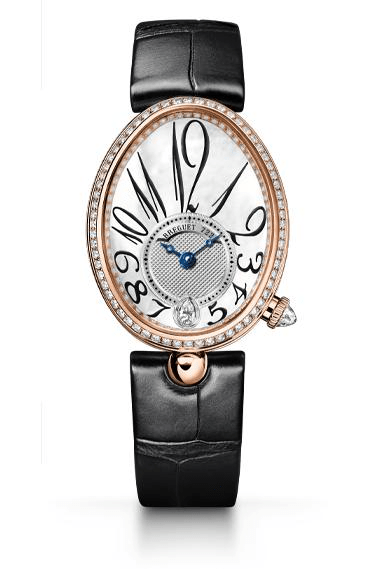
While men commonly wore pocket watches for centuries, the very first known wristwatch was created in 1810 by Abraham-Louis Breguet for Caroline Murat, Queen of Naples and Napoleon Bonaparte’s youngest sister. It was a delicate, oval-shaped repeater watch with a thermometer, designed to be worn on the wrist, marking a pivotal moment in horological history.
At the time, the idea of wearing a watch on the wrist was considered highly unconventional. Gentlemen almost exclusively carried pocket watches, while bracelets were viewed as fashionable jewelry rather than practical timekeeping devices. Caroline Murat’s commission challenged that convention, combining elegant design with remarkable mechanical complexity in a way that was centuries ahead of its time.
Breguet’s workshop records describe the watch as an extraordinary creation, featuring an ultra-thin movement mounted in an elongated oval case and attached to a bracelet woven from gold and hair. Although the original watch has since been lost to history, surviving correspondence and workshop archives provide fascinating insight into one of the most ambitious commissions of the early 19th century. Today, the piece is widely regarded as the world’s first documented wristwatch.
Ironically, it would take more than a hundred years for wristwatches to become the standard for men. During the late 19th century and especially throughout World War I, soldiers discovered that checking the time on a wristwatch was far more practical than reaching into a pocket during combat. What began as a bespoke luxury created for a queen eventually evolved into the preferred style of watch for millions around the world—a reminder that some of history’s greatest innovations begin as bold ideas for just one remarkable person.
What We Know About the Original Watch
According to Breguet’s archives, the original watch featured:
📅 Commissioned on June 8, 1810
👑 Made for Caroline Murat, Queen of Naples
🔔 Quarter repeater complication
🌡️ Built-in thermometer
🥚 Ultra-thin oval case
🪮 Mounted on a bracelet woven from gold thread and human hair
📦 Delivered in 1812
🔢 Breguet No. 2639
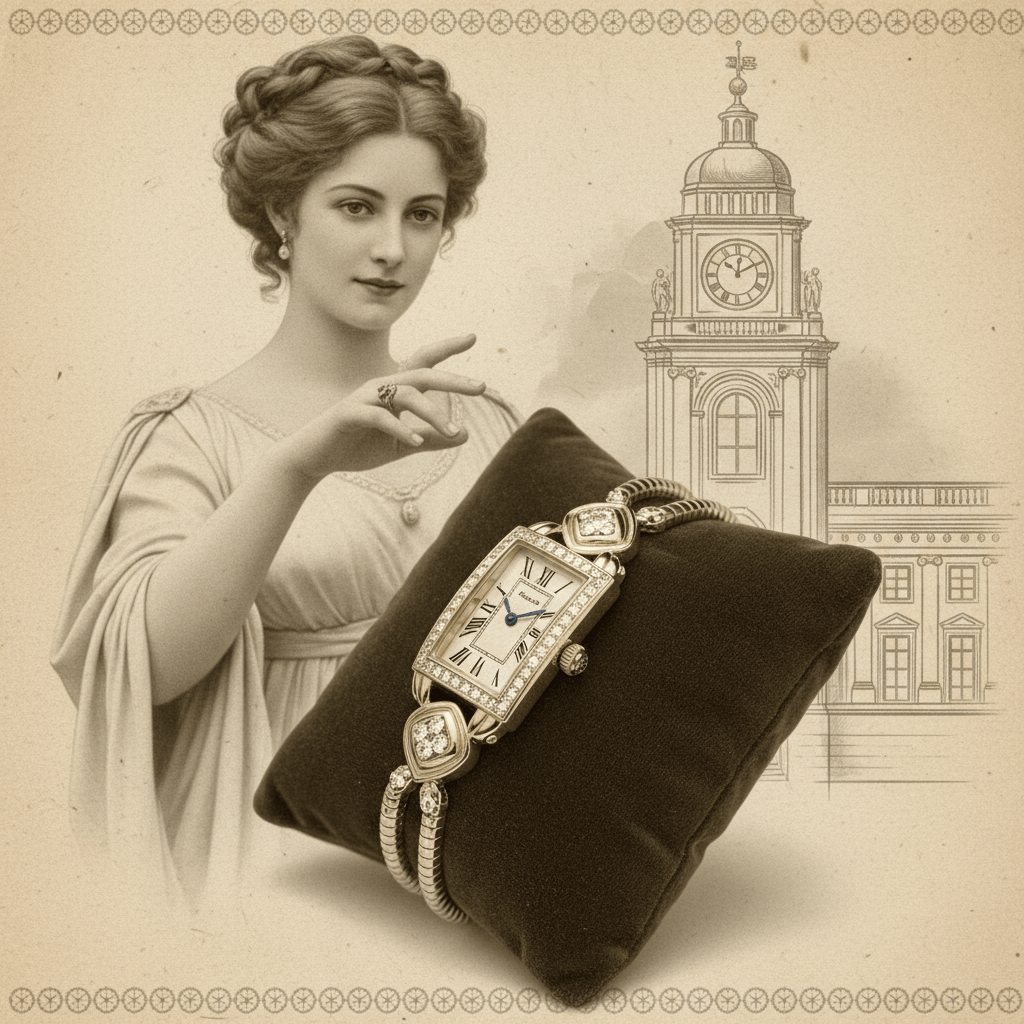
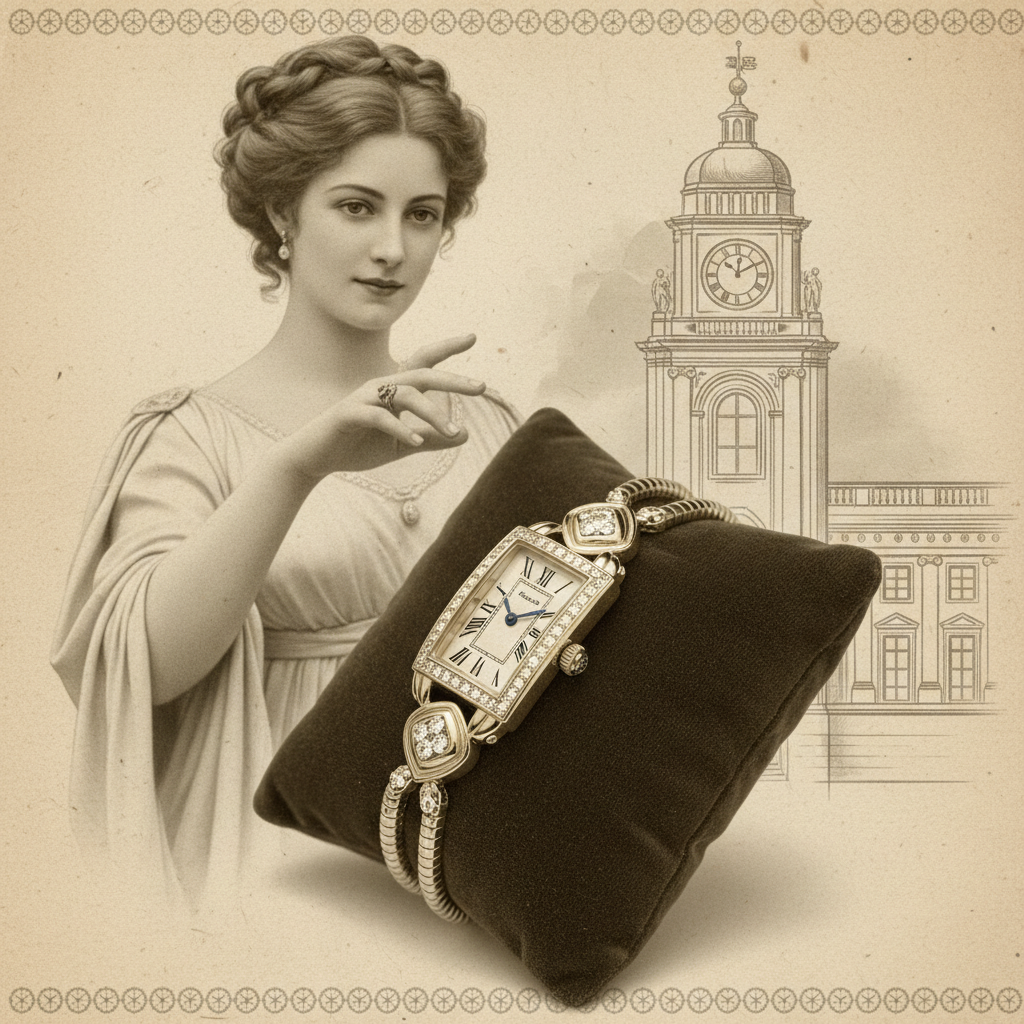
It looked Similar to this
Category: Watch History
Disclaimer: Every effort has been made to keep these watch facts accurate, but the world of horology is full of myths, disputed stories, and fascinating trivia. Consider these facts a starting point for discovery rather than the final word. If you have corrections or additional insights, let us know—we’re always happy to keep the record ticking in the right direction.
In the world of watches, the moon phase complication is like a fancy hat – it started as a necessity but became a stylish trend. Originally, clockmakers used a rotating lunar disc to cover up design flaws, turning their blunders into a celestial display. As time ticked on, watchmakers realized this moon trick could help farmers figure out when to plant crops and sailors avoid sailing into a moonless mess. These days, moon phases aren’t just about practicality; they’re romantic little reminders that your wrist can be both a timepiece and a dreamy connection to the cosmos. Who knew horology could be so poetic?
📅 Monday, July 6, 2026
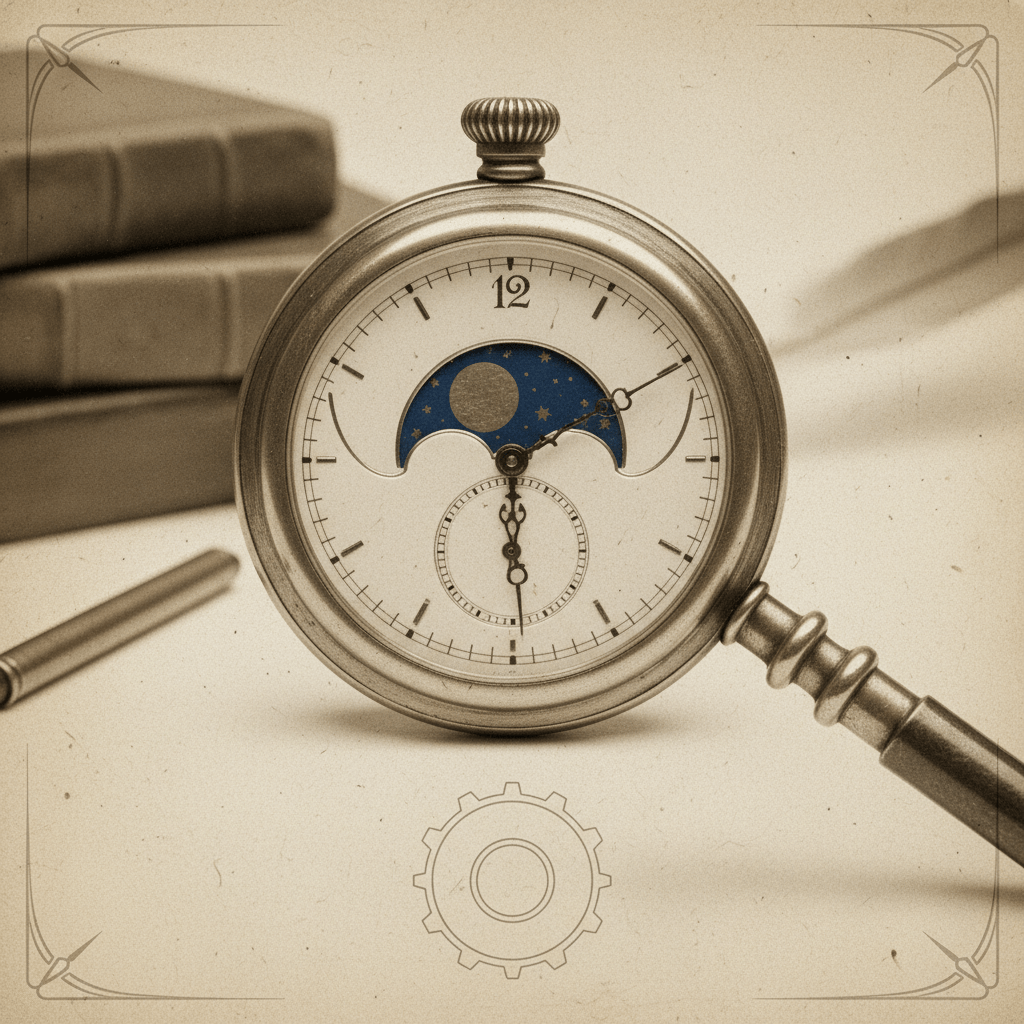
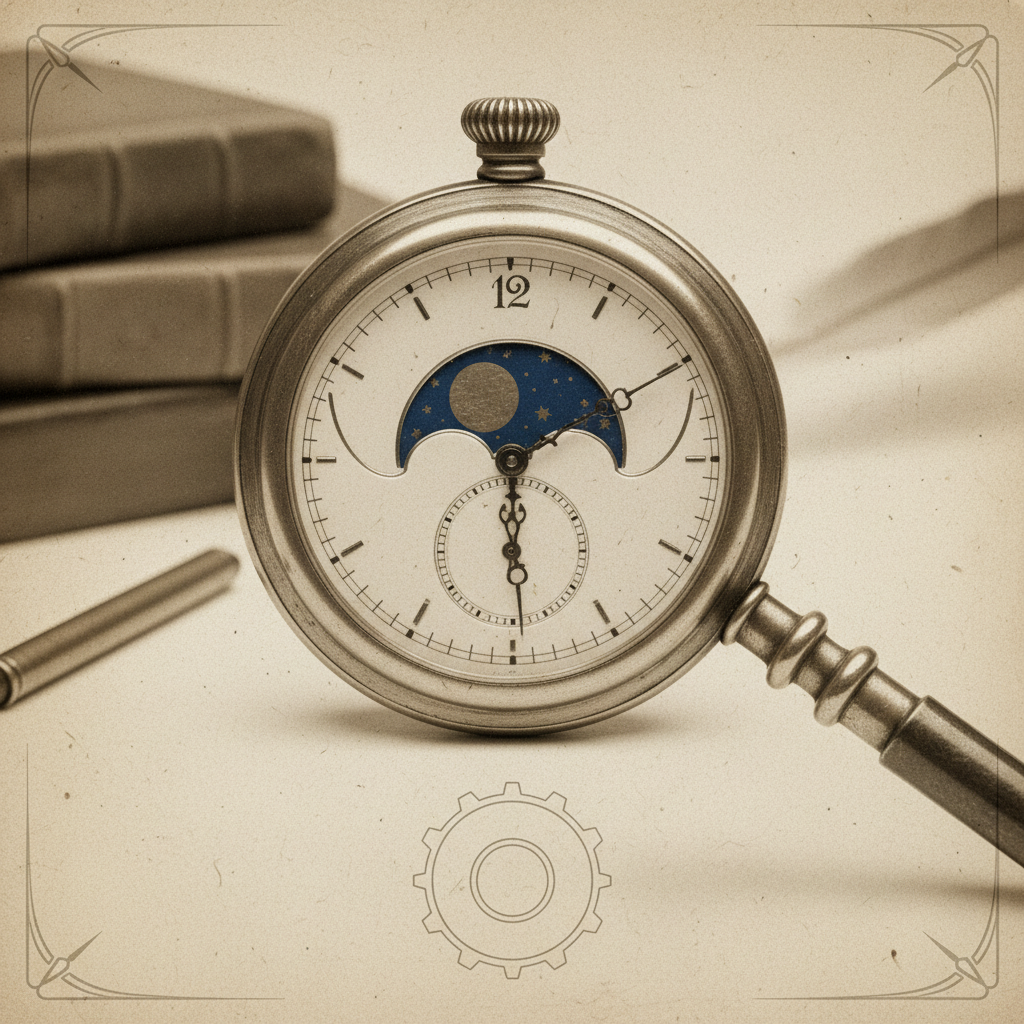
The moon phase complication, now a beloved and intricate feature on many high-end watches, originated from a practical necessity. Early clockmakers used a rotating disc for the moon to hide imperfections or gaps in the dial’s construction, effectively turning a design challenge into an aesthetic and functional display of celestial motion. This ‘fix’ evolved into one of horology’s most poetic complications.
As clockmaking techniques improved during the 17th and 18th centuries, the moon phase display evolved far beyond its practical origins. Watchmakers realized that a rotating lunar disc could do more than simply conceal part of the mechanism—it could also help farmers, sailors, astronomers, and travellers track the changing phases of the Moon. Long before smartphones and weather apps, knowing the lunar cycle was genuinely useful for navigation, agriculture, and even planning fishing expeditions.
Traditional moon phase watches are surprisingly precise. Most use a 59-tooth gear, allowing two complete lunar cycles to be displayed over 59 days. Since the Moon actually takes 29.53 days to complete one cycle, this simple mechanism is remarkably accurate, requiring only a minor adjustment every two and a half years. More advanced modern moon phase movements can remain accurate for decades—or even centuries—before needing correction.
Today, the moon phase complication is cherished less for its practicality and more for the emotion it brings to a watch. It’s a reminder that mechanical watches are miniature works of art as much as they are instruments for telling time. With every passing day, the tiny moon slowly travels across the dial, connecting the wearer to a celestial rhythm that has guided humanity for thousands of years. Few complications capture the romance of traditional watchmaking quite like a beautifully executed moon phase display.
Disclaimer: Every effort has been made to keep these watch facts accurate, but the world of horology is full of myths, disputed stories, and fascinating trivia. Consider these facts a starting point for discovery rather than the final word. If you have corrections or additional insights, let us know—we’re always happy to keep the record ticking in the right direction.
The journey of the Iron Hour Halocline Diver is a testament to perseverance and passion in the face of adversity. Founder Ivan Ennis sought to create a watch that truly resonates with enthusiasts, prioritizing quality and thoughtful design over marketing gimmicks. Despite the challenges brought on by COVID-19, he remained committed to refining the watch for seven years. The Halocline Diver features a respected Swiss automatic movement and an authentic design that reflects a genuine love for watchmaking. This inspiring story serves as an encouraging reminder that success can arise from determination, making every watch a symbol of resilience and craftsmanship.
Every successful product has a story.
Some begin in a boardroom with unlimited budgets and marketing teams. Others begin in a garage, a basement, or on a kitchen table with nothing more than an idea and an unwillingness to quit.
The story behind the Iron Hour Halocline Diver belongs firmly in the second category.
The Dream
Like many independent watch founders, Ivan Ennis didn’t set out to build another luxury status symbol.
He wanted to create the kind of watch that fellow enthusiasts would genuinely enjoy wearing—one that emphasized quality, honest engineering, and thoughtful design over flashy marketing. Inspired by years of collecting and appreciating mechanical watches, he founded Iron Hour Watch Co. with the goal of delivering a Swiss-made automatic diver that could stand alongside far more expensive competitors.
It was an ambitious vision for an independent founder entering one of the most competitive industries in the world.
Then Everything Changed
The Halocline Diver was preparing to make its debut through Kickstarter in 2020.
On paper, the timing looked promising.
Then COVID-19 changed everything.
Supply chains ground to a halt. Manufacturing schedules became uncertain. Consumer confidence dropped dramatically, and crowdfunding campaigns across countless industries struggled to gain traction.
For many startups, this would have been the end.
Years of planning suddenly collided with circumstances no one could have predicted.
Seven Years, a Pandemic, and a Promise Kept: The Story Behind the Iron Hour Halocline Diver
Walking Away Would Have Been Easier
This is the point where many entrepreneurial stories quietly disappear.
Projects are abandoned.
Websites stop updating.
Social media accounts go silent.
Eventually, everyone moves on.
But Ivan didn’t.
Instead of shelving the project, he continued refining the design, strengthening supplier relationships, and working through the countless challenges that come with bringing a mechanical watch to market.
Progress wasn’t measured in weeks.
It was measured in years.
The vision remained the same even when the timeline changed dramatically.
Seven Years Later…
Today, the Halocline Diver is no longer a concept or a crowdfunding campaign.
It’s a finished watch.
After years of development, engineering, prototyping, and persistence, Iron Hour succeeded in producing the watch that nearly never happened.
In an era of overnight product launches and rapidly changing trends, there’s something refreshing about a founder who simply refused to quit.
The Watch That Refused to Stay on the Drawing Board
The Halocline Diver isn’t trying to reinvent the dive watch.
Instead, it focuses on refining the formula that enthusiasts already love.
Clean proportions, excellent legibility, a purposeful design, and robust construction combine to create a watch that feels equally comfortable on an outdoor adventure, at the office, or as part of an everyday collection.
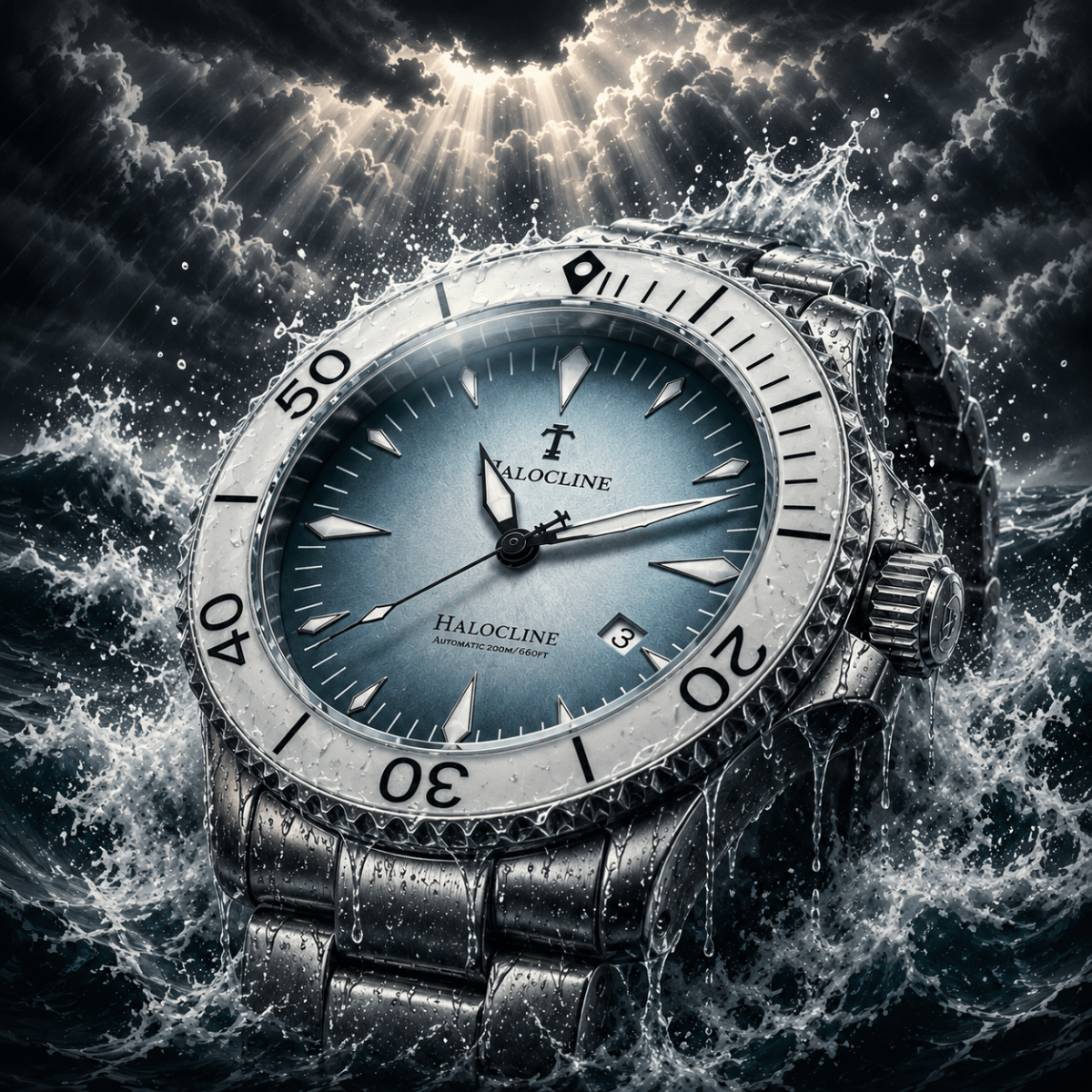
At its heart is the Sellita SW200-1 Swiss automatic movement, one of the industry’s most respected workhorse calibers. Known for its reliability, accuracy, and ease of servicing, it’s a movement trusted by countless independent and established Swiss brands alike. Choosing a proven movement over chasing novelty reflects the philosophy behind the entire project: prioritize dependability over gimmicks.
The attention to detail is where the Halocline begins to distinguish itself. The case finishing is crisp, the bezel action is reassuringly precise, and the overall design strikes a balance between modern performance and timeless styling. Nothing feels excessive, yet nothing feels overlooked.
Perhaps most importantly, the watch doesn’t feel like it was designed by marketers—it feels like it was designed by someone who genuinely loves watches.
That authenticity is difficult to manufacture.
More Than Specifications
In today’s watch industry, it’s easy to become obsessed with specifications.
Water resistance.
Power reserve.
Movement type.
Case diameter.
Those numbers certainly matter.
But what often creates an emotional connection with a watch is the story behind it.
Every Halocline represents years of emails with suppliers, late-night design revisions, manufacturing challenges, financial uncertainty, and countless decisions that most owners will never see.
When you wear the watch, you’re wearing the result of persistence just as much as precision engineering.
What Entrepreneurs Can Learn
Whether you’re building watches, launching software, opening a small business, or creating content online, the lessons from Iron Hour’s journey are surprisingly universal.
Success rarely follows the timeline we imagine.
Unexpected setbacks happen.
Markets change.
Global events reshape entire industries.
Sometimes the only real competitive advantage is refusing to abandon a worthwhile idea.
Perseverance isn’t glamorous.
It doesn’t generate headlines.
But it’s often the difference between a project that becomes “what could have been” and one that eventually reaches the finish line.
Why Independent Watchmakers Matter
Independent brands are responsible for much of the innovation and creativity we see in modern watchmaking.
Without enormous marketing budgets or century-old histories to rely on, they compete by listening to collectors, obsessing over details, and building products they genuinely believe in.
That passion creates watches with personality.
Every independent success story also strengthens the broader watch community by proving there’s still room for craftsmanship, creativity, and entrepreneurial spirit in an industry dominated by global luxury brands.
Final Thoughts
The Iron Hour Halocline Diver isn’t remarkable simply because it’s another Swiss automatic dive watch.
It’s remarkable because it exists at all.
It represents resilience during one of the most difficult periods modern entrepreneurs have faced.
It demonstrates what can happen when someone refuses to let setbacks define the outcome.
And perhaps that’s the greatest lesson this watch has to offer.
Sometimes the most valuable thing a creator can build isn’t just a product.
It’s the determination to finish what they started.
For entrepreneurs, collectors, and anyone chasing an ambitious goal, that’s a story worth wearing on your wrist.
I invite you to learn more by visiting the Brand Site:
Did you know that in 1976, to commemorate the United States Bicentennial, a unique watch was created featuring a miniature, working ‘Liberty Bell’ that would st
📅 Saturday, July 4, 2026
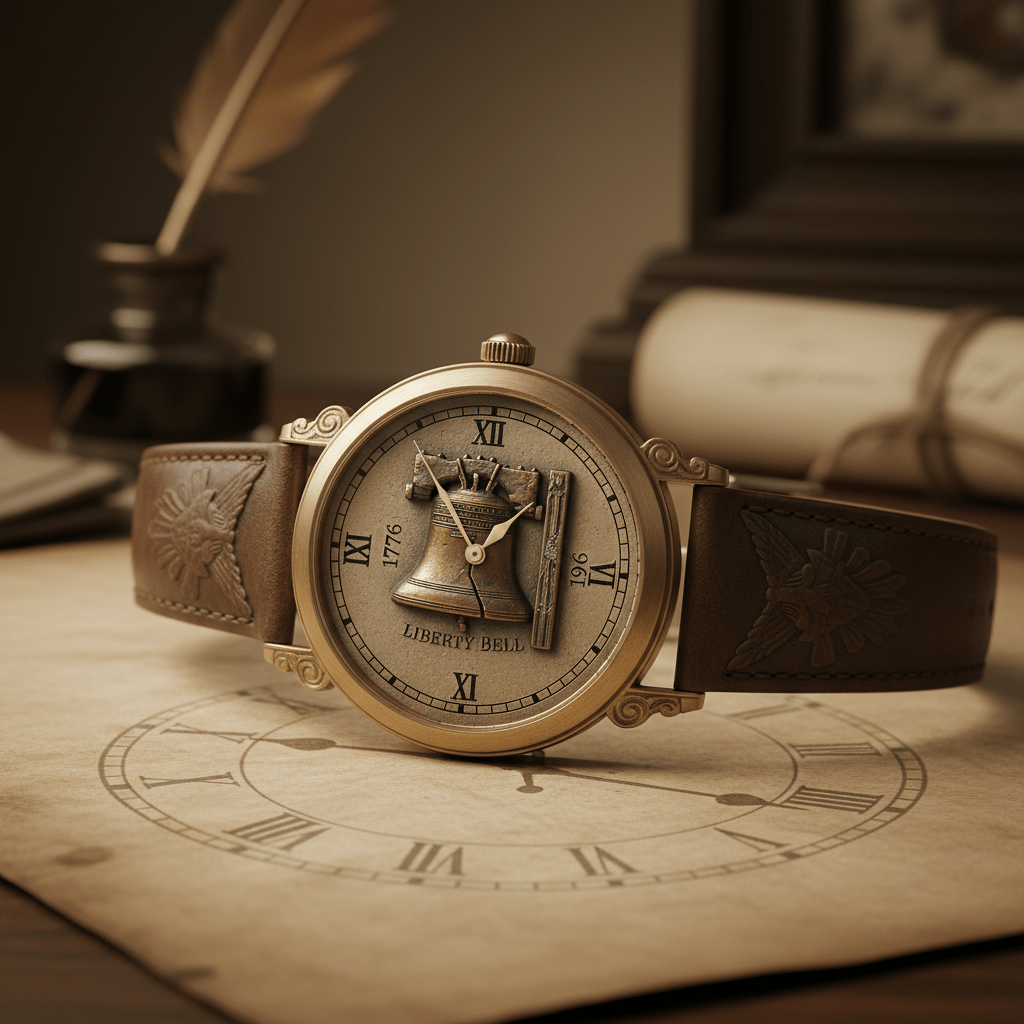
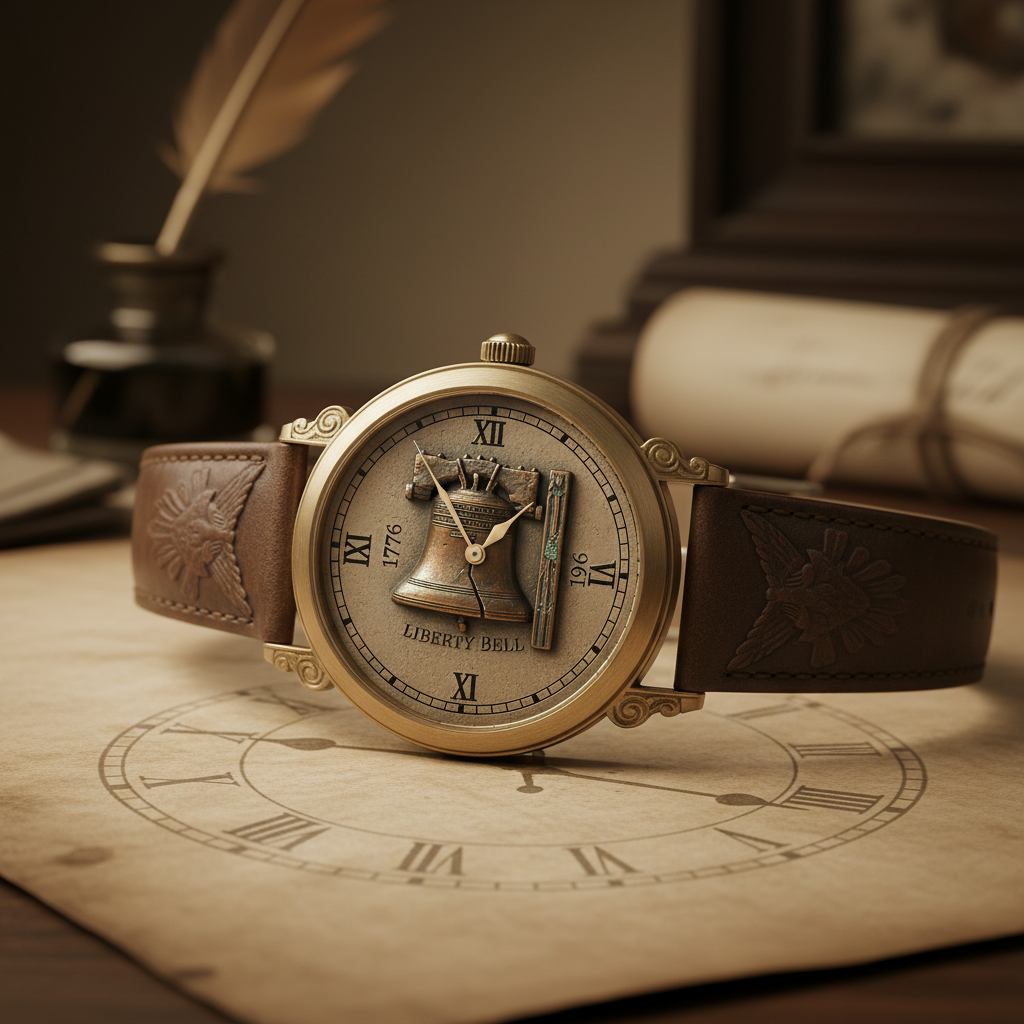
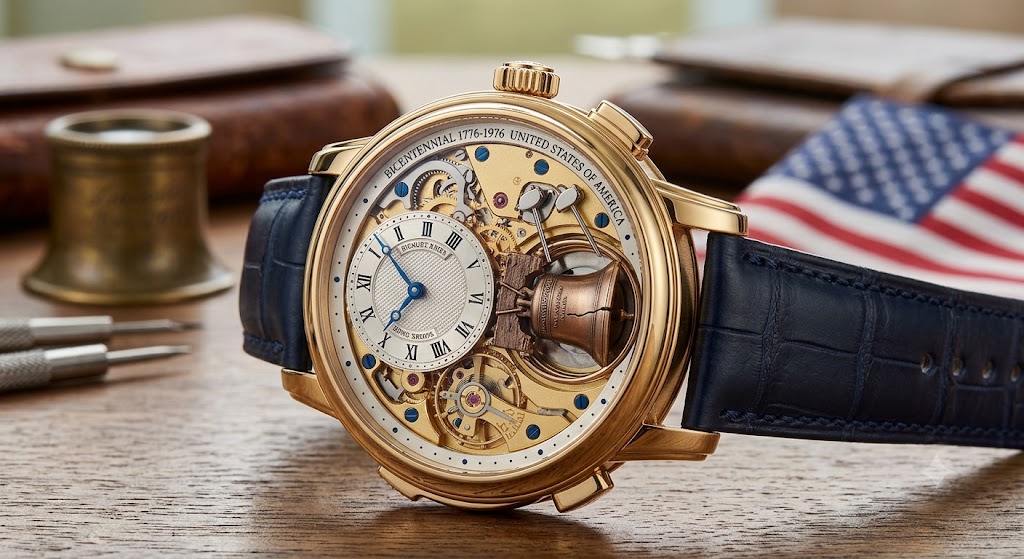
Did you know that in 1976, to commemorate the United States Bicentennial, a unique watch was created featuring a miniature, working ‘Liberty Bell’ that would strike the hours? This highly intricate timepiece was a testament to both American ingenuity and Swiss watchmaking precision, blending patriotic symbolism with horological artistry. It remains a fascinating, albeit lesser-known, piece of watchmaking history tied directly to a pivotal moment for the nation.
NOTE: In Doing Further Research, it appears this was never actually Manufactured, But was indeed an Awesome Concept!
Disclaimer: Every effort has been made to keep these watch facts accurate, but the world of horology is full of myths, disputed stories, and fascinating trivia. Consider these facts a starting point for discovery rather than the final word. If you have corrections or additional insights, let us know—we’re always happy to keep the record ticking in the right direction.
Below is a Render of How it MAY Have looked:
Creating a miniature chiming mechanism small enough to fit inside a wristwatch was an extraordinary engineering challenge. Watchmakers had to carefully design tiny hammers, gongs, and springs that could reliably produce a clear sound without compromising the watch’s accuracy or wearability. These types of complications are among the most difficult to manufacture and are still considered hallmarks of high-end watchmaking today.
More Watch Facts
The Liberty Bell motif also reflected a growing appreciation for commemorative timepieces during the 1970s. Rather than simply printing a patriotic logo on the dial, designers sought to create a watch that celebrated American history through both its appearance and its function. By incorporating a bell that chimed the hours, the watch paid tribute to one of the nation’s most recognizable symbols in a way that was both mechanical and meaningful.
Today, commemorative watches remain popular with collectors, but few are as distinctive as the Liberty Bell concept. Whether honoring historic anniversaries, space missions, sporting events, or royal milestones, these special-edition timepieces offer a snapshot of history on the wrist. The Liberty Bell watch stands as a reminder that great watchmaking isn’t just about telling time—it’s also about preserving stories, celebrating culture, and marking moments that deserve to be remembered.
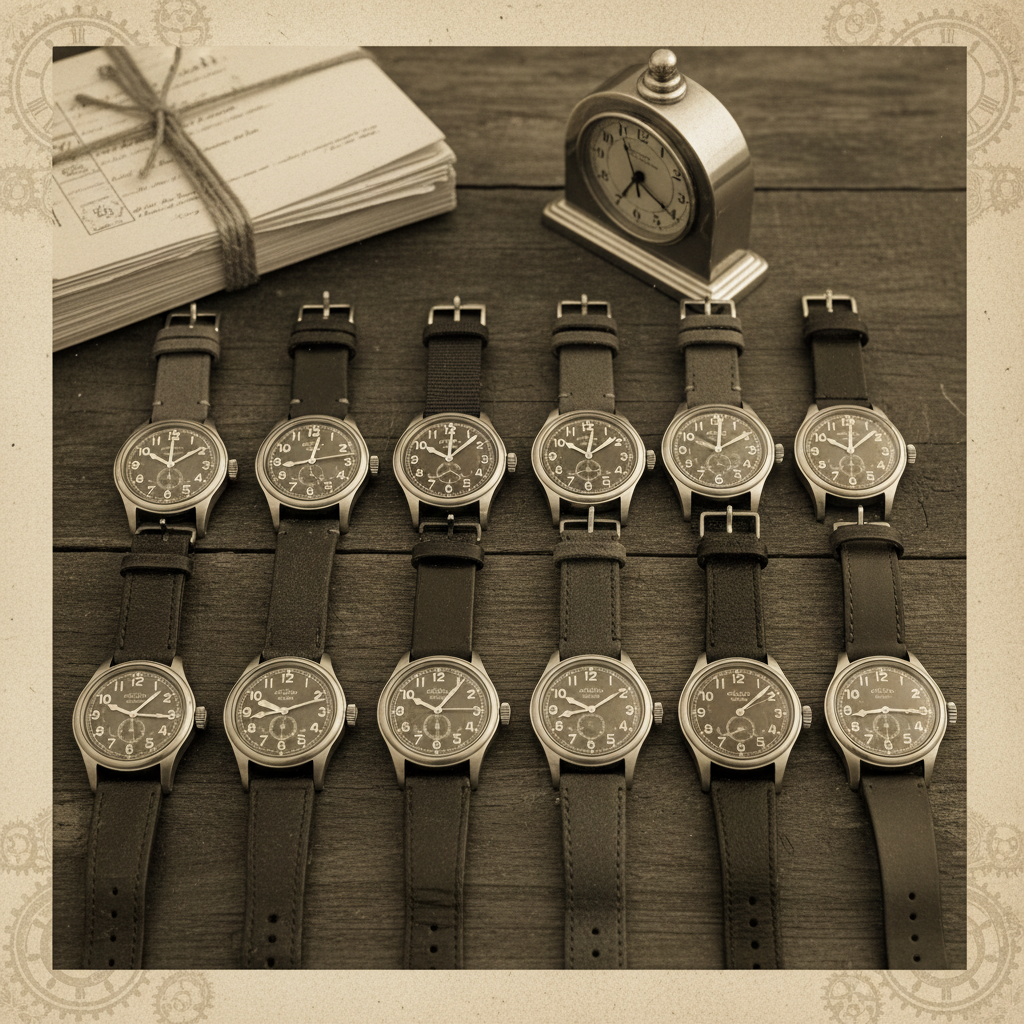
During World War II, the British Ministry of Defence commissioned 12 different Swiss watch manufacturers to produce robust, accurate, and waterproof wristwatche
📅 Friday, July 3, 2026
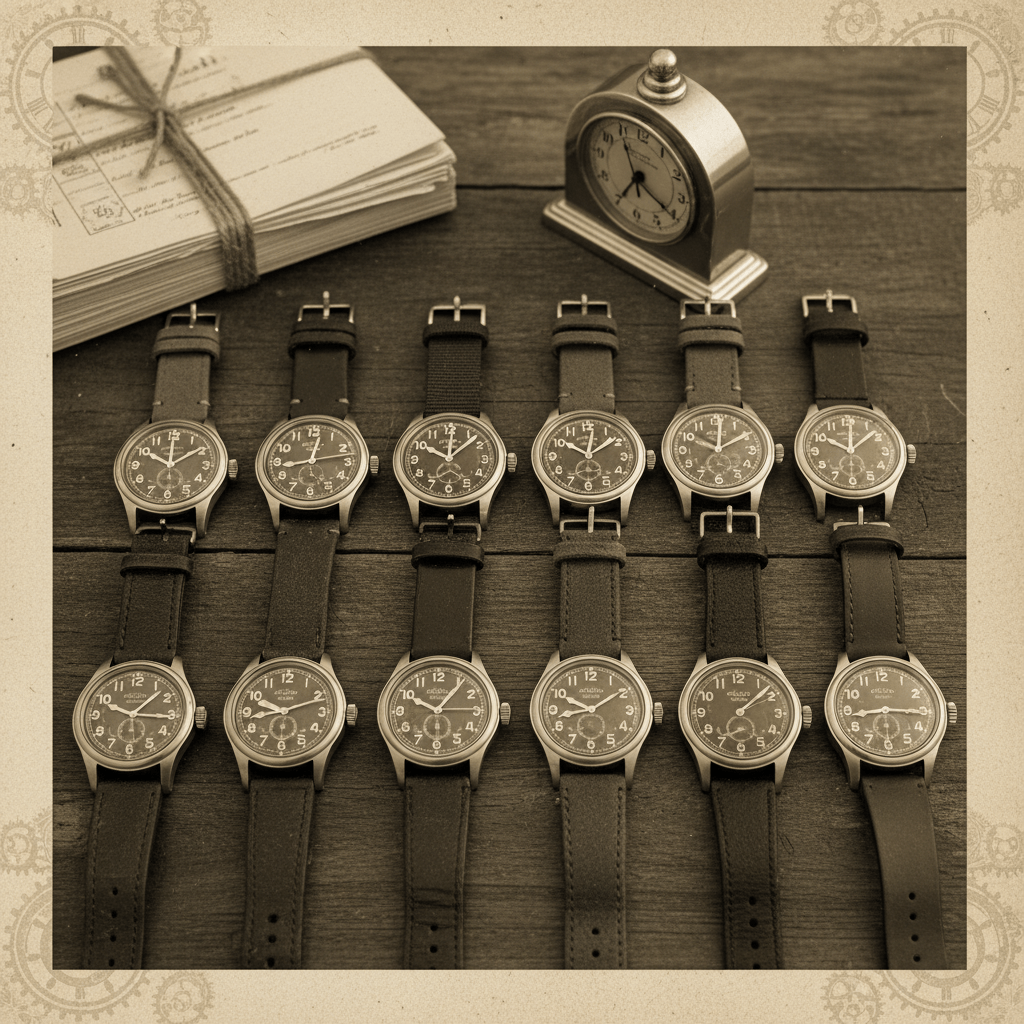
During World War II, the British Ministry of Defence commissioned 12 different Swiss watch manufacturers to produce robust, accurate, and waterproof wristwatches for their soldiers. These watches, known collectively by collectors as the ‘Dirty Dozen,’ each featured a black dial, Arabic numerals, a sub-seconds register, and a specific ‘W.W.W.’ (Wrist Watch Waterproof) engraving on the caseback, making them highly sought after today.