

📅 Saturday, August 22, 2026
During the depths of the Great Depression in 1933, the Ingersoll-Waterbury company was facing imminent bankruptcy. Their fortunes completely turned around when they secured a license from Walt Disney to produce the first Mickey Mouse watch, featuring the character’s hands as the hour and minute indicators. Selling for just $2.50, the watch became a massive cultural phenomenon that sold over two million units in just a few years, saving the company from ruin and eventually evolving into modern-day Timex.
In 1933, during the darkest years of the Great Depression, Connecticut’s Waterbury Clock Company was in serious financial trouble. The company had already acquired the American Ingersoll business after its earlier collapse, and by 1932 Waterbury itself had entered receivership. Then came an unlikely lifeline: a licensing agreement with Walt Disney Enterprises to manufacture a watch starring America’s increasingly famous cartoon mouse. Historical documentation credits the resulting Mickey Mouse watches with helping save Waterbury from receivership.
The design was wonderfully simple—and incredibly clever. Mickey Mouse stood in the center of the dial, with his two arms serving as the hour and minute hands, while a small seconds display featured three tiny Mickey figures seemingly chasing one another around the dial. It effectively turned the act of telling time into animation on the wrist, helping establish a formula that generations of character watches would follow.
And here’s our first important correction: the original wristwatch wasn’t launched at $2.50. Disney’s own D23 history records an initial price of $3.25, subsequently reduced to $2.95; a companion Mickey Mouse pocket watch sold for $1.50. That may sound inexpensive today, but in Depression-era America it still represented a meaningful purchase—which makes what happened next even more extraordinary.
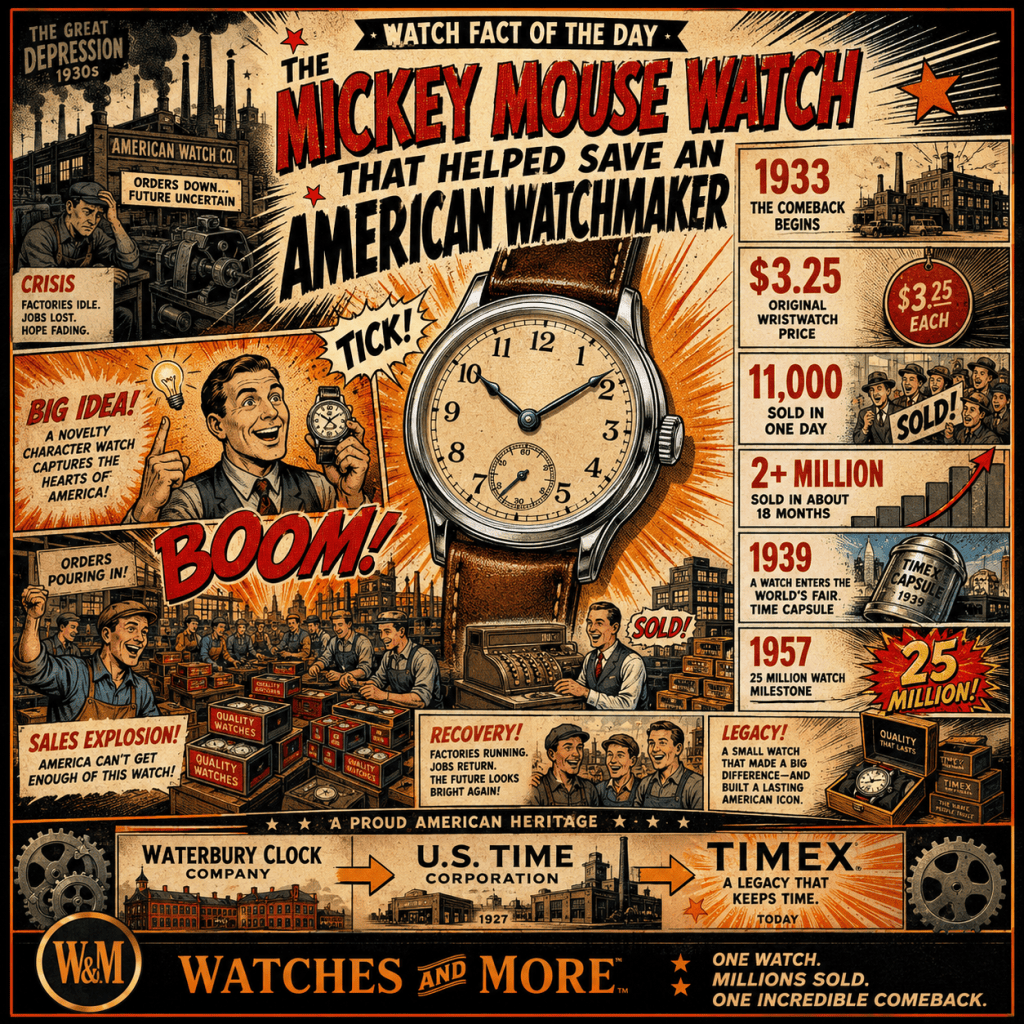
The public went absolutely crazy for it. Macy’s reportedly sold 11,000 Mickey Mouse watches on the first day, and Connecticut History reports that more than two million were sold within roughly a year and a half. The Walt Disney Family Museum gives another often-cited figure of 2.5 million within two years. Waterbury’s workforce expanded dramatically as demand exploded; by 1935, contemporary reporting credited Mickey with helping the company add thousands of workers.
The story gets even better. In 1939, when organizers of the New York World’s Fair created a time capsule intended to represent 20th-century American civilization to people thousands of years in the future, an Ingersoll Mickey Mouse watch was among the objects selected for inclusion. A children’s novelty watch had become such a recognizable symbol of its era that someone decided future civilization needed to see one.
And then comes the connection to one of America’s most famous watch names. Waterbury Clock eventually became U.S. Time, and U.S. Time ultimately became Timex. So saying that the Mickey Mouse watch single-handedly “created Timex” would oversimplify a much longer corporate history—but its enormous Depression-era success was an important chapter in the survival of the company that ultimately carried that lineage forward. Even the National Register documentation for Timex’s corporate headquarters specifically describes the Disney contract as having saved Waterbury from receivership.
💡 Did You Know?
By 1957, the Mickey Mouse watch had travelled an astonishing distance from its desperate Depression-era beginnings: the 25-millionth Mickey Mouse watch was presented to Walt Disney. What began as a licensing gamble for a struggling Connecticut manufacturer had grown into one of the most successful character-watch stories in history.
Category: Brand Spotlight
Disclaimer: Every effort has been made to keep these watch facts accurate, but the world of horology is full of myths, disputed stories, and fascinating trivia. Consider these facts a starting point for discovery rather than the final word. If you have corrections or additional insights, let us know—we’re always happy to keep the record ticking in the right direction.
🕐 Discover more watch facts, reviews, and buying guides at WatchesAndMore
🛍️ You Might Also Like
As an Amazon Associate and affiliate partner, WatchesAndMore earns from qualifying purchases.
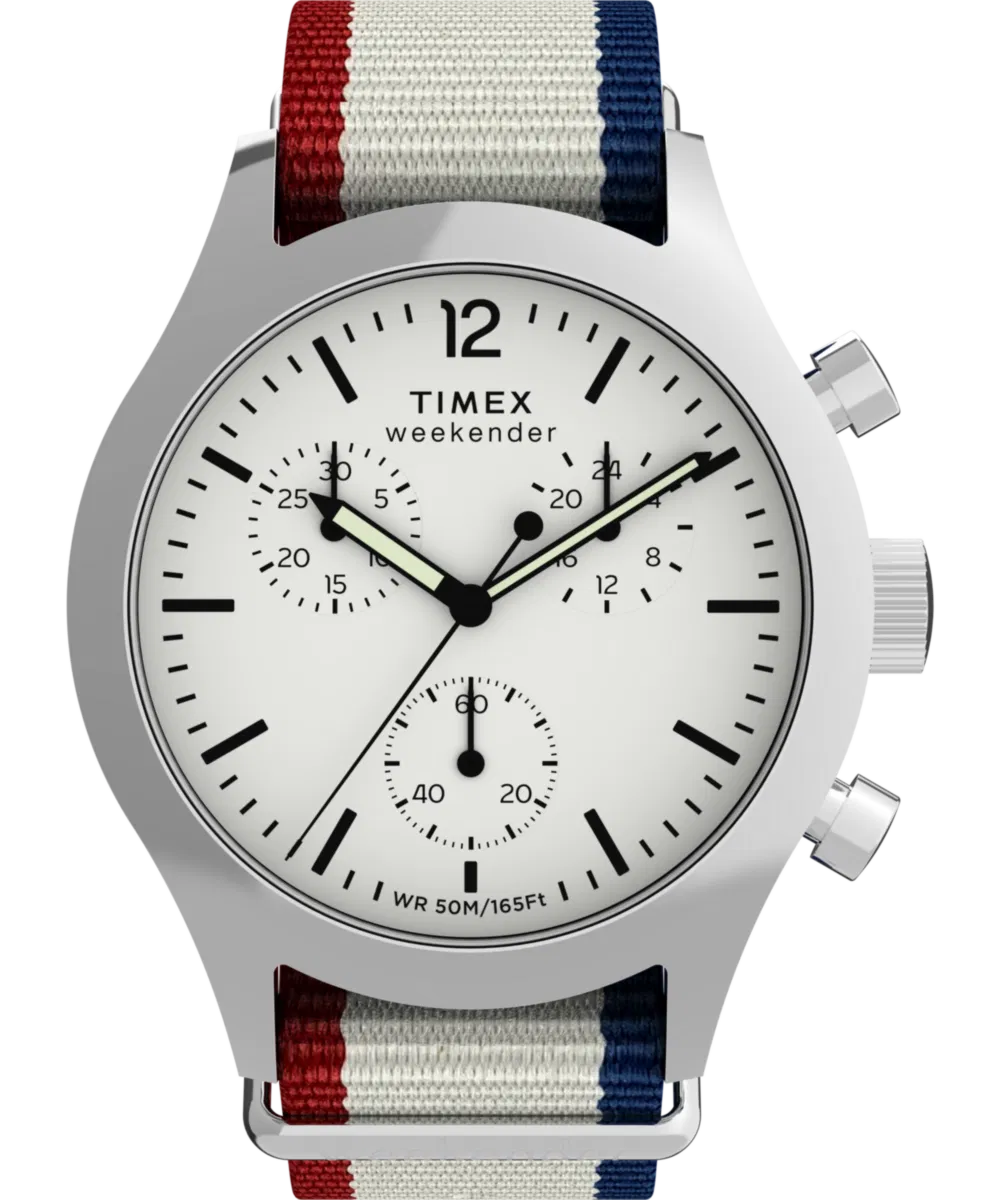
Timex
★★★★★ 4.5 (3,041 reviews)
$79

Browse all expert-reviewed watches →