

📅 Tuesday, September 29, 2026
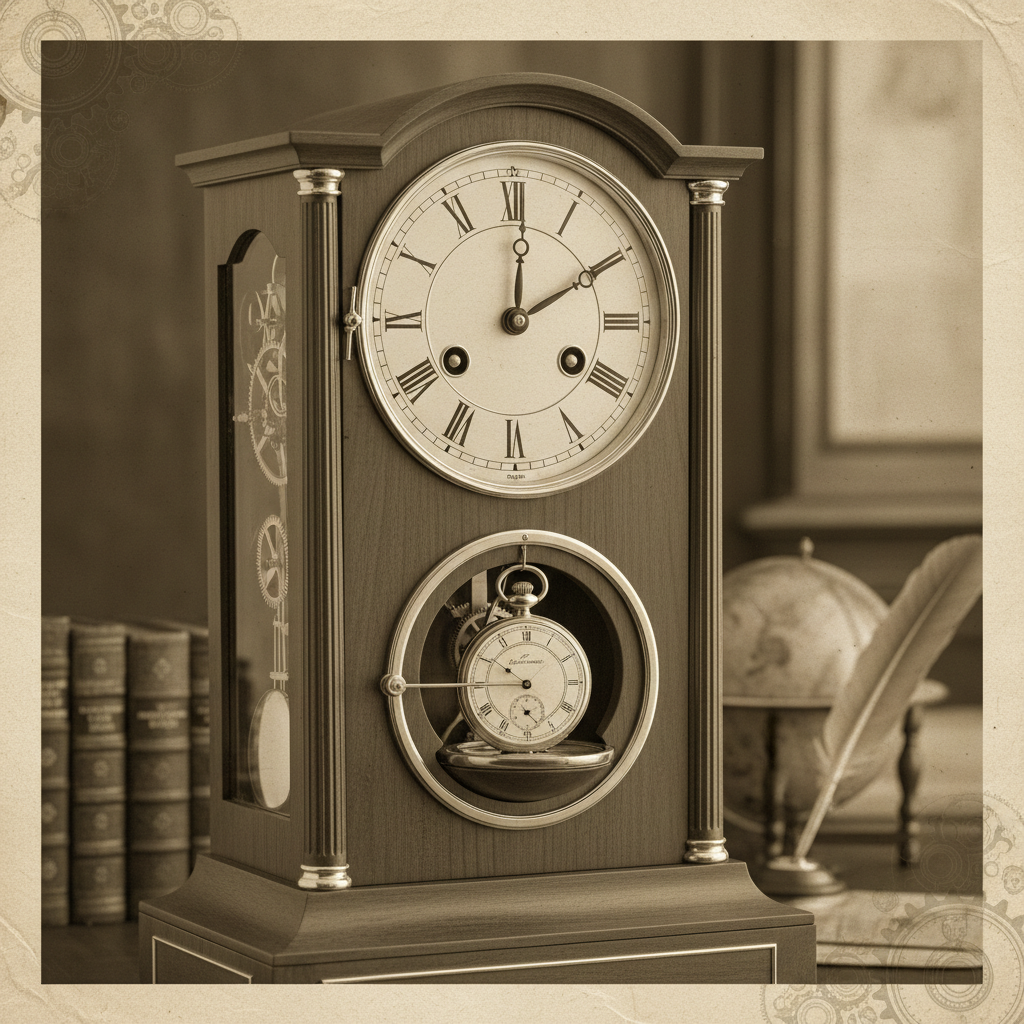
Imagine placing your pocket watch into a clock at night and finding it set to the right time in the morning. No screen. No software. Just gears, springs, and a remarkable idea.
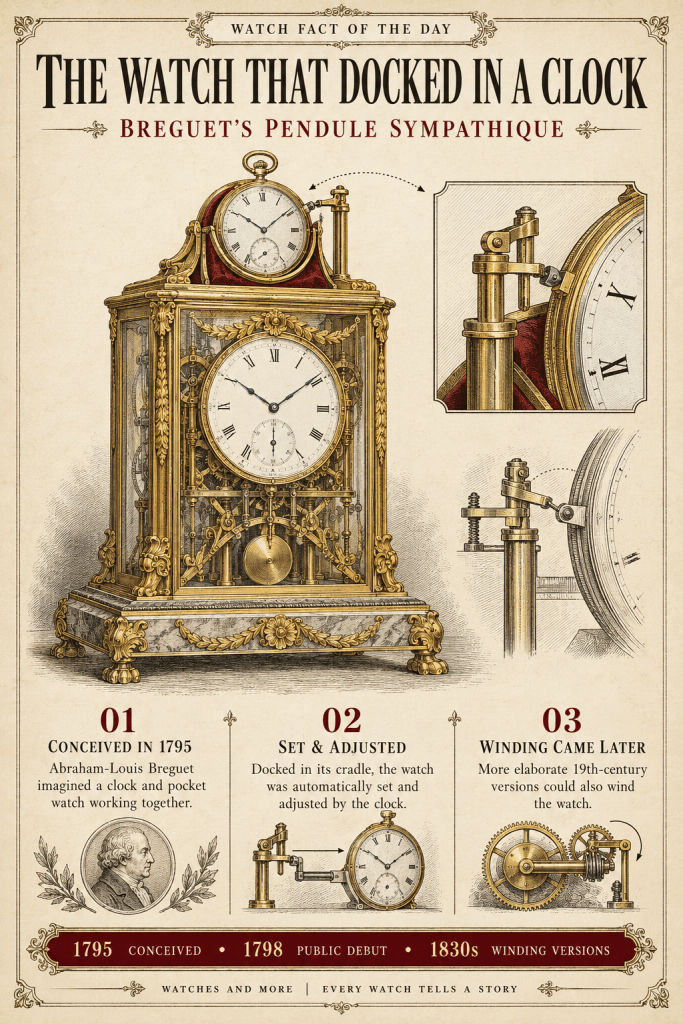
Abraham-Louis Breguet conceived the pendule sympathique in 1795 and first presented it publicly in 1798. It paired a master clock with a portable watch made to fit into a cradle. Once docked, the watch could be automatically set and adjusted by the clock. More than two centuries before we began syncing the devices we carry, Breguet had created a mechanical relationship between two timekeepers.
A Clock and Watch Working Together
The clever part was the connection. The pocket watch could travel with its owner, then return to the clock for correction. Breguet called the system sympathique to express harmony between the two timepieces. That name feels fitting: one kept time at home while the other carried it out into the world.
There is a detail that makes this story even better. The original 1790s concept should not be credited with every feature found in later examples. Breguet describes the early system as automatically setting and adjusting the watch. Later sympathique clocks developed more elaborate mechanisms; a documented 1835 example could also wind its matching watch. The idea evolved from mechanical time synchronization into something even closer to what we would now call a docking station.
Fit for Royalty
These were extraordinary creations, and their buyers reflected that. According to Breguet, Abraham-Louis sold just five, each different, before his death in 1823. His son Antoine-Louis sold one more in 1830. All six went to kings or princes. One clock-and-watch pair was sold in 1814 to Britain’s Prince Regent, the future King George IV.
Why It Still Matters
Today, we barely think about a watch updating itself. Breguet’s achievement invites us to stop and picture what that required when every instruction had to be carried out by a physical mechanism.
The pendule sympathique is a reminder that watchmaking has always been about more than displaying the hour. Sometimes it is about imagining a new way for timepieces to work together—and then finding a way to build it.
Watch Fact of the Day: Breguet conceived a clock that could automatically set and adjust its matching pocket watch in 1795. Later versions added automatic winding. The watch dock was a horological idea long before the digital age.
Every watch tells a story. This one tells the story of two timepieces working in sympathy.
Category: Watch History
Disclaimer: Every effort has been made to keep these watch facts accurate, but the world of horology is full of myths, disputed stories, and fascinating trivia. Consider these facts a starting point for discovery rather than the final word. If you have corrections or additional insights, let us know—we’re always happy to keep the record ticking in the right direction.
🕐 Discover more watch facts, reviews, and buying guides at WatchesAndMore
🛍️ You Might Also Like
As an Amazon Associate and affiliate partner, WatchesAndMore earns from qualifying purchases.
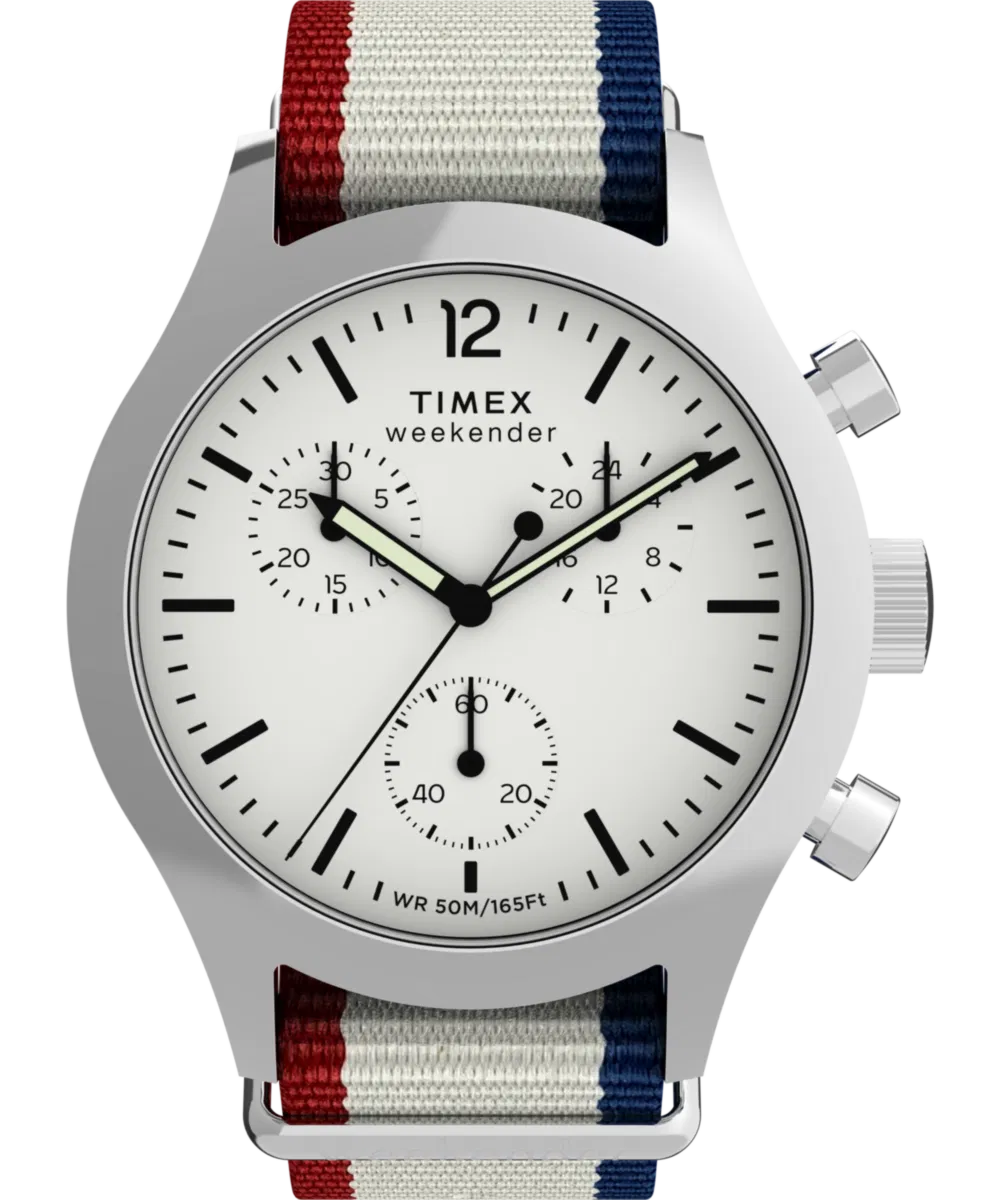
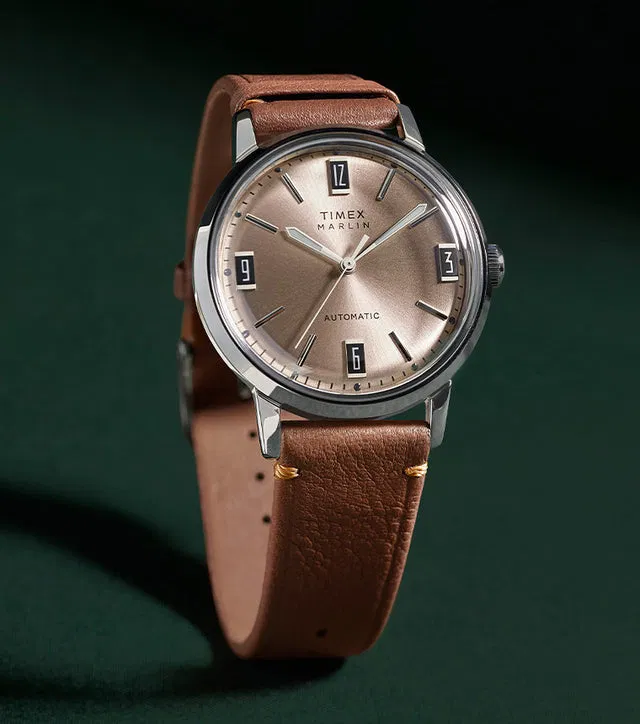
Timex
★★★★★ 4.5 (3,041 reviews)
$79

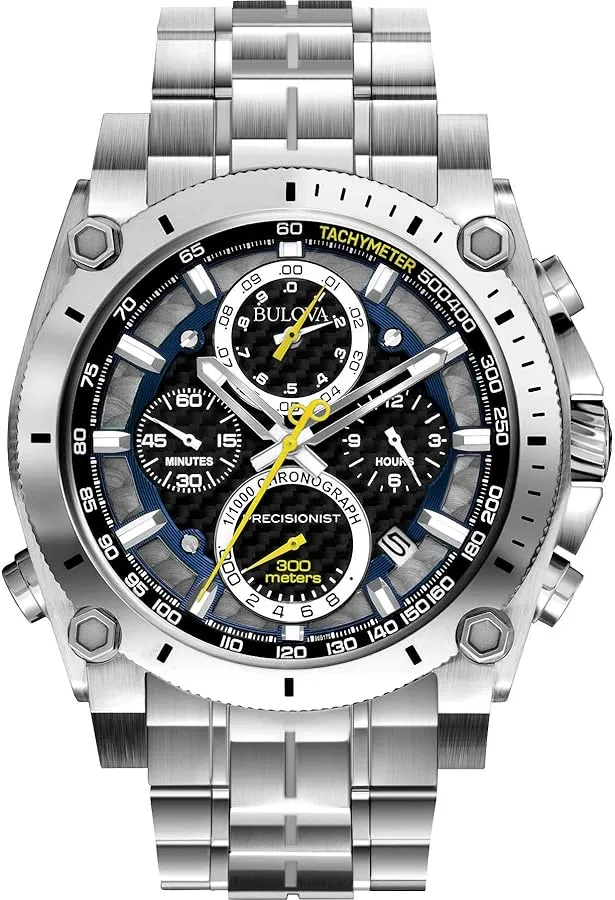
Browse all expert-reviewed watches →