
📅 Wednesday, August 5, 2026
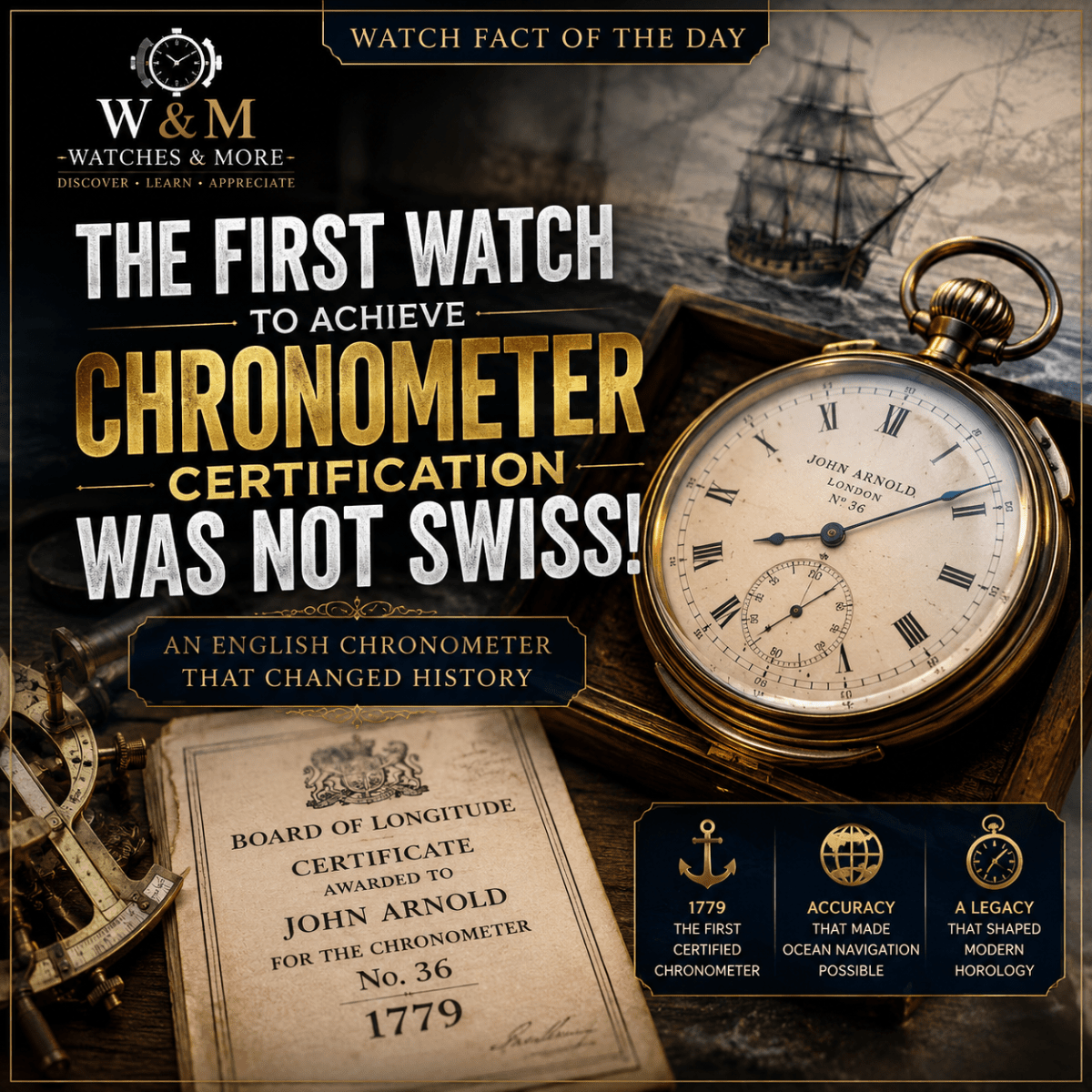
While Switzerland is synonymous with chronometer certification today, the first watch to officially receive a chronometer certificate was actually an English pocket chronometer made by John Arnold in 1779. His famous No. 36 marine chronometer was tested by the Board of Longitude and demonstrated exceptional accuracy, helping solve one of navigation’s greatest challenges. Long before Swiss observatories began certifying wristwatches, Arnold’s pioneering work laid the foundation for the precise timekeeping standards we now associate with the word “chronometer.”
During the 18th century, accurately determining a ship’s longitude at sea was one of the greatest scientific problems of the age. Even small timing errors could result in ships missing their destinations by many miles, often with disastrous consequences. John Arnold, alongside fellow English horologist Thomas Earnshaw, developed increasingly accurate marine chronometers capable of maintaining remarkable precision despite the constant motion, temperature changes, and humidity encountered aboard sailing vessels. Their innovations transformed ocean navigation and greatly improved the safety of global trade and exploration.
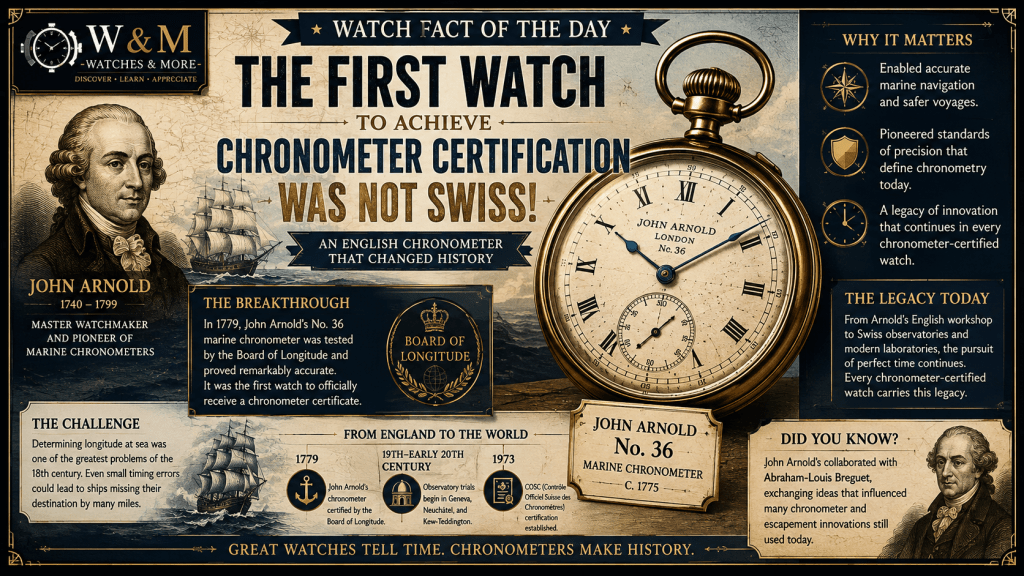
It wasn’t until the late 19th and early 20th centuries that Switzerland began establishing formal observatory trials in cities such as Geneva, Neuchâtel, and Kew-Teddington to evaluate the precision of mechanical watches. These competitions pushed manufacturers like Omega, Longines, Zenith, Patek Philippe, and Rolex to pursue ever-greater levels of accuracy. The modern COSC (Contrôle Officiel Suisse des Chronomètres) certification, introduced in 1973, continues this tradition by subjecting watch movements to rigorous multi-day testing in different positions and temperatures before they earn the prestigious title of Chronometer.
Today, the word chronometer has become a hallmark of exceptional precision, but its roots lie not in the mountains of Switzerland, but in Britain’s quest to master the seas. Every chronometer-certified wristwatch worn today carries a legacy that began over 240 years ago with pioneering English watchmakers striving to solve one of humanity’s greatest navigational challenges.
💡 Did You Know?
John Arnold was one of the first watchmakers to collaborate with Abraham-Louis Breguet, exchanging ideas that helped shape the future of precision watchmaking. Their friendship and shared innovations influenced many of the chronometer and escapement designs that would define horology for generations to come.
Category: Watch History
Disclaimer: Every effort has been made to keep these watch facts accurate, but the world of horology is full of myths, disputed stories, and fascinating trivia. Consider these facts a starting point for discovery rather than the final word. If you have corrections or additional insights, let us know—we’re always happy to keep the record ticking in the right direction.
🕐 Discover more watch facts, reviews, and buying guides at WatchesAndMore
☕ Help Support WatchesAndMore
If you enjoyed this article and would like to help support WatchesAndMore, consider visiting my Etsy Shop or browsing my designs on Redbubble. Every purchase helps support the continued creation of watch reviews, historical articles, buying guides, videos, and all the free content you enjoy here on the website and on YouTube.
Your support allows me to spend more time researching fascinating stories from the world of horology, testing new watches, and producing high-quality content for collectors and enthusiasts around the globe. Whether you’re looking for unique watch-themed merchandise or simply want to support the channel, every order is genuinely appreciated. Thank you for being part of the WatchesAndMore community—your support helps keep the passion for watches alive! ⌚🍻


🛍️ You Might Also Like
As an Amazon Associate and affiliate partner, WatchesAndMore earns from qualifying purchases.
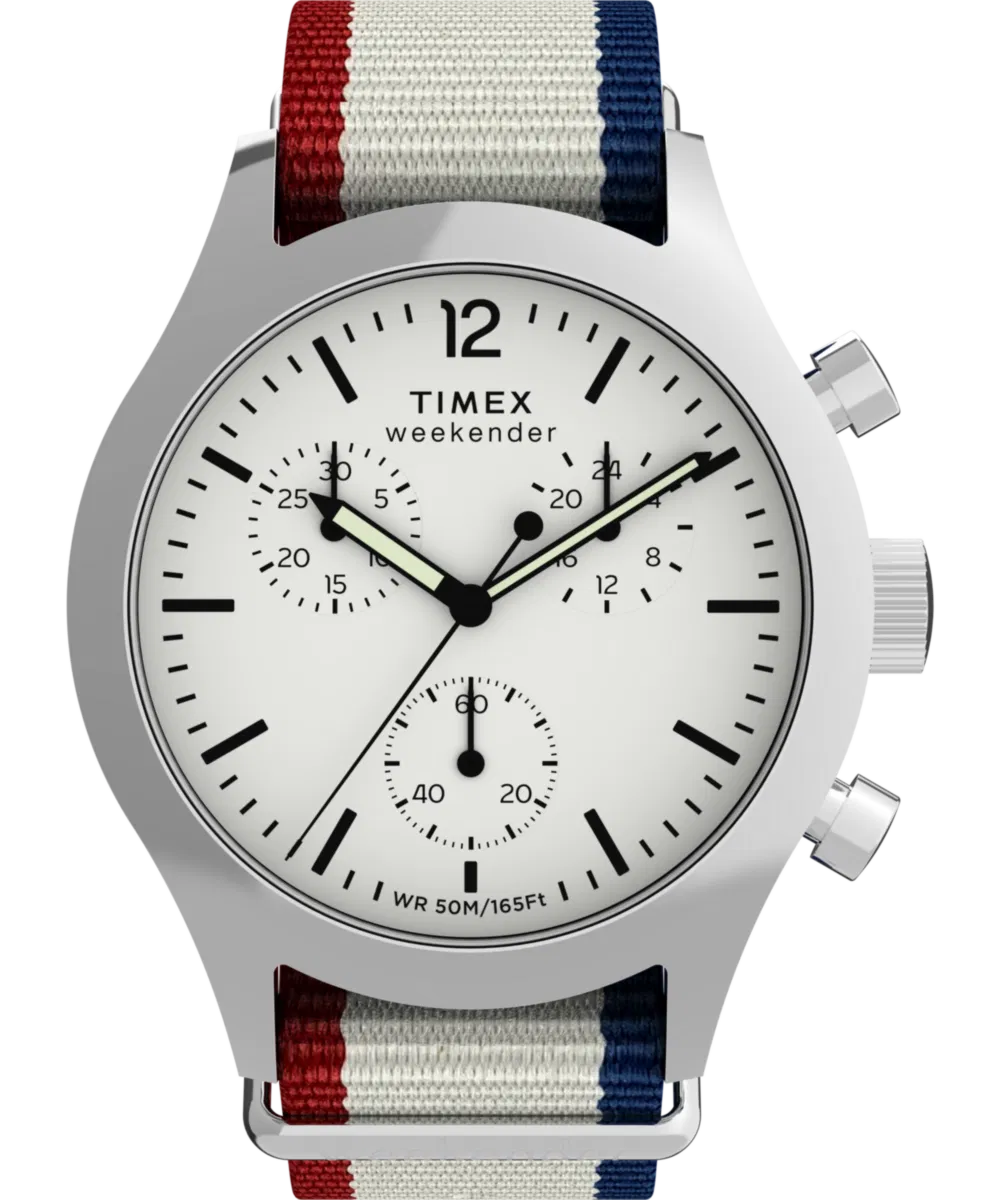
Timex
★★★★★ 4.5 (3,041 reviews)
$79

Browse all 142+ expert-reviewed watches →


