
📅 Sunday, September 6, 2026
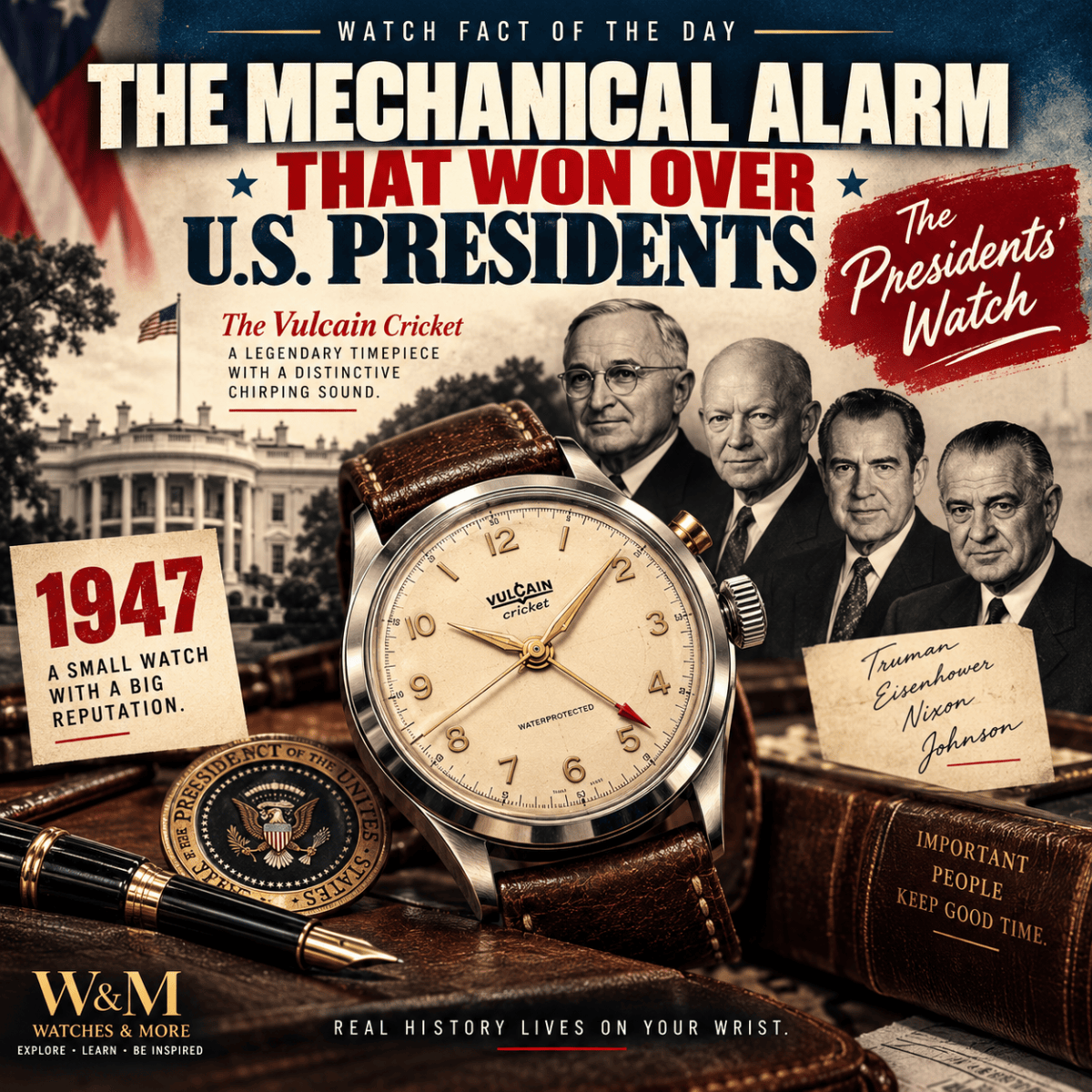
In 1947, Swiss watchmaker Vulcain introduced a wristwatch with a remarkable party trick: it could actually wake you up. The Vulcain Cricket featured a mechanical alarm powerful enough to be genuinely useful, producing the distinctive buzzing sound that inspired its name. Vulcain describes it as the world’s first alarm wristwatch with a sufficiently forceful striking mechanism, and it quickly became one of the company’s defining creations.
Making a mechanical alarm wristwatch was one thing; making one that could actually be heard was another. Vulcain’s solution turned the watch case itself into part of the acoustic system. When the alarm activates, a tiny mechanical hammer rapidly strikes a pin, while the outer caseback functions as a resonance chamber, amplifying the vibrations into the Cricket’s unmistakable sound.
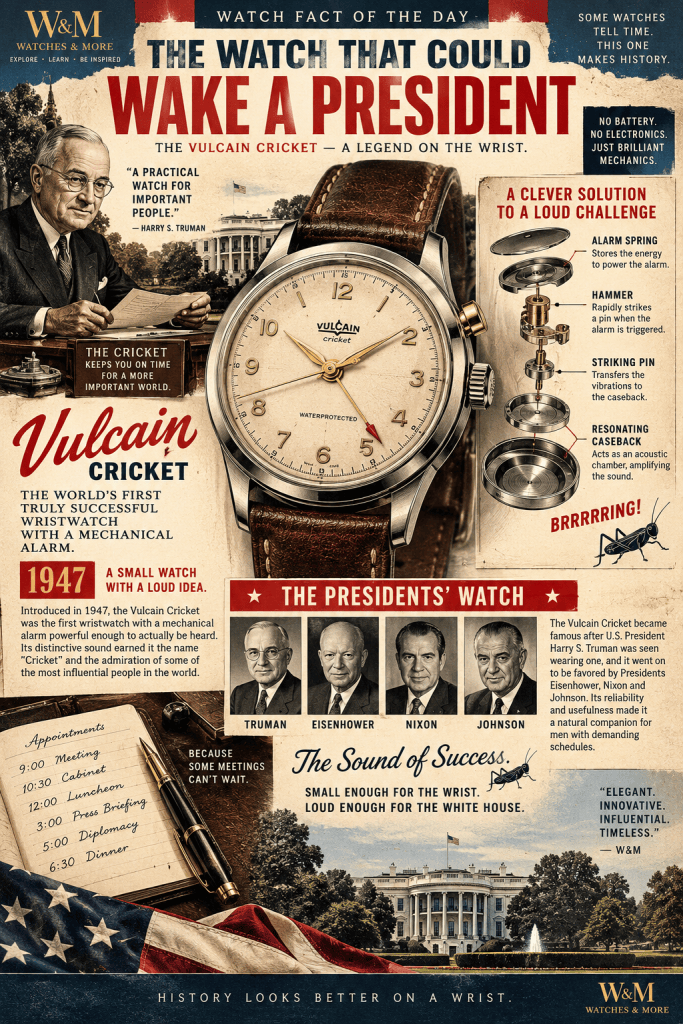
That meant the Cricket wasn’t simply a watch with an extra hand on the dial. It was essentially a tiny mechanical alarm clock engineered for the wrist. The wearer could set an independent alarm time, wind the alarm mechanism, and carry a genuinely audible reminder wherever they went—without batteries, electronics or a speaker.
Then the Cricket found some unusually powerful admirers.
The watch became closely associated with Harry S. Truman, and Vulcain’s history subsequently connects the Cricket with Presidents Dwight D. Eisenhower, Richard Nixon and Lyndon B. Johnson as well. That presidential association became so strong that the Cricket earned its enduring nickname:
“The Presidents’ Watch.”
The connection was particularly appropriate. Before smartphones, digital calendars and electronic reminders, a mechanical alarm could be genuinely practical for someone whose day revolved around meetings and appointments. Set the alarm hand, wind the mechanism, and at the appointed time the little Cricket on your wrist would make sure you noticed.
The basic idea survives today. Modern Cricket movements remain mechanical and hand-wound, and Vulcain’s current V10 alarm calibre uses a double-barrel architecture, with the alarm sounding for approximately 20 seconds. More than 75 years after the original Cricket appeared, the complication remains wonderfully physical: gears, springs, hammer, resonance—and noise.
💡 Did You Know?
The Cricket’s famous sound doesn’t come from an electronic buzzer or miniature speaker. A mechanically driven hammer strikes a pin, creating vibrations that are amplified by the watch’s outer caseback acting as a resonance chamber. In other words, Vulcain didn’t merely put an alarm mechanism inside a wristwatch—it engineered part of the watch case into a miniature acoustic instrument.
SPRING → HAMMER → PIN → RESONANCE CHAMBER → CRICKET! 🦗
⭐ Why It Matters
Today, having an alarm on your wrist sounds completely ordinary. In 1947, making a compact mechanical wristwatch capable of producing an alarm loud enough to be genuinely useful was a significant watchmaking achievement.
And unlike the silent notifications appearing on our wrists today, the Cricket accomplished it with nothing more than mechanical energy and clever acoustics.
NO BATTERY. NO SPEAKER. JUST MECHANICS.
Category: Watch History
Disclaimer: Every effort has been made to keep these watch facts accurate, but the world of horology is full of myths, disputed stories, and fascinating trivia. Consider these facts a starting point for discovery rather than the final word. If you have corrections or additional insights, let us know—we’re always happy to keep the record ticking in the right direction.
🕐 Discover more watch facts, reviews, and buying guides at WatchesAndMore
🛍️ You Might Also Like
As an Amazon Associate and affiliate partner, WatchesAndMore earns from qualifying purchases.
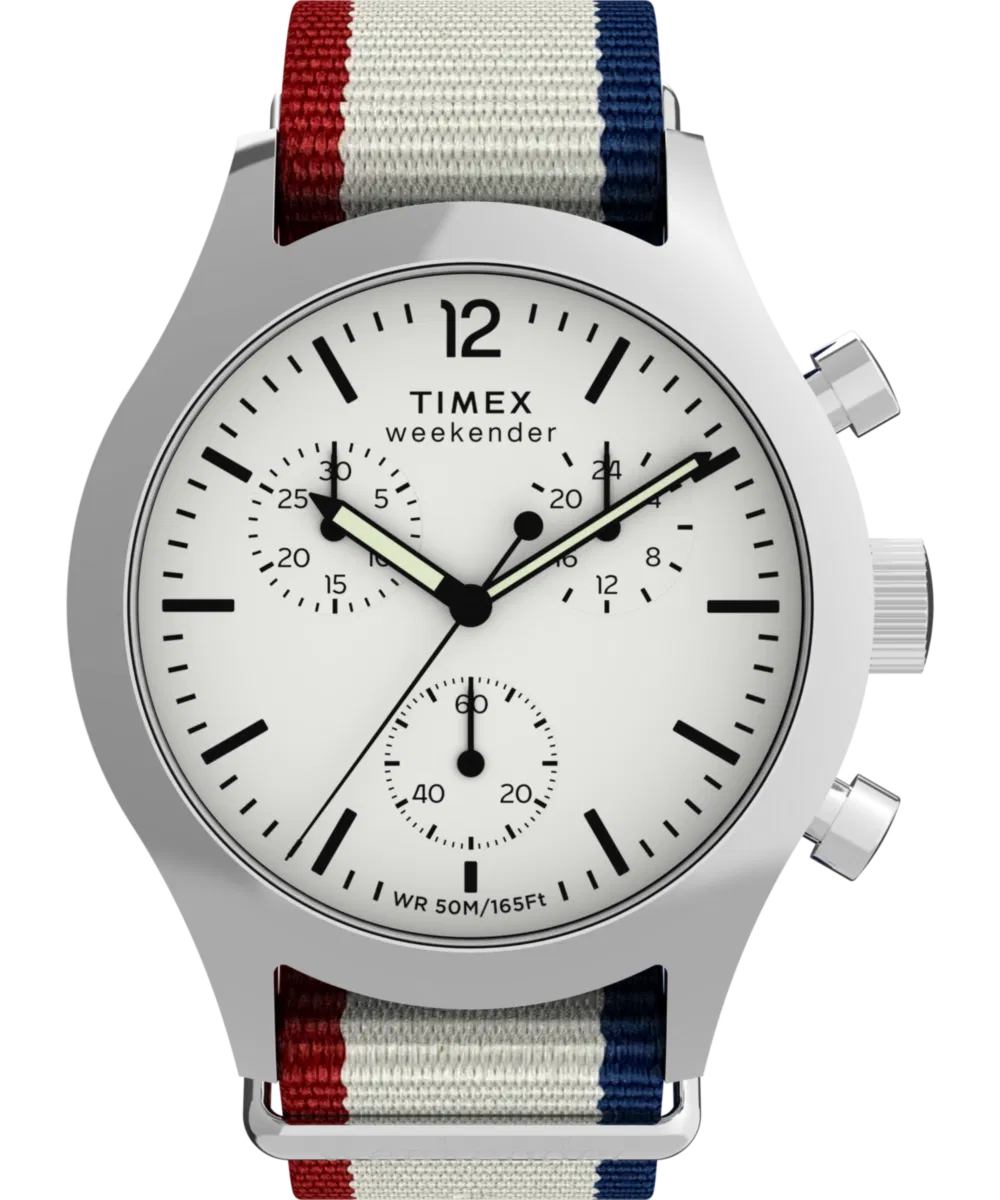
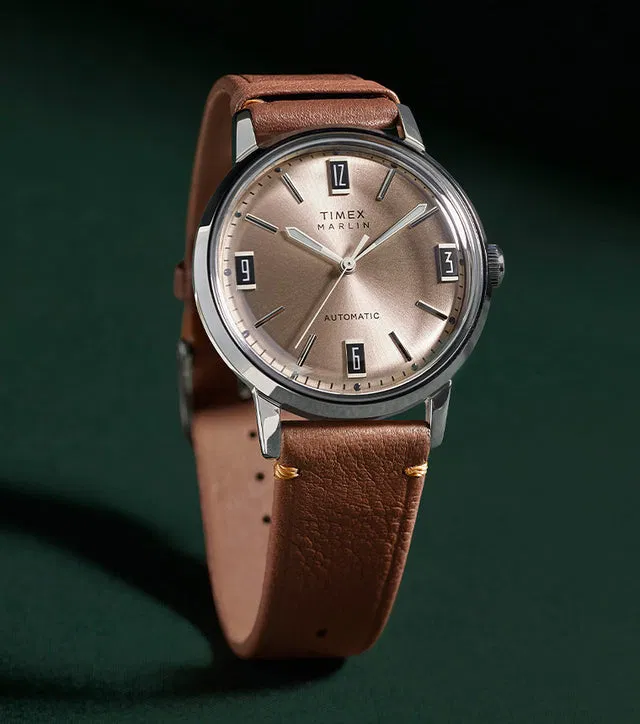
Timex
★★★★★ 4.5 (3,041 reviews)
$79

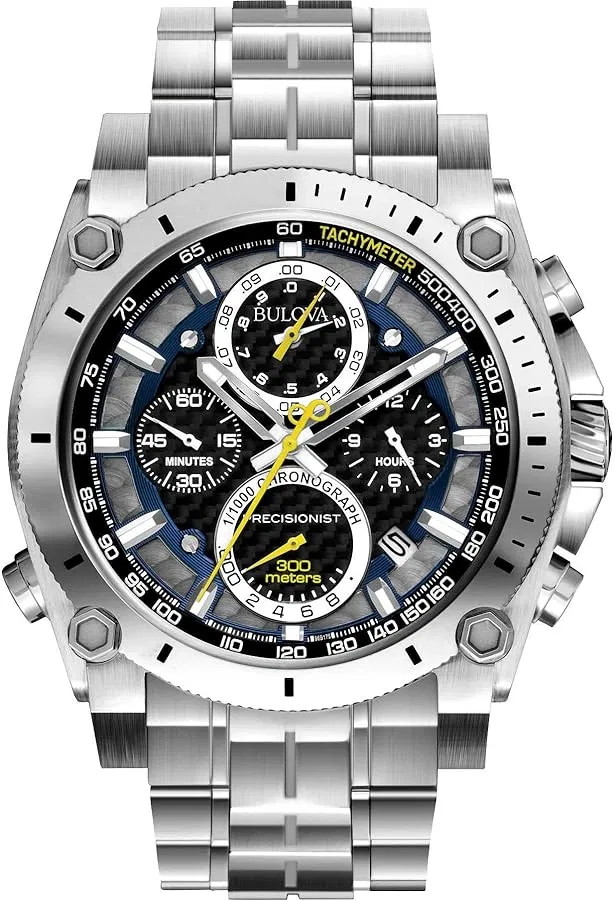
Browse all expert-reviewed watches →