
📅 Wednesday, July 22, 2026
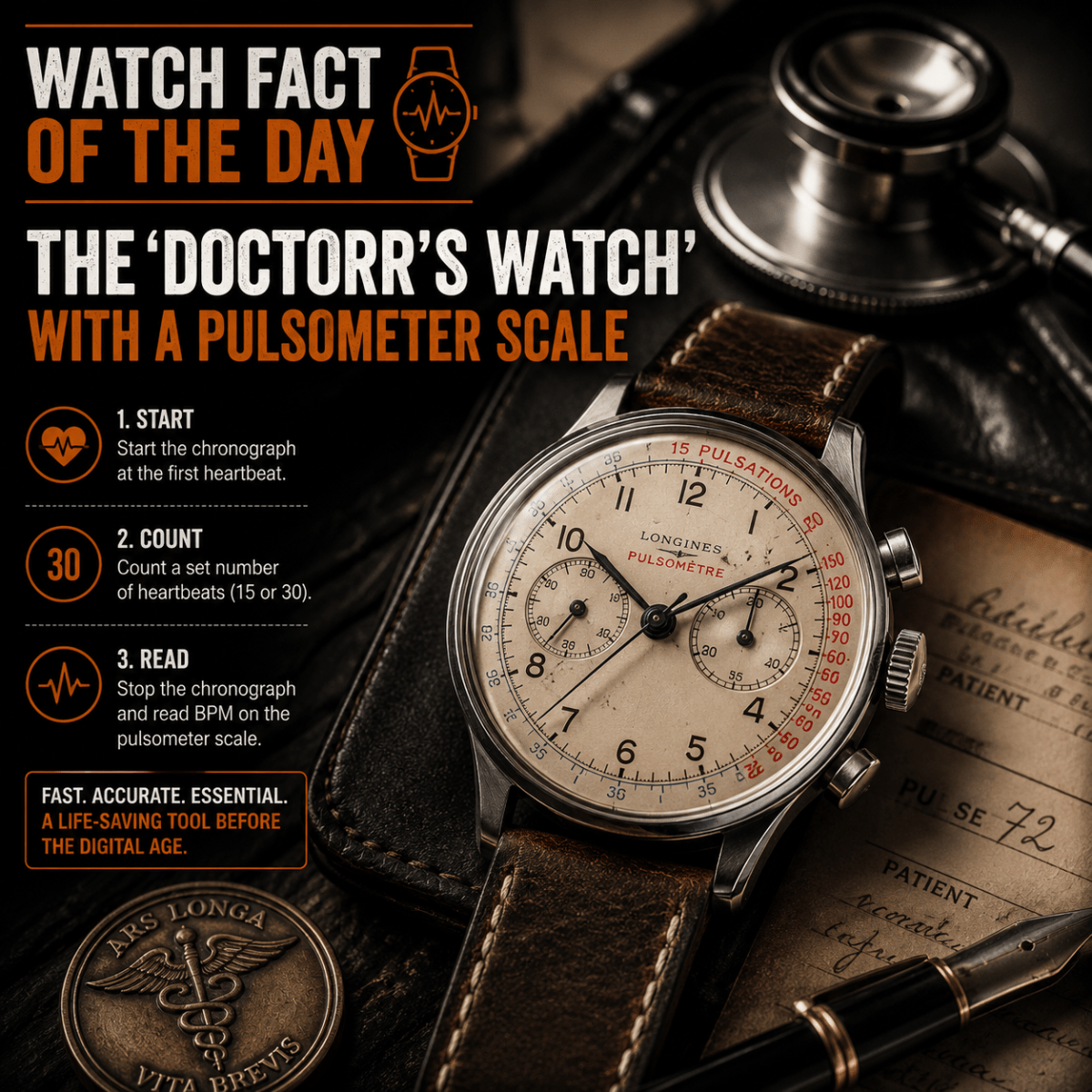
Before digital devices, doctors relied on specialized watches to quickly measure a patient’s pulse. These ‘doctor’s watches’ featured a pulsometer scale on the dial or bezel, allowing a physician to start the chronograph, count a specific number of heartbeats (e.g., 15 or 30), and then read the beats per minute directly from the scale. This ingenious complication was a vital diagnostic tool in medical practice for decades.
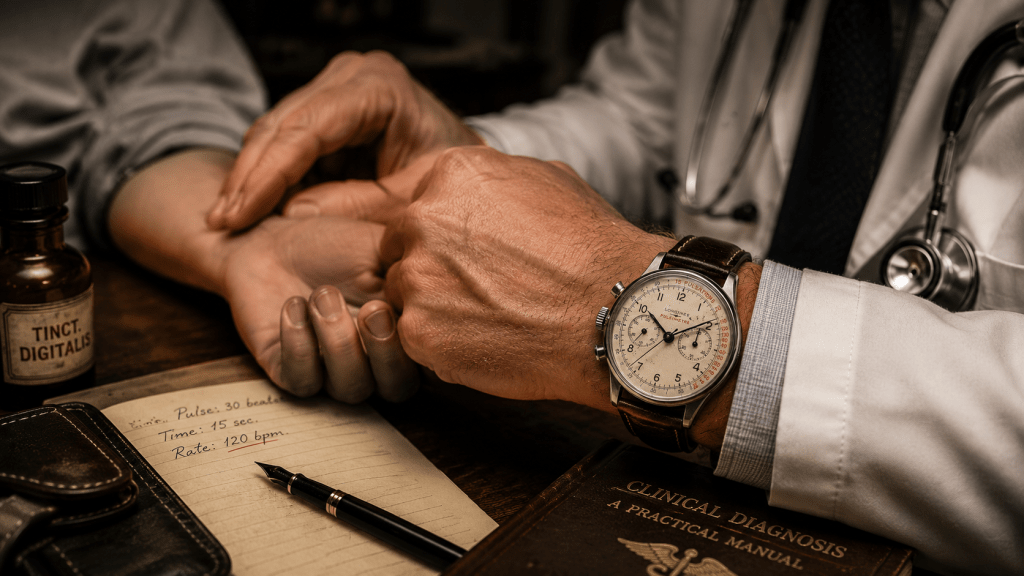
The pulsometer was one of several purpose-built scales developed for chronographs during the late 19th and early 20th centuries. Unlike a standard tachymeter, which measures speed over a known distance, a pulsometer was calibrated specifically for heart rate. After counting a predetermined number of heartbeats—commonly 15 or 30—the physician could stop the chronograph and read the patient’s pulse directly in beats per minute, eliminating the need for mental calculations during a medical examination.
Many renowned Swiss manufacturers, including Longines, Omega, Universal Genève, and later Patek Philippe, produced elegant chronographs featuring pulsometer scales. These watches became trusted companions for physicians making hospital rounds, house calls, and even battlefield examinations, where speed and accuracy could make a critical difference. The distinctive scales, often printed in red or blue around the edge of the dial, remain some of the most visually striking complications ever created.
Although electronic monitors have long replaced the pulsometer in everyday medical practice, these watches remain highly sought after by collectors. They represent a fascinating period when mechanical watchmaking wasn’t just about telling time—it provided practical tools for professionals. Today, a well-preserved doctor’s chronograph is admired not only for its craftsmanship but also as a reminder of an era when a skilled physician’s most important diagnostic instruments were a stethoscope, a trained eye, and a watch.
💡 Did You Know?
Doctor’s watches weren’t the only profession-specific timepieces. Watchmakers also created telemeter chronographs for measuring the distance of visible events like lightning, tachymeter chronographs for calculating speed, and asthmometer watches designed to help physicians measure a patient’s breathing rate—showcasing just how versatile mechanical chronographs became before the digital age.
Category: Watch History
Disclaimer: Every effort has been made to keep these watch facts accurate, but the world of horology is full of myths, disputed stories, and fascinating trivia. Consider these facts a starting point for discovery rather than the final word. If you have corrections or additional insights, let us know—we’re always happy to keep the record ticking in the right direction.
🕐 Discover more watch facts, reviews, and buying guides at WatchesAndMore
🛍️ You Might Also Like
As an Amazon Associate and affiliate partner, WatchesAndMore earns from qualifying purchases.

Browse all 75+ expert-reviewed watches →


