

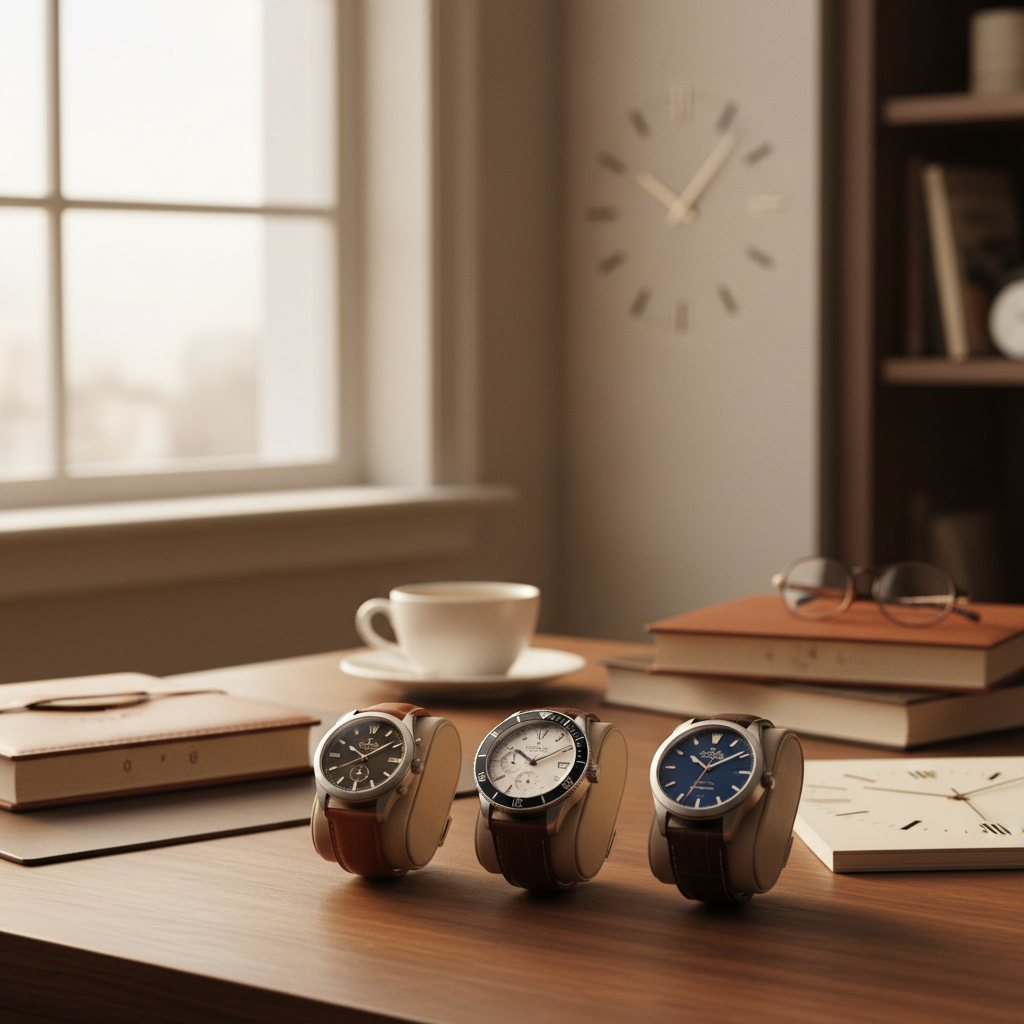
📅 Sunday, October 25, 2026
Different brands. Different watches. The same familiar pose.
Open a watch catalogue and look past the polished cases and beautiful dials.
Notice the hands.
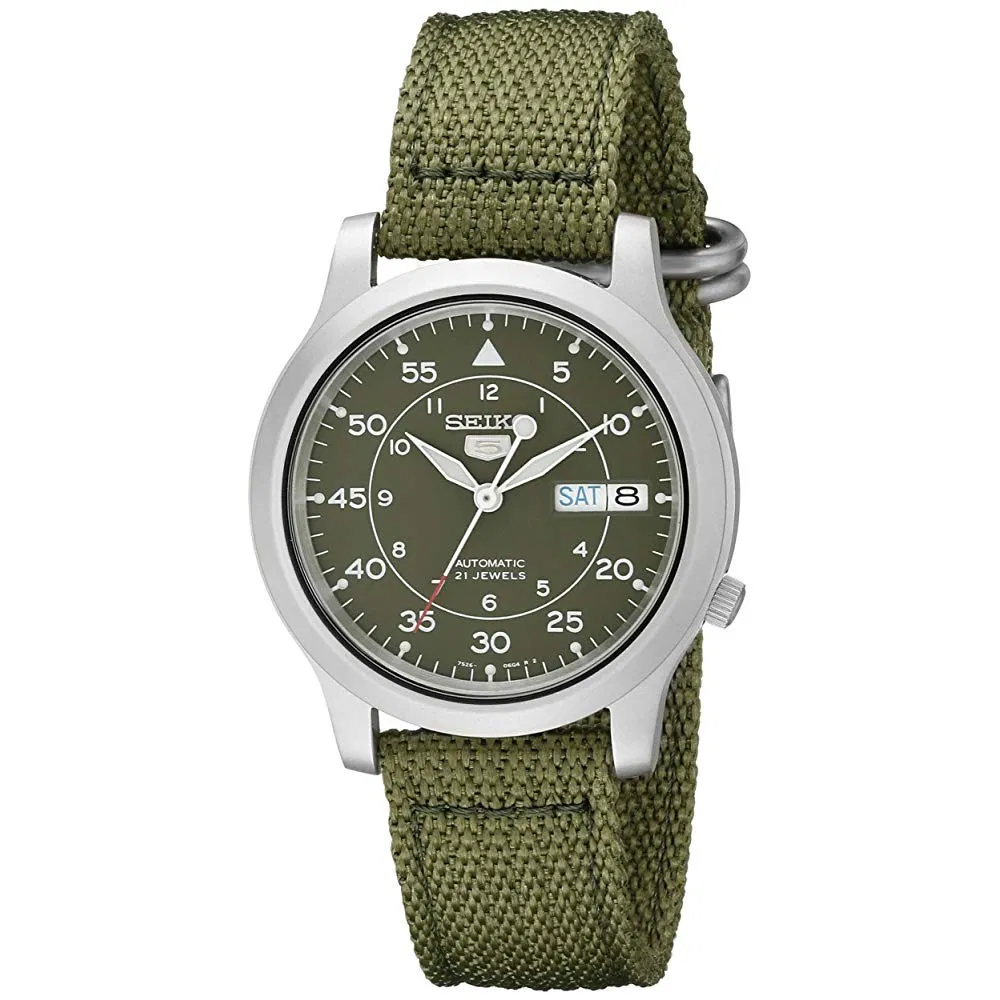
Again and again, they point upwards in that familiar open V: somewhere around 10:10.
Coincidence? Hardly. Those hands are helping present the watch before you have read a word of the advertisement.
🎯 A Watch’s Best Angle
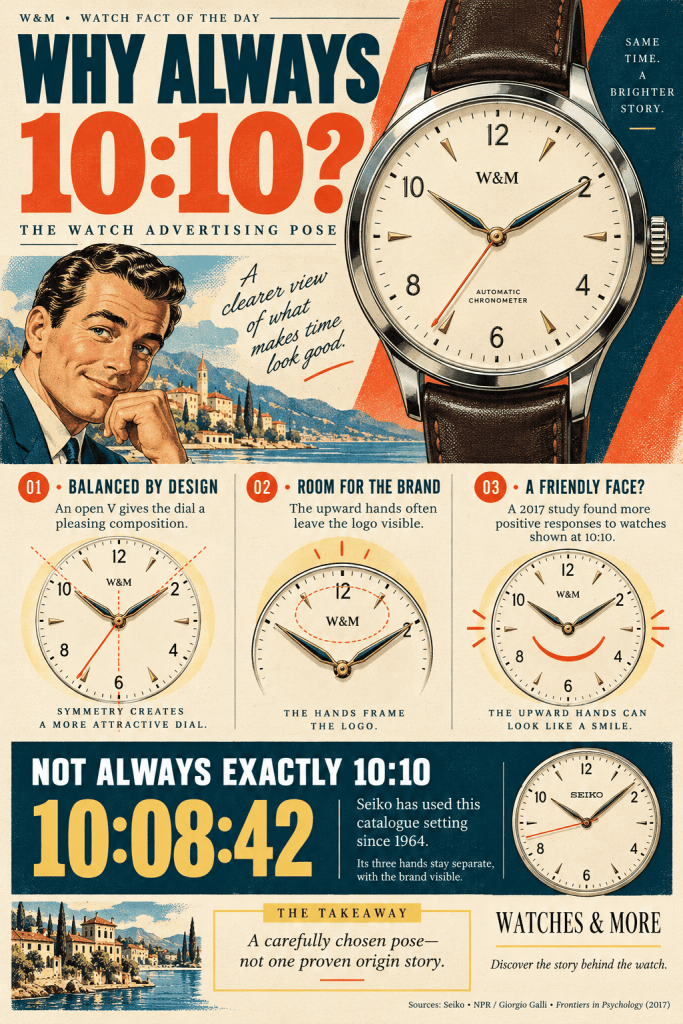
Around 10:10, the hour and minute hands spread across the upper dial, creating a visually balanced arrangement.
In a 2014 NPR interview, Timex design director Giorgio Galli explained his preference in terms of showing the dial clearly. For him, the appeal was the composition rather than a deliberate smiling face. TPR
Think of it as a product’s preferred camera pose: an arrangement chosen to show its design at its best.
That is a strong explanation for the convention’s appeal. It does not establish one definitive moment when the entire industry adopted it.
👀 Making Room for the Name
Seiko provides a particularly clear example.
The company says it has used 10:08:42 for catalogue photographs of its analogue watches since 1964. That arrangement separates the three hands and keeps the brand name and logo visible. It also gives the upward-facing hands a pleasing appearance. seikowatches.com
So “10:10” is useful shorthand for a family of carefully chosen settings—not a universal instruction to the second.
Nor does that pose guarantee every marker, date window, or subdial will remain uncovered. The best arrangement depends on the watch.
🙂 Is the Watch Really Smiling?
The smiling-watch explanation has more behind it than advertising folklore.
A 2017 study published in Frontiers in Psychology compared photographs showing watches at 10:10, 11:30, and 8:20.
Participants rated the 10:10 watches more positively, and a separate experiment found that the arrangement resembled a smiling face.
The researchers also reported more favourable purchase-intention ratings for 10:10. That measures a response to photographs, rather than demonstrating increased real-world sales. frontiersin.org
A pleasing layout may also feel friendly.
🧭 So Why Did the Convention Begin?
The evidence supports several reasons for using it: visual balance, clear presentation, visible branding, and a potentially positive emotional impression.
It does not justify saying the convention began purely for symmetry—or dismissing the smile as a myth.
A designer’s explanation, a brand’s photography rules, and a psychology experiment answer different questions. Together, they make the story more interesting than a single marketing secret.
💡 Did You Know?
Seiko’s preferred setting includes the seconds hand.
At 10:08:42, all three hands contribute to the composition. Even the slender hand you might barely notice has a role in presenting the dial. seikowatches.com
⭐ Why It Matters
Watch advertising reminds us how much design can communicate through a tiny adjustment.
The product stays the same. Move its hands, and the balance of the photograph changes.
Next time you see a watch advertisement, take a second look. Where are the hands guiding your eyes?
Sometimes, the time on a watch tells you how it wants to be seen. ⌚
Watches & More — Discover the story behind the watch.
Explore more Watch Facts • Visit Watches & More • Visit our companion site
Category: Watch Culture
Disclaimer: Every effort has been made to keep these watch facts accurate, but the world of horology is full of myths, disputed stories, and fascinating trivia. Consider these facts a starting point for discovery rather than the final word. If you have corrections or additional insights, let us know—we’re always happy to keep the record ticking in the right direction.
🕐 Discover more watch facts, reviews, and buying guides at WatchesAndMore
🛍️ You Might Also Like
As an Amazon Associate and affiliate partner, WatchesAndMore earns from qualifying purchases.

Browse all expert-reviewed watches →