
📅 Tuesday, September 22, 2026
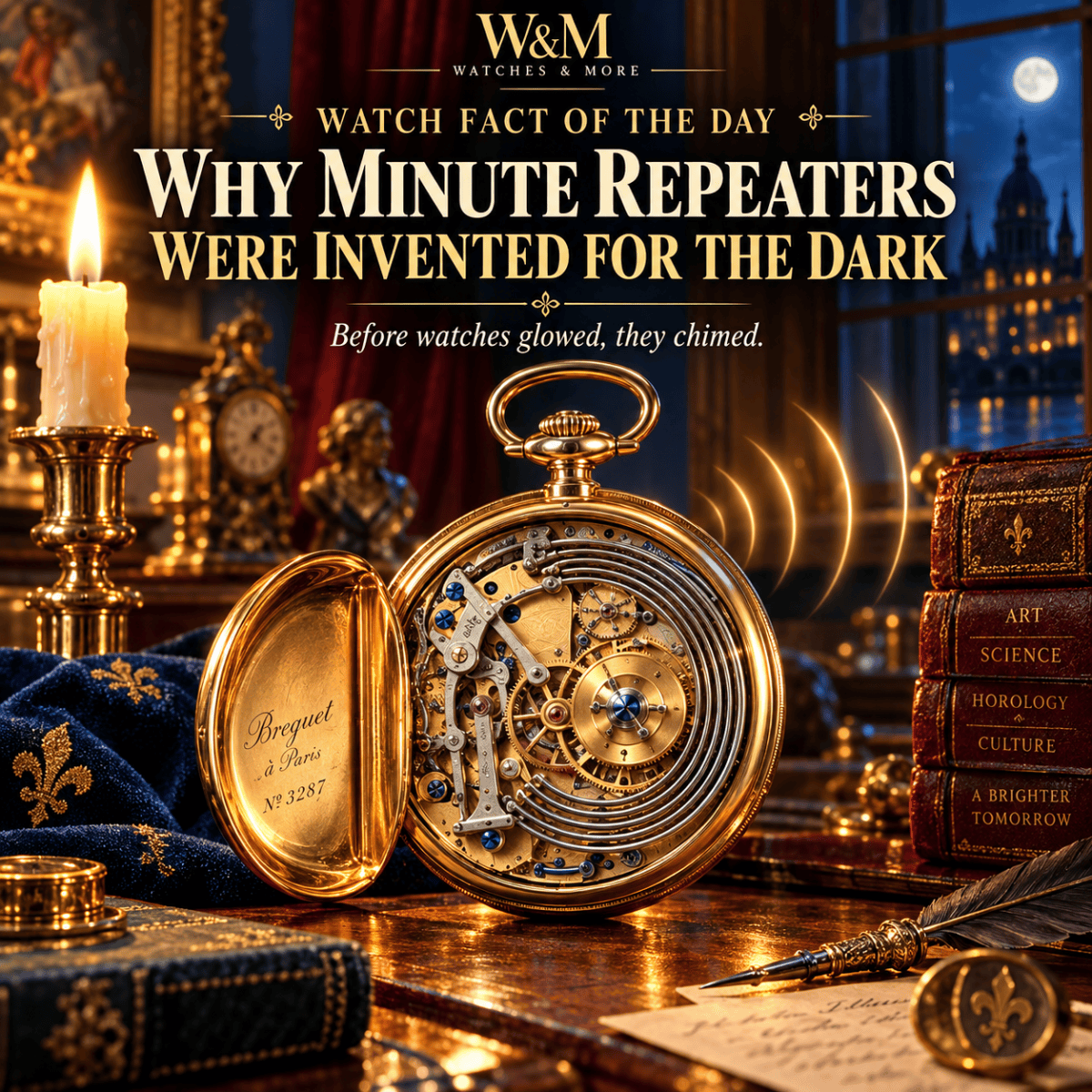
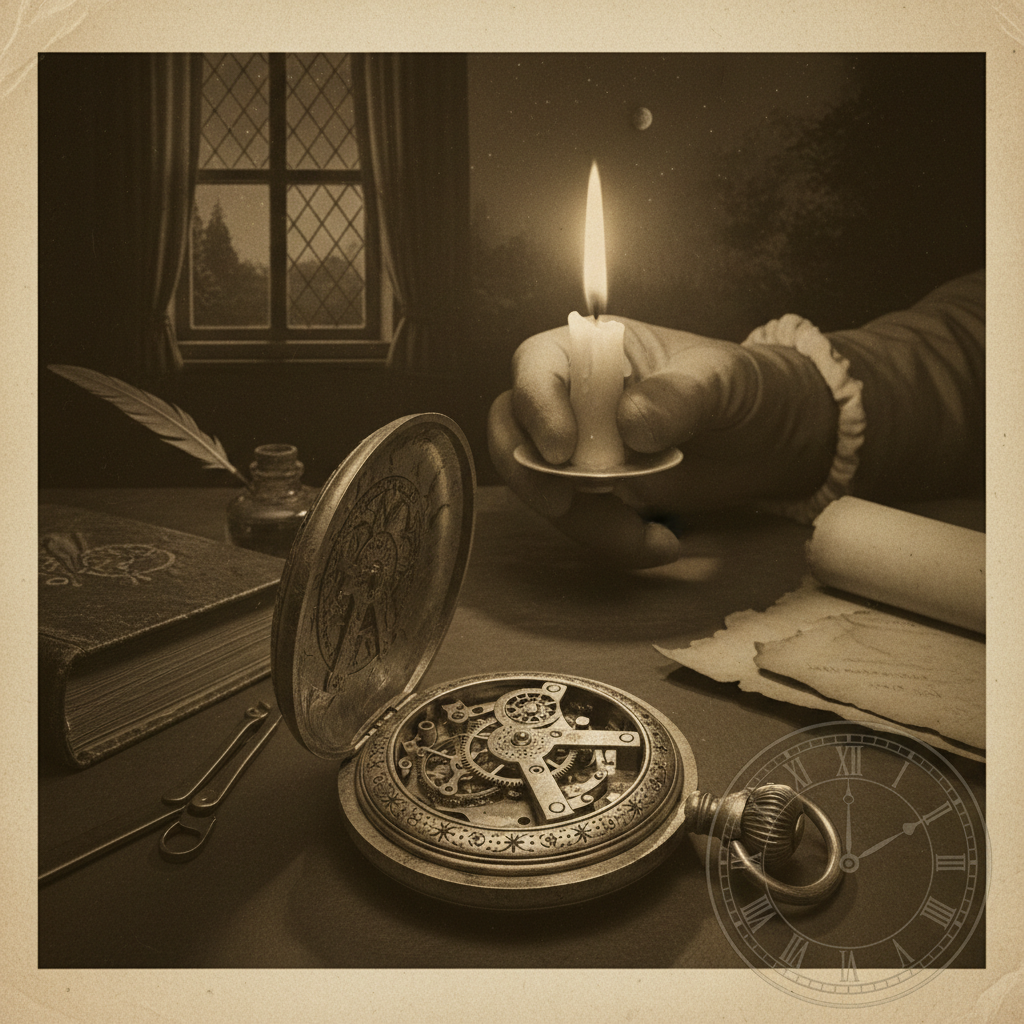
Long before luminous paint, electric lights, or glowing digital displays, checking the time at night could be surprisingly inconvenient.
If you woke in a dark room, reading a watch or clock meant finding a candle, lamp, or other light source first.
Watchmakers came up with a much more elegant solution:
MAKE THE WATCH SPEAK.
By the late 1600s, English watchmakers were developing repeating watches that could strike the time on demand. Early quarter repeaters announced the hours and quarter-hours, and by the early 1700s watchmakers in southern Germany had developed mechanisms capable of indicating the minutes as well. Haute Horlogerie
That was the breakthrough.
Instead of needing to see the dial, the owner could activate a slide or pushpiece and simply listen.
A traditional minute repeater translates the time into three acoustic signals:
LOW TONES = HOURS
TWO-TONE CHIMES = QUARTERS
HIGH TONES = REMAINING MINUTES
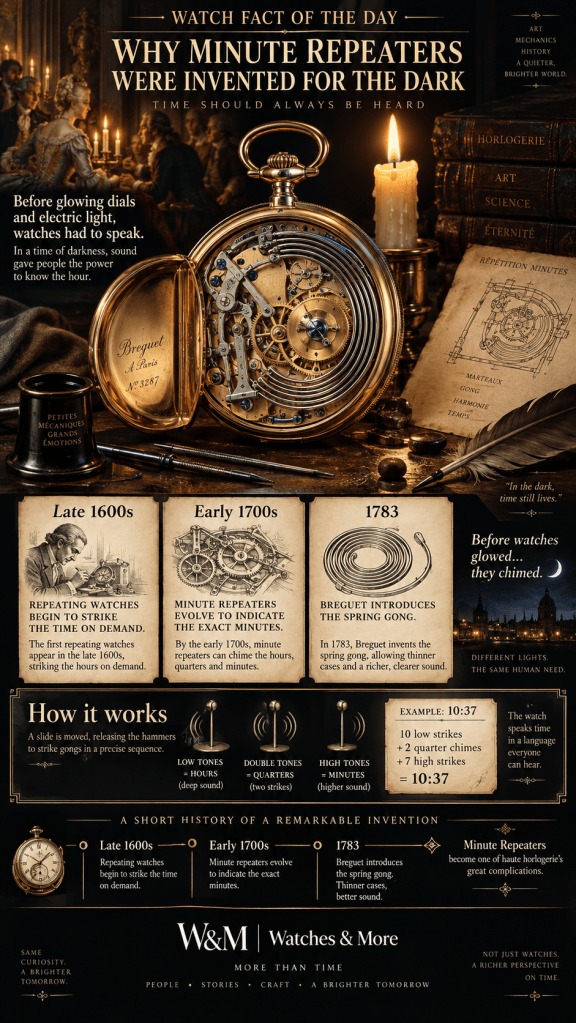
So if the time were 10:37, the watch would strike:
10 hour tones
then
2 quarter-hour sequences
then
7 minute tones
A mechanical watch had effectively become an audible time calculator.
🔔 Breguet Made It Smaller — and Better
Early repeating watches generally struck tiny bells housed inside the case.
That worked, but bells took up valuable space.
In 1783, Abraham-Louis Breguet introduced a major improvement by replacing the traditional bell with a spring gong. The gong could be coiled around the movement, helping make repeating watches thinner while also improving the quality and character of the sound. The idea was so effective that other watchmakers quickly adopted it. Montres Breguet
That innovation helped shape the architecture of the minute repeater we recognize today.
💡 Did You Know?
The modern matchstick didn’t appear until 1845.
The Fondation Haute Horlogerie notes that once matches made candles and oil lamps much easier to light, demand for repeating watches declined. But by then, the minute repeater had evolved beyond pure necessity and become one of watchmaking’s most technically prestigious complications. Haute Horlogerie
In other words, the technology survived long after the original practical problem became easier to solve.
Why?
Because watchmakers had turned a night-time convenience into mechanical art.
⭐ Why It Matters
A minute repeater is one of those complications that reminds us how differently watches were once used.
Today, we think of a watch primarily as something we look at.
A repeater was designed to be:
HEARD.
And making a tiny mechanical object produce clear, musical tones is extraordinarily difficult.
A modern minute repeater must coordinate:
racks
snails
hammers
gongs
springs
timing mechanisms
all while keeping the entire sequence synchronized with the actual time shown on the dial.
That is why minute repeaters remain among the most demanding complications in haute horlogerie. Breguet still describes the minute repeater as a mechanism that makes time audible through precise interaction between hammers and gongs.
Category: Watch History
Disclaimer: Every effort has been made to keep these watch facts accurate, but the world of horology is full of myths, disputed stories, and fascinating trivia. Consider these facts a starting point for discovery rather than the final word. If you have corrections or additional insights, let us know—we’re always happy to keep the record ticking in the right direction.
🕐 Discover more watch facts, reviews, and buying guides at WatchesAndMore
🛍️ You Might Also Like
As an Amazon Associate and affiliate partner, WatchesAndMore earns from qualifying purchases.
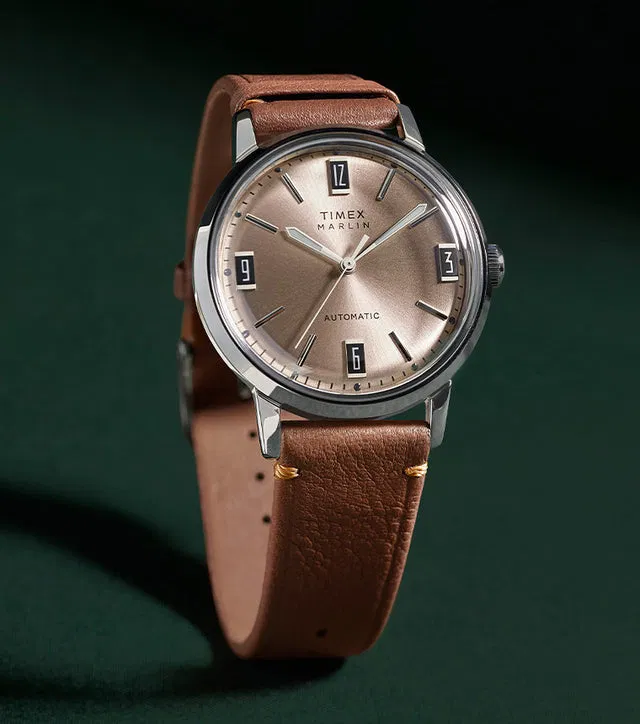
Timex
★★★★★ 4.5 (3,041 reviews)
$79

Browse all 142+ expert-reviewed watches →




 WatchesAndMoreCO