
2026-11-26 · Watches And More
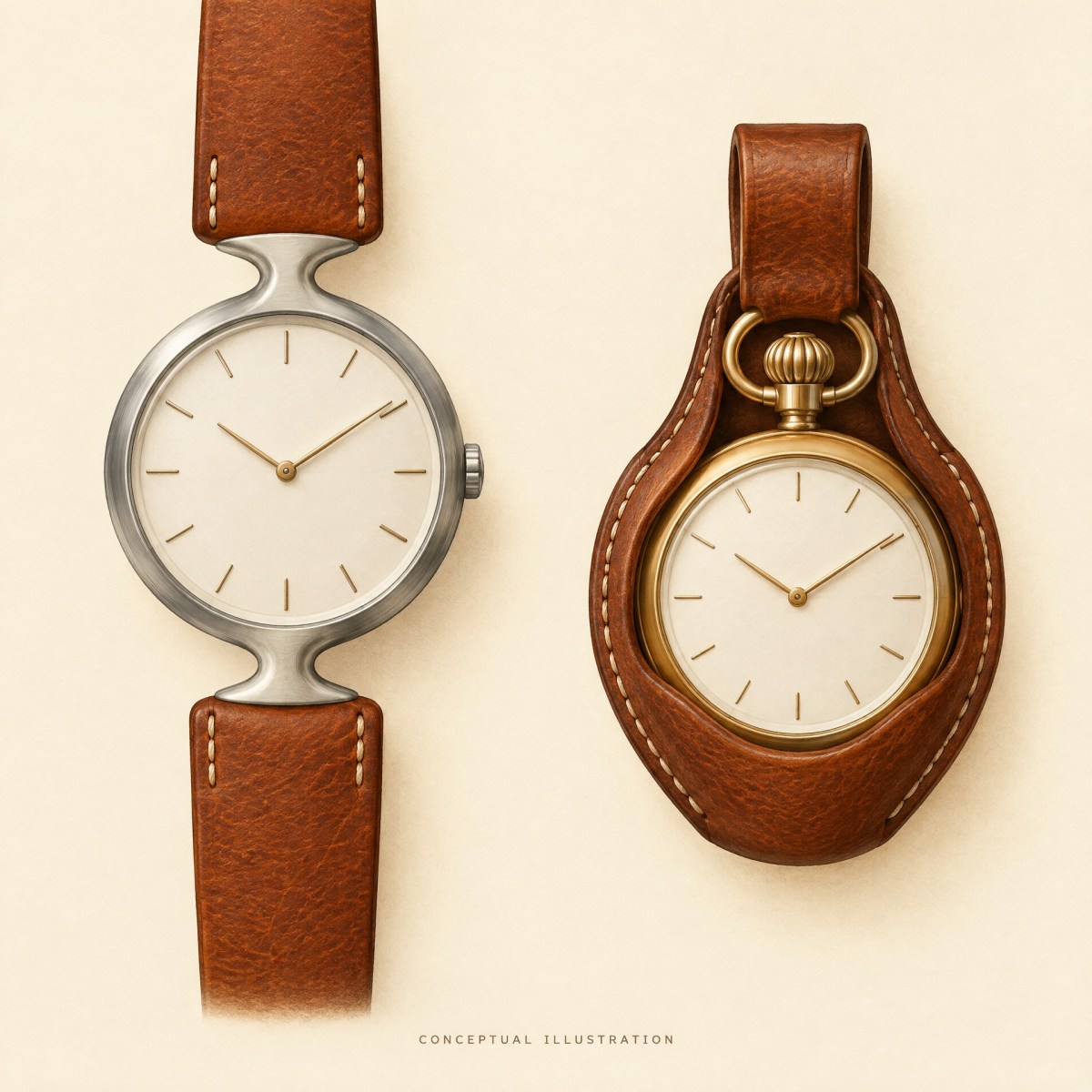
Start where metal meets leather. The Science Museum Group describes its Early Ingersoll wristwatch, L2015-4072, with a silver Dennison case, a winding button at 12 o’clock and lugs soldered onto the case at 12 and 6. Their stated purpose is to allow a strap to attach behind the watch. The leather strap is sewn on. [S1]
💡 Did You Know?
The Ingersoll carries two different dating clues. In the Science Museum Group’s supplied catalogue excerpt, verified on 2026-11-28, the watch is dated approximately 1908, while its case is hallmarked for 1914. Those are distinct descriptions—not a single manufacturing date for the complete assembly. [S1]
There is detail beyond the attachment, too: the catalogue describes a white card dial signed “Ingersoll, Sterling,” subsidiary seconds and a movement with a lever escapement. Yet it is the soldered metal and sewn leather that make this particular design story so revealing. [S1]
⭐ Why It Matters
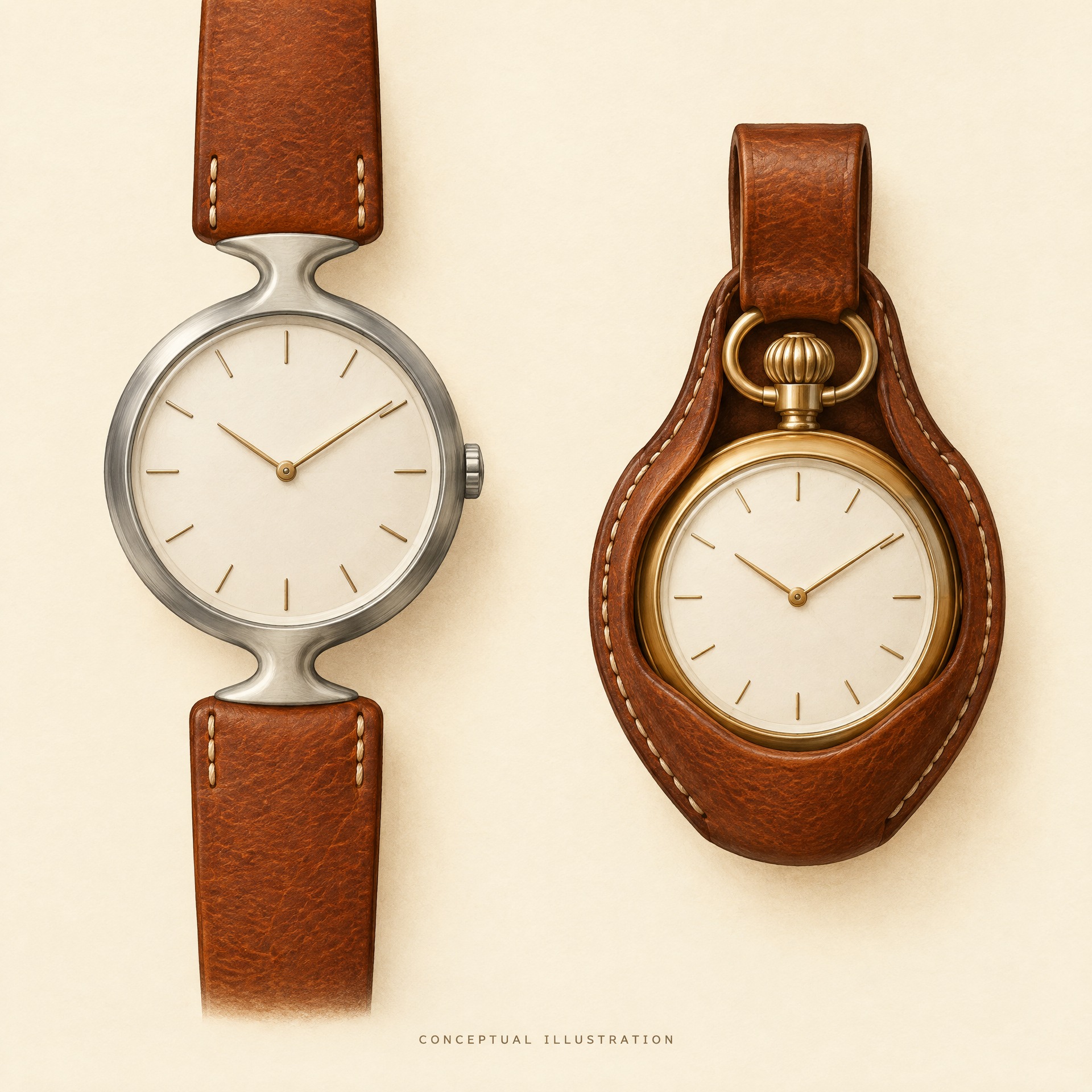
The separate Watch and wrist strap, L2015-3558, presents a different arrangement. The museum describes a leather strap containing a small gold pocket watch, explicitly identifying that containment as converting it into a wristwatch. Here, the strap is documented as a holder for the timekeeper. [S2]
Together, the objects show two documented ways of connecting a timekeeper to the wrist: soldered case lugs with sewn-on leather in the Ingersoll, and a leather strap containing a pocket watch in the second object. The distinction is between attachment to the case and containment by the strap. [S1] [S2]
❤️ The W&M Take
Our take: the connection deserves a place in the spotlight. A dial draws the eye, but the junction between timekeeper and strap gives us another way to appreciate watch design. For us, these two approaches are compelling without needing a winner: one invites attention to the case, the other to the holder.
Sources
- Early Ingersoll wristwatch — Science Museum Group Collection, L2015-4072 — attributed researched excerpt, verified 2026-11-28T01:38:10.983Z; publisher blocked fresh retrieval
- Watch and wrist strap — Science Museum Group Collection, L2015-3558 — attributed researched excerpt, verified 2026-11-28T01:38:10.983Z; publisher blocked fresh retrieval
Disclaimer: Every effort has been made to keep these watch facts accurate, but the world of horology is full of myths, disputed stories, and fascinating trivia. Consider these facts a starting point for discovery rather than the final word. If you have corrections or additional insights, let us know—we’re always happy to keep the record ticking in the right direction.
Read Next
- Jacqueline Dimier’s Royal Oak II: Preserving Character at 29 mm
- Junghans and Max Bill: A Kitchen Clock Before the Purist Wristwatch
Watches And More · Watch Fact Archive · Companion site
Which captures your design curiosity more: attachment points added to a watch case, or a strap that contains the watch itself?
Discover more from WatchesAndMoreCO
Subscribe to get the latest posts sent to your email.


