
📅 Thursday, July 2, 2026
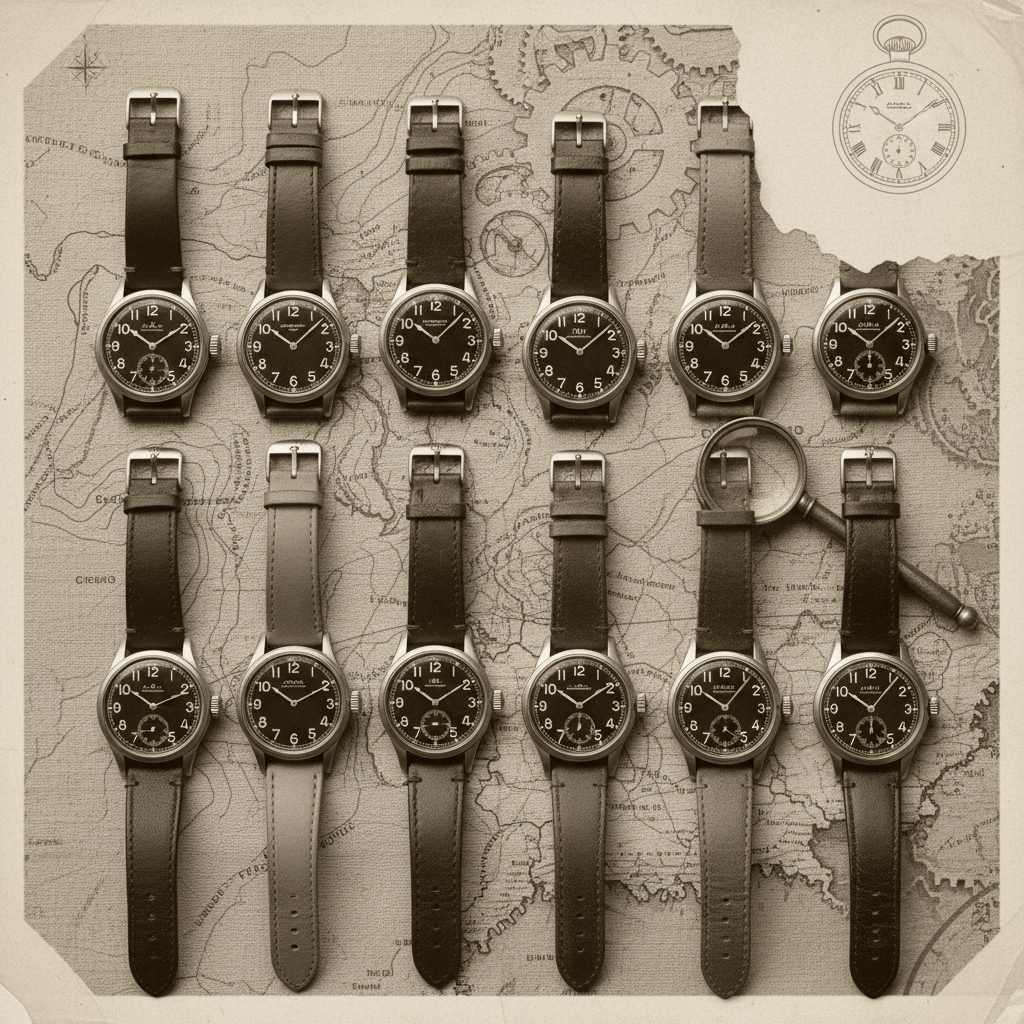
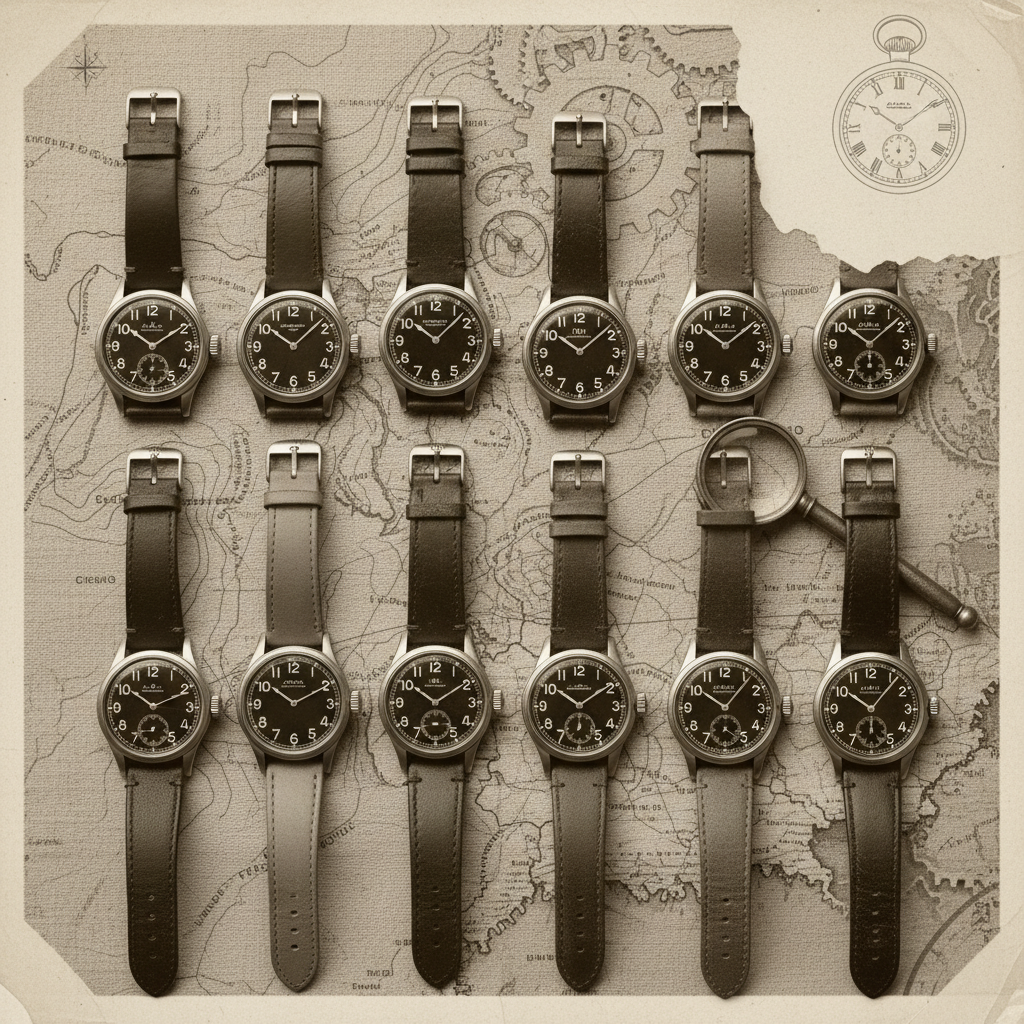
During World War II, the British Ministry of Defence commissioned 12 Swiss watch manufacturers to produce robust, accurate, and waterproof wristwatches for their soldiers. These watches, featuring a black dial, Arabic numerals, luminous hands, and a railway track minute marker, became known collectively as the ‘Dirty Dozen’ and are highly sought after by collectors today for their historical significance and utilitarian design.
Watch Fact of the Day: The “Dirty Dozen” – WWII’s Secret Watch Order
When people think of famous military watches, names like the Rolex Submariner or Omega Seamaster often come to mind. But one of the most influential military watch programs in history wasn’t built around a single brand—it was a coordinated effort involving twelve Swiss watch manufacturers working together during World War II.
Known today as the “Dirty Dozen,” these watches have become some of the most collectible military timepieces ever produced.
Britain Needed a Better Military Watch
By the early 1940s, the British Army needed a wristwatch that could withstand the harsh realities of combat.
Soldiers required watches that were:
- Highly accurate
- Easy to read in low light
- Resistant to dust and moisture
- Durable enough for daily military use
- Simple to maintain in the field
Rather than purchasing commercial watches, the British Ministry of Defence (MoD) created a detailed specification for what became known as the W.W.W. (Watch, Wrist, Waterproof) standard.
Only manufacturers capable of meeting these demanding requirements would receive military contracts.
The Twelve Manufacturers
Twelve Swiss companies successfully produced W.W.W. watches for the British military.
They were:
- Buren
- Cyma
- Eterna
- Grana
- Jaeger-LeCoultre
- Lemania
- IWC
- Longines
- Omega
- Record
- Timor
- Vertex
Together they would later earn the nickname “The Dirty Dozen,” inspired by the famous 1967 war film.
Although the nickname didn’t exist during the war, it has become the accepted name among collectors.
Built for War
Despite being made by different manufacturers, every Dirty Dozen watch followed the same military specification.
Common features included:
- Black matte dial
- Large Arabic numerals
- Luminous hands and hour markers
- Railroad-style minute track
- Small seconds subdial at 6 o’clock
- Manual-wind mechanical movement
- Stainless steel case
- Screw-down or waterproof case construction
- Military issue markings engraved on the caseback
This standardized design allowed soldiers to read the time quickly under difficult conditions while ensuring reliability in harsh environments.
Function always came before fashion.
Why They’re So Important
The Dirty Dozen watches helped establish many of the design principles that still define military watches today.
Modern field watches from brands like Hamilton, Marathon, CWC, and even contemporary military-inspired collections from Longines and IWC owe much of their aesthetic to these wartime designs.
Their influence can still be seen in:
- High-contrast black dials
- Large Arabic numerals
- Minimalist layouts
- Highly legible hands
- Rugged mechanical construction
More than 80 years later, the formula still works.
The Rarest of the Twelve
Not all Dirty Dozen watches are equally common.
Grana produced the fewest examples, making it the rarest and most valuable member of the collection today.
Omega, Cyma, and Record manufactured significantly larger quantities, making them more attainable for collectors.
Completing a full collection of all twelve manufacturers has become one of the ultimate achievements in military watch collecting.
Collecting the Dirty Dozen Today
Original Dirty Dozen watches continue to attract strong interest from collectors around the world.
Values depend heavily on:
- Original dial condition
- Matching military engravings
- Correct movement
- Original hands and crown
- Service history
- Overall originality
A complete set of all twelve watches can command substantial prices at auction, while individual examples remain highly collectible due to their historical importance.
A Legacy That Lives On
The Dirty Dozen wasn’t created as a luxury collection or a marketing campaign.
These watches were purpose-built tools designed to help soldiers survive one of history’s largest conflicts.
Ironically, their clean, functional design has made them timeless icons that continue to inspire modern watchmakers decades later.
Their story reminds us that some of the world’s most celebrated watches weren’t born in boardrooms—they were forged by necessity.
Did You Know?
The term “Dirty Dozen” was never used during World War II. It was adopted years later by collectors, inspired by the classic 1967 war movie The Dirty Dozen. Today, the nickname is recognized worldwide as one of the most legendary chapters in military watch history.
Category: Watch History
Disclaimer: Every effort has been made to keep these watch facts accurate, but the world of horology is full of myths, disputed stories, and fascinating trivia. Consider these facts a starting point for discovery rather than the final word. If you have corrections or additional insights, let us know—we’re always happy to keep the record ticking in the right direction.
🕐 Discover more watch facts, reviews, and buying guides at WatchesAndMore


🛍️ You Might Also Like
As an Amazon Associate and affiliate partner, WatchesAndMore earns from qualifying purchases.
Browse all 75+ expert-reviewed watches →


