
2026-11-18 · Watches And More
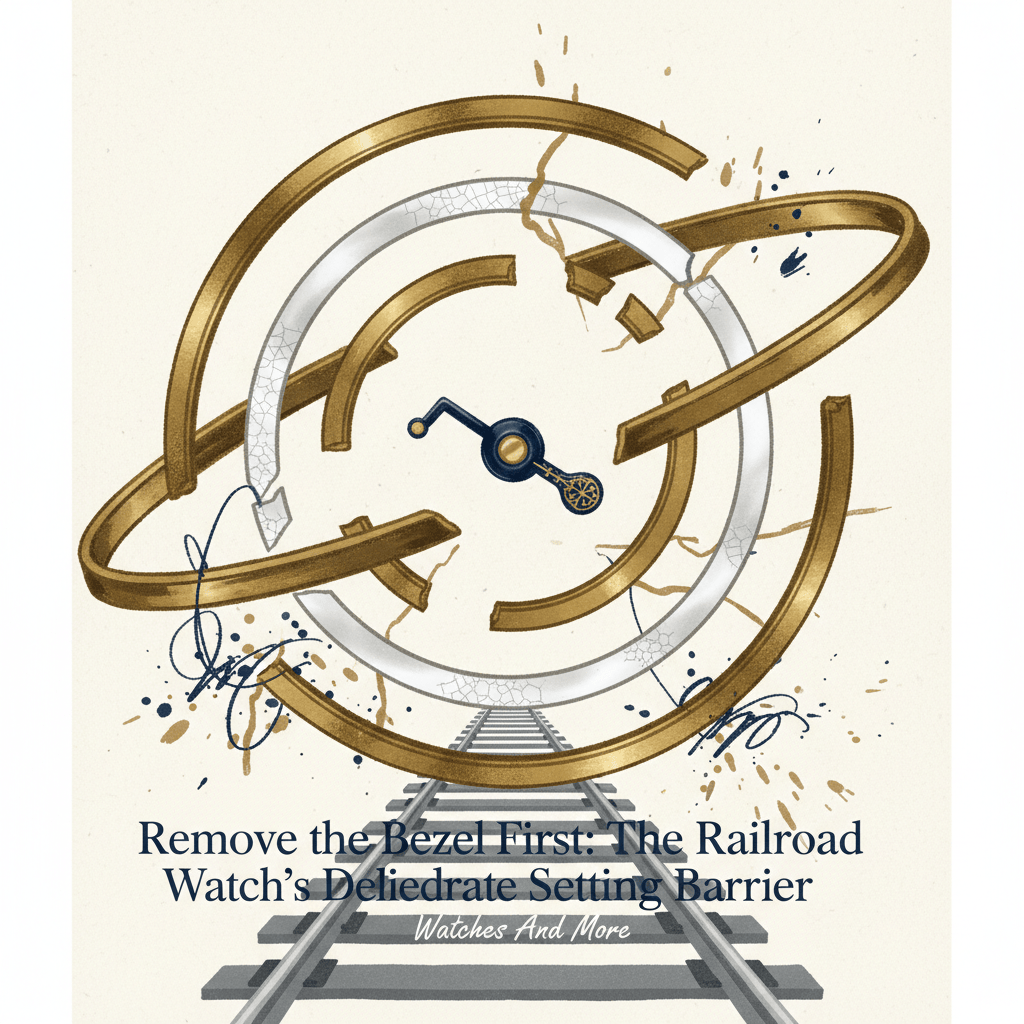
Before changing the time, remove the bezel. Then engage a lever. La Grange Railroad Museum describes this deliberately involved setting sequence as a prominent feature of twentieth-century railroad pocket watches. Its stated purpose was practical: prevent a winding knob caught on a pocket from accidentally changing the hands. [S2] [S2]
💡 Did You Know?
“Railroad grade” needs context. La Grange Railroad Museum defines it as approval by a particular railroad, and explains that qualifications changed over time. An older watch could satisfy one company’s requirements without satisfying another’s. That makes the lever-set story more precise—and more interesting—than a claim that every railroad followed one immutable rule. [S2] [S2]
⭐ Why It Matters
The Smithsonian National Postal Museum’s Kipton account, supplied as an excerpt checked on 2026-11-05, describes an investigation focused on engineers’ watches, one possibly four minutes slow. It says the Lake Shore and Michigan Southern Railroad appointed Cleveland jeweler Webster Ball to investigate, and dates the resulting performance and inspection standards to 1893. “Possibly” matters: the excerpt does not establish the slow watch as a proven cause. [S1] [S1] [S1]
The supplied sources use different names: the Smithsonian says Webster Ball; La Grange’s page says Webb C. Ball. Their wording is retained here rather than silently reconciled. La Grange also identifies service intervals and testing as part of standard-watch regulations: the story concerns ongoing care as well as a clever setting mechanism. [S1] [S2] [S2]
❤️ The W&M Take
For us, the compelling detail is the inconvenience itself. We think this setting barrier offers a wonderfully clear design lesson: a control need not be easier to operate in every circumstance. Sometimes the better choice is to make an important change unmistakably deliberate. The little lever deserves attention not for spectacle, but for restraint.
Sources
- The Great Kipton Train Wreck — attributed researched excerpt, verified 2026-11-05; publisher blocked fresh retrieval
- RAILROAD GRADE POCKET WATCHES
Disclaimer: Every effort has been made to keep these watch facts accurate, but the world of horology is full of myths, disputed stories, and fascinating trivia. Consider these facts a starting point for discovery rather than the final word. If you have corrections or additional insights, let us know—we’re always happy to keep the record ticking in the right direction.
Read Next
- The 19th-Century Watch That Tracked Time Across Two Cities
- The 1930s Watch That Turned Into a Compass
Watches And More · Watch Fact Archive · Companion site
Which would you prefer in an important watch control: instant convenience, or an extra deliberate step that helps prevent mistakes?

