
2026-11-22 · Watches And More
A cone inside a timekeeper sounds unexpected—until its shape becomes the point. Royal Museums Greenwich identifies Larcum Kendall’s K2, dated circa 1771, as a one-day marine timekeeper with a fusee movement. This is a marine instrument, not an ordinary pocket watch. [S1] [S1]
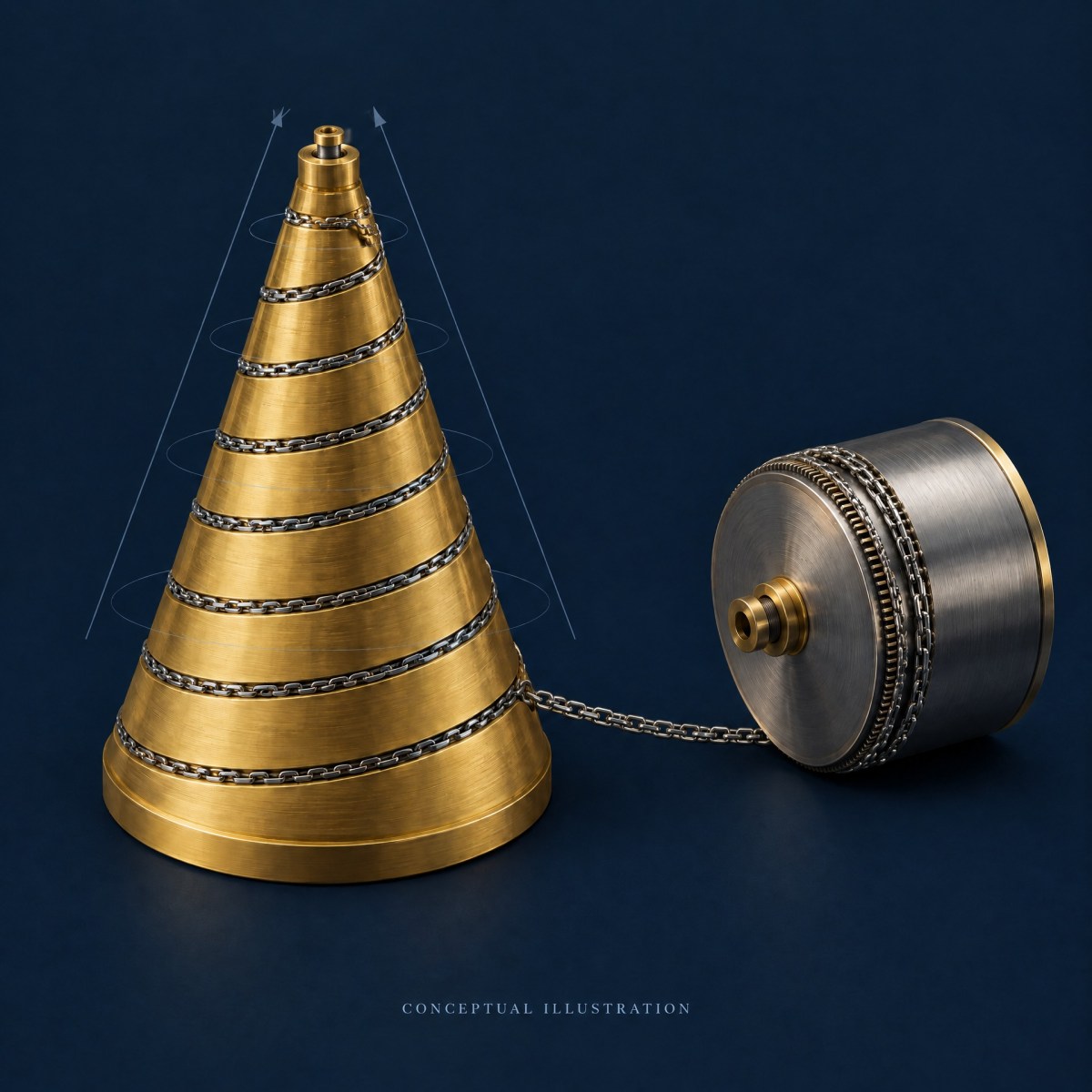
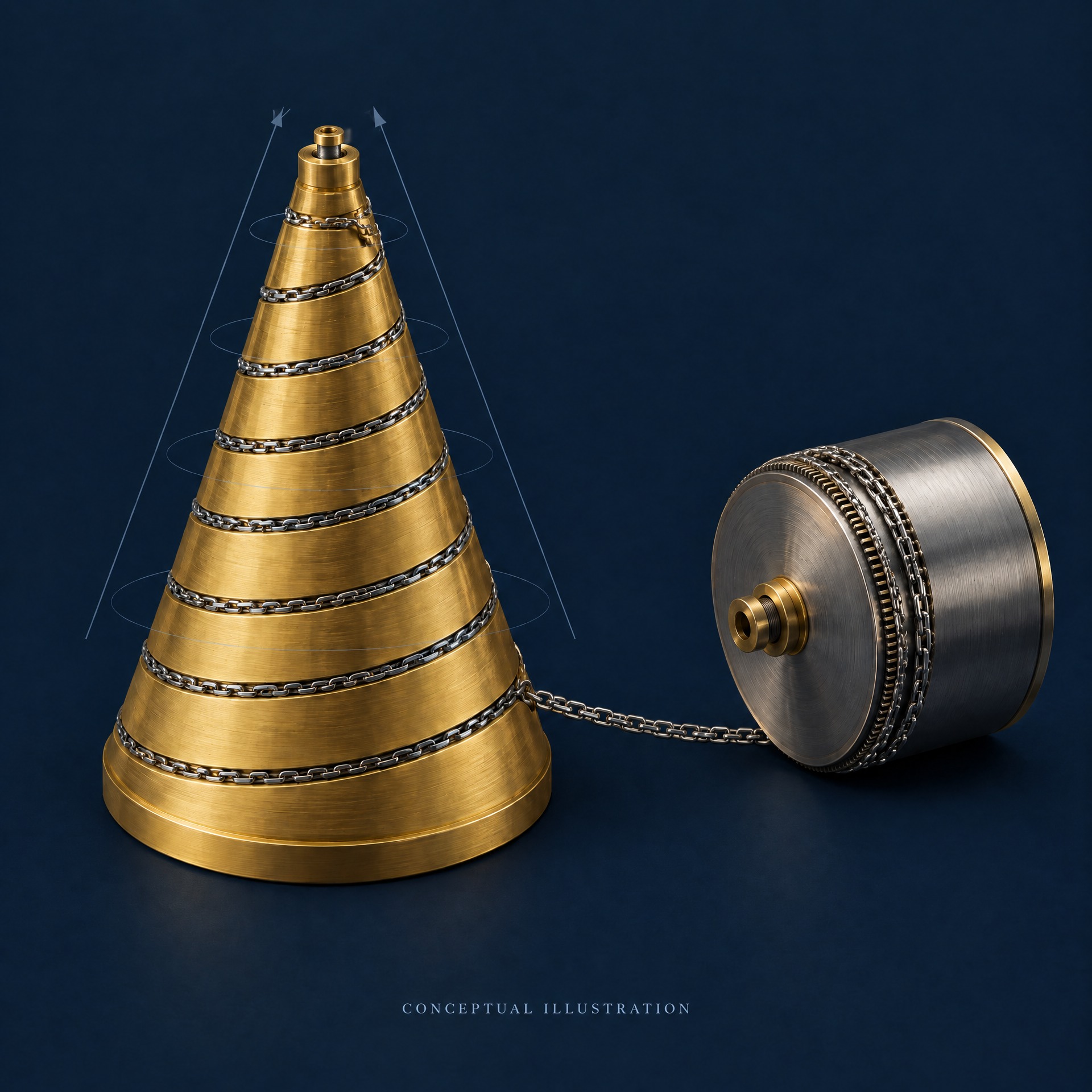
Fondation Haute Horlogerie defines the fusee as a more or less conical component with spiral grooves, connected to the barrel. Its role is to regulate the power transferred to the gears: the cone is part of the transmission, not merely an unusual silhouette. [S2]
💡 Did You Know?
K2’s chain also has a protective job. Royal Museums Greenwich describes a steel balance brake actuated by the fusee chain, designed to stop the timekeeper just before it winds completely down. The stated purpose is to prevent damage to its delicate escapement parts. [S1]
⭐ Why It Matters
Breguet’s technical explanation, published in 2022 for its Tradition Tourbillon, gives a useful way to picture the geometry. With the barrel fully wound, the chain acts on the fusee’s narrow top; as it unwinds, the action shifts toward the broad base. That explains the narrow-to-wide principle, rather than establishing a performance measurement for K2. [S3]
K2 supplies another important distinction. The museum explicitly records a four-wheel train plus great wheel, without a remontoir. Its documented fusee should therefore not be described as an auxiliary remontoir mechanism: the object has the former and lacks the latter. [S1]
❤️ The W&M Take
In our view, K2’s appeal lies in that combination of shape and restraint. The cone invites us to follow the transmission; the brake invites us to appreciate a deliberate stopping point. For us, those specific details make the mechanism more memorable than a sweeping promise of perfect timekeeping.
Sources
- Royal Museums Greenwich — K2, Larcum Kendall marine timekeeper, ZAA0078
- Fondation Haute Horlogerie — Fusee glossary
- Breguet — A new variation of the Tradition Tourbillon joins the collections of Breguet
Disclaimer: Every effort has been made to keep these watch facts accurate, but the world of horology is full of myths, disputed stories, and fascinating trivia. Consider these facts a starting point for discovery rather than the final word. If you have corrections or additional insights, let us know—we’re always happy to keep the record ticking in the right direction.
Read Next
- Nuremberg Eggs and the Origins of Portable Timekeeping
- Watch Fact of the Day: The Remontoire: A Tiny Spring That Resets Itself Every Few Seconds
Watches And More · Watch Fact Archive · Companion site
Which detail draws you in more: the fusee’s changing geometry, or K2’s chain-actuated protective stop?
Discover more from WatchesAndMoreCO
Subscribe to get the latest posts sent to your email.


