
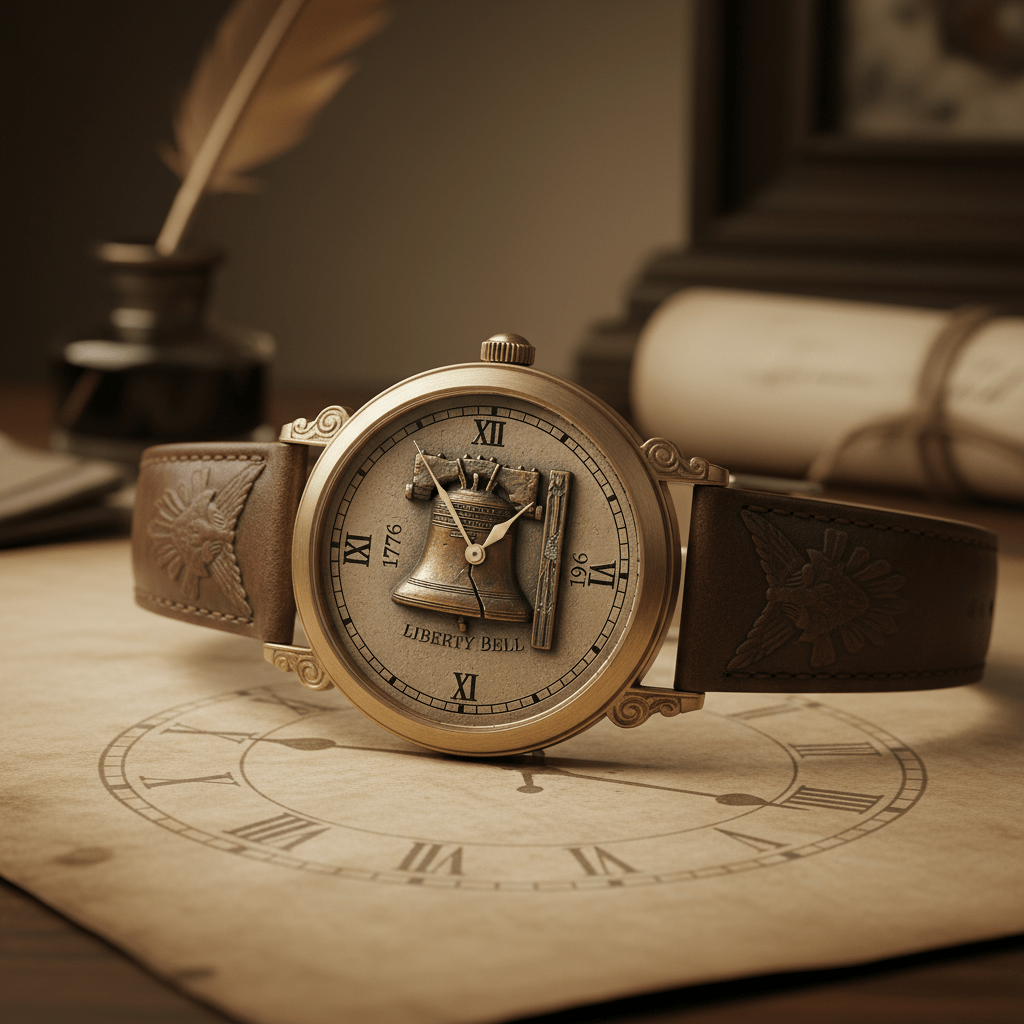
Editorial correction: An earlier version described a 1976 watch with a miniature working Liberty Bell that struck the hours. We have not verified that specific timepiece or its striking mechanism. The concept illustrations in this post should not be treated as documentary evidence.
A tiny Liberty Bell ringing inside a watch is a wonderful idea. It brings together patriotic imagery, mechanical imagination, and the drama of a chiming timepiece. But an appealing idea deserves a clear label. Here, we separate a watch concept from the history we can support.
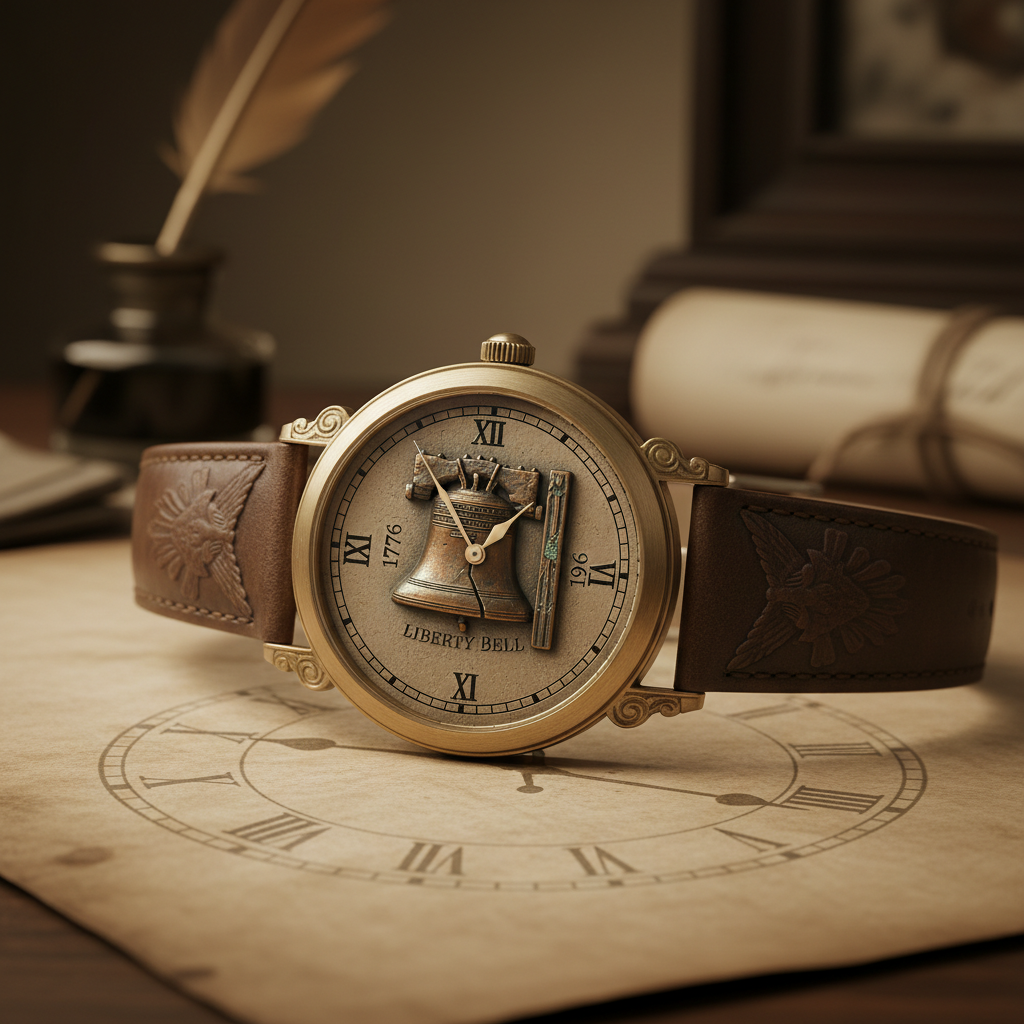
Concept illustration accompanying the original story; not a verified photograph of a historical miniature-bell watch.
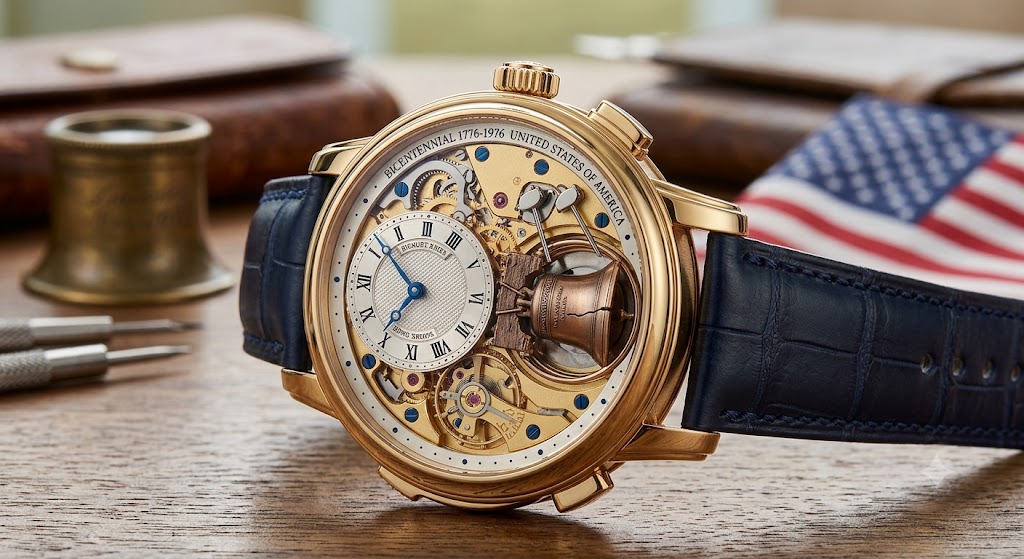
Concept illustration accompanying the original story; not a verified photograph of a historical miniature-bell watch.
A Symbol Is Not a Mechanism
A Liberty Bell picture on a dial or case establishes a decorative theme. It does not establish that a watch contains a bell, a hammer, or a mechanism that strikes the hours. An estate-auction listing documents a commemorative pocket watch with a Liberty Bell design and 1776–1976 markings. That is evidence of commemorative styling, not proof of the working-bell claim made here previously.
What a Working Version Would Need
As a design exercise, imagine how much more is involved than putting a small bell beneath a crystal. A functioning concept would need a way to store and release energy, actuate a striker, and accommodate the sound-producing parts. If it struck automatically on the hour, that would require coordination with the timekeeping mechanism. These are conceptual requirements, not specifications of a documented Liberty Bell watch.
The Real Bicentennial Connection
There is a verified 1976 milestone in the Bell’s own story: the National Park Service records its move to the Liberty Bell Pavilion on January 1, 1976. That event belongs to the history of displaying the actual bell. It should not be used to authenticate a watch simply because both stories mention the Bicentennial.
💡 Did You Know?
The National Park Service distinguishes the Liberty Bell from the clock bell at Independence Hall. A famous bell, a clock’s striking bell, and a watch’s sound-producing mechanism are different things. Keeping those identities separate helps prevent a good story from turning into a misleading one.
⭐ Why It Matters
Watch enthusiasm runs on curiosity, but illustrations and confident captions can make an unverified object seem established. The better collector’s habit is to ask for a maker, reference, contemporary catalogue, museum record, or a clear account of the mechanism. Until that evidence appears, this remains an imaginative concept worth discussing on its own terms.


Related Reading
Explore our documented pocket-watch barometers for a real example of unusual mechanisms sharing one case.
Sources
National Park Service: displaying the Liberty Bell; National Park Service: bells and clocks; Estate Details: commemorative pocket-watch auction listing.
Your Turn
What historical symbol would you turn into a watch concept—and what would its mechanism actually do?
Category: Watch Facts
Disclaimer: Every effort has been made to keep these watch facts accurate, but the world of horology includes disputed stories and changing product information. Treat this article as a starting point for discovery and consult the linked records or manufacturer information for the exact timepiece. Corrections and additional evidence are welcome in the comments.
🕐 Discover more watch facts, reviews, and buying guides at WatchesAndMore.
🛍️ Explore designs, gifts and more at the W&M companion shop.
Discover more from WatchesAndMoreCO
Subscribe to get the latest posts sent to your email.


